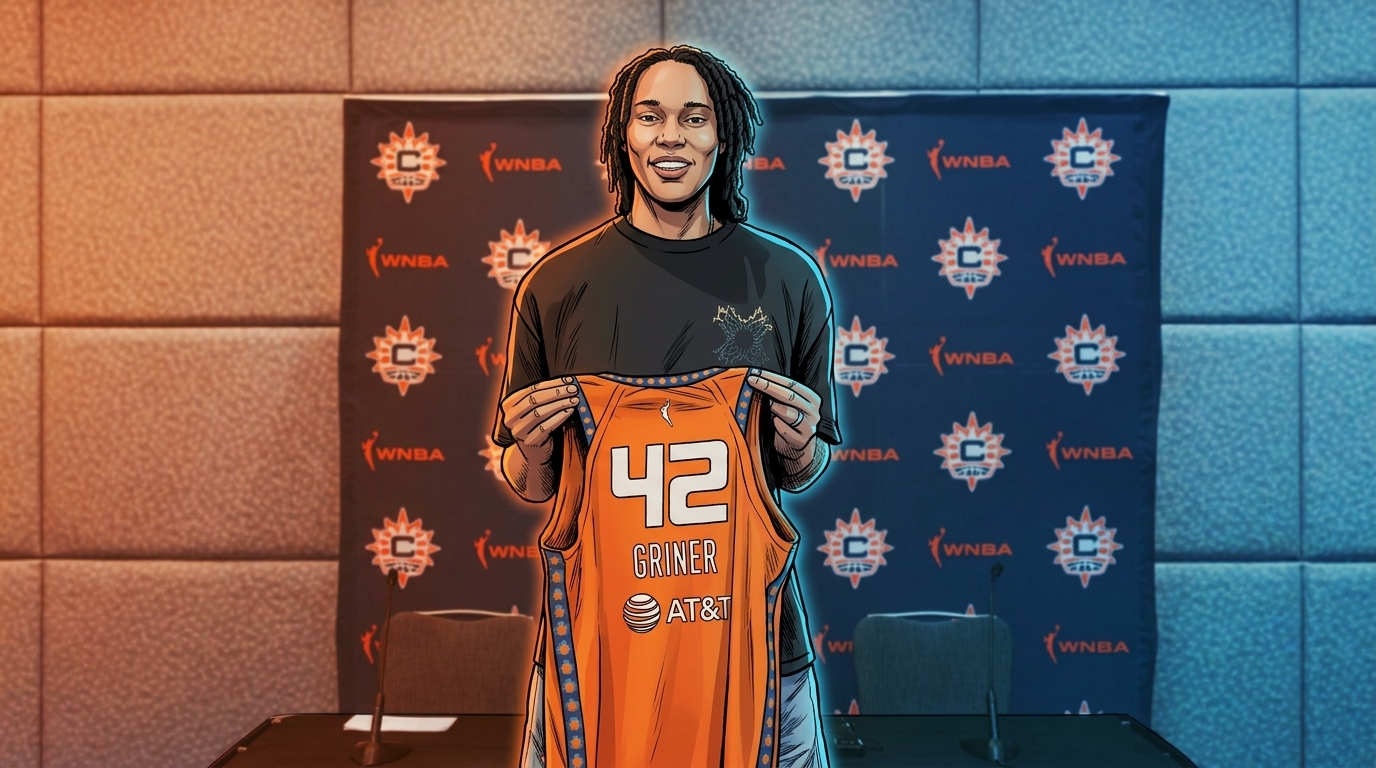

How many franchises actually get to leave on their own terms? Not many, and not in this league. We’ve spent the better part of a decade tracking WNBA relocation chatter: ownership groups sniffing around bigger metros, franchises quietly shopping themselves, ambitious wishlists that die in a single unsourced tweet. Most of it evaporates before anything happens. This one didn’t. The Connecticut Sun beat Toronto Tempo 95-81 on Thursday night at Mohegan Sun Arena, and with that win they played the Connecticut Sun’s final game in the state, 24 seasons after the franchise arrived in Uncasville. Next season, the team plays in Houston.
The sentimental version of this story writes itself: standing ovations, a sellout crowd in orange, a franchise thanking its people on the way out the door. All of that happened, and none of it is the interesting part. The Sun are leaving a building that seats roughly 9,000, where they averaged more than 8,000 fans a night, for Houston’s Toyota Center, which holds 18,000 for basketball. That’s not an upgrade so much as a wager. It’s the WNBA’s expansion-era math (bigger buildings, bigger television markets, bigger everything) running head-on into the small-market loyalty math that Connecticut spent 24 years proving actually works. Both bets can be sound at once. That tension is worth sitting with rather than smoothing into a highlight reel.
Ashlon Jackson made sure the basketball wasn’t just a footnote to the ceremony, even though it mostly got treated like one. She led Connecticut with 18 points, including the final three-pointer in franchise history with 51 seconds left, as tidy an ending as sports ever hands anyone. Aaliyah Edwards, the UConn product who’s spent her career playing minutes from campus, added 16 and told the broadcast afterward, “This is the basketball capital of the world, baby! Don’t ever forget!” Kiki Rice put up 28 for Toronto in a game the visitors nearly stole. Coach Rachid Meziane’s read on his team was simple enough to trust: “Tonight they played with pride. But I also saw a team playing with a lot of joy.”
Team president Jen Rizzotti got the microphone before any of that mattered on the scoreboard, and she used it on the crowd rather than the roster. “You guys have been our family for 24 years,” she told the 8,911 fans who packed the building, many in team orange, season-ticket holders getting the kind of recognition that usually only shows up after a title. “You’ve never disappointed,” she added. “You’ve proved that Connecticut deserves a WNBA team.” (Every departing franchise says its fans are family on the way out. Fewer of them mean it enough to bring 75 to 80 percent of the front office along for the move, which is roughly what’s happening here, per CT Mirror.)
The Connecticut Sun history that actually matters is arithmetic, not sentiment. The team started life as the Orlando Miracle before relocating to Connecticut in 2003, becoming the first independently owned team in WNBA history: no NBA parent club, just the Mohegan Tribe writing checks and betting on itself. Over 24 seasons in the state, the Sun reached four WNBA Finals (2004, 2005, 2019, and 2022) and lost all four, a run of near-misses that would define most franchises as snakebitten instead of successful. It didn’t work that way here. Connecticut became the first team in league history to turn a profit, in 2010, and the franchise’s value climbed from a $10 million purchase price to a $300 million sale. Sustainability turned out to be its own kind of banner, even without a trophy to hang it from.
That value is exactly why Houston came calling, and the new identity it’s buying back is the part of this story I find genuinely strange. In 2027, the relocated franchise reopens as the Houston Comets, not a new name, but the revived brand of the original Comets, who won the league’s first four championships from 1997 to 2000 before folding in 2008. (Houston isn’t just getting a WNBA team. It’s getting its old trophy case back, or at least the branding rights to one, while Connecticut loses the identity it spent 24 years building from nothing.) Rizzotti is making the move too, stepping into a role as president of basketball operations for the Houston side. The person who spent the night telling Connecticut fans they were family is now the person building the thing that replaces them.
Roster ironies stacked up on the way out. Marina Mabrey, Connecticut’s second-leading scorer in 2025 at 14.4 points a night, was left unprotected and taken by Toronto in the 2026 expansion draft. Her old team beat her new team on the one night that mattered most to the old team, a small, specific cruelty that nobody in the building could have scripted better. (Toronto, it turns out, can be grateful for a draft pick and merciless about it in the same offseason.) Tina Charles, who led the Sun in scoring last season, announced her retirement and wasn’t on the 2026 roster at all. The two best scorers from a year ago were both somewhere else on Thursday, watching a team built mostly around other people close out their building.
The other player who wasn’t on the floor got the loudest ovation of the night. Brittney Griner, a Houston native out of Aldine Nimitz High School, signed with Connecticut for 2026 specifically anticipating the move back to her hometown. She didn’t play in the finale, but she carried the Sun flag around the floor postgame and high-fived fans courtside: a marquee free-agent signing who spent her lone Connecticut season as a bridge to a city she already knew. It’s a strange role, and she seemed to know it too.
Social media had its own tribute waiting before the final buzzer even cooled.
https://twitter.com/UnderdogWNBA/status/2103291504496132201
Expansion has been kind to the league’s newer markets — the Valkyries turned an expansion roster into the WNBA’s newest superteam inside two years, and the appetite for bigger arenas in bigger cities isn’t going away. Houston is betting the same appetite applies here, with an assist from nostalgia the Comets name provides for free.
https://twitter.com/espnW/status/2103292005312876852
I believe Connecticut earned exactly the send-off it got Thursday night — a win, a full building, a franchise president who told the truth about what the fans built. I also believe the league just told us, in seat counts and relocation fees, which bet it’s making for the next decade, and it isn’t the loyalty bet. A small market proved a WNBA team could work without a marquee metro behind it. Houston is betting that proof matters less than square footage. I think both of those things can be true, and I don’t think the second one should get to hide behind how well the first one ended.
What happens next is the actual test. Toyota Center will sell more tickets than Mohegan Sun Arena ever could on its best night, and that gap will show up in every financial story written about the Comets for years. Whether it shows up in the standings, whether Griner, Rizzotti, and a relocated front office can build something with the staying power of the team they’re replacing, is the question Houston inherits along with the name. For more WNBA coverage as that answer takes shape, keep an eye on how fast the new building fills up once the nostalgia wears off.