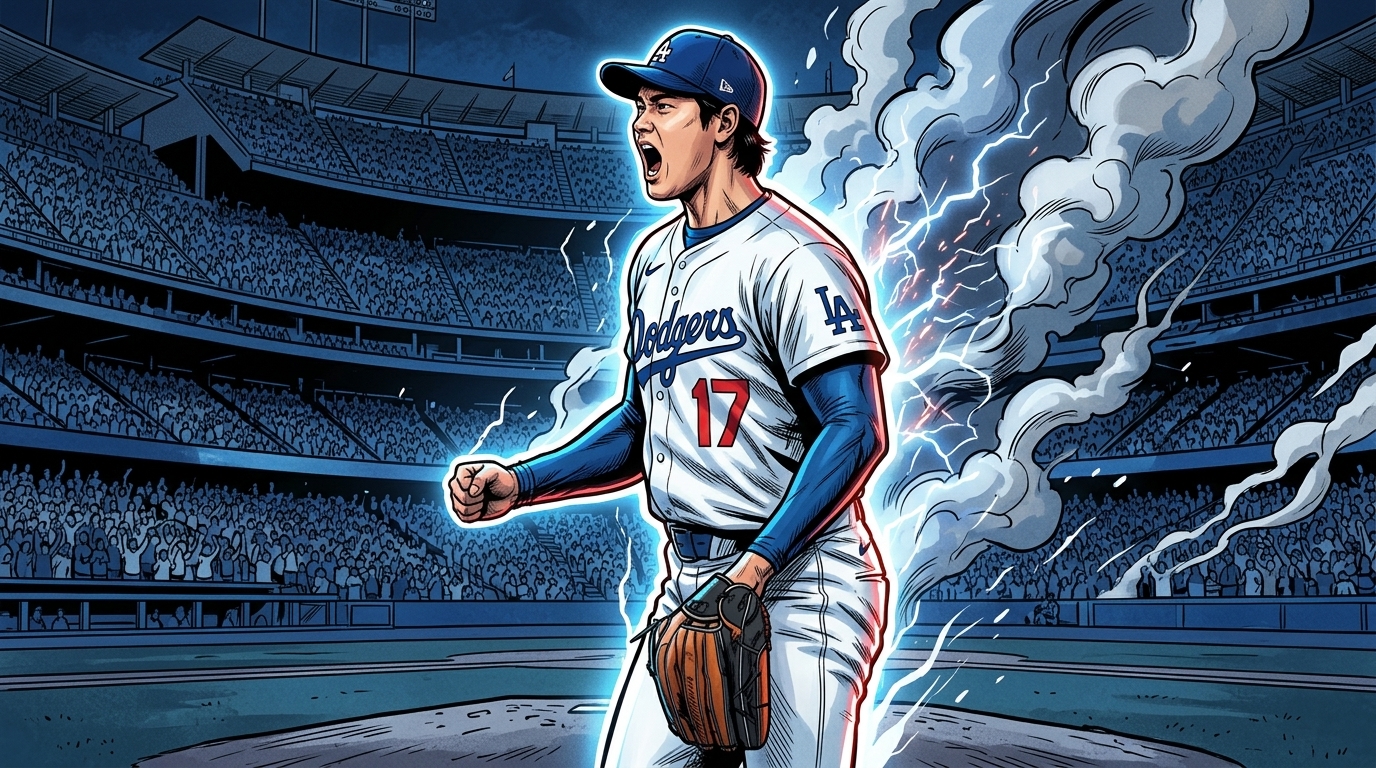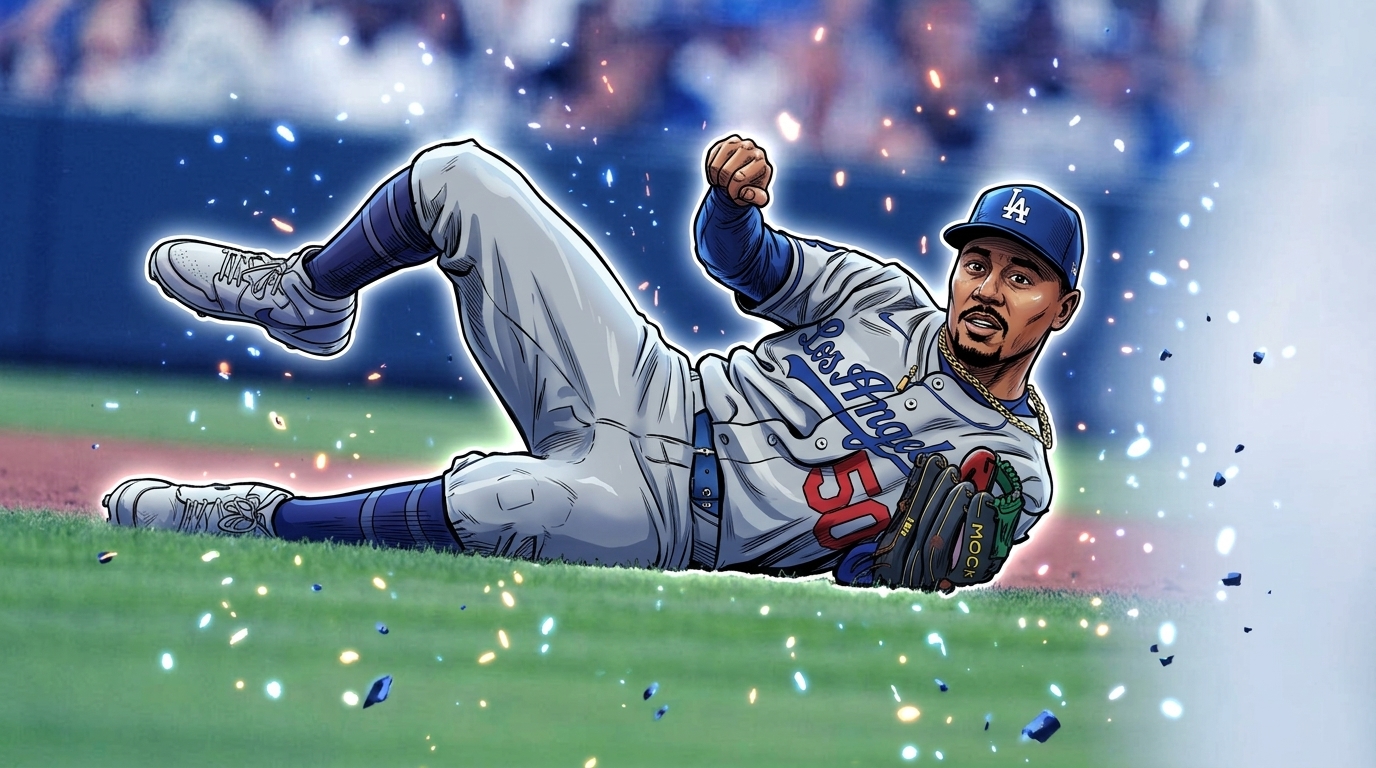

The Los Angeles Dodgers just set a record that will outlast this postseason by decades: 24 division titles, one more than the Atlanta Braves have ever won and three more than the New York Yankees, the most since Major League Baseball split into divisions back in 1969. That number settles one argument. It opens a much harder one. The real question hanging over Dodger Stadium isn’t whether this team makes the playoffs again — it’s whether a specific, banged-up roster can do something almost no recent dynasty has managed: win the World Series three years running.
Dave Roberts said as much himself, and it wasn’t the usual coach-speak. “There is certainly a higher expectation when, if you don’t win the World Series, you fail,” Roberts said after the clinch. Division dominance used to be the whole story in Los Angeles. Now it’s the floor, not the ceiling.
How the Dodgers Became MLB’s Most Dominant Franchise
The Dodgers clinched their fifth consecutive NL West title with an 8-2 win over the Cincinnati Reds on September 17, their 13th division championship in the last 14 seasons. The lone miss came in 2021, when Los Angeles won 106 games and still finished second, one game behind a 107-win Giants team. As a lifelong Giants fan, that’s the one permanent victory lap I get to take here: the last time anybody in the NL West beat the Dodgers to anything, it was mine.
Kyle Tucker made sure the clinching game had its own headline anyway. He went 4-for-4 with a first-inning home run and three RBIs, a triple short of the franchise’s first cycle since 2017. The Dodgers clinched, and posted about it themselves:
https://twitter.com/Dodgers/status/2100753801678385520
None of that is what makes this stretch actually historic, though. The 14 consecutive postseason appearances are what ties the all-time record set by the Braves from 1991 through 2005, excluding the strike-shortened 1994 season. Twenty-four division titles is rare. Fourteen straight Octobers without missing once is closer to unheard of.
Why Has Nobody Three-Peated Since 2000?
Only two franchises have ever won three straight World Series: the 1972-74 Oakland A’s and the 1998-2000 Yankees. New York’s bid for a fourth ended in 2001, when Arizona’s Luis Gonzalez blooped a bases-loaded, ninth-inning walk-off single off Mariano Rivera in Game 7.
That near-miss remains the closest anyone has come to four straight in a quarter-century of trying. There isn’t a big enough sample of three-peat bids to prove a single cause, but the more persuasive explanation for the Dodgers specifically is accumulated fatigue, not bad luck. Champions keep playing deep into October and November every year, extra games that never show up anywhere in a regular-season win total. By year three, that toll stops being hypothetical. Bullpen arms carry more mileage. Position players carry more nagging injuries into September. That’s not a proven historical law — it’s two straight Octobers of extra baseball landing on the same roster that’s now trying for a third, and the injury list below is exactly what that would produce.
Pitching staffs absorb the worst of that mileage. A deep postseason run means an ace throws extra innings in October that never register on an ERA the following spring, and a bullpen empties itself out chasing outs across two extra rounds nobody else on the schedule has to play. None of that shows up on paper in March. It shows up in September, when the same arms that delivered two rings are already dealing with soreness instead of building toward another one.
What Is Actually Wrong With This Roster?
Entering October, the Dodgers are managing five real injury situations: Shohei Ohtani (biceps inflammation, on the injured list since September 8, targeting a hitting-only return), Blake Snell (groin tightness), Roki Sasaki (a finger blister), Edwin Diaz (neck inflammation) and Freddie Freeman (knee soreness, back in the lineup).
None of these is individually a crisis. Ohtani’s timeline points toward a hitting-only return, which still gets a generational bat back in the lineup even if the two-way version has to wait. Freeman is already back on the field. But stack five names together and the picture is a team that has spent two straight Octobers running its best players hard, and is doing it again in September before the games that count most have even started. Roberts doesn’t get to choose between a full-strength three-peat bid and a full-strength Ohtani. Right now, he’s building a case for one while missing pieces of the other.
Is This Still the Best Team in the National League?
Yes, with a real caveat. The Dodgers still look like the deepest, most talented roster in the league on paper, but health is doing more of that work than talent alone at this point, and the margin looks thinner in September than it did in April.
Where the Dodgers land relative to Milwaukee and the rest of the MLB postseason picture still matters for October seeding, but it’s a secondary question next to health. A team can be the best roster in the National League on paper and still lose a short series to a healthier team playing loose. The Dodgers have been the best roster in the National League on paper for four years running. That has never been the hard part. The hard part starts now.
There’s a version of this team, at full health, that looks like the best group anyone has fielded in years: a lineup with Ohtani, Freeman and Tucker written into the same order, and enough starting pitching depth to absorb one short Snell start without blinking. There’s a second version, currently on the field, missing enough of that depth that a bad week in the Division Series stops being a footnote and starts being the whole story. Both versions are real. Only one of them gets to play in October.
The evidence suggests the Dodgers still have the highest ceiling in baseball when everyone is healthy, which is exactly the qualifier that has broken every three-peat bid since the Yankees’ run ended. History doesn’t need Los Angeles to lose in October. It just needs one more starter to land on the injured list at the wrong moment, and the 26-year drought since anyone last won three straight becomes 27. Bet on the roster. Don’t bet on all of it staying intact.