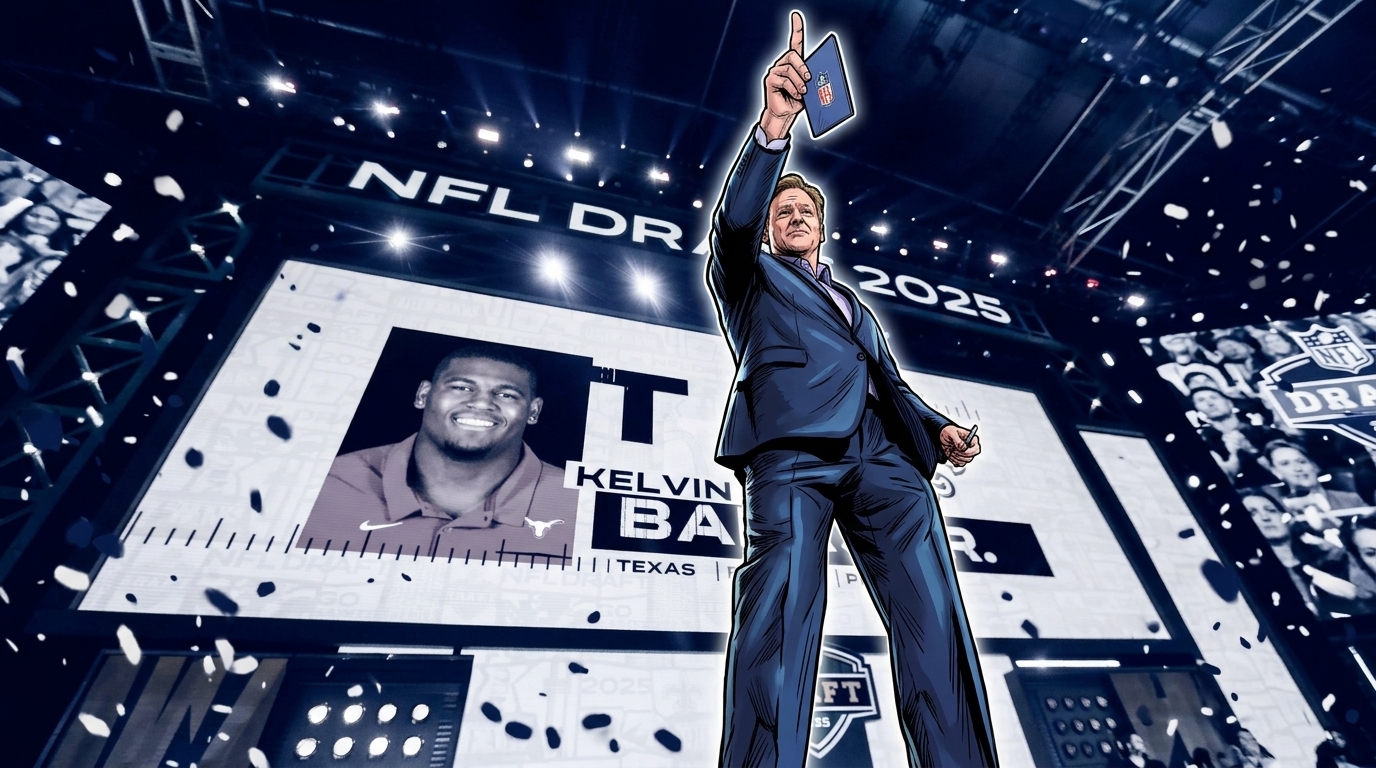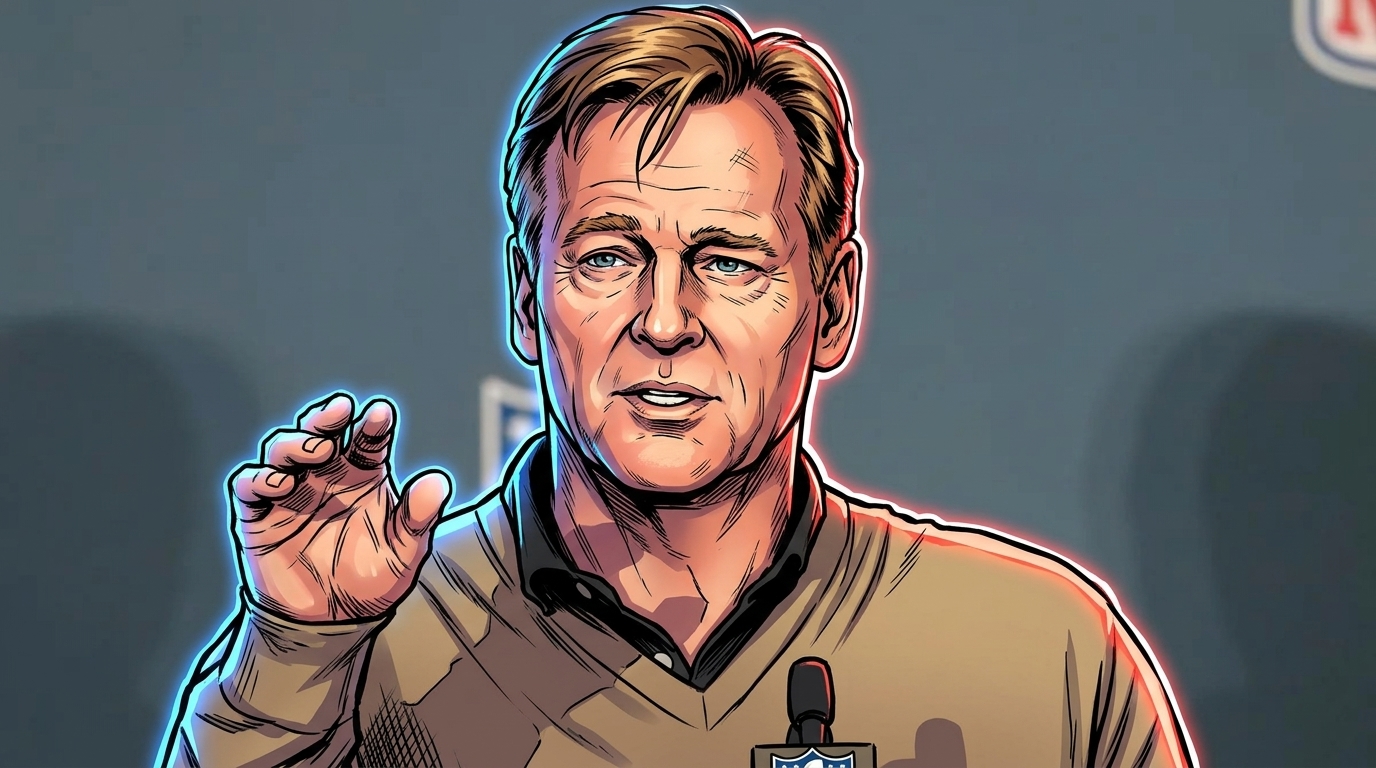

Roger Goodell went on CNBC last week and did the concerned-commissioner routine, telling the world the NFL just wants “stronger regulations” on prediction markets to keep the game clean and the customers safe. I believe him about as much as I believe my cable company when it calls a rate hike an “investment in your experience.” The NFL’s own compliance office was a lot less careful two weeks earlier, in a letter to the operators actually taking these bets, and the gap between what Goodell says on TV and what his office puts in writing is the whole story here.
That letter came from Sabrina Perel, the NFL’s chief compliance officer, and it wasn’t her first. She’d already flagged a list of “objectionable” bet categories back in March: whether a kicker misses a field goal, whether a quarterback’s first pass falls incomplete, whether a running back clears some arbitrary yardage total on his first carry, plus anything touching player injuries, player conduct, or officiating calls. In early September she sent a second letter to Kalshi, Polymarket, and the rest of the prediction-market operators. ESPN’s David Purdum flagged it the same day it went out:
https://x.com/DavidPurdum/status/2095677855694803335
Perel’s actual line is the one worth sitting with:
“It is deeply concerning that bets within the objectionable categories that we identified months ago have been and continue to be listed as contracts on exchanges.”
Deeply concerning is compliance-department speak for we want a paper trail before we go nuclear on somebody, and Perel wasn’t writing it about courtside seating markets. She was writing it about whether a rookie kicker shanks a chip shot, which is exactly the type of prop the NFL has spent years insisting doesn’t threaten anything when a licensed sportsbook offers the same bet.
Compare that to what Goodell said with a microphone in his face. Asked directly about prediction markets, he sounded less like a man citing an active threat than a man stalling for time:
“We think that there needs to be stronger regulations into the prediction markets… We want to see that to protect the integrity of our game… We want to make sure we’re protecting the consumers that are on those platforms.”
He also said the league is “proud of” its existing sportsbook relationships and doesn’t feel like it has “to be first” into prediction-market deals, patient, prudent, protecting the little guy — except the patience only seems to run out for bets that don’t cut the league a check. Call it what it is: bullshit dressed up as prudence.
Line up Perel’s fire-alarm letter next to Goodell’s calm-dad interview and they share one detail neither man mentions out loud: both landed in the same run-up to kickoff that the NFL re-signed DraftKings and FanDuel and brought in Fanatics, the third bookie the NFL just brought into the tent, as an official sportsbook, days before the season kicked off. All three get the shield on their apps, retail space at the Draft and the Super Bowl, and real-time Next Gen Stats and BetVision data no prediction market gets near. The league won’t say what any of that’s worth. It doesn’t have to. You already know which side of this fight isn’t the one getting called “concerning.”
The money involved isn’t hypothetical, either. Prediction markets pulled in roughly $5.83 billion in trading volume across the first Saturday and Sunday of this NFL season. Kalshi alone did $4.89 billion of that, more than its entire NFL volume from last season, which totaled $7.21 billion. Polymarket ran $404 million on Sunday by itself. That’s a market big enough already that the league’s broadcast partners are going to start wondering why they don’t have a cut of it, not some app quietly skirting a loophole.
Connecticut didn’t wait to find out. Two weeks after suing Kalshi directly, Governor Ned Lamont’s office fired off cease-and-desist orders to nine prediction-market operators: Polymarket, Coinbase, Crypto.com, Robinhood, ProphetX, Novig, Webull, Gemini, and Underdog Predict, all ordered to stop taking sports contracts from anyone in the state. Connecticut isn’t alone in trying to kill the category through litigation, either; New York’s already got a $36 billion lawsuit calling the whole category illegal gambling aimed at Kalshi. The detail that turns this into a media story instead of a regulatory one: the only books still legally allowed to take a Connecticut bettor’s money are DraftKings through Foxwoods, FanDuel through Mohegan Sun, and Fanatics through the state lottery. Same three companies the NFL just re-signed. If you’re the guy in Hartford who wanted ten bucks on whether a rookie kicker misses a field goal, the state didn’t protect you from anything. It walked you out of the open market and into the arms of the three operators that already pay the league for that privilege. Call it a tax with a press release, not consumer protection.
None of this makes prediction markets the good guys. They’re lightly regulated, they’re chaotic, and some of Perel’s specific complaints about single-player manipulation props hold up fine on their own merits. But legitimate safety concerns don’t usually show up bundled with a freshly signed sportsbook contract, voiced by the compliance office instead of the commissioner’s own mouth. The NFL wants you to think this is about protecting the integrity of the game. It’s about protecting the cut DraftKings, FanDuel, and Fanatics just paid for the right to be the only bookies standing next to it.