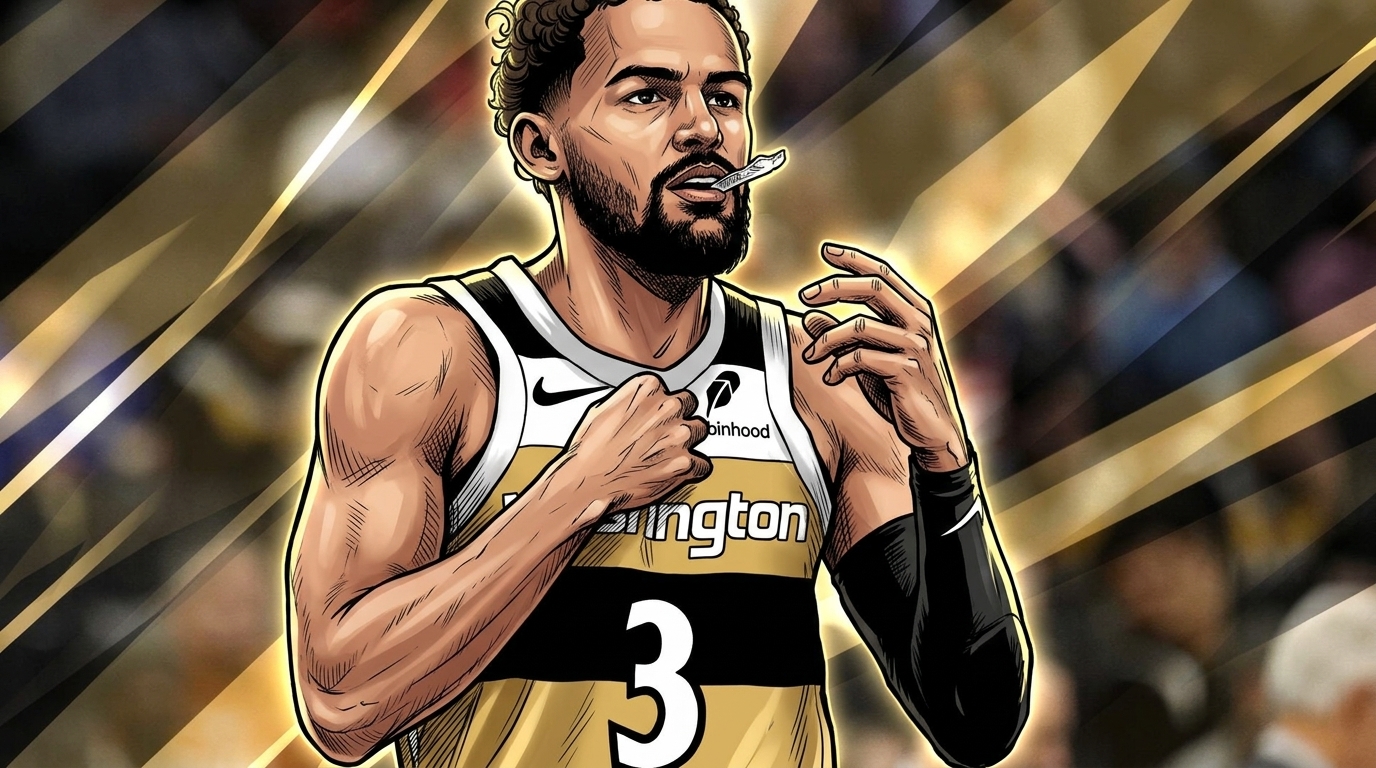

How often does a front office turn down a star player and get handed proof, months later, that they read the situation correctly? The Sacramento Kings passed on a trade for Trae Young last year, and the number that scared them off just showed up in real life. Young signed a four-year extension with the Washington Wizards worth roughly $212 million in June, landing in the range Sacramento was reportedly trying to avoid before the deal ever closed.
The trade on the table sent Zach LaVine to the Atlanta Hawks in exchange for Young coming to Sacramento. The Kings walked away, kept LaVine as their backcourt centerpiece, and passed on adding a second ball-dominant guard who was about to command a max-range price tag.
Why the Kings Actually Said No
Sacramento wasn’t worried about Young’s talent. Per Yahoo Sports, the Kings feared he’d demand a max-range extension the moment he arrived, a number James Ham of ESPN 1320 Sacramento pegged at potentially “$250, $300 million.” That’s the kind of long-term commitment that reshapes a cap sheet for half a decade, attached to a guard already on his second organization.
I run projection models for three different fantasy baseball leagues, and the exercise never changes: you’re guessing at a player’s future cost before the market sets it. Front offices are supposed to be better at that math than a guy with a spreadsheet and too much free time on a Tuesday night. Most of them aren’t. Sacramento, on this one move, was.
Atlanta didn’t keep Young either. Once the Kings passed, the Hawks traded him to Washington for CJ McCollum and Corey Kispert, ending a run that had made Young the face of the franchise for seven-plus seasons. He’d just returned from a knee sprain, played five games in an 0-5 stretch, then took a quad contusion before landing in Washington’s building instead.
That set up exactly the situation Sacramento wanted no part of. Word started circulating fast once the numbers on Young’s next contract took shape:
https://x.com/LegionHoops/status/2097349083052867692
Five months after arriving in Washington, Young declined a $49 million player option and signed for four years and roughly $212 million instead. It happened during the chaotic draft-night stretch when Young opted out, a stretch that reshuffled several other rosters around the league that same week. The deal runs through at least 2028-29, with a player option tacked onto the back end.
Did the Numbers Prove Sacramento Right?
Not down to the dollar, but close enough to validate the read. The Kings were reportedly bracing for an extension worth $250 to $300 million, and Young ended up signing for about $212 million. That’s a meaningfully lower number, but it lands in the same weight class Sacramento was trying to avoid before the trade ever happened.
Washington had more room to make that number work than Sacramento would have. Acquiring Young moved the Wizards roughly $30 million below the luxury tax and opened up about $46 million in cap space for this offseason, the kind of flexibility a team rebuilding around future assets can absorb in a way a team trying to win now can’t. The Kings would have carried that same $212 million commitment on top of LaVine’s money while trying to build a roster that competes immediately, not one that’s stockpiling picks and cap sheets.
There’s also the injury math that comes with paying him $53 million a year. Young missed extended time with a knee sprain and then a quad contusion across his final Atlanta stretch and his first months in Washington, an injury-shortened season now attached to a nine-figure guarantee. That’s the exact kind of downside Sacramento avoided just by saying no.
The reception hasn’t exactly been kind, either. The $212 million extension is already being called one of the worst contracts in the league by people who watched Young’s efficiency dip through the injuries, a strange outcome for a franchise that gave up two rotation pieces and real cap flexibility just to get him in the building.
Why Doesn’t Every Front Office Do This?
Most front offices react to bad contracts after they happen instead of pricing them out beforehand. Sacramento’s call on Young shows the forecasting model works when teams actually use it: identify the extension a star will demand, price it honestly, and let that number, not the trade return, decide whether the move is worth making.
The forecasting talk in this sport almost always happens after the ink dries. Analysts spend months picking apart a bad contract, running math the front office could have run before it ever signed off on the trade. Sacramento ran that math early instead, and early forecasting makes for a quiet story: no trade, no press conference, just a phone call that ended before it started. That’s probably part of why the disciplined version of this decision gets so little credit next to the flashier ones.
That kind of discipline is rare specifically because it requires saying no to immediate upside. Sacramento gave up a shot at adding a four-time All-Star guard, and it would have been easy to justify the deal in the moment: a bigger name, more shot creation, a real jump in ceiling. Instead, Sacramento ran the extension math first and decided the ceiling wasn’t worth the floor.
The lesson isn’t that Trae Young is a bad player. It’s that Sacramento treated an extension the same way I treat a bid in one of my fantasy leagues: price the future cost before you make the move, not after you’re stuck with it. Teams that skip that step are the ones handing out the contracts everyone mocks two years later. The Kings ran the numbers, didn’t like the answer, and walked. Washington ran the same numbers and paid anyway. Give me the front office that did its homework first.