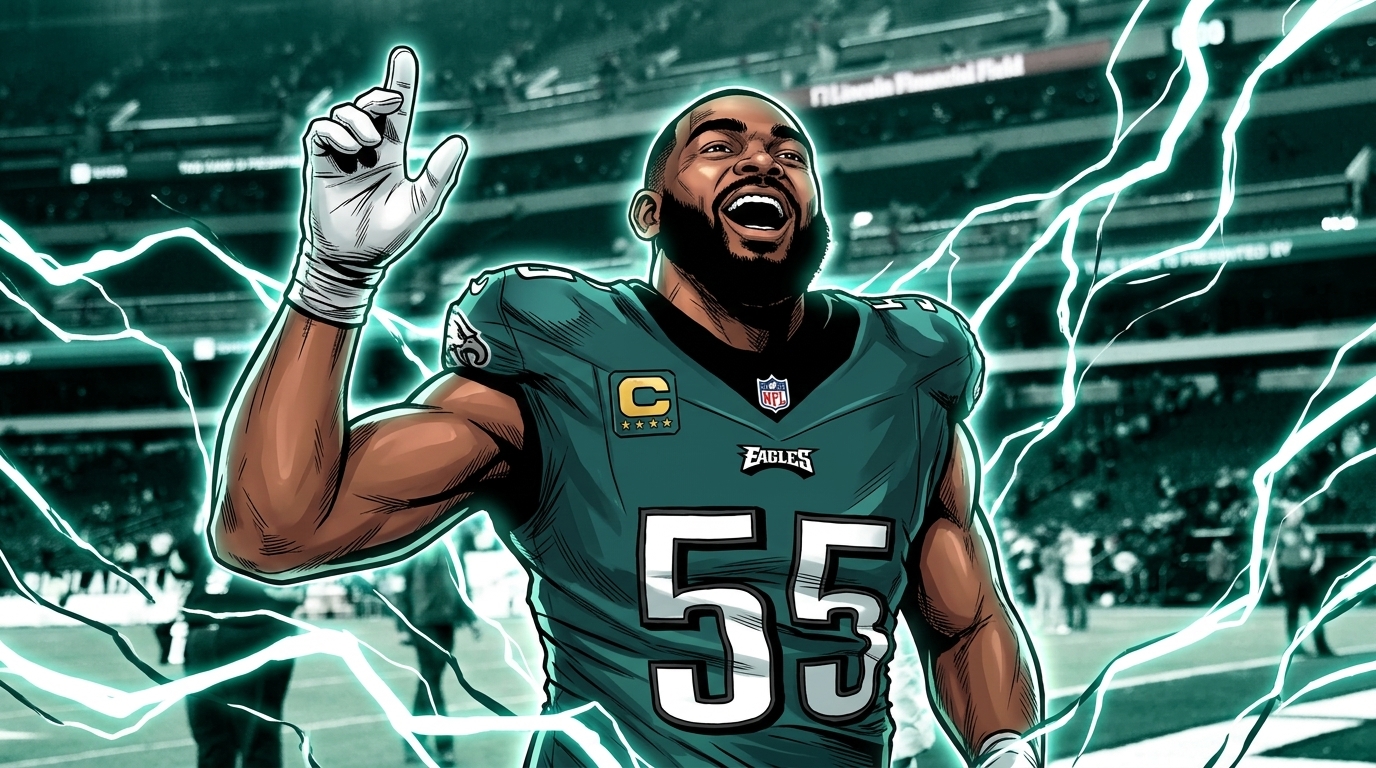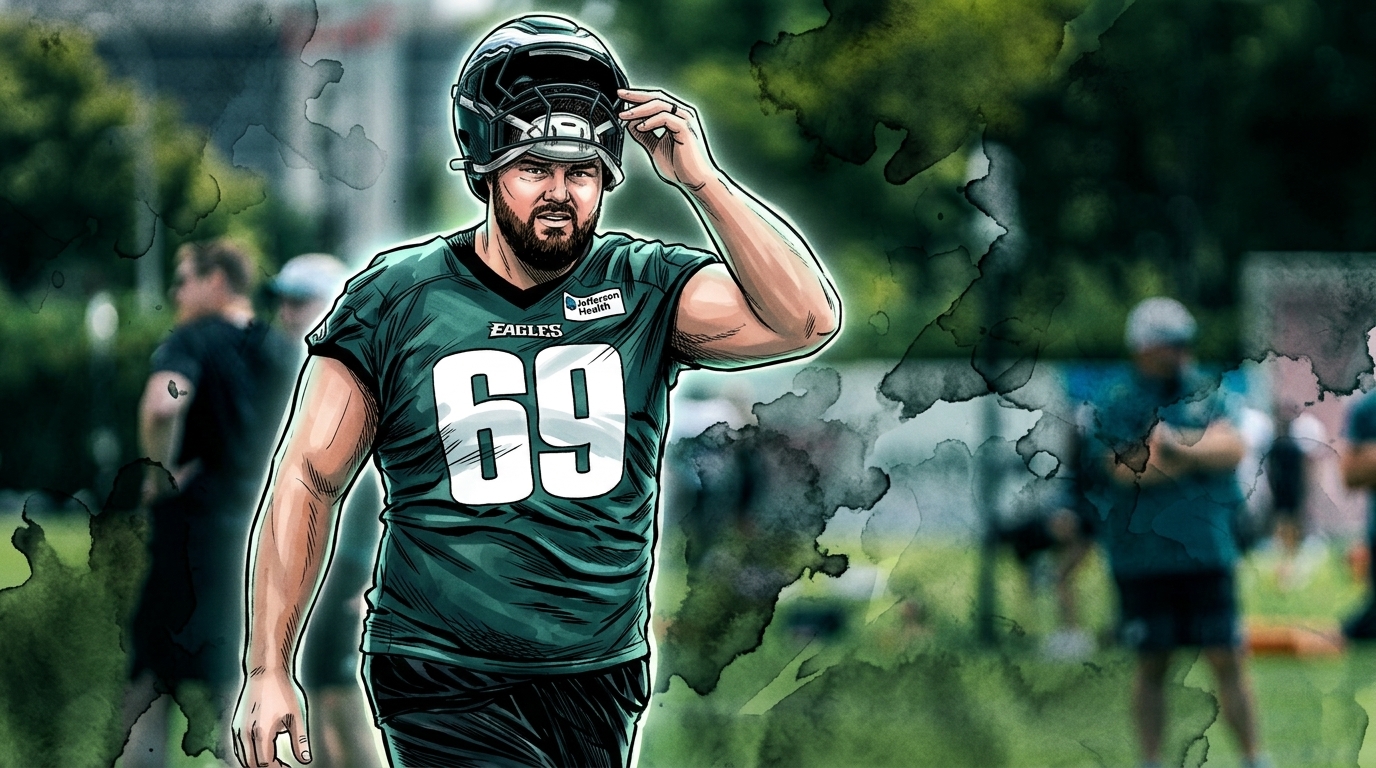

There’s a version of an NFL career that almost no great tackle gets to live: the one where you decide when it ends. Lane Johnson just lived it anyway. The Philadelphia Eagles announced Tuesday that Johnson is retiring effective immediately, 14 seasons in, with two Super Bowl rings already in the case and most of a 2026 schedule he had hoped to finish still unplayed.
Call that the Clean Exit Problem. For almost every great tackle in modern NFL history, retirement shows up as a verdict handed down by the body or the front office, not a request Johnson gets to file himself. He’s the exception. The data on how rare that exception is was the first thing I checked this morning, the same way I’d check a small sample before trusting it in one of my fantasy baseball models, and it held up anyway.
What Actually Happened This Week
Johnson didn’t ease into this. He was scratched from Sunday’s game against the Los Angeles Rams for what the team called a personal matter, then two days later made it permanent. In his own statement, posted by the team, Johnson said: “After a lot of reflection, I’ve realized that my personal and family priorities in my life have changed. Right now, it is critical that I focus on my mental health.” He posted his own farewell on X:
https://twitter.com/LaneJohnson65/status/2107560413525148074
Two words and an emoji, which is about as much as anyone needed after reading the statement. The timing matters here more than the trophies do. Johnson is walking away three games into his 14th season, not after a decline-driven offseason or a release. Per NFL.com, he finishes with 171 regular-season starts and 15 more in the playoffs, which is another way of saying he basically never missed a snap for a decade and a half at the most physically unforgiving position on the field.
None of this happened because the Eagles are rolling. Philadelphia sits at 2-2, having lost two straight, including a 27-7 loss to Case Keenum and the Bears before the Rams game Johnson didn’t play in. Owner Jeffrey Lurie called him “an all-time Eagle and one of the best players ever to play his position in NFL history,” and said “there is no doubt in my mind that one day he will be named to the Pro Football Hall of Fame.” Lurie also pointed to something separate from the football: “The courage he has shown using his own personal experiences to advocate for mental health awareness has undoubtedly saved lives.”
Why Do Great Tackles Almost Never Get to Choose the Date?
The data here is unambiguous: offensive tackles leave the league on two timelines, and both are involuntary. Either the body breaks first, or the performance erodes until a team makes the decision for you. A player picking his own exit date, at the top of his résumé, with two championships already banked, is close to a statistical ghost at this position.
Think about why that is. A left or right tackle’s entire job is absorbing the fastest, most athletic pass rushers in football snap after snap for a decade, and the wear compounds in ways that don’t show up on a stat sheet until a knee or a shoulder simply stops cooperating. Teams don’t wait around for a graceful goodbye from a 30-something lineman once the tape shows he’s lost a step — they move on, publicly or quietly, and the player’s hand gets forced. Johnson sidestepped both exits. He left on his own words, for reasons that had nothing to do with declining play or a roster crunch.
Three Careers That Didn’t End Like This
I pulled three comparable offensive-line careers to see if Johnson’s path had any real precedent. It doesn’t.
Joe Thomas played 11 seasons and made 10 Pro Bowls without ever reaching a Super Bowl, and his career ended the way most great tackles’ do: involuntarily. A torn triceps in Week 7 of 2017 snapped a streak of 10,363 consecutive snaps played, and he spent the following months deliberating before retiring in March 2018. The injury made the decision, not Thomas.
Mark Tuinei is the closer comp on rings. He won three Super Bowls with the Cowboys, and knee problems still ended his career after the 1997 season. A three-time champion, forced out by his body anyway. Two rings and a mid-season walk-off like Johnson’s weren’t on the table for him, because his knees didn’t ask his permission.
Then there’s Jason Kelce, Johnson’s own line-mate for over a decade, who retired in March 2024 with one ring, seven Pro Bowls, and six All-Pro nods to his name. Kelce stepped away only after a wild-card playoff loss and months of public soul-searching over his declining play. A gradual, offseason, decline-driven exit — the normal shape of the thing, even for a Hall of Fame-caliber center who played next to Johnson every week.
Three decorated linemen, three forced exits of one kind or another. Zero matches for walking away mid-season, at full value, by your own clock.
What Johnson’s Exit Actually Proves
Six Pro Bowls across two separate stretches of his career, five All-Pro nods, three NFC title game runs, and a pair of rings that gave this franchise its first two Lombardi Trophies — that’s a résumé that was already going to get discussed in Canton conversations whenever Johnson chose to stop playing. What this week changes is the shape of the ending, not the case itself.
The data says players like him don’t get to pick the date. Johnson picked it anyway, on his own terms, for reasons bigger than football. Brandon Graham’s retirement last month already closed one chapter of this era for Philadelphia. Johnson closing his own chapter now, mid-season and entirely on his own words, is the rarer outcome by a wide margin. It’s the one that will get remembered as the standard, not the exception, the next time someone tries to define what walking away on your own terms actually looks like.