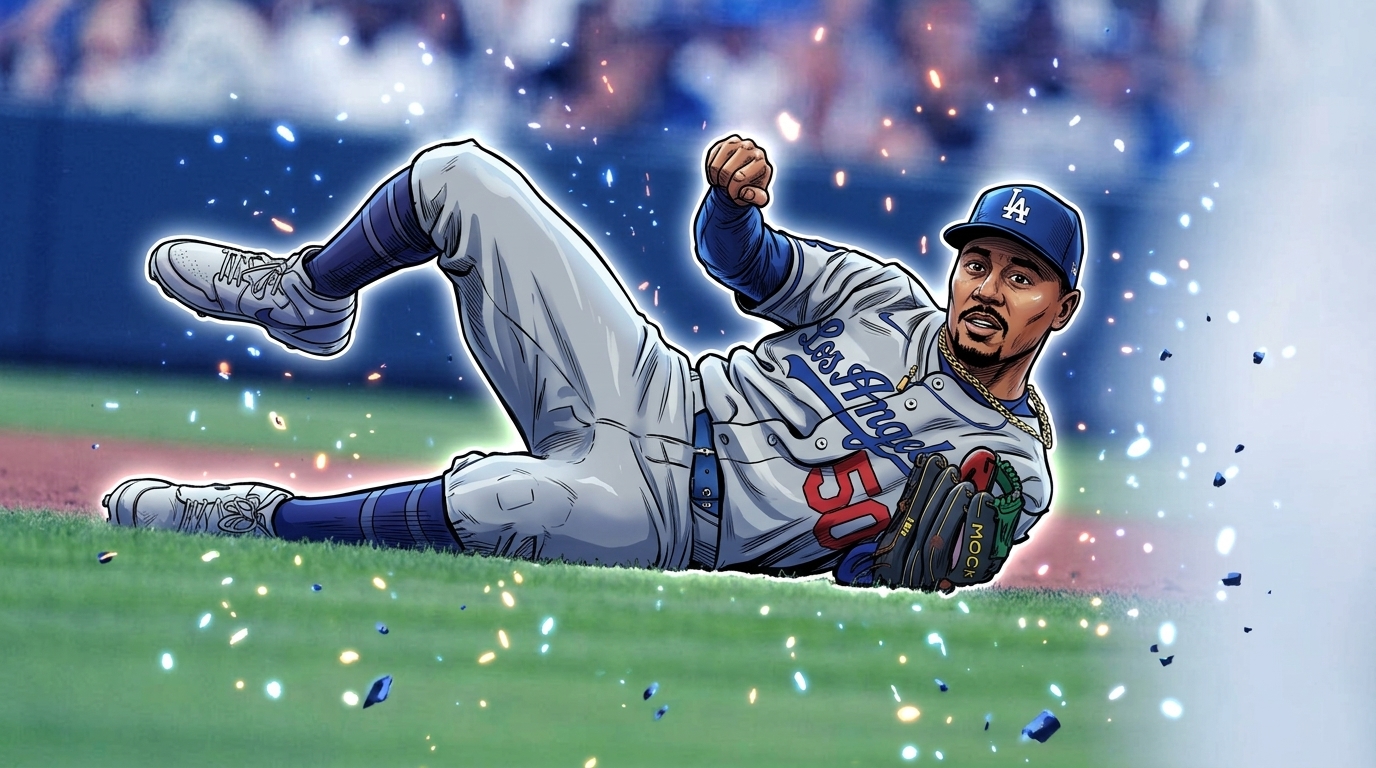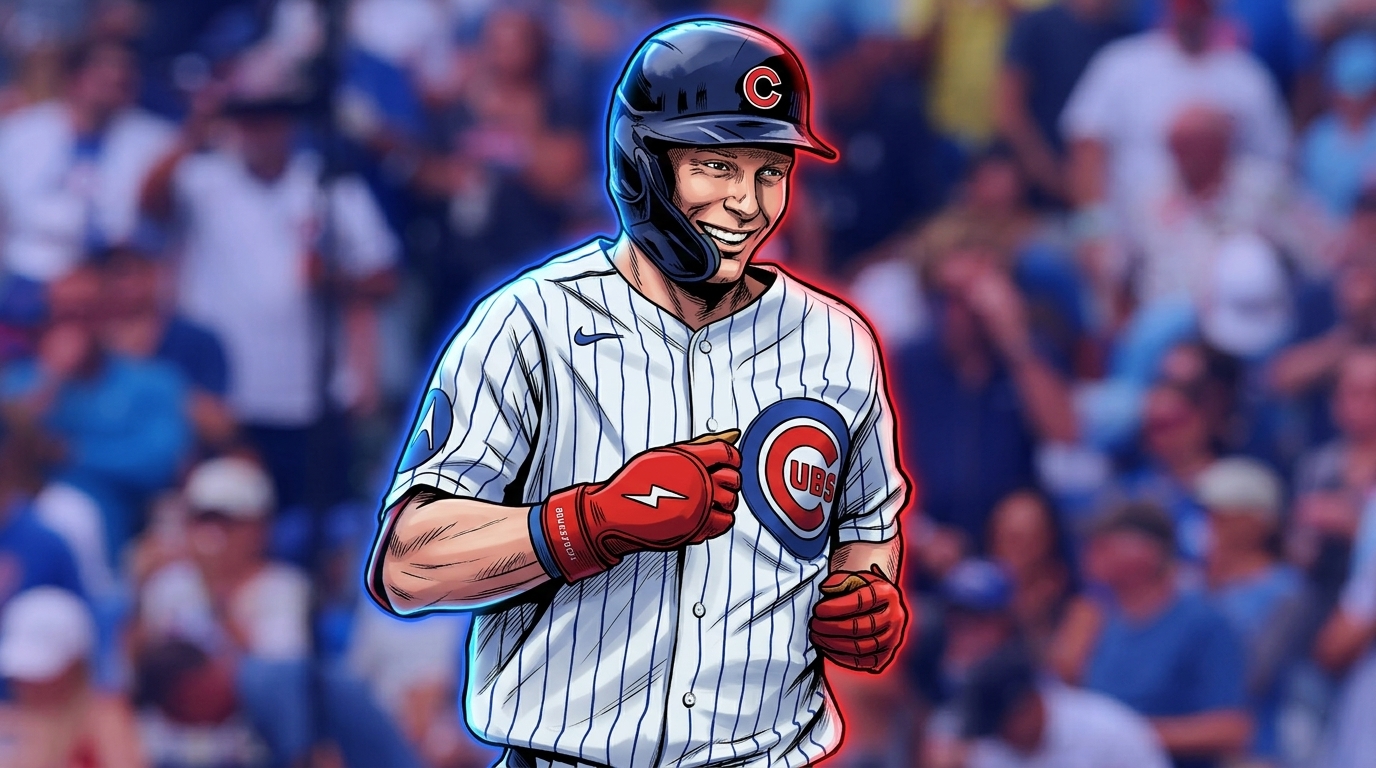

Shohei Ohtani’s combined WAR stopped climbing on July 3. Pete Crow-Armstrong’s hasn’t stopped rising since April. That’s the whole race in two sentences — and neither one has anything to do with a swing path or a betting line.
For five months this was the easiest call in the National League. Now Fanatics Markets prices Ohtani at eight cents on the dollar to win, against ninety-three cents for a Cubs outfielder having the best summer of his career. The temptation is to hand Crow-Armstrong the crown and call it a changing of the guard. The data says something less flattering: this isn’t Crow-Armstrong winning the argument. It’s Ohtani’s body forfeiting it, and that should worry the Dodgers more than any lost trophy will.
How bad is Ohtani’s slump, actually?
Bad enough that the numbers stop sounding like baseball and start sounding like a medical chart. Since Aug. 18, Ohtani is 7-for-51 at the plate, a .137 average with 20 strikeouts in that stretch. Zoom into his last seven games and it gets worse: a .143 average, zero home runs, zero RBI, a .452 OPS, a number closer to what a pitcher hitting for himself used to post before the National League adopted the DH. August as a whole was his worst month of the season by rate stats, a .207/.333/.429 line with 19 strikeouts across 15 games.
None of this is happening in a vacuum. Ohtani hasn’t pitched since July 3, when knee soreness that first surfaced in June never actually resolved. By early September he was carrying three separate issues at once: the left knee inflammation, a right biceps problem, and neck soreness serious enough to sit him for back-to-back games, his second straight day off as of this past Friday. Dave Roberts didn’t dress it up. Before a Cardinals game on Sept. 3, he said the swing wasn’t the swing we’re used to seeing, adding that Ohtani is “not close to optimal.” That’s the manager, not a stat page, confirming what the slash line already showed.
Is this really about Pete Crow-Armstrong at all?
Only in the sense that his numbers happen to be the ones still climbing while Ohtani’s stall. On merit, Crow-Armstrong has been genuinely great this year: a .283/.377/.577 line, elite defense, and a case that would look identical whether or not Ohtani ever missed an inning.
Give him his due before anything else. Crow-Armstrong hit five home runs in a single weekend in August, became the sixth player in history to hit a leadoff homer and a walk-off homer in the same game, and is running a .945 OPS to go with an outs-above-average mark that leads all of baseball. This is his second straight 30-30 season. On name value alone, that’s a legitimate MVP case with no real caveat attached.
But look at where the argument actually turns. Ohtani’s hitting-only WAR sits at 3.99, and even stapled to the pitching value he built before the shutdown, his combined number still trails Crow-Armstrong’s bat-only WAR by roughly two wins. Crow-Armstrong didn’t close that gap with one hot week; he closed it because Ohtani’s number froze on July 3 while his kept climbing every week since. A margin that started at zero in June has widened to two full wins by September, and all of the movement runs one direction. Call it what the ledger shows: an injury bill, arriving one WAR point at a time, tied directly to the knee that’s already cost him his pitching return.
The players voting in ESPN’s informal MVP poll seem to read it the same way. Rhys Hoskins put it bluntly: “The reality is we get to watch maybe the best player to ever play this game in Shohei.” Brady Singer was more direct about the mechanism: “If Ohtani was pitching, it would probably be him.” And Mark Leiter Jr., about as unsentimental as it gets: “If you take Ohtani out of the rotation, they don’t miss a beat.” Former big leaguer Kevin Pillar’s outside read landed in the same place: without Ohtani pitching, Crow-Armstrong is his MVP. Fifteen of the poll’s twenty-one voters picked Crow-Armstrong, four picked Ohtani, two split down the middle. Read the vote alongside those quotes, and it stops looking like a verdict on who had the better August. It reads instead like a headcount of players who’ve watched Ohtani’s swing up close and don’t like what they’re seeing.
What happens if the Dodgers shut Ohtani down for good?
Roberts called a season-ending pitching shutdown “an option” before that Sept. 3 game against the Cardinals, though he stopped short of committing to one, saying there’s no hard timeline yet. If it happens, the Dodgers lose their two-way weapon for the stretch run and head into October with Ohtani as a bat working through three separate injuries at once.
The framing matters here. A front office managing a rookie pitcher’s innings count is planning around a number on a calendar. This is a team watching a superstar’s body run out of separate things to hurt at the same time, and trying to decide which one to protect first. Fabian Ardaya’s reporting on the Dodgers’ pitching staff captures how granular that decision has gotten, tracking bullpen usage and pitch counts for the arms around Ohtani while the team still hasn’t ruled him back in.
https://x.com/FabianArdaya/status/2091263915535773697
Ohtani’s own line in that thread is one clause — pitch count, needs one more live BP session. Everything after it is about the arms picking up the slack around him.
If the shutdown becomes permanent for the season, the MVP snub becomes the least important consequence of it. A four-time MVP hasn’t needed protection from his own body before. Now that conversation is happening in real time, across multiple joints and muscles, with no end date attached.
Crow-Armstrong is going to win the hardware, and he’ll have earned it against a full, healthy field. But the field wasn’t full. The Dodgers didn’t lose an MVP race this month. They found out exactly how much they’ve been asking one body to carry, and the answer arrived in a knee, a biceps, and a swing that isn’t close to what it used to be.