
I can’t believe we’re still pretending schedule releases are random. The Raiders have zero primetime games on their 2026 schedule, zero international games, and a full slate of Sunday-afternoon windows nobody outside Nevada will plan a weekend around, and the league wants you to call that bad luck. That’s a verdict, and it was written before a single snap.
The NFL doesn’t hand out Sunday Night Football slots and London games based on a coin flip. Broadcast partners pay billions for the right to pick winners months in advance, and every year the league builds its marquee windows around the teams it believes people will actually tune in for. This year, for the first time since 2010, it built none of them around the Raiders. That’s not a competitive read. Nobody knows anybody’s record in September. It’s a marketing judgment, made in a conference room in New York, and it’s a colder assessment of this roster than anything that happens on the field this season.
The Raiders are one of five teams, alongside the Cardinals, Dolphins, Jets, and Titans, left off the initial primetime slate entirely. Zero primetime games on the Raiders’ 2026 schedule, and a full season of games kicking off at 1 or 4 p.m. local, no exceptions. Flex scheduling can still bail them out later if they’re good enough to matter, which is its own insult: you have to earn your way into relevance after the league already told you that you don’t have any.
Then there’s the international slate, and this one’s worse. The Raiders haven’t played an international game since 2019, a 24-21 win over the Bears at Tottenham Hotspur Stadium. Seven seasons. Every other team in the league has taken at least one trip abroad since then. The Raiders are the only team that hasn’t, and 2026 does nothing to change that streak. If the league is picking road trips based on which fanbases and rosters are worth exporting, it has now decided, in writing, that Las Vegas isn’t one of them — not even for a novelty game in a stadium that already screams “made for television.” The schedule release made the rounds the way these things do, with the same reaction from everyone who noticed:
https://twitter.com/MarkZinno/status/2095471117687218226
He’s right, and it’s not close.
Mike North, the NFL’s VP of Broadcast Planning, was asked about the snub directly, and here’s what he said:
“We don’t draft our way into primetime. We play our way into primetime.”
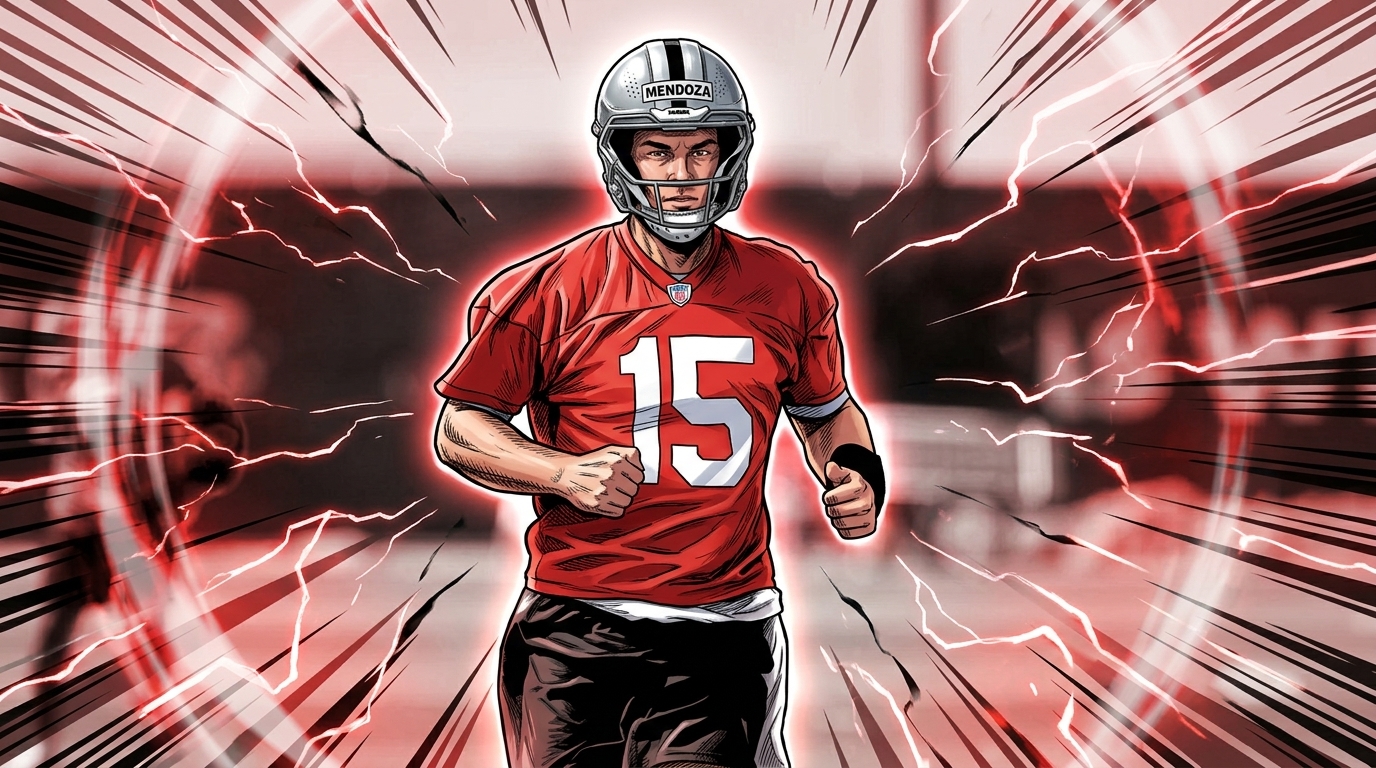
Cute line. Except it’s bullshit. The Raiders never got the chance to play their way into anything, because the schedule was built before the games happened, which is the entire complaint. North kept going, on Fernando Mendoza, the No. 1 overall pick sitting behind Kirk Cousins: “Nobody knows if or when Mendoza might play. It’s certainly something where it would be great if we knew. We don’t.” Translation: we didn’t know if the guy you drafted first overall would even be your starter, so we didn’t bother building a broadcast window around your team. Mendoza’s exclusion is only the third time in 20 years a No. 1 pick’s team has been shut out of primetime entirely, following the 2011 Panthers and the 2025 Titans, and patterns like that don’t happen by accident. The league has already filed this franchise under “check back later,” even after it handed the Week 1 job to Kirk Cousins over their No. 1 pick.
And to be clear, this isn’t a two-quarterback problem being spun into a bigger story than it is. The Raiders are rolling with three: Cousins starting, Mendoza the rookie waiting behind him, Aidan O’Connell holding down QB3. Three quarterbacks on a depth chart never explained the snub. What explains it is whether the league trusts any of them to be appointment television in December.
Somebody still has to pay for all of it. A family of four walking into Allegiant Stadium this season is looking at $1,805.99 for tickets, two beers, four hot dogs, two sodas, and parking, according to Action Network’s numbers reported by the Review-Journal — $331.44 above the NFL average, and that’s after the price actually dropped from last year because the team went 3-14. A season-ticket holder in Las Vegas paying full price starts at roughly $2,487 for the year on the secondary market, before parking, before beer, before a single hot dog. That’s the trade the league is offering its own paying customers: full ticket prices, a roster the schedule-makers have already discounted, and not one national window all year to show for it.
My brother works in city government in Trenton, and he’s told me enough times how budget documents work: the number that gets buried in an appendix is usually the one that tells you what an institution actually believes, not the press release stapled on top. An NFL schedule is the league’s budget document. The Raiders got buried in the appendix. Seventeen weeks of Sunday-afternoon obscurity, and the only people required to show up and pay full freight are the ones in the building.