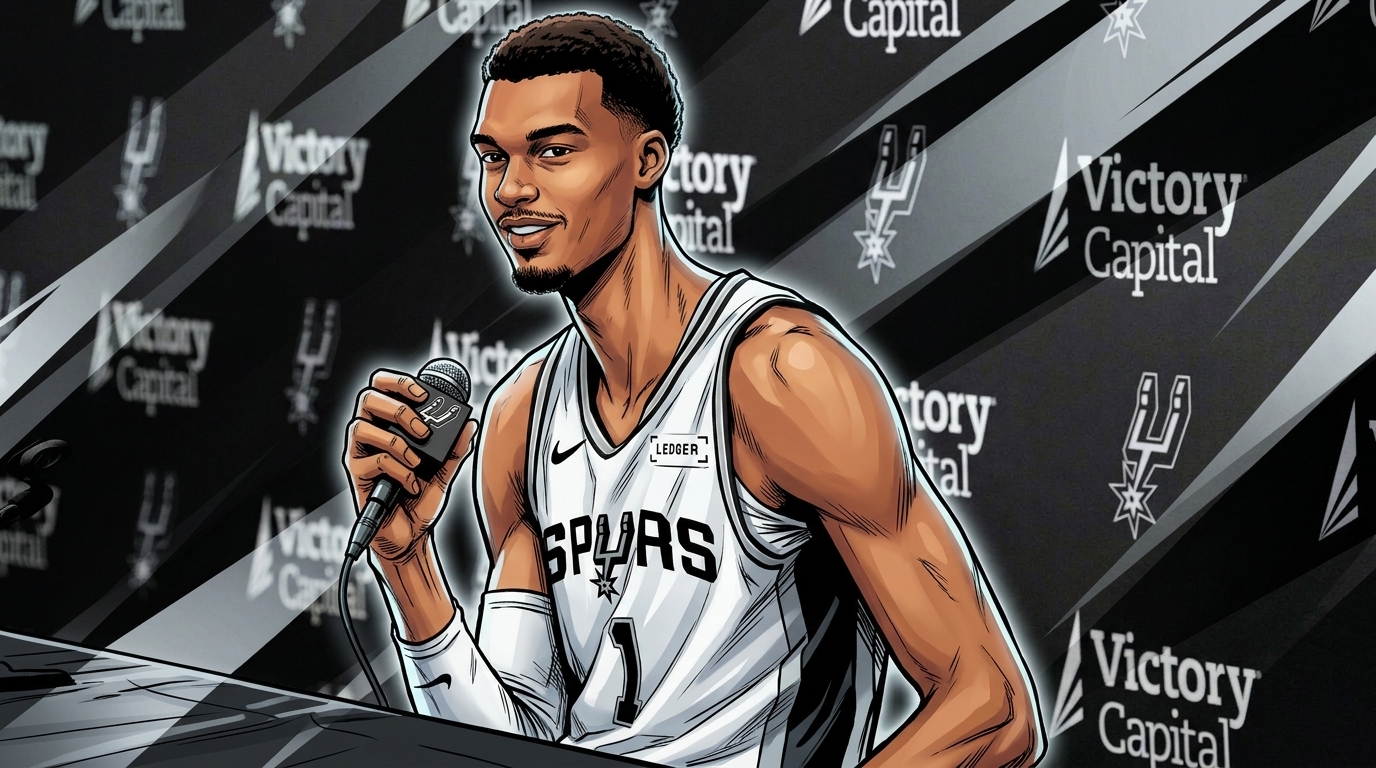

We’ve been conditioned to hear athletes dodge the sports-betting-endorsement question with some version of “I don’t really get into that side of things.” Victor Wembanyama didn’t dodge. Asked directly if he’d ever promote a sportsbook, the Spurs center said it plainly: “Absolutely not. I will never do that.” Then he kept going. “Honestly, I think it’s very sad to see some players promote it… Everybody does whatever they want, but without me,” he told ESPN.
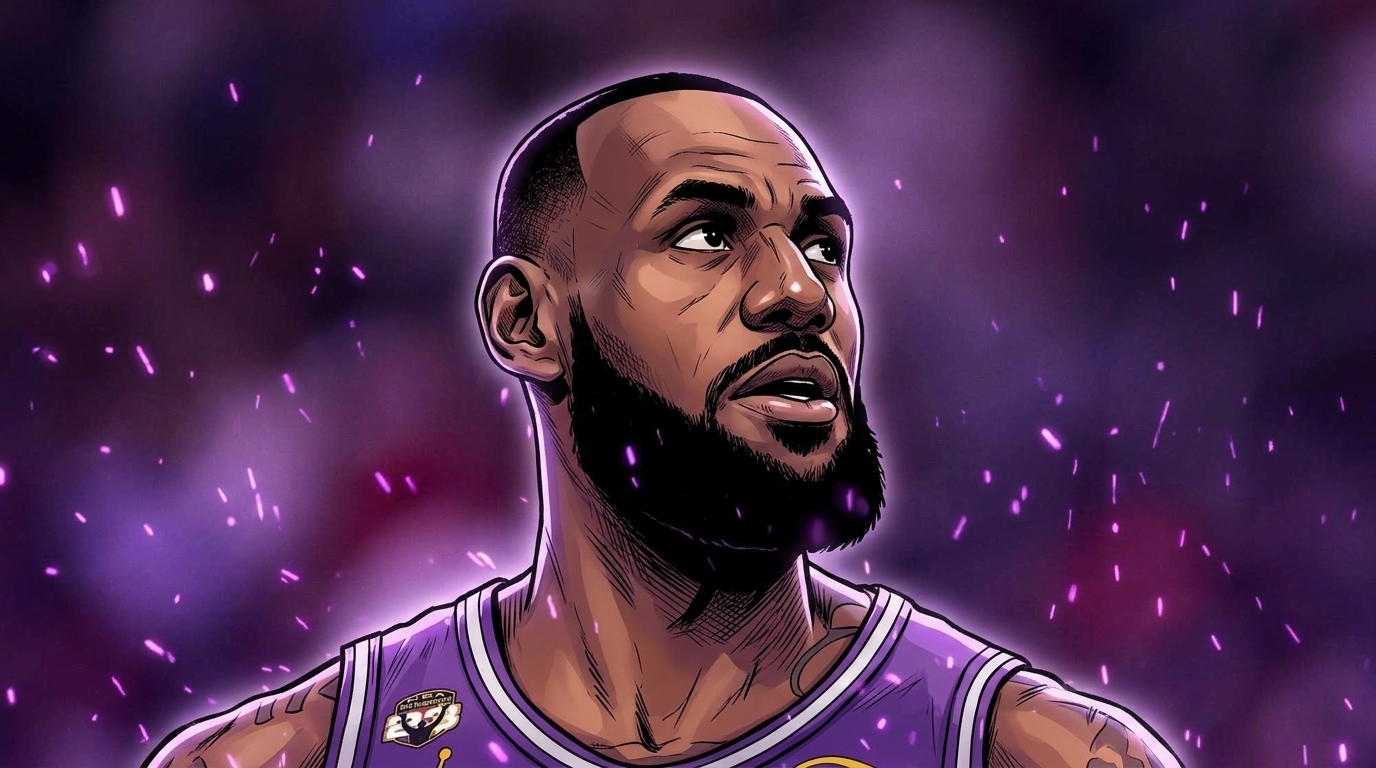
He didn’t say a name. He didn’t need to. Weeks earlier, LeBron James signed a $15 million-a-year endorsement deal with the prediction-market company Polymarket, as Yahoo Sports reported, and Draymond Green jumped in almost immediately to defend it. What’s actually sitting in front of us isn’t a two-man feud — it’s a three-front split. Wemby’s flat no. LeBron’s $15 million yes. Draymond’s defense of both. Line them up and what you get isn’t a disagreement about one deal. It’s proof the NBA has no real consensus on gambling money, just individual stars running their own math in public and hoping nobody notices the gaps between the answers.
Mike Finger of the San Antonio Express-News was in the room when Wembanyama said it, and the clip traveled fast:
https://twitter.com/mikefinger/status/2105708192147571058
Wembanyama wasn’t just striking a pose for the cameras, either. He added that he’s turned down real money to stay on the right side of this. He said he’s “refused plenty, much, much more money than I’ve made for things that were not [in line with] my values,” and that he wants to “inspire in a good way.” That’s a specific, load-bearing claim from a 22-year-old face of a rebuilding franchise: turning down paydays that would dwarf his rookie-scale salary because of what they’d look like next to his jersey number on a kid’s back. (San Antonio has built its entire marketing operation around Wembanyama’s wholesomeness: the alien bit, the chess references, the refusal to trash-talk anybody. It fits the brand so cleanly it’s almost suspicious. It also happens to be true.)
LeBron’s Polymarket deal already drew backlash when it landed, mostly from people who remember him fronting kids’ sneaker campaigns a decade ago and now see him fronting a prediction market built on the same mechanics as a sportsbook. Former Mavericks executive Haralabos Voulgaris put the sharpest point on it: “$15m to help get a generation of kids hooked on gambling is a choice. LeShame.” That’s not a neutral read (Voulgaris has his own history with front offices to account for), but the underlying criticism, a global icon normalizing betting behavior for an audience that includes actual children, isn’t new. It’s exactly the sentiment Wembanyama appeared to be channeling without naming his target.
Draymond Green’s defense is sharper than a simple teammate-covering-teammate reflex. “You can’t be in sports and think that it’s okay for the league to have certain partnerships but not the players,” he told Front Office Sports. “That’s hypocritical.” He added he’d be “1000%” interested in a similar deal himself. And he’s not wrong about the mechanics: the NBA runs its own stable of licensed sportsbook partners and collects its own cut of the same industry it occasionally wrings its hands about in public. (The league’s broadcast partners run sportsbook ads inside the same telecast that cuts to a stern “bet responsibly” graphic between quarters. Nobody in that chain seems bothered by the whiplash.) This is sports’ broader hypocrisy around prediction markets showing up again, and it isn’t contained to basketball. The Yankees just took Polymarket’s sponsorship money for stadium signage at the same time New York State is suing that company as an illegal gambling operation, which is the institutional version of exactly what Draymond’s describing. It’s the same double standard around athletes and betting ads that regulators have started flagging elsewhere in the industry: the institution profits quietly while the individual gets asked to answer for it on camera.
So who’s actually right? I think Draymond’s logic is airtight and still doesn’t settle anything, because pointing out that the league is compromised doesn’t make an individual player’s choice less of a choice. The league’s own hypocrisy doesn’t retroactively make LeBron’s yes or Wembanyama’s no more or less correct — it just means everyone in this conversation, including the people writing the rules, is already compromised in some way. That’s not even the most interesting part of where this lands, though.
The more interesting part is that Wembanyama’s answer is the only one of the three that doesn’t need anyone else’s behavior to make sense. Draymond’s yes needs “the league does it too” to hold up. LeBron’s deal needs the “it’s predictions, not a sportsbook” distinction to soften it, and that distinction gets thinner every time Polymarket gets compared to DraftKings in the same sentence. Wemby’s “absolutely not” needs nothing from anybody else. It survives no matter what the league does next, which is a stronger statement than it looks like at first.
I believe that’s the one worth sitting with, though it comes with an asterisk: it’s an easier stance to hold at 21, with a rookie extension and a global shoe deal already stacked up, than it is at 40, a few seasons from the end of an earning window. That’s the uncomfortable context sitting underneath LeBron’s yes that nobody rushing to call it “LeShame” particularly wants to acknowledge.
A clip from BrickCenter framed the exchange as a direct callout, and it’s hard to watch it as anything else:
https://twitter.com/BrickCenter_/status/2105727908170125639
None of this resolves cleanly, and it shouldn’t. What’s worth watching is whether a fourth max-level player signs a betting-adjacent deal before the calendar flips. At that point, this stops being three guys disagreeing in separate interviews and starts looking like the league’s actual, unwritten policy, set by volume instead of by vote.