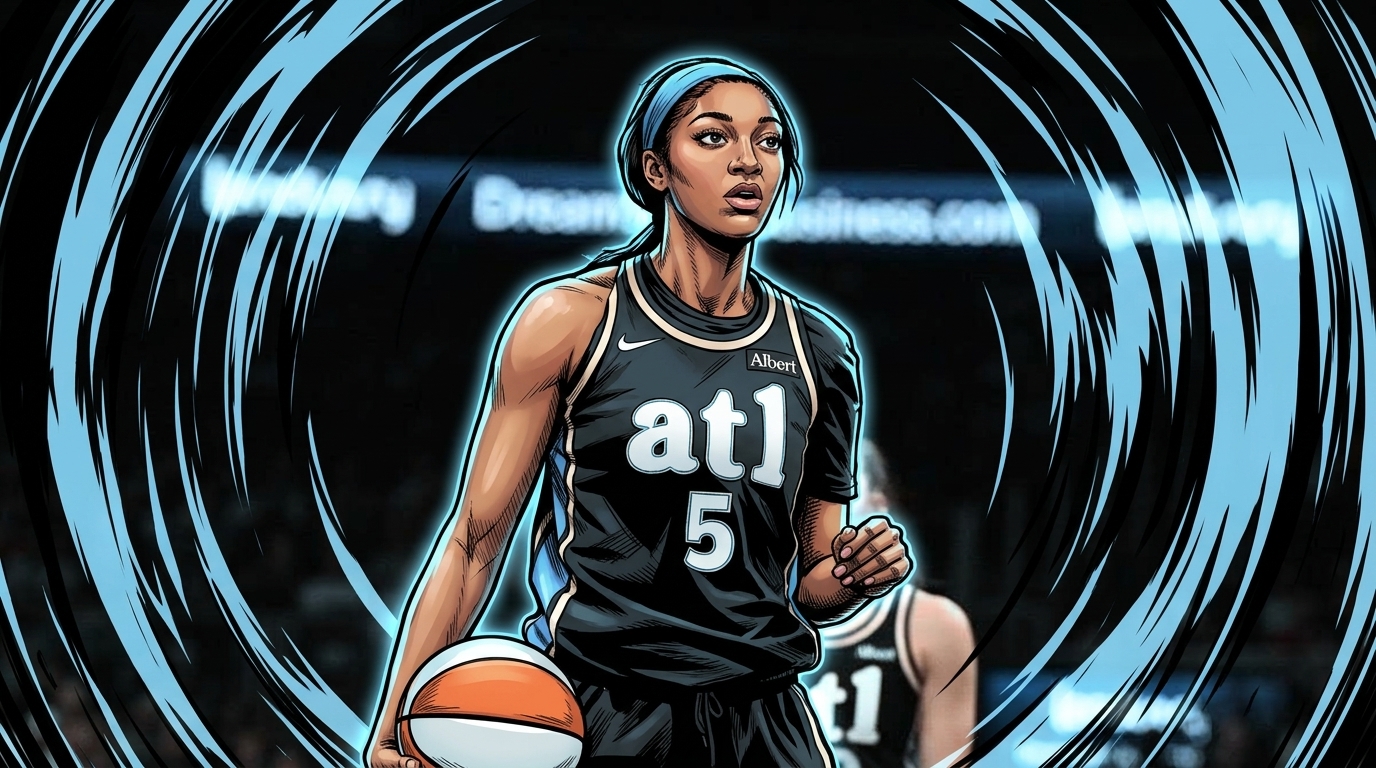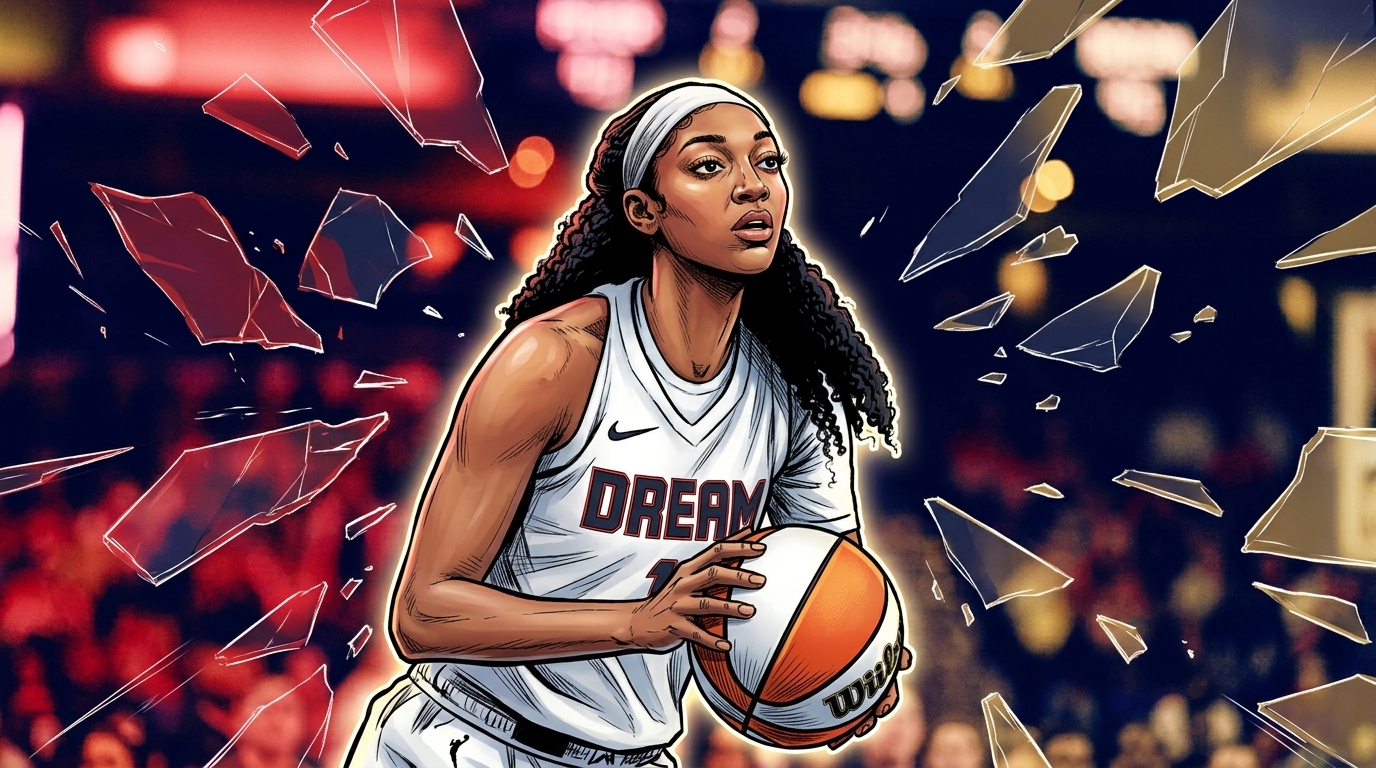

Angel Reese’s eighth technical foul of the season should have cost her a game. Instead, about three hours after the final buzzer, the WNBA made it disappear, and I don’t think that’s a coincidence anymore, because the league did the exact same thing for Caitlin Clark five weeks ago.
The record itself is the good part of this story, so let’s get that out of the way first. Reese finished with 16 points, 16 rebounds and six assists in a 101-83 loss to the Portland Fire on Friday, her 28th double-double of the season, tying Alyssa Thomas’ single-season WNBA record set with the Connecticut Sun back in 2023. That’s a real accomplishment for a player who’s spent two years getting run through the media wringer, and it belongs to Reese and the Atlanta Dream regardless of what happened next.
What happened next is the part nobody wants to talk about. With 8:45 left in the fourth quarter, Reese got tangled up with Portland’s Carla Leite while boxing out for a rebound and picked up her eighth technical foul of the year. A player’s eighth technical in a WNBA season triggers an automatic one-game suspension. There’s no discretion built into that number. It applies to every player who steps on a WNBA floor, and it was supposed to apply to Reese starting Sunday against the Minnesota Lynx.
Then the WNBA rescinded the technical, about three hours after the final buzzer, dropping her back to seven for the season and clearing her to play. Dream coach Karl Smesko told reporters afterward:
“It didn’t look like something that was tech-worthy.”
Cool. Except Smesko coaches Reese, and a coach defending his own star from an in-game technical is the least surprising quote in sports. What he didn’t offer, and what nobody at the league office has offered either, is an actual explanation for why a call made live on the floor got overturned in a review process that has never once been described publicly.
But that’s not even the most interesting part. The WNBA did the exact same thing for Caitlin Clark earlier this month. Clark was sitting on seven technicals of her own, and her eighth got rescinded within about two hours, sparing her an identical suspension before a game against the New York Liberty. Both calls involved a star’s eighth technical of the year. Both got reversed within hours of the final buzzer. And both times, the league offered the public nothing beyond the outcome.
I cannot find a memo, a press release, or a quote from anyone in the WNBA’s front office laying out what actually separates a technical worth erasing from one that isn’t. My brother works in city government in Trenton, and if he ran a budget process with an unwritten exception clause that only ever benefited whichever department happened to be the mayor’s favorite that month, he’d be explaining himself to the state comptroller by Friday. The WNBA gets to call it a review and move on, and that’s bullshit dressed up as due process.
None of this is new for Reese specifically. Earlier this year, a coach got suspended for calling her a “protected species,” which, credit where it’s due, turned out to be the most accurate scouting report anyone’s produced on how the league office treats its biggest draw. Four days before Friday’s record, Reese had already drawn a round of stat-padding criticism for a late uncontested layup against the Sparks that pushed her to double-double number 27 in a different game entirely. That controversy was pettier and mostly noise. The real story is that outlets pile on Reese for style points constantly, while the league’s own disciplinary process gets a three-hour pass with no questions asked.
The WNBA posted the record like it was pure good news, no asterisk in sight:
https://twitter.com/WNBA/status/2093498948019187766
It is a good moment, genuinely, for Reese and for Thomas, whose name deserved to stay next to that number. But the league doesn’t get to only tell the fun half of the story. If an eighth technical is serious enough to write an automatic suspension into the rulebook, every player who reaches it deserves the same explanation the league keeps giving exactly two people: its most famous rookie-turned-star and its most bankable rebounder. Twice in five weeks stops looking like an accident. It starts looking like an actual policy that the WNBA just hasn’t bothered to admit it has.