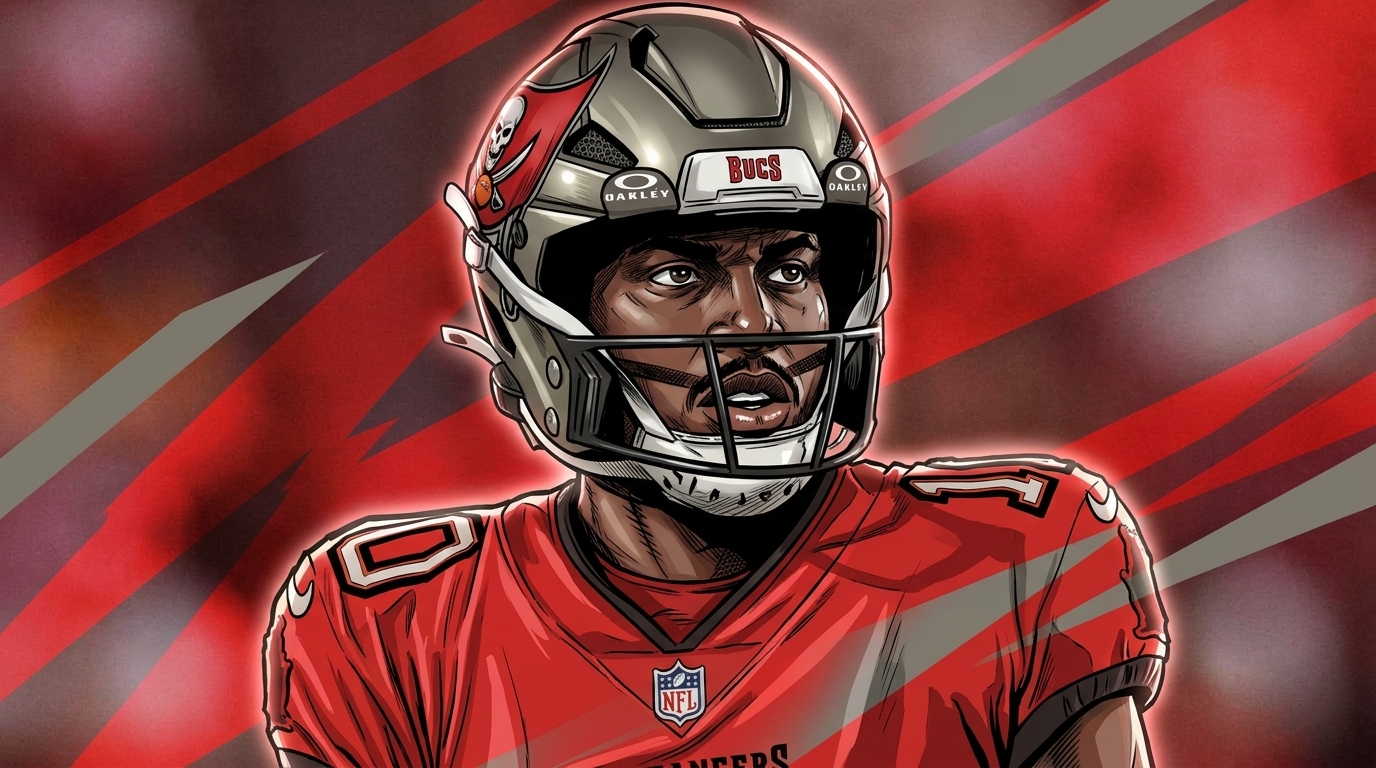

Baker Mayfield signed a three-year, $165 million extension with the Tampa Bay Buccaneers that guarantees him $120 million in total. Tampa Bay could have had this same quarterback, on a smaller number, back in July.
They waited instead.
Mayfield set his own deadline before training camp opened, telling the Bucs he wanted a new deal in place by July 29th. That date passed, camp opened with no contract, and Mayfield admitted afterward that missing it left him feeling disrespected. As he told reporters, once the deadline came and went, “it was going to be all ball” from there on out. Tampa Bay spent that stretch building the trap it eventually walked into, the kind where every good game Mayfield played just made the eventual number bigger.
That isn’t patience.
That’s a miscalculation with a nine-figure price tag.
Run the numbers side by side. The offer on the table in the days before camp opened was reportedly a two-year extension worth just over $100 million total. What Mayfield has now is a three-year deal worth $165 million, with $120 million of it guaranteed. Tampa Bay didn’t save money by waiting. It bought a longer commitment at a higher average and called that a win.
Look at the actual structure of the money. The three new years average $55 million annually, and $70 million of the guarantee is locked in fully at signing, no matter what happens next. Tampa Bay is on the hook for that money regardless of his health, his receivers, or his completion percentage between now and 2029. General manager Jason Licht spent the summer publicly insisting that “Baker is at the forefront of our mind at all times” and that “all of our plans revolve around Baker.” Plans built around a guy apparently didn’t include paying him before the price went up.
If 2026 Mayfield turns back into the quarterback who bounced through Cleveland, Carolina, and Los Angeles before Tampa Bay ever worked, none of that guaranteed money disappears. It just sits there as the cost of a front office that thought it had more time than it did.
By early September, the front office had let its own deadline pass without a deal and somehow ended up back at the table anyway. What changed wasn’t Mayfield’s leverage. It was Tampa Bay finally agreeing to the extra guaranteed year he’d wanted since spring, and joebucsfan.com put the outcome as bluntly as anyone could: “so much for deadlines.”
I spent two years freelancing on other people’s clocks, chasing checks that showed up whenever an editor finally decided they were ready. Tampa Bay just found out what it feels like to be the one running out the clock instead of the one waiting on it, and their version of that lesson needed a lot more zeroes than mine ever did.
Adam Schefter had the terms out within minutes of the deal becoming official:
https://twitter.com/AdamSchefter/status/2097433433622315450
None of those numbers were on the table in July. The Bucs paid full price in September to relearn something they already knew back then.
Mayfield won the standoff. The front office just paid to admit it.