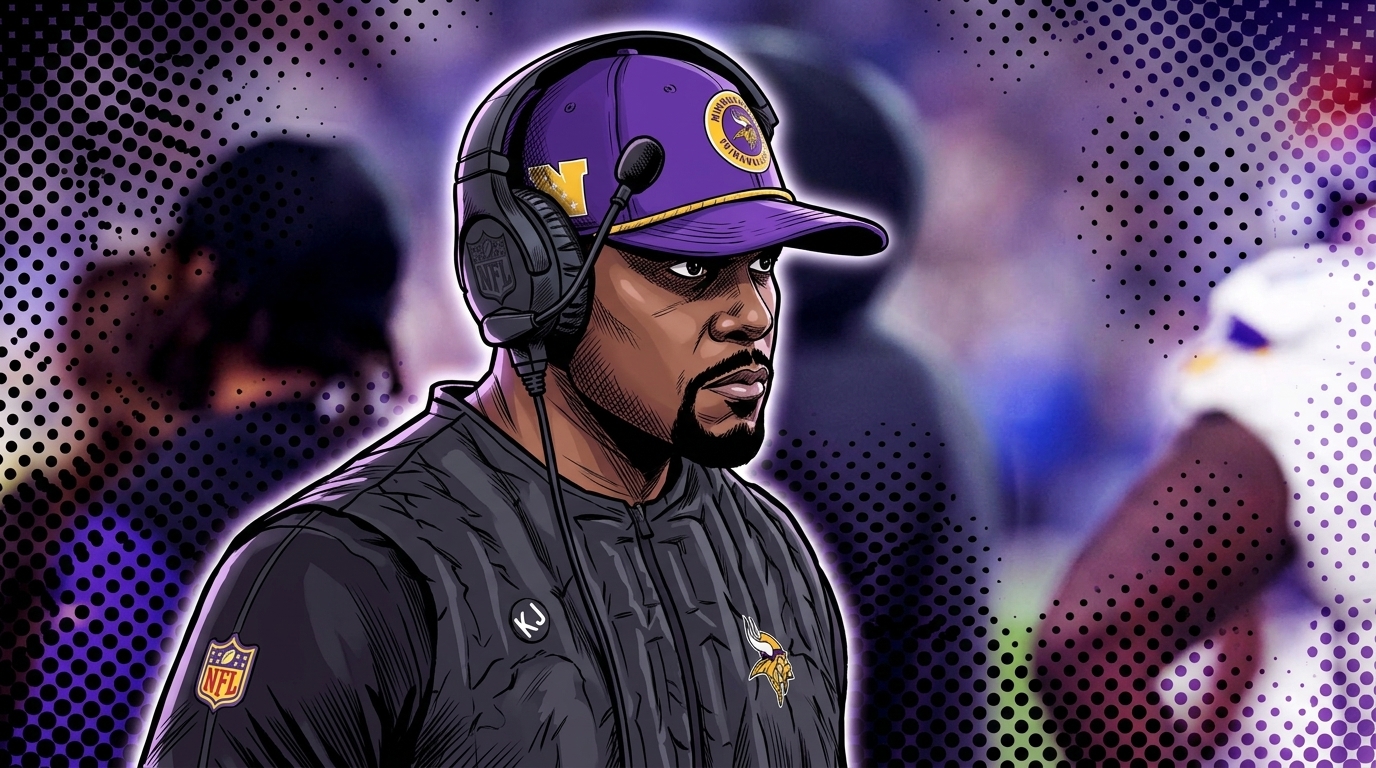

Brian Flores has dialed up a blitz on 74% of opponent dropbacks through two games this season, the highest rate posted by any defense since ESPN Research started counting in 2006. Coaches love the word “aggressive.” This is past that. Sending extra rushers on three of every four snaps isn’t a tendency you lean on when the matchup favors it. It’s a bet on the entire premise of the position: that quarterbacks in 2026, with all their pre-snap tools, still can’t solve a defense that refuses to sit still.
Scarier still, and rarely mentioned: no other team in the league is within 30 percentage points of Minnesota’s rate, per Fansided’s breakdown of this season’s blitz numbers. Flores isn’t running a scheme so much as an experiment nobody else in the league is willing to try, and today’s opponent happens to be built to test it — Baker Mayfield, who is 2-0 lifetime against Flores-coordinated defenses.
What Is the Vikings’ Blitz Rate in 2026?
The Minnesota Vikings are blitzing opposing quarterbacks on 74% of their dropbacks through two games in 2026, the highest rate any team has posted since ESPN Research began tracking blitz rate in 2006. The next-closest defense in the league isn’t within 30 percentage points of that mark.
Flores has always run this defense hot, but this isn’t a one-year spike out of nowhere. Minnesota blitzed 49.4% of dropbacks in 2023, his first season as coordinator, dipped to 39.7% in 2024, climbed back to 47.7% last year, then jumped to the mid-70s to start this one, according to FTN Fantasy’s tracking of the trend. Read as a line graph, that’s not a coordinator tweaking a dial. It’s a coordinator deciding the dial doesn’t apply to him. The whole appeal of a low blitz rate is that it lets a defense rush four, drop seven, and live with whatever math the coverage gives up. Flores has traded that math for structured chaos: extra rushers from unpredictable spots, disguised pressure, a secondary playing on an island because the pass rush is supposed to make the throw happen before the coverage matters.
What the Jordan Love Game Actually Proved
Week 1 was the extreme case inside the extreme case. Minnesota’s blitz call against Jordan Love was the single most lopsided pressure package this defense showed all season, and it got flagged in real time by reporters tracking the game live:
https://twitter.com/BenjaminSolak/status/2099288431398453617
Minnesota blitzed Love on 78.3% of his dropbacks, per Next Gen Stats — the highest rate against any quarterback in a single game in eight years, and the most for any QB since 2023. Love faced pressure on 52.8% of those dropbacks and took four sacks directly off the blitz. Translated: Flores made Love beat extra rushers on more than half his snaps, for an entire game, and Love couldn’t do it enough to matter.
Green Bay’s Week 1 collapse still needed help to finish — Minnesota trailed 22-10 in the third quarter before ripping off 29 unanswered points to win 39-22, per ESPN’s box score. The blitz created the conditions. It didn’t finish the job by itself, and that gap is worth holding onto for later.
Week 2 offered less drama and more proof. Minnesota beat Chicago 9-3 at Soldier Field, holding the Bears to a single field goal, the number a defense produces when it’s setting the terms instead of reacting to them. Dallas Turner has been part of that, getting into the backfield more often through two games than almost anyone else at his position. Andrew Van Ginkel added a strip-sack of Love in Week 1 and a 17-yard sack of Caleb Williams in Week 2. Those are individual box-score lines, but they’re also the visible output of a scheme built to keep arriving from wherever the quarterback wasn’t looking.
The One Quarterback With a Winning Record Against It
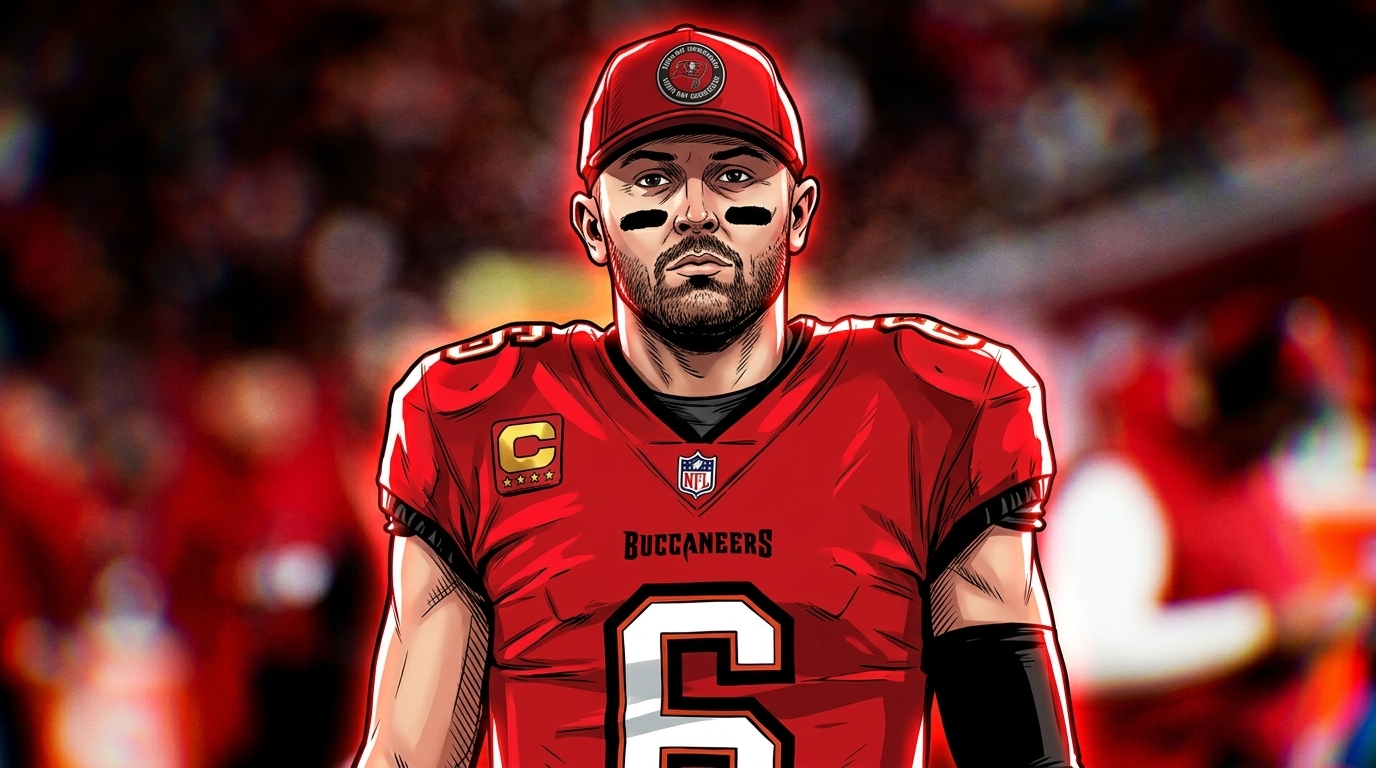
Every experiment eventually meets a control group. Minnesota’s has a name, and it’s already beaten this specific coach twice. Mayfield’s Cleveland Browns beat Flores’ Miami Dolphins in 2019. His second win came in September 2023, his first start as a Buccaneer, when he threw two touchdown passes in a 20-17 win over Minnesota. That’s also the game in which Mayfield said afterward that he’d picked up on Minnesota’s defensive signals, a detail Athlon Sports revisited heading into this rematch. Two meetings, five touchdown passes, one interception.
That record isn’t nostalgia dressed up as a stat. Since arriving in Tampa Bay in 2023, Mayfield owns the NFL’s best touchdown-to-interception ratio against the blitz, at 5.5, minimum 30 attempts. This season alone he’s completed 11 of 12 passes against the blitz, a league-leading 91.7%, per Next Gen Stats. When defenses have sent extra rushers at Mayfield specifically, he has punished the decision at a rate nobody else in the league can match.
Is Baker Mayfield the Test Case That Breaks This?
Minnesota (2-0) travels to face an 0-2 Buccaneers team today, kickoff 4:05 PM ET on FOX, and Tampa Bay’s murky contract situation with Mayfield has been a bigger storyline all week than anything the defense is about to attempt. Neither team’s front office drama matters once the ball is snapped. What matters is whether a quarterback who has spent three seasons solving pressure can solve pressure at a volume nobody has ever actually thrown at him.
Two games is still a small sample against a coordinator who has been building toward this number for three years, and Flores has faced exactly zero quarterbacks with Mayfield’s specific track record against him. Volume blitzing carries one real vulnerability: it needs a quarterback who guesses wrong more often than he guesses right, and Mayfield’s résumé against pressure says he doesn’t. Flores will almost certainly call another number in the 60s or higher today, because nothing about two wins makes a coordinator with this profile blink. What changes is who’s standing across from it. Green Bay and Chicago hadn’t seen this before. Mayfield has beaten this exact coach twice, with the best numbers against the blitz in football to back it up, and today is the first time all season Flores has to prove the concept, not just the record.