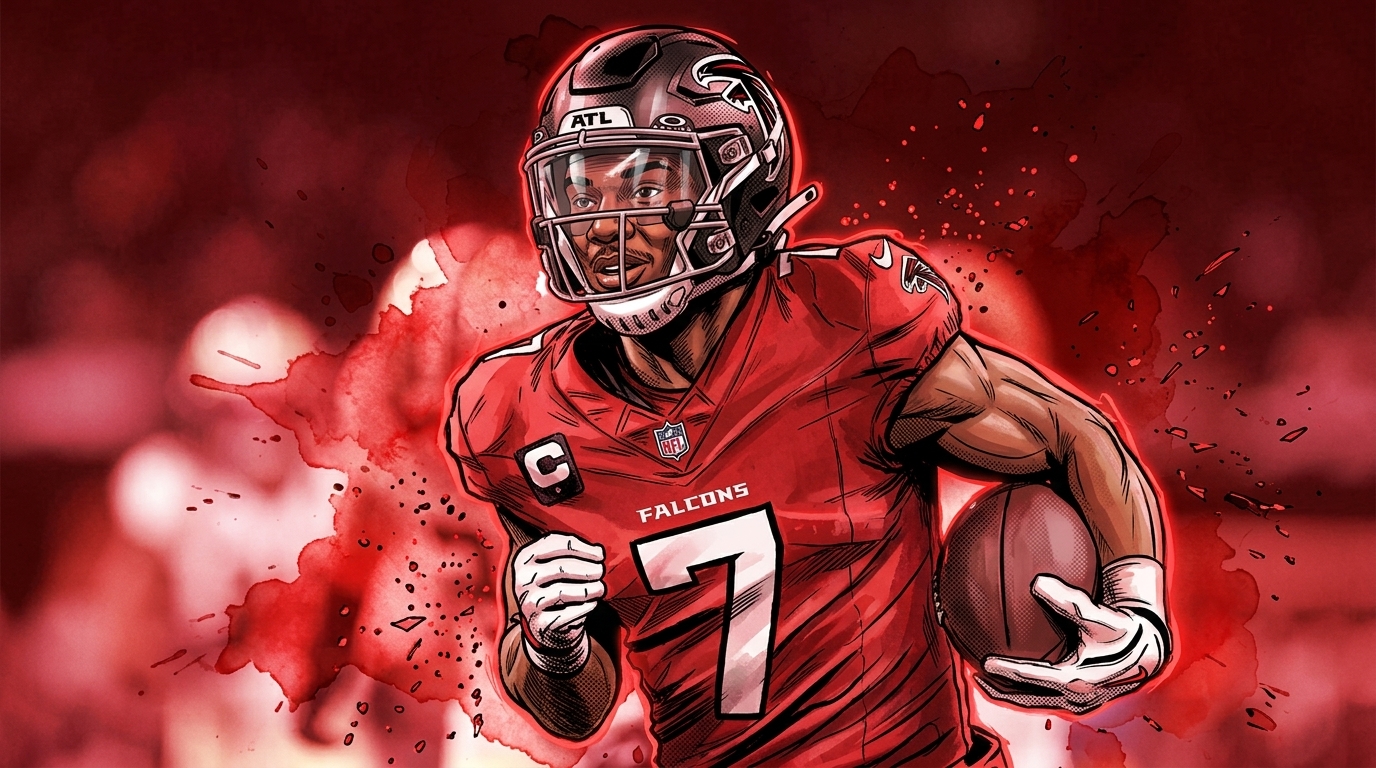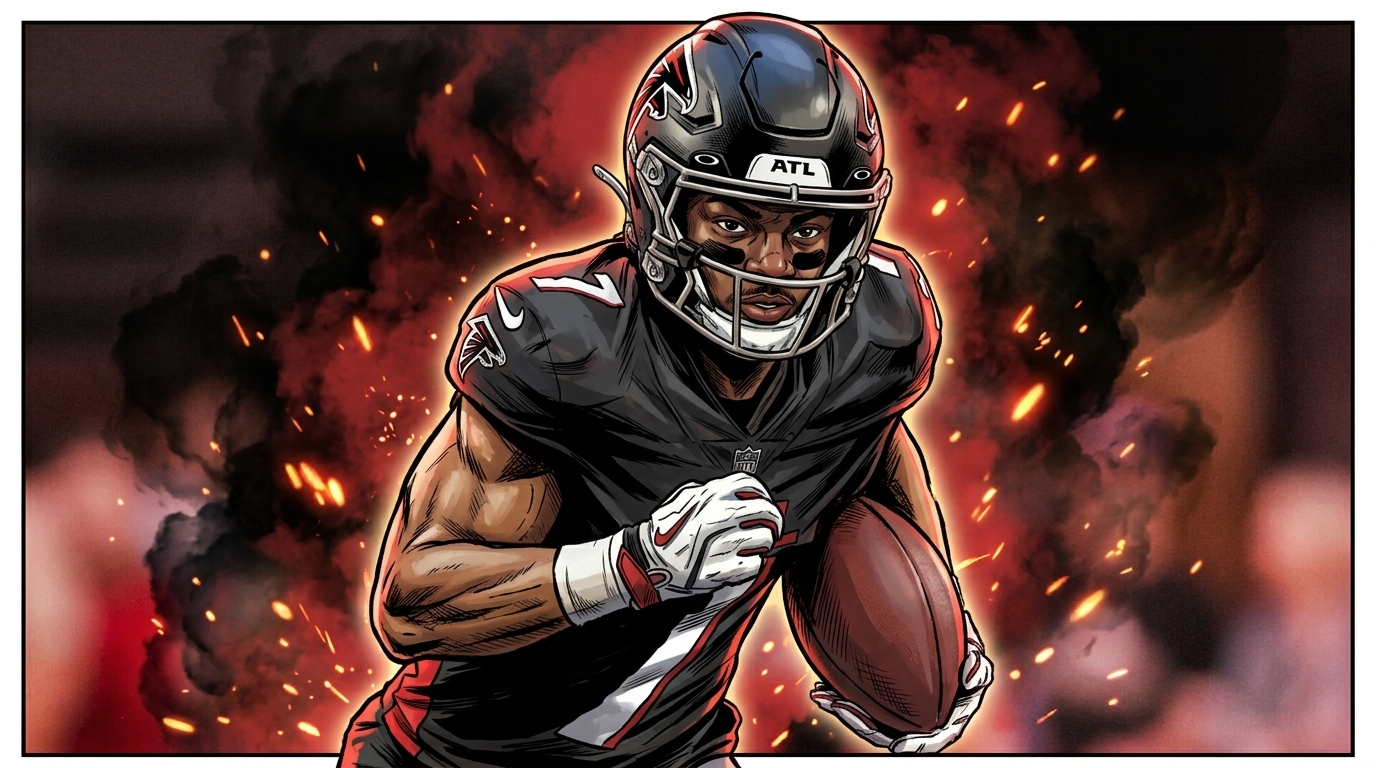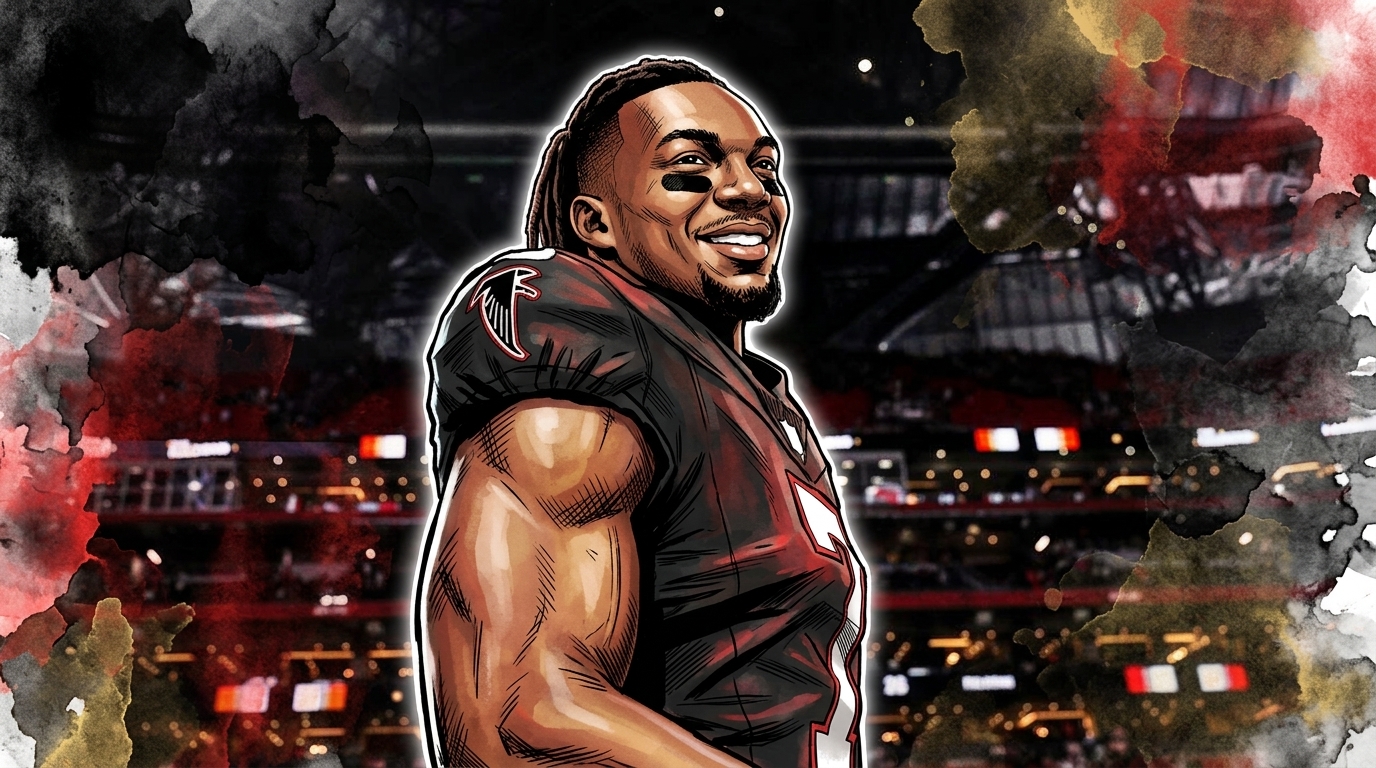

The NFL Top 100 is built entirely from opposing film rooms: players voting on players, not writers voting on names. That’s what makes Bijan Robinson’s jump from No. 62 a year ago to No. 3 this week worth more than a highlight reel. A 59-spot climb reads less like a vibe shift and more like a formal admission, from the league’s own defenders, that they misjudged how hard Robinson actually is to defend.
What Is Bijan Robinson Ranked on the NFL Top 100?
Bijan Robinson ranks No. 3 on the NFL Top 100 Players of 2026, a 59-spot jump from No. 62 the year before — the largest single-year climb in the countdown’s history. The ranking ties Julio Jones for the highest any Atlanta Falcons player has ever finished in the poll.
The league’s own account made the jump feel just as jarring in real time as it reads on paper.
https://twitter.com/NFL/status/2095149763138076865
Nobody projected a running back to move 59 places in one cycle, and the players who actually vote on this thing just told the rest of the league why they did.
That ranking sits on top of a season that reset expectations for what a lead back can be. Robinson started all 17 games and led the NFL with 2,298 scrimmage yards, a total that ranks 12th all-time for a single season. Broken down, that’s 287 carries for 1,478 rushing yards at 5.1 yards per carry, a career high and the first time he’s cleared 5.0 in any season, plus 79 catches for 820 receiving yards. Add the touchdowns and Robinson scored 11 times, seven on the ground and four through the air, while functioning as Atlanta’s rushing offense and its second-leading receiver in the same box score.
The clearest single frame of that season came in Week 17 against the Rams, when Robinson broke a 93-yard touchdown run, the longest run in Falcons history and the longest by any player in the league all season, and hit a top speed of 21.25 mph on the way to the end zone, according to Next Gen Stats. A 21-plus mph top speed on a touchdown run is the kind of number that shows up on a combine leaderboard, not buried at the bottom of a box score.
Why a 59-Spot Jump Means More Than a Highlight Reel
Media rankings shift on volume and vibes: one big month, one play that goes viral, and a player jumps twenty spots on somebody’s power-rankings column by Tuesday. The NFL Top 100 doesn’t work that way. It’s voted on by the players who actually line up across from these guys, which means a 59-spot swing reflects something closer to a collective admission, made by the people whose job is stopping him, that they got the degree of difficulty wrong the first time around.
Think about what that means in practice. A cornerback voting on wide receivers is voting on route recognition and separation. A linebacker voting on Robinson is voting on something closer to full-field difficulty: can this guy hurt you between the tackles, on the perimeter, and in pass protection, all in the same drive. When 59 spots move on a runner in one cycle, that’s the players tasked with containing him admitting, in aggregate, that containment wasn’t really on the table this season.
That same players’ poll left Drake Maye at No. 11 this year, a reminder that quarterback value and running back value get weighed on different scales inside the locker room than they do on television. A back climbing 59 spots in a single cycle is rarer than a franchise quarterback landing just outside the top ten. That gap is a decent measure of how unusual Robinson’s leap actually is.
The Julio Jones Number Nobody Saw Coming
Robinson’s No. 3 finish ties Julio Jones for the highest ranking any Falcon has posted in the countdown’s history. Jones hit that same number in 2017, backed it up with a No. 4 finish in 2018, and was still charting at No. 11 as late as 2020, a run that lines up with three of the most productive receiver seasons this franchise has ever produced.
That’s the company Robinson just joined, and it’s worth sitting with for a second. Jones got there as a true No. 1 receiver in a passing league built to reward exactly that kind of player. Robinson got there as a running back, at a moment when the position has spent a decade losing value relative to the passing game in national broadcasts and free agency spending alike. A receiver hitting No. 3 fits the shape of the modern NFL. A running back doing it on a players’ poll cuts against that shape entirely.
Atlanta made a similar bet on him before this season even started, locking Robinson into his $75 million extension on the strength of exactly the kind of workload he just delivered: a three-down back who can carry the rushing attack and start every week as a receiving weapon without the offense needing to scheme around his limitations. There aren’t many backs left in the league who get paid and voted for like that in the same year.
What Defenses Have to Change Now
Robinson’s ranking should read as a warning label for opposing coordinators, not a trophy for Atlanta’s media guide. A back who clears 5.0 yards per carry for the first time in his career, catches 79 passes, and still has the juice for a 93-yard touchdown run at 21.25 mph isn’t a player a defense can plan for with one extra box defender. He forces sub-package math: crowd the line to slow the rushing total and he beats you over the middle or out of the backfield; keep an extra safety deep to respect the passing game and the rushing yards only get worse.
The jump from No. 62 to No. 3 reads as a verdict from the players tasked with stopping him: treating Robinson as a complementary piece to Atlanta’s passing game isn’t a viable game plan anymore. Whoever’s coordinating against the Falcons next season should start there.