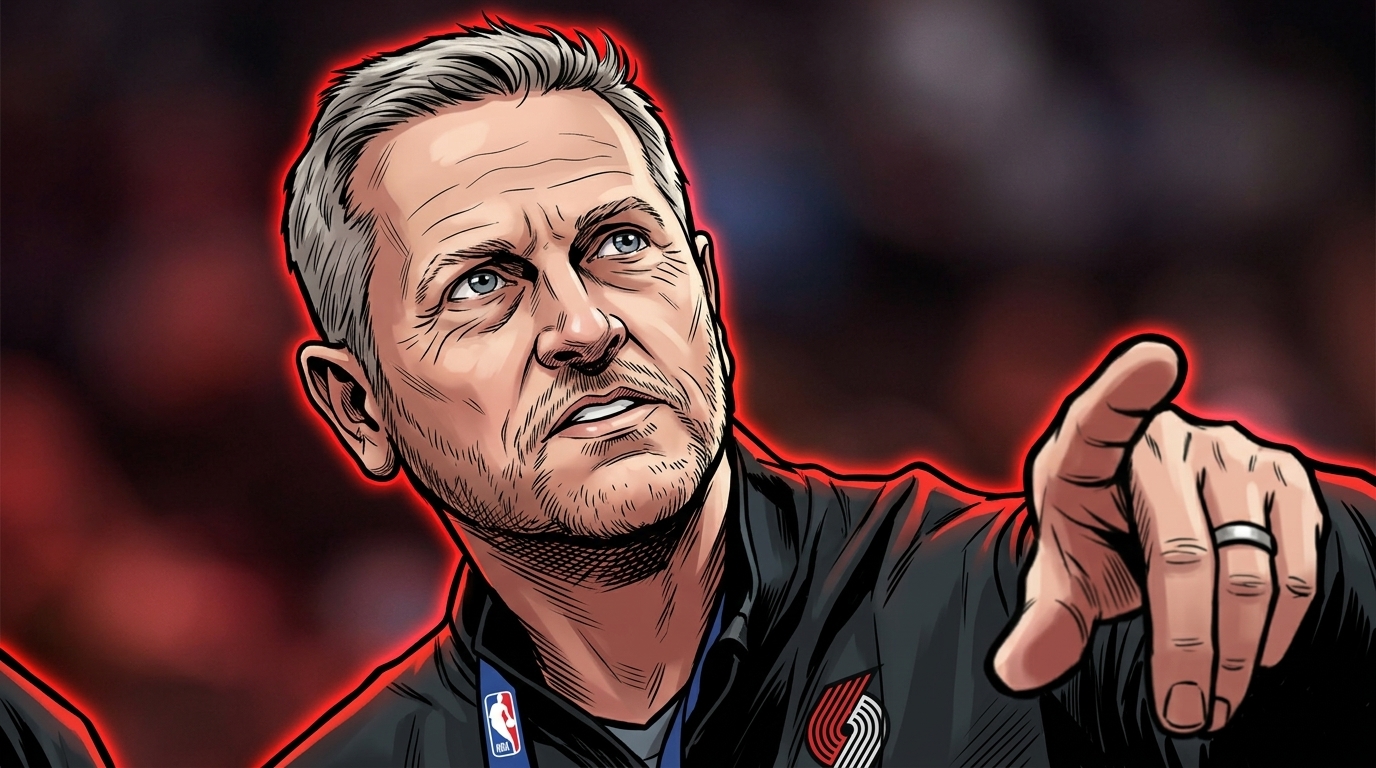

I have read TEGNA’s internal review language three times now, looking for the sentence where somebody admits what actually happened to Braiden Bell, and it isn’t in there. Bell got hired to call play-by-play, got fired hours into the job over tweets from age fifteen, and the review that followed isn’t asking whether ending a grown man’s career over that was the right call. It’s asking whether KGW’s newsroom filled out the correct internal paperwork on the way there. The review targets process, not the decision. TEGNA wrote that down and published it like it wasn’t the whole scandal.
Bell is 29. He built his way to this job for years, calling games for the WNBA’s Phoenix Mercury before the Trail Blazers made him the youngest lead broadcaster in the NBA. He never called a possession for them. KGW-TV, Portland’s NBC affiliate, found two tweets from when he was about fifteen — one from December 2012 about Asian people, one from July 2013 that read “no blacks either. #racist” — and rushed its story out roughly three hours ahead of its own evening newscast so a competitor couldn’t beat it to the scoop. The team fired him the same day: zero tolerance, not moving forward, statement issued, case closed.
KGW’s own reporting, according to The Desk’s coverage of TEGNA’s review, found nothing similar from Bell as an adult. Thirteen years of a public life, and the complaint is two tweets from a teenager nobody had bothered to look up until a job opening made him worth Googling.
TEGNA’s review is aimed at “whether KGW-TV and its two journalists, news director John Tierney and sports reporter Devon Haskins, follow[ed] the company’s editorial processes with respect to researching and reporting” the story. The firing doesn’t appear anywhere in that sentence. Whether a decade-old adolescent Twitter account should end somebody’s career doesn’t appear in that sentence. What appears is a question about whether the correct internal boxes got checked before KGW hit publish, and TEGNA apparently considers that the live issue here.
Media reporter Matthew Keys reported that the review’s real purpose, per the same account, is to confirm the station followed its editorial policies, largely so TEGNA and KGW are insulated from future legal claims rather than to amend or retract anything. That’s not accountability journalism examining itself. That’s ass-covering with a press release attached, and somebody at corporate signed off on calling it a review.
My brother works for the city in Trenton, and a decade of hearing him describe how municipal government actually runs has taught me one durable thing: bureaucracies are excellent at auditing whether procedure was followed and remarkably incurious about whether the procedure produced a decent outcome. TEGNA just ran that exact playbook on local television, and nobody there seems to have noticed the irony of investigating the people who investigated somebody else for far less.
Tierney, one of the two journalists under his own company’s review, posted to X in real time as it unfolded:
https://twitter.com/jtierney6/status/2105862467759034664
Tierney’s own tweet confirms the sequence — KGW had already found the tweets and was mid-report when the team’s firing statement landed. The speed that got cited as the subject worth reviewing is the same speed nobody at TEGNA has shown any interest in applying to the decision on the other end of it, the one that cost Bell his job before he opened his mouth on air.
Bell’s attorney, Arnie Herz, demanded reinstatement and asked the question TEGNA’s review conspicuously avoids: should the worst words a fifteen-year-old ever wrote decide the rest of his life? Bell apologized, said the tweets have no reflection of who he is today, and the Blazers declined to reconsider anyway. Travis Demers, the team’s radio play-by-play voice for seven seasons, is calling games on a trial basis now instead. Portland’s broadcast booth has had a rough stretch lately, and the guy who waited years for a shot at the TV chair is getting it because the guy who got there first got erased from the building before tip-off.
TEGNA will finish its review eventually, conclude that KGW mostly followed procedure, file a memo nobody outside the building will ever read, and end up exactly as legally insulated as it hoped to be. Bell will still be unemployed. The tweets will still have been real, and fifteen years old when they were written. The only part of this entire mess that got investigated was the part that was never actually in question.