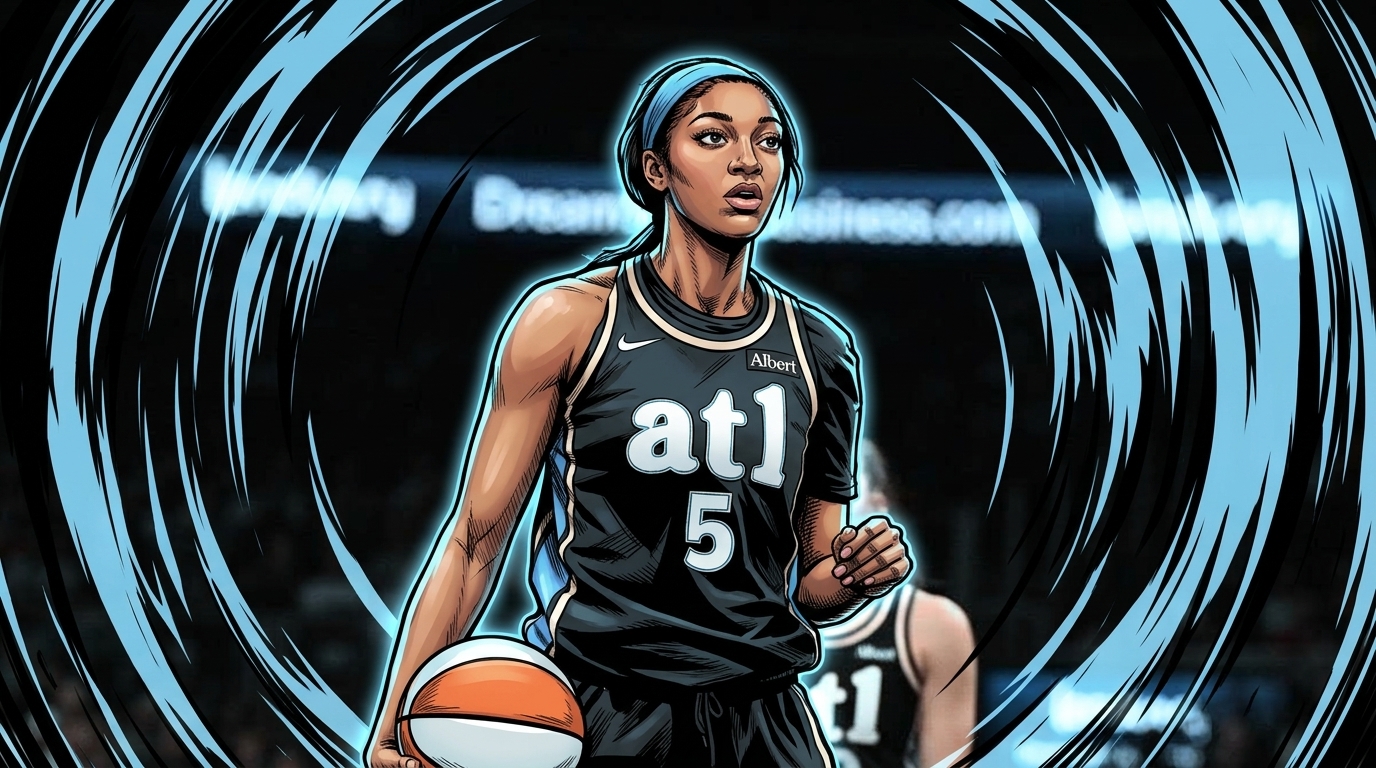

There’s a stat buried in Caitlin Clark’s season that says more about her likely first-round opponent than any preseason breakdown could: 20 turnovers against a single team, the highest total she’s committed against anyone in the league. That team is the Atlanta Dream, and barring a final-day collapse, the Indiana Fever are about to spend a best-of-three series finding out why.
Will Caitlin Clark and Angel Reese Meet in the 2026 WNBA Playoffs?
Nothing but a total collapse over the final day changes it: Clark’s Fever will open the 2026 WNBA playoffs against Angel Reese’s Dream as the 5-seed facing the 4-seed. It would be the first career playoff meeting between two players whose regular-season series already turned physical.
Why Fever-Dream Is the Bracket’s Most Likely Matchup
The seeding math isn’t close. As of today, the final day of the regular season, the provisional bracket points straight at a Caitlin Clark-Angel Reese matchup in the 2026 WNBA playoffs: Atlanta locked into the 4-seed with first-round home court already secured, Indiana clinching the 5-seed with a win tonight or a loss paired with a Washington defeat. That tiebreaker scenario is the only thing standing between the projected bracket and a lock, and it involves a Mystics team that pulled off its own surprise this season, punching a playoff ticket in Washington’s own late-season playoff clinch with almost no veteran roster to speak of.
Either path produces the same first-round pairing when the playoffs open Sunday, September 27, with four games launching the opening round. This is the round-one collision the league has been circling for weeks, as thebiglead.com laid out once the seeding began to take shape. A five-versus-four pairing isn’t usually the marquee matchup on opening weekend. This one is, because it’s also the most physically charged Fever-Dream first-round matchup on the board — two teams that have already played twice, split the results, and left the second meeting with more storylines than either was chasing.
What Already Happened Between These Two Teams
This rivalry hasn’t needed manufacturing. It already has two results and a flashpoint. On June 20, Atlanta beat Indiana 113-96 in a game decided less by shot-making than by whistles. Indiana was called for 29 personal fouls, and Clark alone accounted for seven of the Fever’s 19 turnovers. She didn’t hide her frustration afterward. “What we did well in the first half was play in transition, spray, find open people,” she said. “And then it’s really hard to do that when all we do is foul, and they score.”
Two months later, on August 16, Indiana got the result back, beating Atlanta 95-91 in overtime, though the score undersells what actually decided the game’s tenor. With about 4:10 left in the first quarter, Reese and Clark tangled for a rebound, and Reese shoved Clark away with no foul called, despite two officials standing close enough to see it happen. That no-call outlived the game itself, feeding the no-call discourse from their last meeting that followed both teams into the final stretch of the regular season. Clark finished with 26 points and 9 assists. Reese managed 15 points on 5-for-16 shooting to go with 14 rebounds, and Atlanta’s Allisha Gray outscored them both with 32. The game only reached overtime because Reese missed a potential game-tying layup at the regulation buzzer.
https://twitter.com/DraftKings/status/2089141910304592230
DraftKings caught the moment that mattered most, Clark laughing from the bench as that shot rimmed out, and it’s aged into the same clip both fan bases keep replaying. A series with two results, one buzzer-beater miss, and an unresolved no-call doesn’t need playoff stakes to already feel personal.
Is Atlanta’s Pressure a Real Fever Problem?
Start with the number that opened this piece. Twenty turnovers against one opponent is the highest total Clark has given up against any team on the schedule this season. Atlanta’s average of nine team steals a game explains a good share of it: Rhyne Howard, Jordin Canada, and Reese herself all rank among the WNBA’s individual steals leaders, which means the ball pressure comes from three separate angles instead of one predictable defender to plan around. The data here is unambiguous — Atlanta doesn’t just play fast, it plays fast from multiple directions at once, and that’s a harder problem to solve in a scouting report than a single disruptive body in the passing lanes.
Zoom out to the season totals and the shape of this series comes into focus. Clark is averaging 22.8 points, 8.5 assists, and 3.9 rebounds a game on 45.2 percent shooting across 39 appearances, an efficient, high-usage engine who touches the ball on nearly every possession — which is exactly why a defense built to attack the ball from multiple spots matters so much against her specifically. Reese is putting up 16.4 points, 12.1 rebounds, and 2.8 assists a night on a nearly identical 45.1 percent clip over 43 games, meaning the efficiency gap that usually separates a franchise guard from a rebounding forward barely exists here. That parity is part of what makes this Fever-Dream first-round matchup so hard to project on paper alone.
What Game 1’s First Possession Needs to Answer
This rivalry already has two results, a no-call that outlasted its own game, and a turnover rate that spikes specifically against one roster. It’s walking into the playoffs with real tape, not manufactured beef, and that changes what actually needs to happen on the opening possession of Game 1. It will start answering whether officials let Atlanta’s brand of physical, ball-pressure defense play out the way it did on August 16, or whether they tighten the whistle from how the regular season handled it in either direction. If it’s the former, expect fouls to pile up early and Indiana’s spacing to feel cramped again by the fourth quarter, the same shape the June loss took. If it’s the latter, this turns into a series about whether Clark can solve a three-way pressure defense that has already bothered her more than anyone else on the schedule.
Bet on this series going the distance. Atlanta has the individual steals threats and the head-to-head record on its side, but the swing from June to August shows Indiana adjusts inside a series faster than one data point suggests, and a healthy Clark playing with normal spacing is a different puzzle than the foul-plagued version Atlanta beat in June. Round one is going to be tighter, and nastier, than a 5-seed-versus-4-seed label implies.