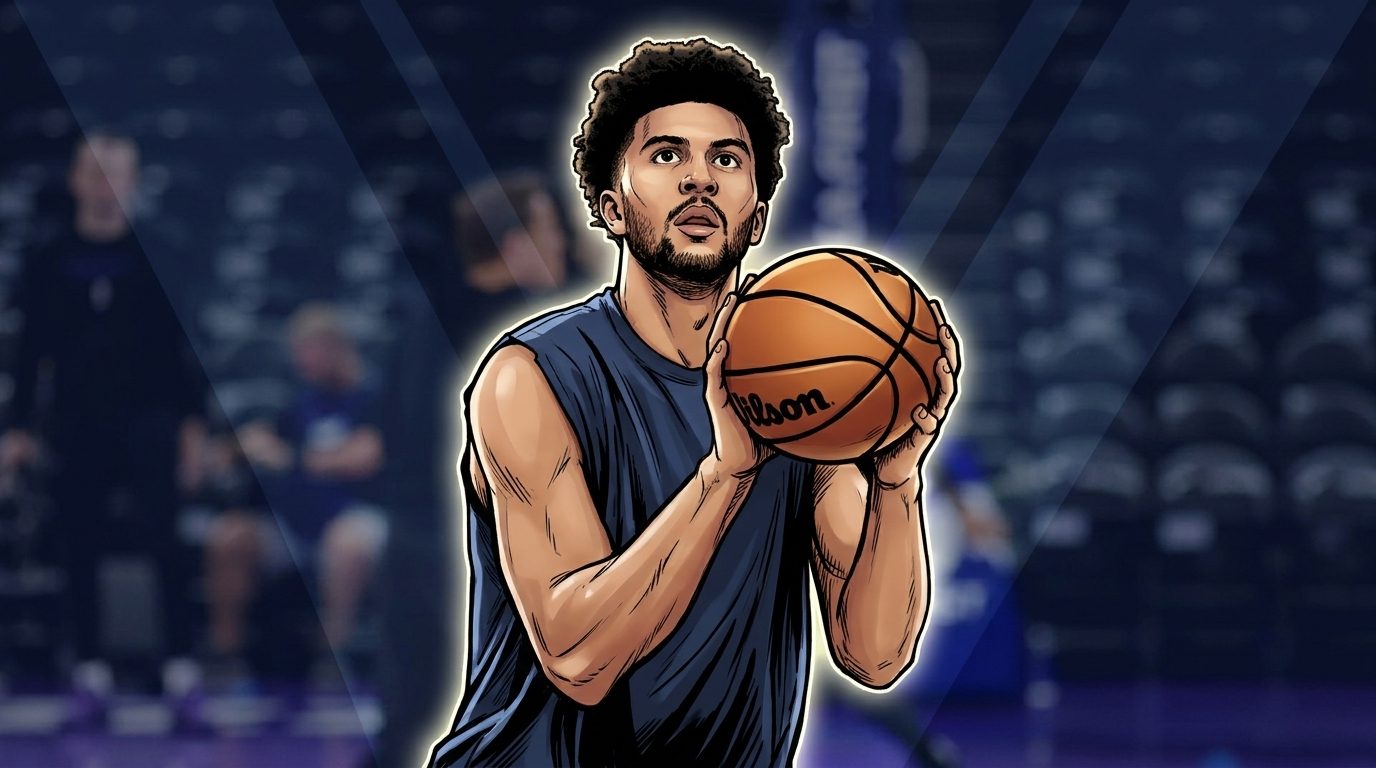

Cameron Boozer’s stat line from the Memphis Grizzlies’ 124-103 win over the Trail Blazers, 18 points, 12 assists and either 11 or 12 rebounds depending on which outlet you trust, is the kind of box score a franchise usually needs years of losing to acquire. Memphis needed one bad season.
That’s Cameron Boozer’s first career triple-double, and it landed five games into his rookie year, the same week Memphis climbed to 5-0, tied with the Houston Rockets for the NBA’s best record rather than standing alone at the top the way a lot of the preseason chatter assumed they would. The box score settles whether he’s good. The harder question is whether the league missed something it should have caught before the draft.
Just How Rare Is a Rookie Triple-Double Like This?
Boozer is the second-youngest player in NBA history to record a triple-double, behind Oklahoma City’s Josh Giddey (19 years, 84 days, January 2022), and the youngest forward ever to do it, ahead of LeBron James, who needed until he was 20 years and 20 days old to manage the same feat back in January 2005.
Put in plain terms: across the sport’s entire history, exactly one teenager has done this at a younger age, and no forward, not even LeBron, got there faster. That’s the company Boozer is keeping after five NBA games.
The box score itself carries a wrinkle. CBS Sports has him at 11 rebounds; Al Jazeera has 12. Both outlets agree on the rest: 18 points on 6-of-10 shooting, including 4-of-5 from three, to go with 12 assists in 28 minutes, barely more than half a regulation game, against a Portland defense that had no answer for him inside.
https://twitter.com/NBA/status/2116031130801524834
The league’s own account rounded the rebound number up to 12, which means even the outlet built to broadcast these stats correctly couldn’t settle the debate.
Did Memphis Actually Earn the No. 3 Pick?
Most premium rookies arrive after years of losing, a fan base that’s made peace with tanking as a strategy, and maybe a conspiracy theory about how the ping-pong balls fell. Memphis skipped almost all of that. The Grizzlies made the playoffs in 2024-25 at 48-34, swept in the first round by Oklahoma City, before collapsing to 25-57 the next season. One bad season, not a cycle of them, bought Memphis a 37.2% shot at a top-four pick and a 9% shot at No. 1 in the 2026 lottery, worse odds than a coin flip landing however you needed it to. Memphis landed third anyway and used the pick on Cameron Boozer out of Duke, a name that carries its own complicated NBA history.
Memphis didn’t spend years tearing things down on purpose. The front office’s one-year rebuild got bailed out by a rookie who’s already playing like a top pick instead of a consolation prize three spots down the board.
Is Memphis’s System Manufacturing These Numbers?
The sample holds up beyond that one night. Boozer is averaging 15.4 points, 10.6 rebounds and 6.2 assists across his first five games, including the triple-double, numbers that lead every rookie in the league on the glass and put him on pace for something close to a 15-and-10 floor most nights, triple-double or not.
By the numbers, five games in:
- 15.4 points, 10.6 rebounds, 6.2 assists per game, tops among rookies on the glass
- Double-digit scoring in four of his first five games, every one after his debut
- 18 points on 6-of-10 shooting, 4-of-5 from three, in the triple-double alone
- Four different opponents faced already: Utah, Golden State, Sacramento, Portland
The obvious objection: five games is a tiny sample, and an up-tempo Memphis roster creates easier shots and rebounding chances than a slower offense would hand a rookie big. That holds up best against the assist number, which climbs when teammates are cutting into the space he creates. It holds up worse against the rebounding, which has shown up against four different styles of opponent already and leads every rookie in the sport regardless of which team is feeding him minutes. Ten and a half boards a night is starting-center production in most arenas, and it’s coming from a 19-year-old still learning an NBA role in real time.
What Does This Mean for How Teams Scout Bigs?
Two teams picked ahead of Memphis in 2026, and neither of them came away with Cameron Boozer. A one-year collapse bought the Grizzlies the pick instead, and a rookie who’s already outplaying where he fell is turning No. 3 into the best value of the class. The real lesson is about how often front offices discount a dominant freshman year at Duke because the production looked too easy against college competition. Memphis didn’t do anything clever to get here. The front office just didn’t flinch on draft night, and five games into the follow-up, that’s looking like the correct call.
The rebounding already looks real. The number worth tracking from here is the 6.2 assists. If that holds once opposing coaches start scouting him like the problem he’s become instead of the rookie he still technically is, the two teams that picked ahead of Memphis in the 2026 draft get to explain why their boards had him third.