
I’ve heard “foregone conclusion” applied to a lot of situations, and it has never once described something good happening to a person who wasn’t already rich. Yahoo’s Ross Dellenger used it this week for where the 24-team College Football Playoff expansion stands after CFP leaders met outside Chicago, and the phrase is doing real work. A foregone conclusion means the decision already got made somewhere you weren’t in the room, and everyone left is just managing the announcement. The decision here is that conference championship weekend, the single Saturday in December that’s been appointment viewing for decades, gets killed so four more teams can squeeze into an already bloated bracket. I’m furious about it, and I don’t think anyone running this process has asked a single fan whether that trade was worth making.
Nobody with actual power is running this math out loud, so I will. The ten FBS conference championship games, worth a combined $250 million, are what’s getting cut, with the SEC title game alone worth roughly $100 million by itself. A 24-team playoff is reportedly a foregone conclusion, and the reason it’s happening right now is the ESPN negotiating window the CFP opened three weeks ago, the 30-day stretch where a new rights deal either gets done or it doesn’t. This was never a debate about whether 24 teams makes for better football. It’s a broadcast-rights negotiation, and conference championship Saturday is the furniture getting sold off to make room for more ad inventory.
CFP executive director Rich Clark summed up the vibe at those Chicago meetings: “The revenue is an unknown. That’s why we’re in this negotiating window.” That’s a hell of a thing to admit on the record while you’re in the process of erasing a tradition older than most of these TV contracts. They’re guessing, with something cities like Atlanta, Charlotte, and Indianapolis have built hotel blocks, bar shifts, and parking-lot tailgate economies around every December for years. That’s not strategy. That’s bullshit wearing a blazer.
I spent eighteen months doing cost-benefit work at a housing-policy nonprofit before this, and I know exactly what “the revenue is unknown” sounds like. It’s the sentence a developer uses to justify demolishing a block of low-income units for a tower that may never get built. That phrase rarely means genuine uncertainty. It means the decision already got made, and somebody needs a few more weeks to make the math look honest.
That window closes October 9th. Miss it, and the rights hit the open market with a hard December 1st deadline hanging over the whole format decision — the kind of pressure-cooker timeline that produces “foregone conclusions” instead of actual debate. The 24-team plan reportedly started as a Big Ten pitch back in August, and the ACC and Big 12 signed on first, along with Notre Dame, because neither of those leagues has nearly as much to lose from gutting its own championship game as the SEC does.
On3’s Pete Nakos reported the momentum directly:
https://x.com/On3/status/2104933776195203253
Four days of meetings in Chicago, and the only open question left is how fast this happens.
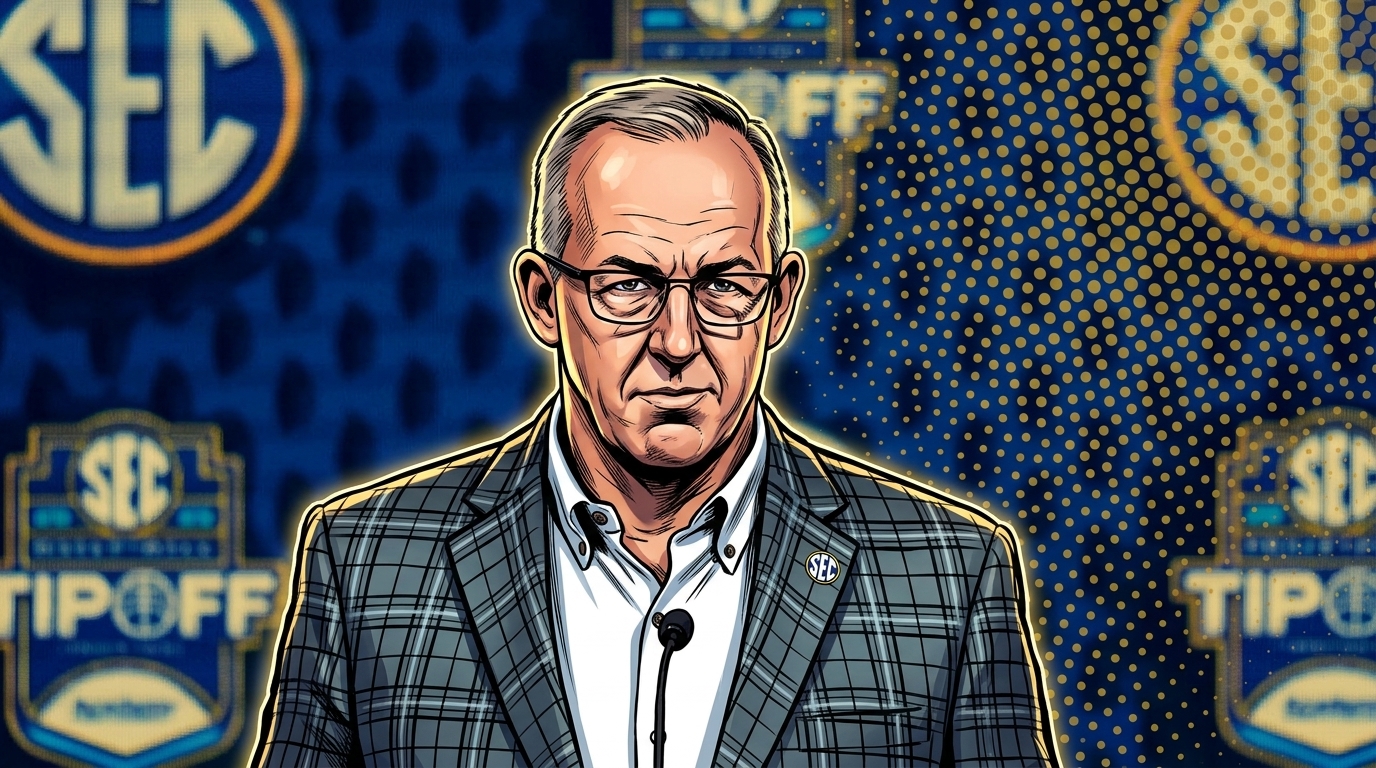
The Southeastern Conference’s position is softer than outright support, which isn’t the same thing as a surrender. Commissioner Greg Sankey spent most of the year as the clearest holdout, pointing to the league’s contract with Mercedes-Benz Stadium running through 2031 and backing a 16-team model instead of 24. What’s moved since then is a financial condition, not a change of heart: a push to require every power-conference team to play ten games against power-conference opponents before any expanded field gets his blessing. He’s negotiating leverage before the walls close in, and that’s a very different thing from agreeing the sport gets better with eight more teams in it.
The actual proposal has Round 1 the first weekend of December and Round 2 the third weekend, likely hosted on campus by the higher seed, with conference executives also floating a ten-bowl structure to replace what exists now. Even the Army-Navy game, parked on the second weekend of December for most of a century, might have to move. None of that is being negotiated for competitive balance. It’s being negotiated around a television contract and a hard deadline, and whatever comes out the other end will get sold back to you as a gift.
The counterargument deserves one sentence: more playoff teams means more access, and a kid at a mid-major program gets a real shot instead of a trophy nobody outside campus notices. Fair enough, as far as it goes. But access for four extra teams isn’t worth detonating the best regular-season Saturday left on the calendar, and ESPN, the same network quietly cutting the people who built it, is the last company I’d trust to weigh that tradeoff honestly. A legacy asset that doesn’t maximize ad inventory gets cut. That’s been true of on-air talent for two years now, and apparently it’s true of conference championship weekend too.
No vote has happened. No deal is signed. But “foregone conclusion” isn’t a prediction, it’s an admission, and by the time anyone makes it official, the only thing left to decide will be how to spin the eulogy for championship Saturday as a win. Smart money says they stick the landing on the press release. They always do.