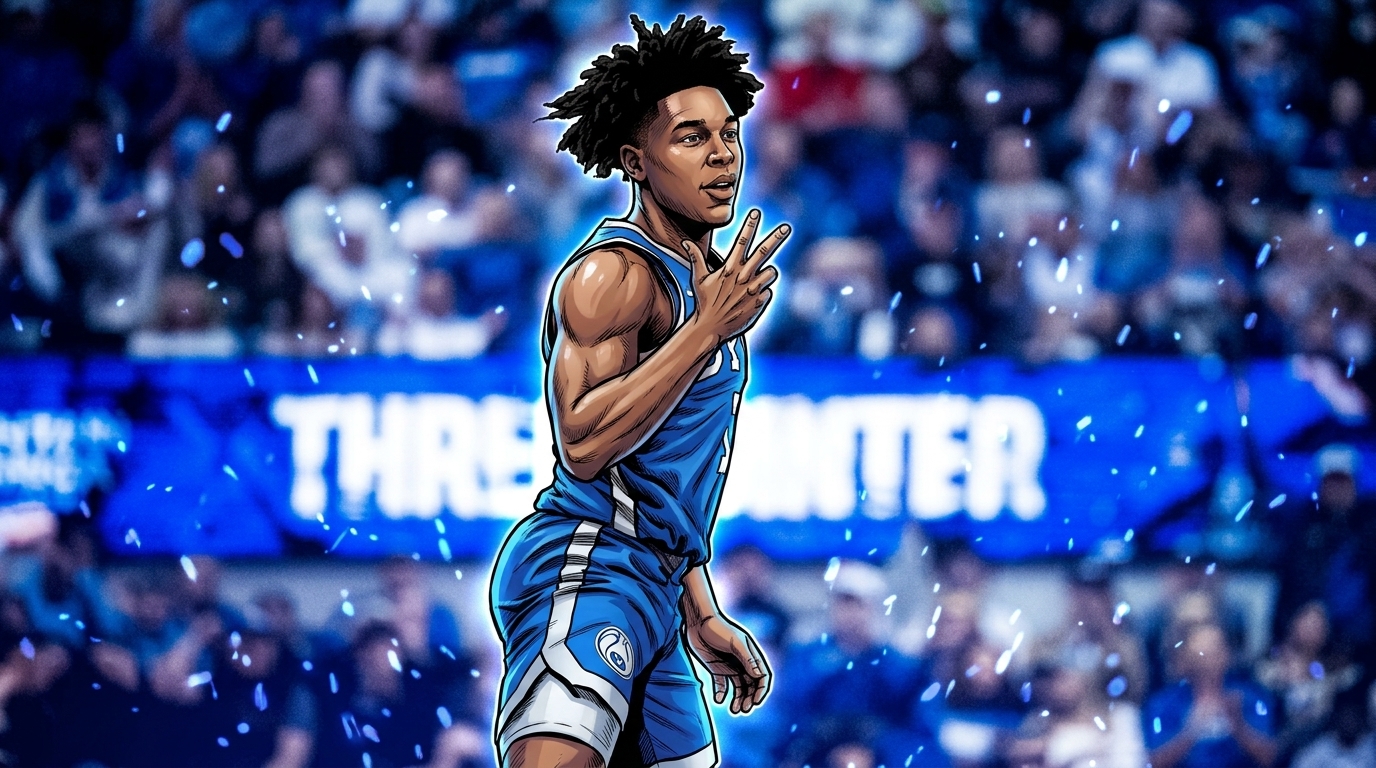

One college basketball program almost spent $30 million on a single roster this offseason, and the NCAA still stamps “student-athlete” on every kid wearing that jersey with a straight face. I have re-read that sentence a dozen times looking for the punchline and there isn’t one. 247Sports reported that more than a dozen programs are projected to clear $20 million in college basketball NIL spending for 2026-27, with one roster nearly touching $30 million before a single possession has been played.
That number used to belong to one program. Kentucky ran the sport’s most expensive roster last season at $22 million, and Front Office Sports reported the record-setting spend bought the Wildcats a 5-4 record and a season that “looks like a dud.” A $20 million college basketball roster would have been unthinkable five years ago. Now it’s the middle of the pack, and the number that used to define the sport’s NIL spending arms race can’t even buy a winning record.
Coaches aren’t even pretending to be surprised anymore. They’re just tired.
“There has to be at least three or four teams (in our league) that are in the $30 million range.”
That’s an anonymous SEC assistant coach. His boss isn’t any more composed about it:
“Every year we’re like, OK, this is the last year — and then that s—t just keeps going up.”
Both quotes ran in Bleacher Report’s rundown of the arms race, and they read less like strategy talk than hostages describing the room they’re locked in. Nobody in that story sounds like they’re winning. They sound like the last people still buying chips before somebody flips the table.
The roster spending is the number everyone wants to talk about, but the number that should actually make you angry is 573.
Roughly 1,454 Division I men’s basketball scholarship players entered the 2026 transfer portal this cycle, out of 5,460 tracked nationally. On3’s portal tracker shows 881 of them have already committed somewhere else, about six weeks before the season tips off. That leaves roughly 573 players still unsigned, sitting by the phone while a dozen programs argue over who gets closer to $30 million.
Some of those 573 are lucky compared to the guys who needed a courtroom just to be allowed to compete. A Cobb County judge in Georgia granted a preliminary injunction this month letting 16 Division I players, including former Clemson and Georgia forward RJ Godfrey, suit up in 2026-27, after they sued the NCAA over an eligibility model a court found had been applied “arbitrary and inconsistent” to Class of 2022 players who’d already used up four seasons. Godfrey got his season back only because a judge forced the NCAA’s hand, not because the NCAA decided it owed him one.
This is the same fight driving the NCAA’s five-for-five eligibility mess nationally, where the association keeps losing in court and keeps acting surprised about it. Vanderbilt center Jalen Washington won his own injunction for a fifth season and is still parked in the transfer portal looking for a team, six weeks out:
https://twitter.com/PeteNakos/status/2083287242194235649
Washington beat the NCAA in open court and it still didn’t buy him a roster spot. That’s the whole racket in one sentence: winning is the floor, not the finish line.
I read enough labor reporting outside this beat to recognize a captured market when I see one. College football is already running college football’s own two-tiered NIL split, spending obscenely at the top while everyone else fights over scraps, and college basketball just caught up. Nobody drew this up by accident.
A market with $20 million rosters at the top of college basketball’s NIL spending pyramid and 573 unsigned players scrambling at the bottom isn’t broken. It’s working exactly as designed, and the design was never built with those 573 in mind. The NCAA gets to keep saying “student-athlete” because nobody with the power to stop them has bothered to correct the label. Fine. Keep the word. Just stop pretending it still means what it used to.