
Fifty-eight to one. That’s what a straight-up bet on East Texas A&M beating Oklahoma Monday night would have paid, the kind of number sportsbooks reserve for games that aren’t supposed to be competitive at all. East Texas A&M won anyway, 68-64, the second-largest point-spread upset in Division I basketball in the last thirty years. By the time the night ended, two more results had landed next to it that have no business sharing a calendar, let alone a Monday.
UCLA beat a ranked opponent in a season opener for the first time in twenty-six years. Memphis needed a go-ahead three-pointer with 38 seconds left to hold off a ranked Iowa State team that nearly erased a seven-point deficit in the final five minutes. Three results, three different ways of saying the same thing: the gap between college basketball’s best programs and everyone chasing them might be the thinnest it’s been in a decade, and opening night just handed us the first real data point to argue it.
What Actually Happened to Oklahoma?
The Oklahoma Sooners entered as a 28.5-point favorite over East Texas A&M and lost outright, missing 11 of 12 shots across a stretch spanning the final 6:53 of the first half. It was East Texas A&M’s first win over a power-conference opponent in program history, and Oklahoma head coach Porter Moser apologized to fans afterward.
The shooting numbers explain how a 28.5-point favorite loses outright. Oklahoma finished 5 of 20 from three and 17 of 32 at the free-throw line, a 53 percent clip at the stripe that would get a junior varsity team benched. East Texas A&M actually shot better from three (41 percent) than Oklahoma shot from the field overall (40 percent). Bo Aldridge carried the upset with 22 points on 8-of-12 shooting, while Pop Isaacs led Oklahoma with 15 and Derrion Reid pulled down 10 rebounds in the loss.
Games like this exist because of the buy game, the quiet arrangement where a power-conference program pays a smaller school a flat fee to show up and lose by thirty. It’s supposed to be a near-automatic outcome for the home team on both ends, the win and the check, and that’s exactly why buy games have become their own minor scandal whenever the guarantee breaks. Oklahoma kept the check, not the win.
https://twitter.com/OU_MBBall/status/2117459969914102132
A 28.5-point spread doesn’t blow up on a bad shooting night alone. Moser’s postgame apology to the home crowd tells you the program already knows that.
UCLA Hadn’t Done This Since 2000
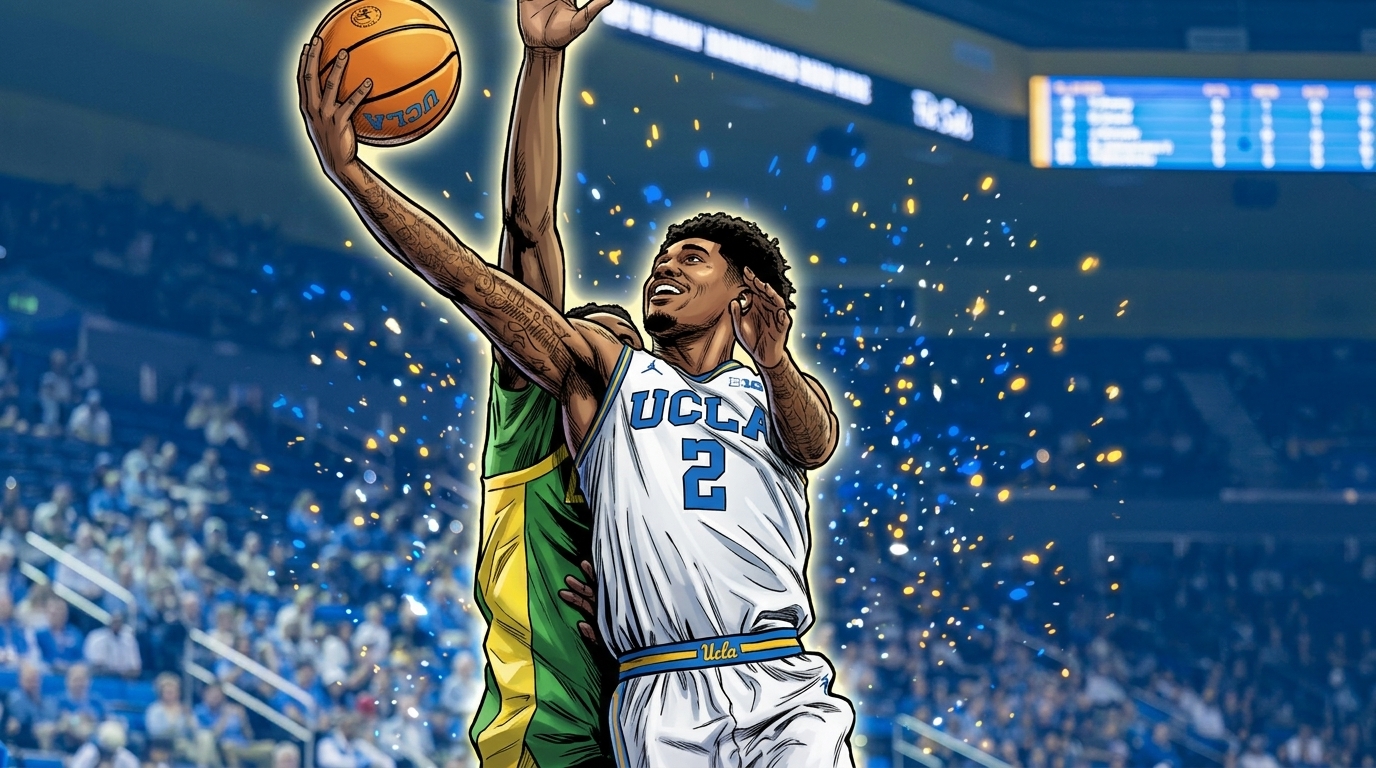
The UCLA Bruins’ result carries less shock value than Oklahoma’s loss. The Arizona Wildcats were ranked fifth, not a 28-point underdog, but the history behind it is rarer. The No. 22 Bruins beat No. 5 Arizona 84-75 at a neutral site in Las Vegas, and it marked the first time UCLA has opened a season by beating a ranked team since 2000-01, when the Bruins knocked off No. 7 Kansas. Twenty-six years is longer than most of this year’s UCLA roster has been alive.
Trent Perry ran the show for Mick Cronin’s team with 21 points and 5 assists. Arizona got a monster individual performance in defeat: Ivan Kharchenkov scored a career-high 38 points and still watched the Wildcats lose by nine. A program-record-level scoring night from Arizona’s best player, canceled out anyway, is its own small data point. Arizona wasn’t flat or careless. It ran into a team that matched its best player shot for shot and still had enough left to win by double digits.
Memphis Didn’t Dominate Iowa State: It Survived It
The pregame framing on the Memphis Tigers’ win had them controlling the game from start to finish. The box score tells a messier story. Memphis and the Iowa State Cyclones traded the lead eleven times in the first half alone, with seven ties and neither team ahead by more than five points at any point before halftime. Memphis led 40-39 at the break on the strength of a buzzer-beating dunk from Luke Almodovar, the SEMO transfer who finished with 18 points and 8 rebounds.
It didn’t get more comfortable from there. Memphis’s largest lead of the entire game was seven points, 69-62, with just over five minutes left. Iowa State answered immediately with a 7-0 run to tie it at 69, and from there it came down to who wanted it more in the final ninety seconds. Jayden Reid scored 11 of his 26 points in the last three minutes, capped by a go-ahead three with 38 seconds left that held up for an 80-76 final. Memphis didn’t impose its will on a ranked opponent for forty minutes. It trailed or sat tied for most of the night and needed a late shot-making stretch from one player to escape with the win.
So Is the Talent Gap Actually Closing?
Three results from one night can’t prove a permanent shift in talent distribution by themselves, but they’re a real signal. East Texas A&M’s upset is the second-largest point-spread shock in thirty years, and the largest one, Eastern Illinois over Iowa in December 2022, happened inside the same four-year window. That’s not a coincidence showing up twice.
Two of the three biggest point-spread upsets of the last thirty years landing inside a four-year stretch argues the East Texas A&M result isn’t a freak outlier so much as the latest data point in a pattern that was already building before Monday. Pair that with UCLA snapping a twenty-six-year drought and Memphis needing a defensive stand to protect a one-possession lead, and a single night produced three independent readings pointing the same direction.
None of this happens in a vacuum. The transfer portal has already scrambled most rosters beyond anything recognizable from five years ago, redistributing players from blue bloods to mid-majors fast enough that preseason rankings read more like guesses than projections in year one of a new roster cycle. A mid-major beating a power-conference favorite outright, on its own floor, by not flinching for forty minutes, is exactly the kind of result the portal era was supposed to make less rare.
Call it parity if the word still means anything after how often it gets thrown around in November previews that age badly by March. The evidence from one night says the gap between the top of the sport and the middle of it got shorter this offseason, and opening night put three separate proofs of it on the same slate before anyone’s model had a chance to catch up. I’d bet on seeing at least one more top-25-over-top-5 shocker before Thanksgiving. The preseason numbers just haven’t adjusted to this era yet.