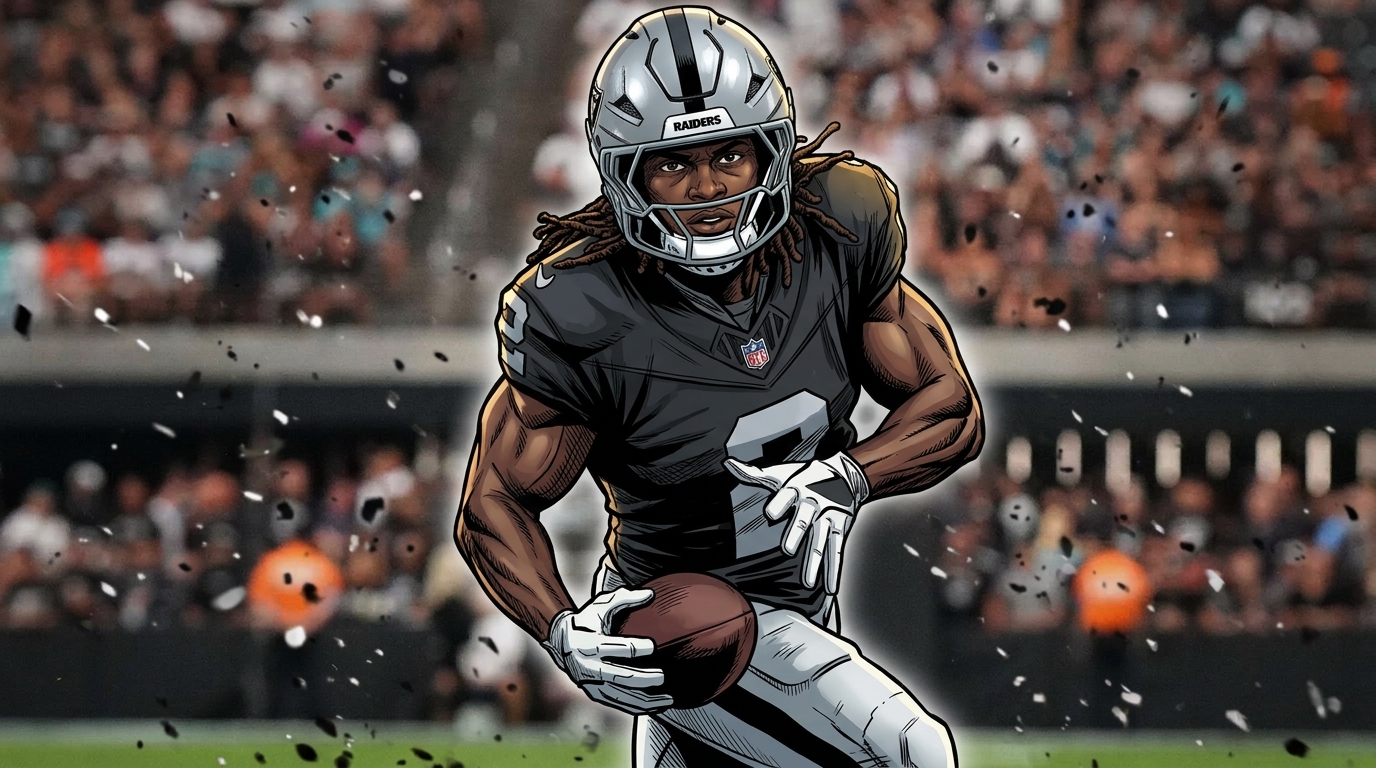

Before Netflix put a name on this, the internet had already decided what kind of story it was: an audacity highlight reel, a guy so bold with a fake 49ers jersey and a white Corvette that he earns the clip-compilation treatment. I think that’s actually where the real failure starts, not the $1.3 million or the twenty-six women the government says he defrauded. We reacted to this like a heist movie trailer, not like a system failure, and nobody circled back to ask the only question that matters: why did “NFL player” work in the first place.
Every piece of coverage since the scheme became public has leaned on the same framing: how could anyone fall for this? That question does real cultural work, and not the work it looks like it’s doing. Framing this as a story about gullible women lets the rest of us skip the part where we’d probably have made the same call. We covered the scam itself back in August, and even then the replies wanted an audacity story: the Corvette, the staged “practice” footage, the invented “expedited account” investment pitch, the detail that he was still wearing 49ers gear when he was arrested at the Boise airport, like he couldn’t write himself out of the bit even in handcuffs. Nobody wanted the boring version. The boring version is that “current or former NFL player” is one of a small number of claims a stranger can make about himself that almost nobody checks.
What’s genuinely strange, once you sit with it, is that there’s no normal mechanism by which a civilian can verify someone is or was a professional athlete, especially a name that isn’t a household one. Rosters turn over constantly. Practice squads and injured reserve and guys who got a single preseason rep all exist in a gray zone most fans never track. “I play receiver for the 49ers” isn’t a claim most people know how to falsify, so it doesn’t get falsified. It gets believed by default, the same way a stranger in scrubs gets treated as a nurse.
Love’s props didn’t manufacture that belief. They decorated a premise his targets had already granted him. Once “I play for the 49ers” lands, a stranger’s brain stops running verification and starts running confirmation. Every subsequent detail just has to not contradict the story, not prove it. A helmet in the trunk, a jersey on the hanger, a video that reads as practice footage: none of that is evidence of anything on its own. It only works because the real work already got done by three words.
https://x.com/FearedBuck/status/2110460661935583444
That’s the tweet that’s been circulating since Netflix confirmed the project, and it’s worth noticing what it describes without editorializing: firsthand accounts, how he built the identity, trust. The internet is already framing this as a mechanism story, not just an audacity story, even before a single frame airs.
According to Netflix’s own rundown of the project, Maclain Way and Chapman Way — the directors behind Wild Wild Country — are attached as executive producers. Wild Wild Country was never really about Rajneeshpuram’s day-to-day logistics. It was about how an entire town’s trust apparatus got exploited by people who understood exactly which claims nobody double-checks. Putting those two names on a catfishing story isn’t a neutral choice. Somebody read this and recognized it wasn’t really a story about one unusually bold liar.
I’ve written before about what a sports documentary chooses to leave out. The way ESPN’s Caitlin Clark coverage handled its own omissions is still the clearest recent example of a documentary’s gaps being the actual story. “Wide Deceiver” faces its own version of that test. Does it build toward “he was audacious,” which is comfortable and ends in applause for his nerve, or toward “this works because almost nobody checks,” which indicts the system the viewer is sitting inside? Executive producers who made their reputation on the second question is a reasonable bet, not a guaranteed one.
The obvious pushback here: these women should have looked him up, reverse-searched the photos, asked somebody who follows the NFL whether the roster spot checked out. That’s fair as advice and thin as an explanation. Twenty-six women were defrauded of more than $1.3 million, according to reporting from Hollywood Unlocked, and the FBI has since identified roughly thirty-five more potential victims beyond that. That’s a lot of people failing an identical background check, which should make you suspicious of the check, not just the people who skipped it. Dating apps don’t verify athlete claims. The league has no process for a stranger’s spot-check. Asking individual women to have built a verification system that no institution around them bothered to build puts the burden exactly backward.
What I keep landing on is that Love didn’t invent a new kind of lie. He found an old one, status borrows trust and trust skips verification, and pointed it at one of the few identity categories where skepticism still reads as rude. Question a stranger’s claim to be a doctor and you’re being careful. Question whether the guy on the dating app actually suits up for the 49ers and you’re the one who doesn’t believe in romance. Love has pleaded not guilty, with a trial set for December. The documentary will have its firsthand accounts and its true-crime beats ready before that trial even starts. I’m less interested in whether it nails his audacity than whether it asks why the premise worked at all, because if “NFL player” is still a password with no lock behind it, somebody is already running this exact scheme under a different team’s colors right now, and a Netflix doc about the last guy isn’t going to be the thing that stops him.