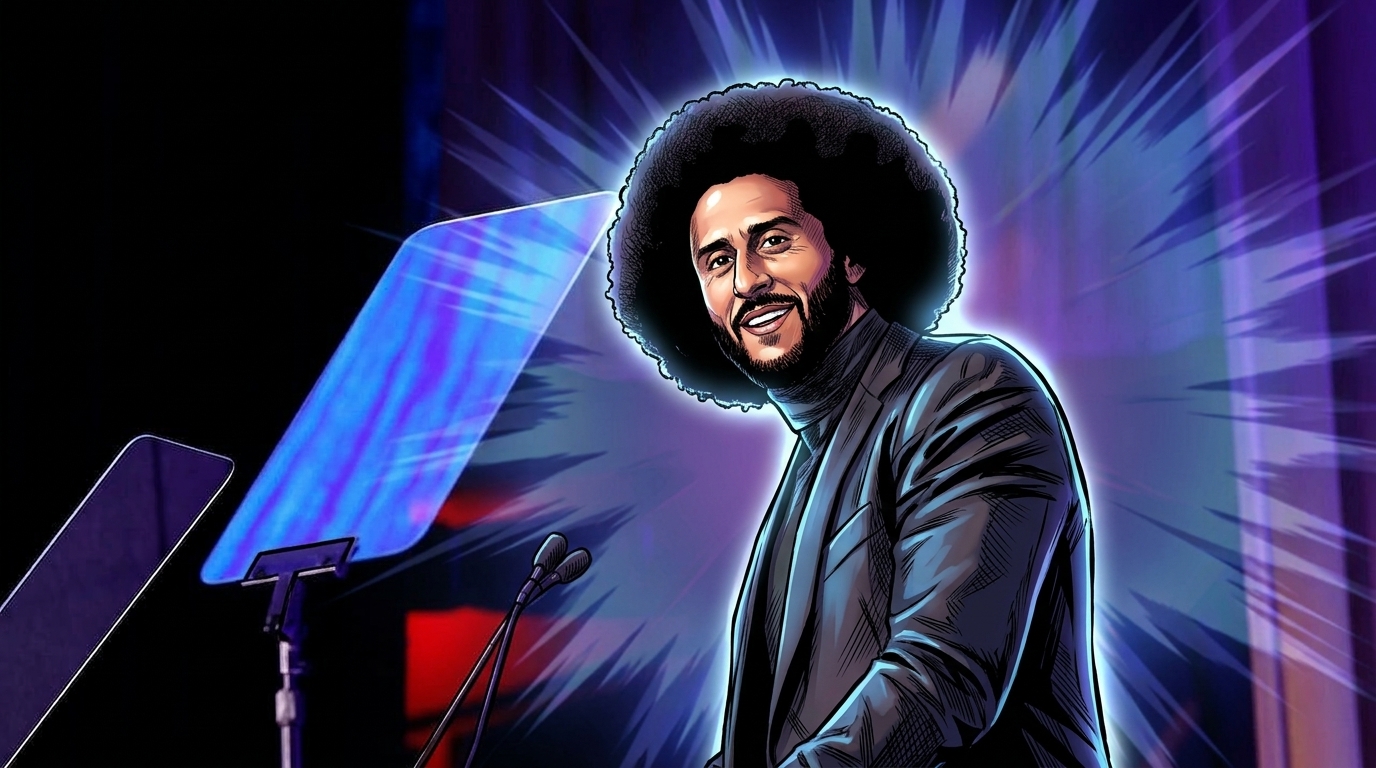

Troy Vincent stood in front of NFL owners in December 2022 and used the phrase “slave auction” about the scouting combine. He’s the league’s executive vice president of football operations, a Black man who played sixteen years in this sport before it became his job to help run it, and he was pushing for reforms that would let players wear more than compression shorts under fluorescent lights while scouts measured them. Jerry Jones and Arthur Blank pushed back. Within a news cycle, it was over, and most people never heard about it at all.
I’ve watched this exact fight happen every time Colin Kaepernick makes a version of the same comparison, and at this point I don’t think it’s actually about the combine. Vincent said it from inside the building, with a title and a pension and an eventual return to the league’s good graces. Kaepernick says it from outside the building, unemployed since 2016, and it becomes a week of programming. That gap says less about the metaphor than it does about who the audience has already decided gets to use it, which is a more uncomfortable thing to sit with than arguing about word choice.
In his new memoir, The Perilous Fight, timed to the ten-year anniversary of the kneel that got him blackballed, Kaepernick writes about being photographed in compression shorts at the combine and says his mind went to “scenes I had witnessed in numerous movies depicting slave auction blocks.” He doesn’t stop at the image. He also describes what happened to him afterward as a version of “buck breaking,” the historical practice of publicly punishing an enslaved man to warn others not to step out of line, and applies that framing to his own blackballing as a message to any athlete considering the same move.
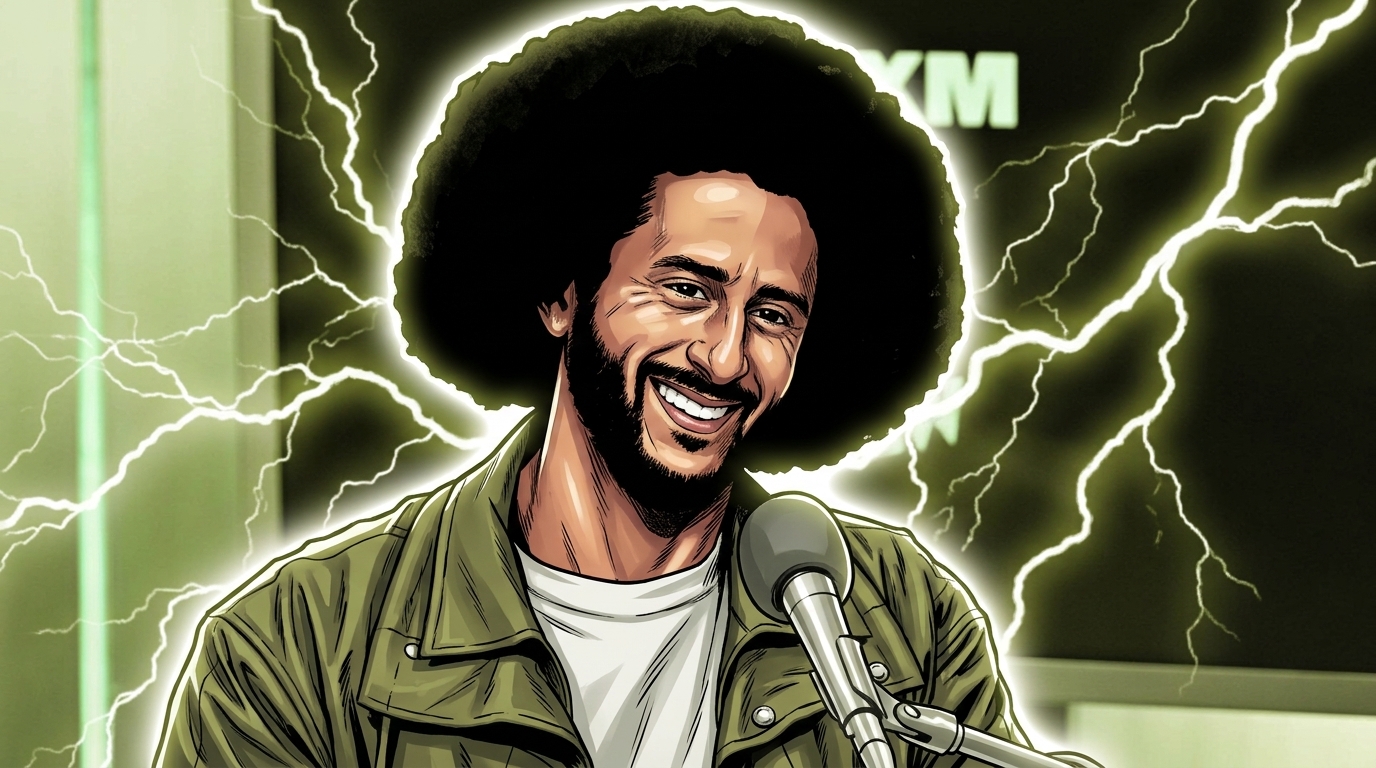
On Ryan Clark’s Pivot podcast last week, sitting with co-hosts Channing Crowder and Fred Taylor, Kaepernick called the combine’s physical evaluation a “meat market” and said the process and the intentions behind it are the same as what he’d already put in the book. Clark, an ESPN personality who spent years as a player before this became his job, asked supportive follow-up questions instead of pushing back, and the segment moved on to something else.
It didn’t stay quiet for long. By Monday, Clay Travis and Buck Sexton had built a segment around how wrong the framing is, arguing the combine is one of the most coveted opportunities in professional sports. Whiskey Riff went further, calling it outright hypocrisy that a man comparing the league to slavery is also a man who wrote an open letter to the Jets asking for a roster spot. That’s a real tension worth naming honestly: wanting back into an institution you’ve just described in the ugliest terms available. I don’t think it disqualifies the underlying comparison, and I don’t think settling whether it does is the actual point of writing about any of this, but treating “is he a hypocrite” as the whole argument is an easier fight than the one about the metaphor itself.
Some of the online response skipped the hypocrisy angle and went straight for mockery, treating the phrase “meat market” in quotation marks as though the punctuation alone were the punchline.
https://x.com/JoshRileyUE/status/2019237047605817641
That style of reply skips the substance entirely and dunks on the phrasing, which functions less as a counterargument than as a signal to whoever’s watching about which side you’re allowed to stand on without doing any of the reading.
None of this is new terrain, which is the part that should embarrass anyone still covering it like breaking news. Back in November 2021, Sunny Hostin and Michele Tafoya had this identical fight on The View, sparked by Kaepernick’s Netflix special “Colin in Black and White,” which cut a slave-auction reenactment directly against combine-drill footage. Five years later the footage has changed and the hosts have changed, but that 2021 clip is essentially the last time this exact discourse cycle ran, just with an anniversary peg instead of a fresh news one. It didn’t resolve then. It won’t resolve now. It’s the same fight over the metaphor, just restaged with new hosts.
There’s a version of this where the outrage cycle becomes the actual story, and I keep coming back to the backlash proving the piece’s point as a useful template: the reaction to a piece of writing can end up demonstrating the exact dynamic the writing described, without anyone involved clocking that they’ve done it. Every time Kaepernick’s combine comparison to a slave auction resurfaces, the fight over whether he’s allowed to say it becomes evidence for his underlying claim, which was never really about drills and stopwatches. It was about who controls the terms of the conversation in the first place.
Sports media isn’t built to referee which historical comparisons are permissible in a conversation about a job interview. I don’t know that any institution is. But sports media in particular restages the fight instead of settling it, with the same beats every time: someone says something charged, someone with more institutional standing said the identical thing years earlier to a fraction of the blowback, and the apparatus argues about tone instead of asking why the tone reaction is so lopsided. Troy Vincent used the same phrase back in 2022, from inside the league office, and it barely survived a single news cycle. It’s not unlike a backlash cycle that never actually resolves, where the discourse repeats less because the question got more complicated and more because nobody with the platform to end it has any reason to.
Swipe has run some version of this story three times in the past seven weeks, which I mention not to flex our news judgment but because it’s the clearest proof I’ve got that the discourse cycle restages itself, including here. We’re part of the machine that keeps Troy Vincent’s version of the sentence forgotten and Kaepernick’s version permanently newsworthy, and writing this piece doesn’t exempt me from that, it just makes me aware of it while I’m doing it.
I don’t know if “slave auction” is the correct description of a scouting combine, and I’m not going to pretend I’ve landed on an answer in this last paragraph. What I keep noticing is that nobody actually arguing about it seems interested in landing on one either. The metaphor was never really the thing up for a vote. The right to use it is, and that’s a much less comfortable thing to admit is what everyone’s actually fighting about.