
Cleveland didn’t beat Dillon Gabriel for the starting quarterback job this week; it never had to, because Gabriel wasn’t entered in that race, and the fastest way to spot an organization protecting a shaky decision is to watch how quickly it can make an inconvenient name disappear into a medical form.
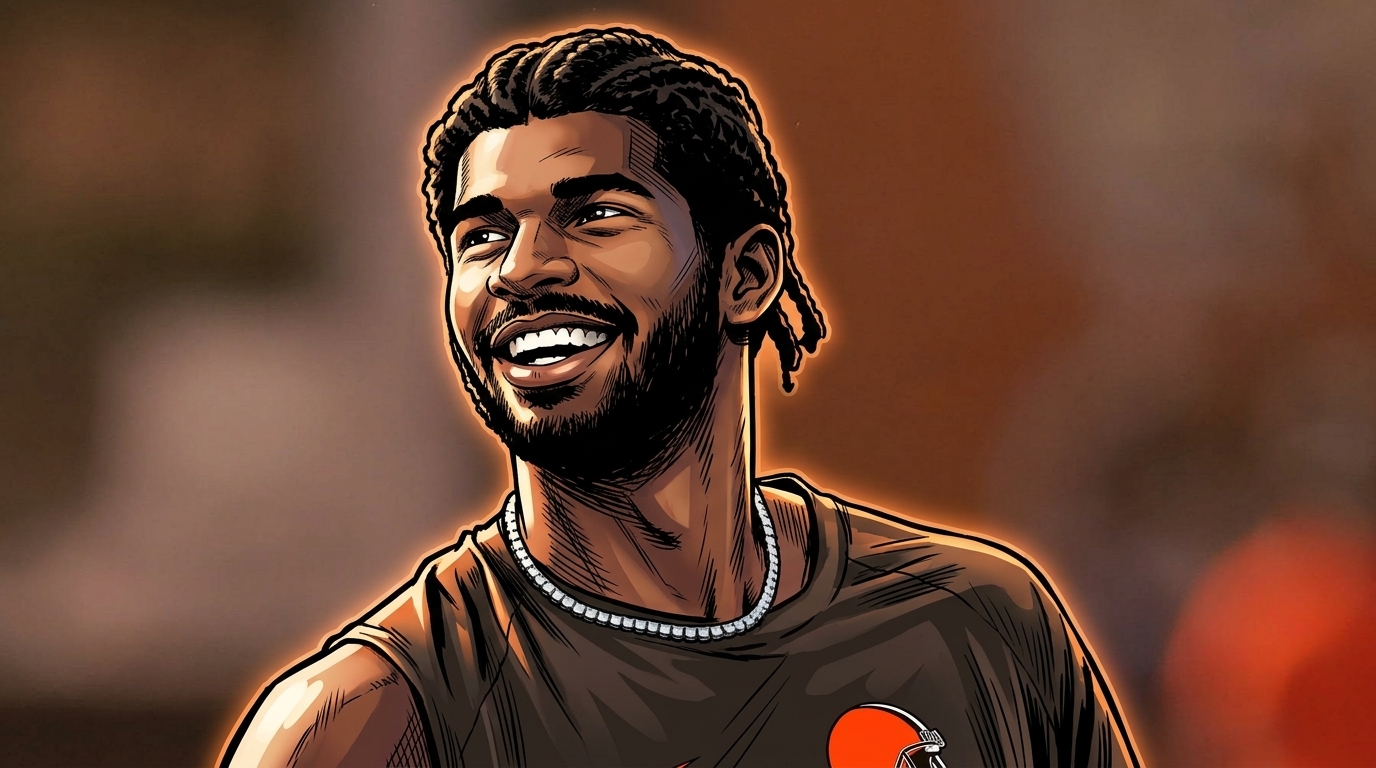
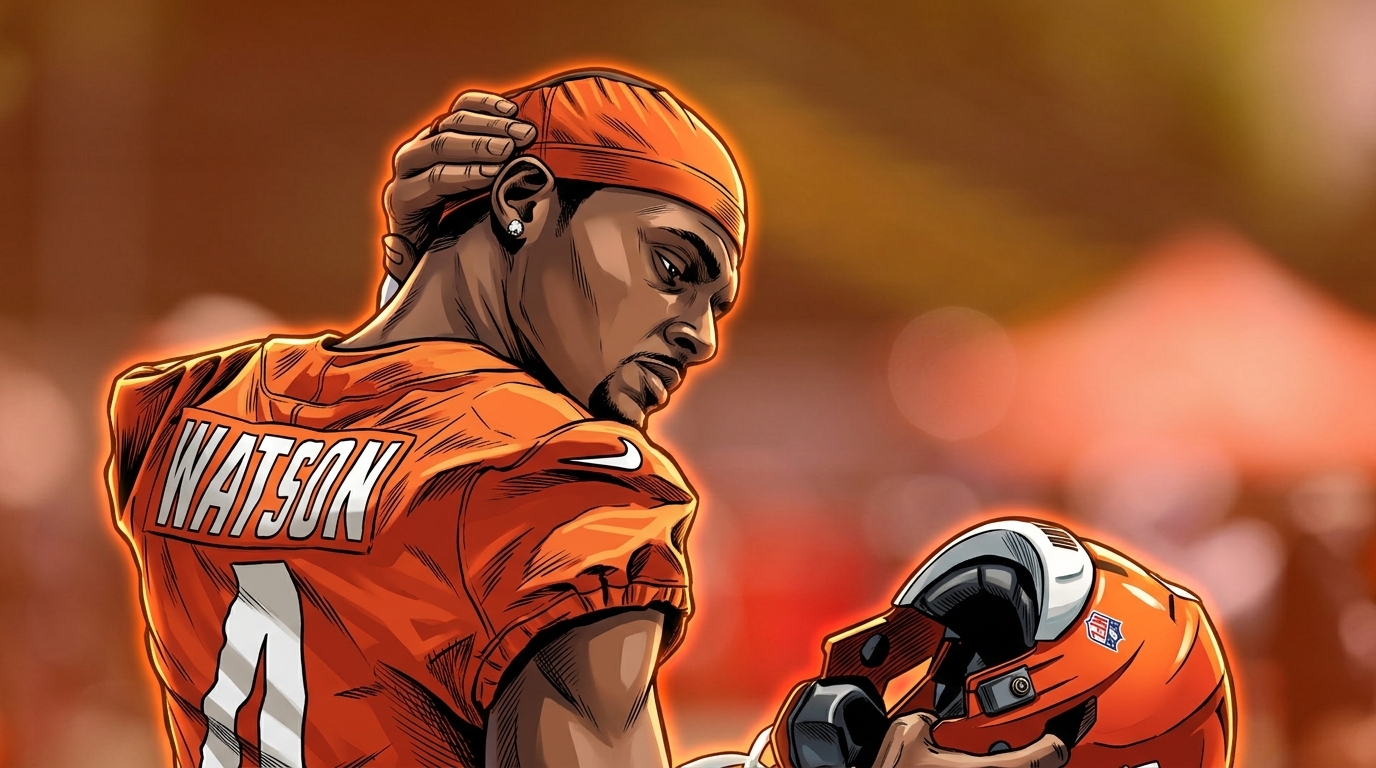
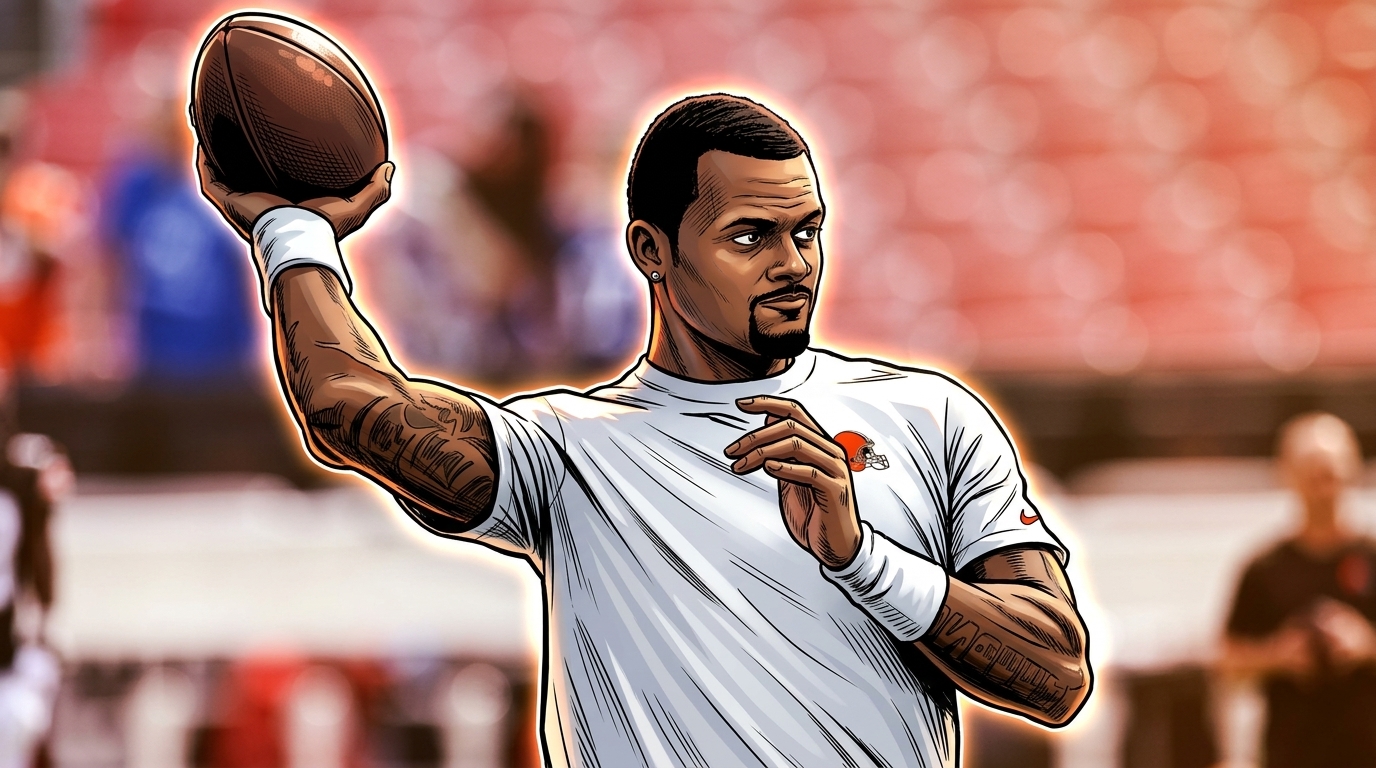
The actual competition, the one ESPN reported the Browns settled Monday, was between Deshaun Watson and Shedeur Sanders, the fifth-round pick who started seven games as a rookie last year, started this preseason’s opener, and will now hold a clipboard for a coach who described Watson’s case as a matter of “full body of work.” Sanders lost, and the case that Watson hadn’t actually won the job was already making the rounds before that announcement landed. Losing to Watson is a defensible outcome even for people tired of the whole quarterback saga. What’s harder to defend is what “full body of work” conveniently skips.
The detail worth sitting with is that Watson and Sanders both sat out the preseason finale against New England. Todd Monken used that game to evaluate Gabriel and rookie Taylen Green instead, since neither of them was competing for anything. Gabriel went 12-of-15 for 186 yards and three touchdowns, spread the ball to eight different receivers, and helped put up 37 points in a game the two men who actually wanted QB1 didn’t bother to suit up for. Watson’s most recent competitive snaps, by contrast, came five days earlier in Buffalo: 5-of-12 for 35 yards, an interception, and boos loud enough that he called the reaction personal before walking it back with an apology Monday. That’s the body of work Monken weighed against a quarterback who wasn’t allowed to enter the room.
None of that, alone, is scandalous. Gabriel lost the job to Sanders last season after going 1-5 as a starter, and preseason stat lines don’t erase a real track record. What turns this into something else is the four days after Cleveland handed Watson the job: Gabriel went on injured reserve with a back injury from that same finale, designated to return in about a month, which let the Browns keep him, Watson, Sanders, and Green all on the quarterback depth chart without spending an active roster spot. The player who just delivered the best quarterback performance on the roster got filed under a designation the exact week the front office needed him out of the conversation.
Picture the injured reserve list as a filing cabinet, the kind every front office keeps for players who are more useful sorted than seen. Nobody has to release a name that complicates the quarterback math; the front office just needs a drawer, a checkbox marked “IR,” and a doctor’s note nobody outside the building gets to read. The move doesn’t require dishonesty to work; a real injury and a conveniently timed one look identical on paper, and paper is the only thing anyone outside the building gets to see.
Ben Volin called it the Cleveland equivalent of the Foxborough Flu, and Jake Liscow called it the most phantom IR designation he’d seen, both quoted in a roundup of a league already suspicious of the timing. Fans got there faster, landing on some version of “we all know he is fine.” Gabriel’s wife, Zo, went public specifically to shut that down, writing plainly that yes, Dillon hurt his back, yes, he’ll be fine, and yes, he’s still on the Browns. Take her at her word; a real injury and useful timing aren’t mutually exclusive, and the organization built itself the perfect cover story for a good problem it needed to make quiet.
Yahoo Sports had the placement details within the hour:
https://twitter.com/YahooSports/status/2094168173440352261
Nobody credible thinks Cleveland manufactured a back injury to solve a quarterback controversy. What it got instead was a real injury landing at the one moment it was maximally useful, and the front office already owns the Watson booing fallout from Buffalo well enough to know exactly how convenient that timing looks from the outside.