Cleveland Browns
The Cleveland Browns are an NFL franchise defined by Paul Brown's AAFC dynasty, Jim Brown, eight pre-Super Bowl titles, and a 1995 move and 1999 return.
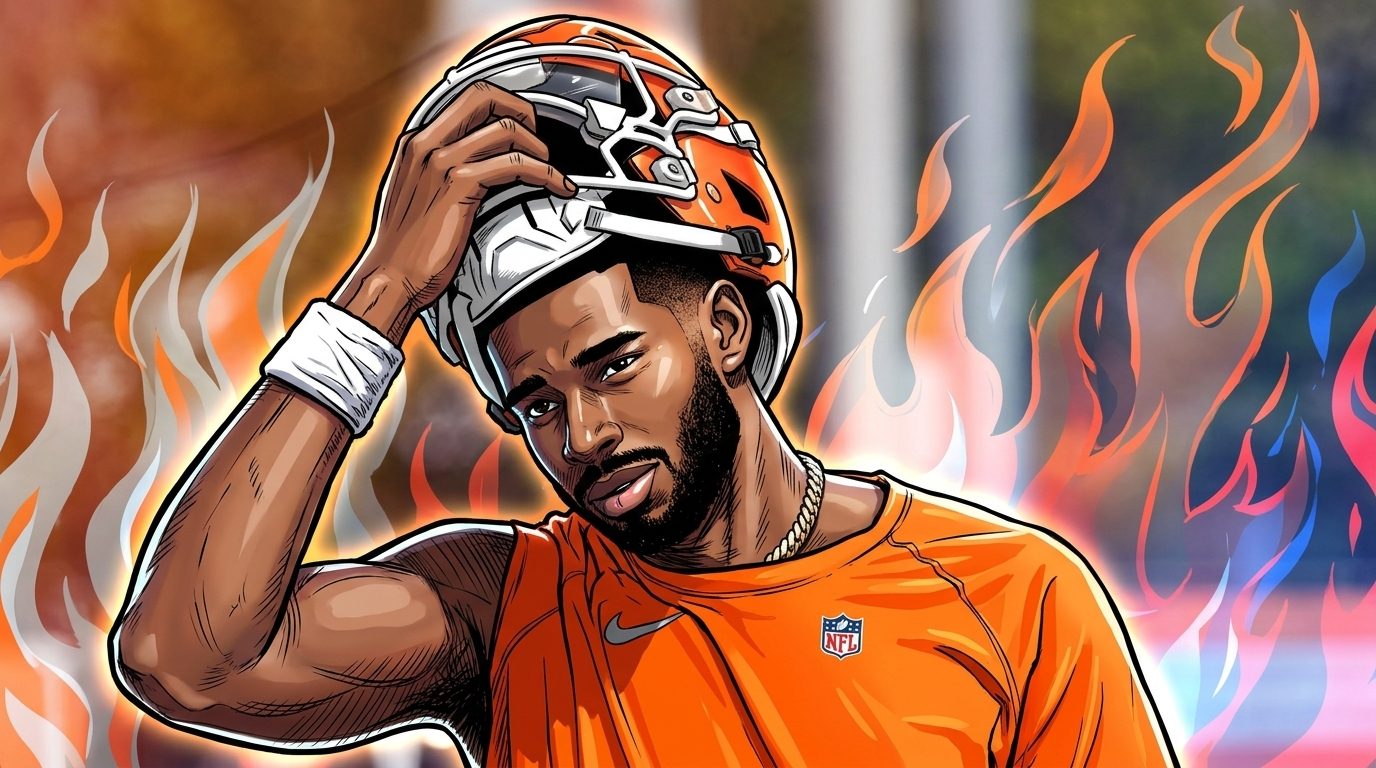
The Cleveland Browns are one of professional football’s founding powers and one of its longest-suffering fan bases — a franchise that won championships in each of its first five seasons of existence and has not won one since 1964. Born in 1946 as the dominant team of the All-America Football Conference, named for the coach who built them, and carried into the NFL on the shoulders of Otto Graham, Jim Brown, and Lou Groza, the Browns own eight league championships and a legacy of innovation that reshaped the sport. They are also one of only four active franchises never to reach a Super Bowl, a club whose modern identity is bound up in a 1995 relocation, a three-year dormancy, a 1999 rebirth, and a quarterback carousel that has run for a quarter-century. No NFL team’s past and present stand in sharper contrast.
| Vitals | |
|---|---|
| Established | 1944 (first season 1946, AAFC) |
| League / conference / division | NFL — AFC North (since 2002) |
| Stadium | Huntington Bank Field, Cleveland, Ohio |
| Owner | Jimmy and Dee Haslam (Haslam Sports Group, since 2012) |
| Head coach | Todd Monken (hired Jan. 28, 2026) |
| Titles | 8 — AAFC 1946, 1947, 1948, 1949; NFL 1950, 1954, 1955, 1964 |
Paul Brown and the AAFC dynasty (1946–1949)
The franchise was built around one man before it ever played a down. When the All-America Football Conference launched in 1946, Cleveland’s entry was named for Paul Brown, the former Ohio State and Great Lakes Navy coach hired to run it. Brown was a methodical innovator — he is credited with the modern playbook, classroom film study, the taxi squad, and face-mask refinements — and he assembled a roster that overwhelmed the new league.
Cleveland won all four AAFC championships the league ever awarded. The Browns took the title in 1946, 1947, 1948, and 1949, losing only four games across the conference’s entire four-year existence. The 1948 team went 14–0 and then beat Buffalo 49–7 for the crown — the first perfect season in professional football history, a quarter-century before the 1972 Dolphins.
The nucleus was a Hall of Fame core. Quarterback Otto Graham, fullback Marion Motley, tackle-kicker Lou Groza, and end Dante Lavelli headlined the offense, while guard Bill Willis — alongside Motley — helped reintegrate professional football in 1946, a year before Jackie Robinson debuted in baseball. When the AAFC folded after 1949, the Browns were absorbed into the NFL for 1950, carrying a reputation as a gimmick that would not last.
The NFL’s first dynasty (1950–1955)
They answered the doubters in a single afternoon. In their first NFL season, the Browns beat the two-time champion Philadelphia Eagles in the opener and then won the 1950 NFL Championship Game, edging the Los Angeles Rams 30–28 on a late Lou Groza field goal. It was the franchise’s fifth consecutive professional title across two leagues.
Cleveland reached the NFL Championship Game in each of its first six NFL seasons. The Browns lost the title game in 1951, 1952, and 1953, then reasserted themselves with back-to-back blowouts: a 56–10 rout of the Detroit Lions in 1954 and a 38–14 win over the Rams in 1955.
Otto Graham defined quarterback excellence for a decade. Across ten pro seasons (per Pro-Football-Reference) Graham played in the league championship game every single year, winning seven titles. He retired for good after the 1955 championship, having thrown for more than 23,000 combined AAFC and NFL yards.
The Jim Brown era and the 1964 title (1957–1965)
The greatest running back of his era arrived in 1957. Cleveland selected Jim Brown sixth overall out of Syracuse, and he was NFL Rookie of the Year and MVP as a rookie. Over nine seasons (Pro-Football-Reference) he led the league in rushing eight times, won three MVP awards, made the Pro Bowl every year, and retired as the sport’s all-time rushing leader with 12,312 yards and 106 rushing touchdowns — still the only player to average more than 100 rushing yards per game over a full career.
The era’s defining off-field moment was a firing. Art Modell bought the club in 1961 and, in January 1963, dismissed Paul Brown as coach and general manager, ending the only coaching tenure the franchise had known. Modell installed assistant Blanton Collier, and the power struggle between owner and founder would echo for decades.
Collier delivered Cleveland’s last championship. On Dec. 27, 1964, the underdog Browns shut out the heavily favored Baltimore Colts 27–0 in the NFL Championship Game, scoring all 27 points in the second half. It remains the franchise’s most recent title — and was the last major professional championship for the city of Cleveland until the NBA’s Cavaliers in 2016. Jim Brown played his final season in 1965, a year the Browns again reached the title game, and announced his retirement in mid-1966 to pursue acting, walking away at the height of his powers.
After Jim Brown: Collier’s contenders and the lean 1970s (1966–1979)
Cleveland stayed a power into the late 1960s. With Leroy Kelly inheriting the backfield, the Browns reached the NFL Championship Game in 1968 and 1969, losing both — to the Colts and the Vikings respectively — as the Super Bowl era dawned around them. The 1970 AFL–NFL merger moved Cleveland into the new AFC Central division.
Then came the franchise’s first sustained drought. The Browns made the playoffs in 1971 and 1972 but bottomed out mid-decade, going 3–11 in 1975 under new coaching and spending the back half of the 1970s in the division’s middle tier. The groundwork for the next contender, though, was being laid at quarterback.
The Kardiac Kids (1979–1980)
A run of last-minute finishes gave the team a nickname. Quarterback Brian Sipe, a 13th-round pick who grew into a star, led a team that decided game after game in the final moments — the “Kardiac Kids.” In 1980 Sipe was named NFL MVP, throwing for 4,132 yards and tying for the league lead with 30 touchdown passes as Cleveland won the AFC Central at 11–5.
It ended in the cold with one call. In the divisional playoff on Jan. 4, 1981 — a 4°F day at Cleveland Stadium, the coldest NFL game since the Ice Bowl — the Browns trailed Oakland 14–12 and, rather than attempt a short field goal, called a pass. Sipe’s throw was intercepted in the end zone on the play known forever as “Red Right 88.” It was the first of the gut-punch playoff losses that would come to define the franchise.
Kosar and three times to Denver (1985–1990)
Bernie Kosar engineered his way home. A Northeast Ohio native, Kosar maneuvered into the 1985 supplemental draft specifically to play for Cleveland, and under coach Marty Schottenheimer he led a resurgence powered by the bleacher faithful of the Dawg Pound. The Browns reached three AFC Championship Games in four seasons — and lost all three to the Denver Broncos.
Two of those losses have their own names. On Jan. 11, 1987, “The Drive” saw John Elway march 98 yards in the final minutes to force overtime, where Denver won 23–20. A year later, on Jan. 17, 1988, “The Fumble” ended a furious Cleveland rally when Earnest Byner was stripped at the goal line in a 38–33 loss. The third defeat came in the 1989 season, 37–21, again in Denver. No franchise of the era came so close, so often, to a Super Bowl without reaching it.
Decline and the Move (1991–1995)
Bill Belichick could not revive it. Hired in 1991, the future six-time Super Bowl champion went 36–44 across five seasons in Cleveland, a tenure best remembered for releasing the popular Kosar in 1993. A promising 1994 team went 11–5 and won a playoff game, but what followed overshadowed everything.
On Nov. 6, 1995, Art Modell announced the team would move to Baltimore. Citing stadium debt and the lack of a replacement for aging Cleveland Stadium, Modell revealed the relocation mid-season; the team collapsed to the finish and Belichick was fired. A settlement reached in early 1996 produced an unusual outcome: Cleveland retained the Browns’ name, colors, and entire history, while Modell’s relocated club became the new Baltimore Ravens. The Browns suspended operations for 1996, 1997, and 1998.
Dormant years and the 1999 return (1996–1999)
The NFL promised a rebirth, and delivered one. As part of the settlement, the league guaranteed Cleveland a franchise and a new stadium by 1999. The reconstituted Browns returned as an expansion team in 1999, stocked through an expansion draft and holding the No. 1 overall pick, which they spent on Kentucky quarterback Tim Couch. The team went 2–14 that first year back — the opening chapter of a long rebuild that never quite took.
The quarterback wilderness (2000–2017)
The return era was defined by instability at the game’s most important position. A 2002 team reached the playoffs, but the Browns otherwise churned through coaches, general managers, and an almost comic succession of starting quarterbacks. The nadir arrived back-to-back: a 1–15 season in 2016 followed by an 0–16 campaign in 2017, making Cleveland just the second team in NFL history to go winless across a 16-game schedule and leaving the franchise 1–31 over two years. The “quarterback carousel” became national shorthand: by the time Baker Mayfield took over, he was roughly the 30th different starter since 1999.
Mayfield and a playoff breakthrough (2018–2023)
The No. 1 pick of 2018 finally stuck, briefly. Baker Mayfield took over as a rookie and, two years later under first-year coach Kevin Stefanski, led the 2020 Browns to an 11–5 record and the team’s first playoff berth since 2002. On Jan. 10, 2021, Cleveland won 48–37 at Pittsburgh for its first postseason victory since the 1994 season. The 2023 team made the playoffs again at 11–6, but a revolving door at quarterback — injuries and churn pushed the lifetime starter count past 40 — kept the franchise from building on either breakthrough.
The Watson era (2022–present)
In 2022 the Browns made the most consequential bet in franchise history. Cleveland traded its 2022, 2023, and 2024 first-round picks, a 2022 fourth-round pick, a 2023 third-round pick, and a 2024 fourth-round pick to Houston for quarterback Deshaun Watson and signed him to a five-year, $230 million fully guaranteed contract — the largest guaranteed deal in NFL history. Watson had faced more than two dozen civil lawsuits alleging sexual misconduct during massage sessions, which he denied and largely settled; the NFL suspended him 11 games and fined him $5 million in 2022 under the personal conduct policy. On the field the deal soured further: Watson ruptured his right Achilles tendon on Oct. 20, 2024, then re-ruptured it in January 2025, costing him the entire 2025 season.
The defense gave Cleveland its biggest star. Edge rusher Myles Garrett, the No. 1 pick of 2017, was named NFL Defensive Player of the Year in 2023 and again in 2025, the latter after he set the single-season sack record with 23, breaking the prior mark of 22.5. Garrett requested a trade in February 2025, then signed a record four-year, $160 million extension in March 2025 that made him the league’s highest-paid non-quarterback — before Cleveland traded him to the Los Angeles Rams on June 1, 2026 for edge rusher Jared Verse and three draft picks, including a 2027 first-rounder.
The 2025 draft added two rookie quarterbacks and a national story. Cleveland took Oregon’s Dillon Gabriel in the third round, then traded up for Colorado’s Shedeur Sanders — son of Deion Sanders — at No. 144 overall in the fifth round after a widely covered draft slide. Both rookies started during a 5–12 2025 season, after which the Browns fired Stefanski on Jan. 5, 2026 and hired former Ravens offensive coordinator Todd Monken.
The 2026 season opened with Watson back under center. Cleveland named Watson its Week 1 starter over Sanders, his first start since the 2024 Achilles tear, and he made his season debut Sept. 13, 2026. Through six games — as of Oct. 23, 2026 — the Browns were 4–2 and atop the AFC North following a 13–10 win over the Ravens on Oct. 18, 2026. Off the field, the franchise broke ground on April 30, 2026 on a new domed stadium in suburban Brook Park, slated to open for the 2029 season and to carry the Huntington Bank Field name.
Retired numbers
The Browns honor five retired numbers, a small and distinctive set that spans the franchise’s founding generation. Two belong to men whose careers ended in tragedy rather than on the field: Ernie Davis, the 1961 Heisman winner acquired in 1962, was diagnosed with leukemia and died in 1963 without ever playing a regular-season game, and safety Don Fleming died in a 1963 construction accident. The franchise retired Davis’s No. 45 and Fleming’s No. 46 soon after their 1963 deaths and Groza’s No. 76 in 1968; no retirement year is on record for Graham’s No. 14 or Brown’s No. 32, both long out of circulation. Dante Lavelli, often mistakenly listed, is honored as a Hall of Famer but his number is not retired.
| No. | Player | Pos. | Browns tenure | Retired | Notes |
|---|---|---|---|---|---|
| 14 | Otto Graham | QB | 1946–1955 | Not recorded | Pro Football HOF 1965 |
| 32 | Jim Brown | FB | 1957–1965 | Not recorded | Pro Football HOF 1971 |
| 45 | Ernie Davis | RB | acquired 1962 | 1963 | Never played a game; died 1963 |
| 46 | Don Fleming | S | 1960–1962 | 1963 | Died 1963 |
| 76 | Lou Groza | OT/K | 1946–1959, 1961–1967 | 1968 | Pro Football HOF 1974 |
Season by season
Every season in franchise history, folded by decade, newest first. The Browns did not field a team from 1996 through 1998.
The 2020s 49–58 · 2 playoff berths · 1 playoff win
| Season | W–L | Finish | Playoffs |
|---|---|---|---|
| 2026 | 4–2 | 1st (AFC North, thru Wk 6) | In progress |
| 2025 | 5–12 | 4th (AFC North) | — |
| 2024 | 3–14 | 4th (AFC North) | — |
| 2023 | 11–6 | 2nd (AFC North) | Lost Wild Card (HOU 14–45) |
| 2022 | 7–10 | 4th (AFC North) | — |
| 2021 | 8–9 | 3rd (AFC North) | — |
| 2020 | 11–5 | 3rd (AFC North) | Won WC (PIT 48–37); Lost Div (KC 17–22) |
The 2010s 42–117–1 · 0 playoff berths · 0–16 in 2017
| Season | W–L | Finish | Playoffs |
|---|---|---|---|
| 2019 | 6–10 | 3rd (AFC North) | — |
| 2018 | 7–8–1 | 3rd (AFC North) | — |
| 2017 | 0–16 | 4th (AFC North) | — |
| 2016 | 1–15 | 4th (AFC North) | — |
| 2015 | 3–13 | 4th (AFC North) | — |
| 2014 | 7–9 | 4th (AFC North) | — |
| 2013 | 4–12 | 4th (AFC North) | — |
| 2012 | 5–11 | 4th (AFC North) | — |
| 2011 | 4–12 | 4th (AFC North) | — |
| 2010 | 5–11 | 3rd (AFC North) | — |
The 2000s 57–103 · 1 playoff berth
| Season | W–L | Finish | Playoffs |
|---|---|---|---|
| 2009 | 5–11 | 4th (AFC North) | — |
| 2008 | 4–12 | 4th (AFC North) | — |
| 2007 | 10–6 | 2nd (AFC North) | — |
| 2006 | 4–12 | 4th (AFC North) | — |
| 2005 | 6–10 | 4th (AFC North) | — |
| 2004 | 4–12 | 4th (AFC North) | — |
| 2003 | 5–11 | 4th (AFC North) | — |
| 2002 | 9–7 | 2nd (AFC North) | Lost Wild Card (PIT 33–36) |
| 2001 | 7–9 | 3rd (AFC Central) | — |
| 2000 | 3–13 | 6th (AFC Central) | — |
The 1990s 41–71 · 1 playoff berth · dormant 1996–98
| Season | W–L | Finish | Playoffs |
|---|---|---|---|
| 1999 | 2–14 | 6th (AFC Central) | — |
| 1995 | 5–11 | 4th (AFC Central) | — |
| 1994 | 11–5 | 2nd (AFC Central) | Won WC (NE 20–13); Lost Div (PIT 9–29) |
| 1993 | 7–9 | 3rd (AFC Central) | — |
| 1992 | 7–9 | 3rd (AFC Central) | — |
| 1991 | 6–10 | 3rd (AFC Central) | — |
| 1990 | 3–13 | 4th (AFC Central) | — |
The 1980s 83–68–1 · 7 playoff berths · 3 AFC title games
| Season | W–L | Finish | Playoffs |
|---|---|---|---|
| 1989 | 9–6–1 | 1st (AFC Central) | Won Div (BUF 34–30); Lost AFC Champ (DEN 21–37) |
| 1988 | 10–6 | 2nd (AFC Central) | Lost Wild Card (HOU 23–24) |
| 1987 | 10–5 | 1st (AFC Central) | Won Div (IND 38–21); Lost AFC Champ (DEN 33–38) |
| 1986 | 12–4 | 1st (AFC Central) | Won Div (NYJ 23–20, 2OT); Lost AFC Champ (DEN 20–23, OT) |
| 1985 | 8–8 | 1st (AFC Central) | Lost Div (MIA 21–24) |
| 1984 | 5–11 | 3rd (AFC Central) | — |
| 1983 | 9–7 | 2nd (AFC Central) | — |
| 1982 | 4–5 | 8th (AFC) | Lost First Round (LAR 10–27) |
| 1981 | 5–11 | 4th (AFC Central) | — |
| 1980 | 11–5 | 1st (AFC Central) | Lost Div (OAK 12–14) |
The 1970s 72–70–2 · 2 playoff berths
| Season | W–L | Finish | Playoffs |
|---|---|---|---|
| 1979 | 9–7 | 3rd (AFC Central) | — |
| 1978 | 8–8 | 3rd (AFC Central) | — |
| 1977 | 6–8 | 4th (AFC Central) | — |
| 1976 | 9–5 | 2nd (AFC Central) | — |
| 1975 | 3–11 | 4th (AFC Central) | — |
| 1974 | 4–10 | 4th (AFC Central) | — |
| 1973 | 7–5–2 | 3rd (AFC Central) | — |
| 1972 | 10–4 | 2nd (AFC Central) | Lost Div (MIA 14–20) |
| 1971 | 9–5 | 1st (AFC Central) | Lost Div (BAL 3–20) |
| 1970 | 7–7 | 2nd (AFC Central) | — |
The 1960s 92–41–5 · 1 NFL title (1964) · 4 title-game trips
| Season | W–L | Finish | Playoffs |
|---|---|---|---|
| 1969 | 10–3–1 | 1st (Century) | Won Conf (DAL 38–14); Lost NFL Champ (MIN 7–27) |
| 1968 | 10–4 | 1st (Century) | Won Conf (DAL 31–20); Lost NFL Champ (BAL 0–34) |
| 1967 | 9–5 | 1st (Century) | Lost Conf (DAL 14–52) |
| 1966 | 9–5 | 2nd (Eastern) | — |
| 1965 | 11–3 | 1st (Eastern) | Lost NFL Champ (GB 12–23) |
| 1964 | 10–3–1 | 1st (Eastern) | Won NFL Champ (BAL 27–0) |
| 1963 | 10–4 | 2nd (Eastern) | — |
| 1962 | 7–6–1 | 3rd (Eastern) | — |
| 1961 | 8–5–1 | 3rd (Eastern) | — |
| 1960 | 8–3–1 | 2nd (Eastern) | — |
The 1950s 88–30–2 · 3 NFL titles · 7 title games
| Season | W–L | Finish | Playoffs |
|---|---|---|---|
| 1959 | 7–5 | 2nd (Eastern) | — |
| 1958 | 9–3 | 1st (Eastern) | Lost Conf playoff (NYG) |
| 1957 | 9–2–1 | 1st (Eastern) | Lost NFL Champ (DET 14–59) |
| 1956 | 5–7 | 4th (Eastern) | — |
| 1955 | 9–2–1 | 1st (Eastern) | Won NFL Champ (LAR 38–14) |
| 1954 | 9–3 | 1st (Eastern) | Won NFL Champ (DET 56–10) |
| 1953 | 11–1 | 1st (Eastern) | Lost NFL Champ (DET 16–17) |
| 1952 | 8–4 | 1st (American) | Lost NFL Champ (DET 7–17) |
| 1951 | 11–1 | 1st (American) | Lost NFL Champ (LAR 17–24) |
| 1950 | 10–2 | 1st (American) | Won NFL Champ (LAR 30–28) |
The 1940s — AAFC 47–4–3 · 4 AAFC titles (1946–49)
| Season | W–L | Finish | Playoffs |
|---|---|---|---|
| 1949 | 9–1–2 | 1st (AAFC) | Won AAFC Champ (SF 21–7) |
| 1948 | 14–0 | 1st (Western) | Won AAFC Champ (BUF 49–7) |
| 1947 | 12–1–1 | 1st (Western) | Won AAFC Champ (NYY 14–3) |
| 1946 | 12–2 | 1st (Western) | Won AAFC Champ (NYY 14–9) |
By the numbers
Franchise marks
Cleveland’s all-time leaders span the generations: Brian Sipe holds the career passing record (23,713 yards), Jim Brown the rushing record (12,312 yards), and Ozzie Newsome the receiving record (662 receptions, 7,980 yards), per Pro-Football-Reference.
Per the list of Cleveland Browns seasons, through the 2025 season.
Ranks
- 4-for-4 AAFC championships — every title the league ever awarded (1946–49)
- 1 of 4 Active NFL franchises never to reach a Super Bowl
- 17th NFL franchise valuation ($9.0 billion, Sept. 2026)
Per the list of Super Bowl champions and Forbes, as of Sept. 2026.
Honors
- 4× NFL champion (1950, 1954, 1955, 1964)
- 4× AAFC champion (1946, 1947, 1948, 1949)
- Jim Brown — 3× NFL MVP
- Otto Graham — 7× pro champion
- Myles Garrett — 2× NFL Defensive Player of the Year (2023, 2025)
- 23 Pro Football Hall of Famers enshrined as Browns
Per the Pro Football Hall of Fame and team season records.
The arguments
Was the Watson trade the worst in modern NFL history? Owner Jimmy Haslam has defended the fully guaranteed $230 million deal as being in the team’s “best interest” at the time, framing it as the cost of landing a franchise quarterback. Critics across the league have called it the most damaging contract ever signed, pointing to the games lost to suspension, the Achilles injuries, and the salary-cap burden set against the premium picks surrendered to Houston. The two positions are rarely reconciled; they simply describe different facts about the same gamble.
Was Paul Brown’s firing justified? Art Modell framed the 1963 dismissal as a necessary modernization of a club run by a coach whose autocratic control — including trades made without the owner’s knowledge — had alienated players. Brown’s defenders note that the man was the architect of the franchise and the sport’s foremost innovator, pushed out two years before the title his roster won. Collier’s 1964 championship is cited by both sides as evidence.
And the Move itself? To Cleveland, Modell’s 1995 relocation was a betrayal that cost the city its team; to Modell, it was a financial necessity driven by stadium debt and a facility the city would not replace. The NFL’s unusual settlement — history and name staying in Cleveland, the players going to Baltimore — satisfied neither narrative fully and remains the defining grievance of the franchise’s modern era.
Why it matters
The Cleveland Browns are the NFL’s great study in contradiction: a founding dynasty that pioneered how the game is coached and played, and a modern franchise that has turned heartbreak into an identity. They gave the sport Paul Brown’s intellect, Jim Brown’s dominance, and a fan culture — the Dawg Pound, the orange helmet, the loyalty through 0–16 and relocation alike — that outlasts every losing season. No title since 1964 and no Super Bowl ever only sharpen the stakes. For Cleveland, the Browns are less a team than an inheritance, passed down with its glories and its grievances intact.