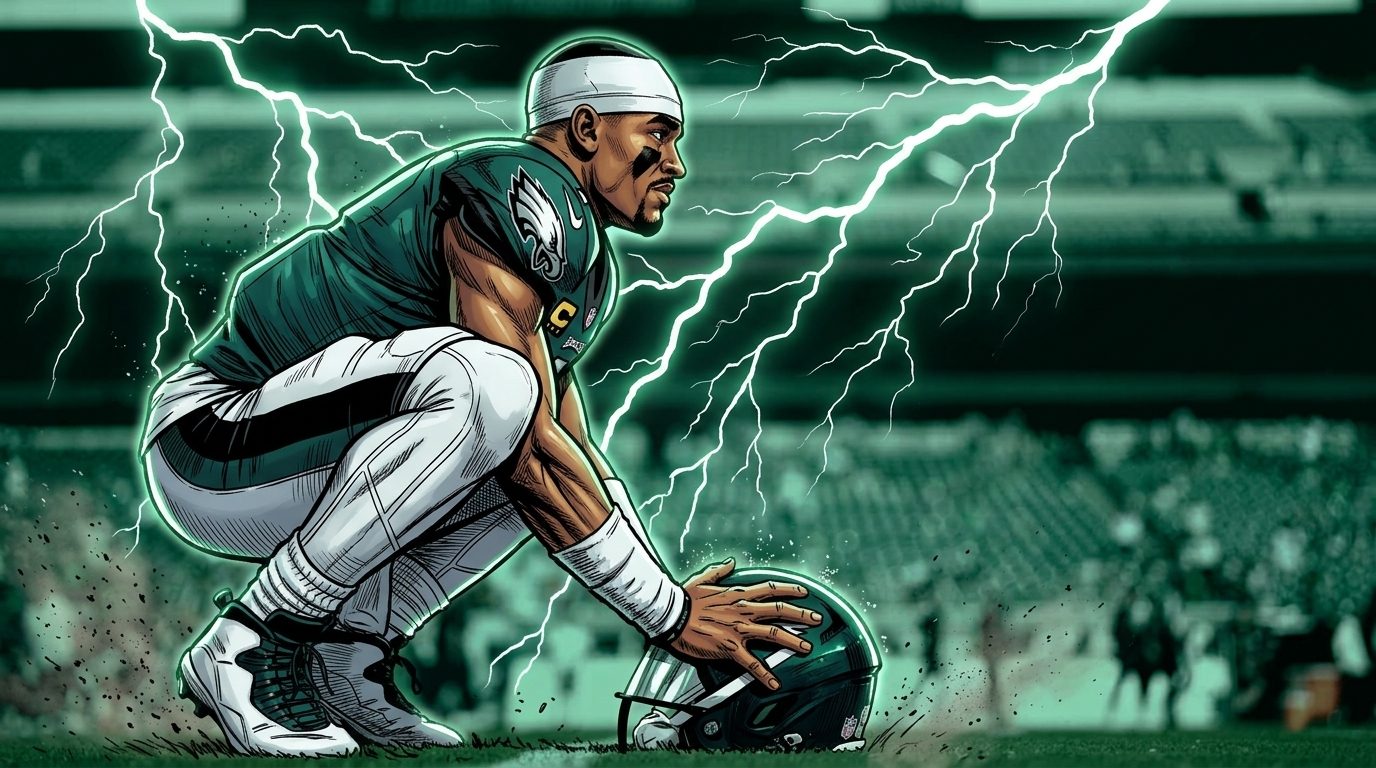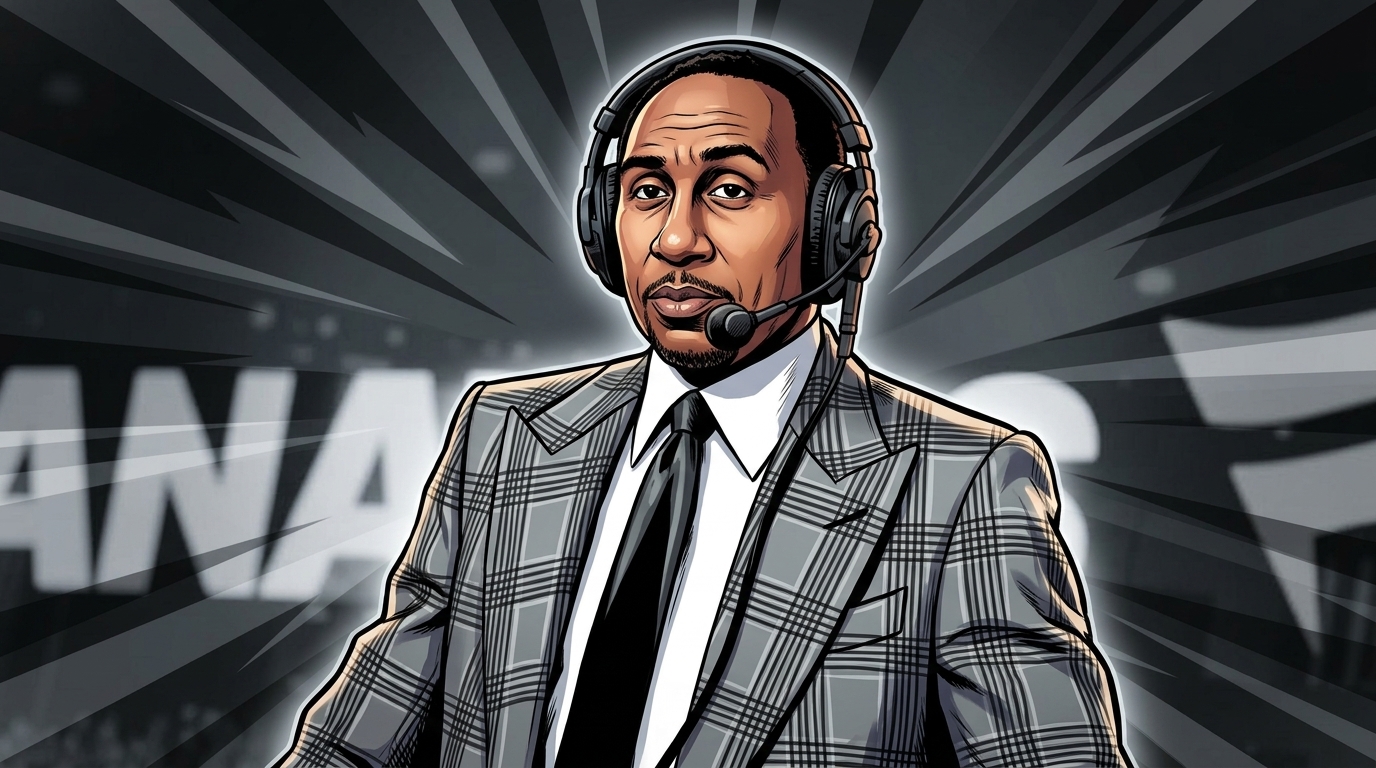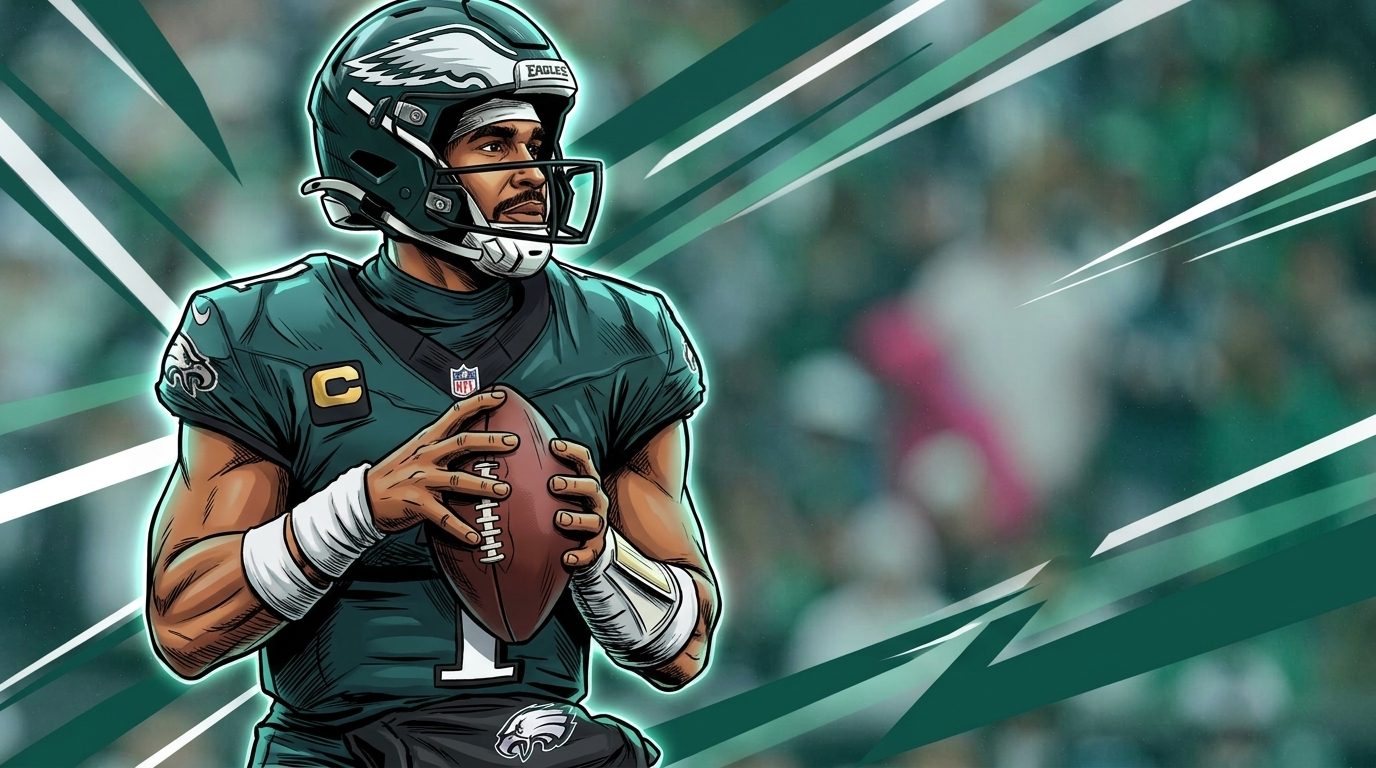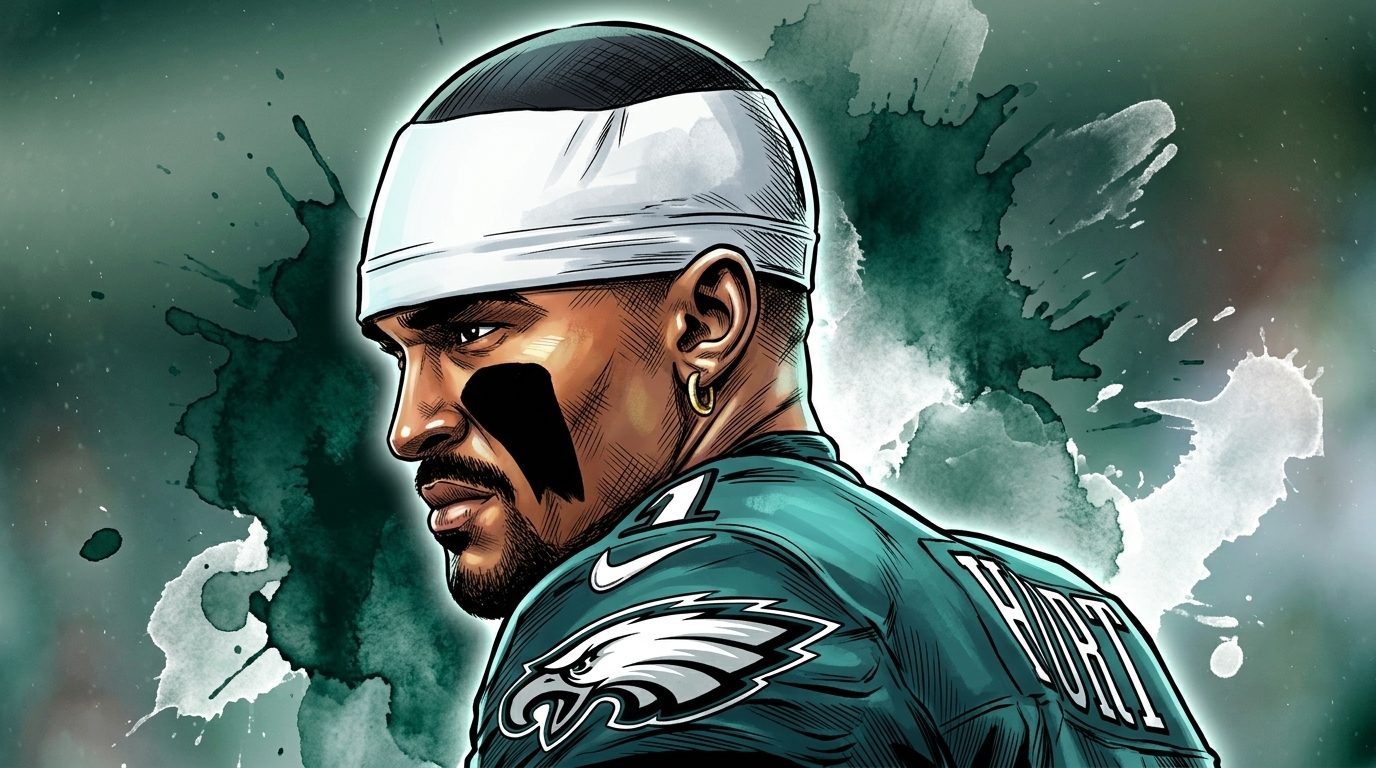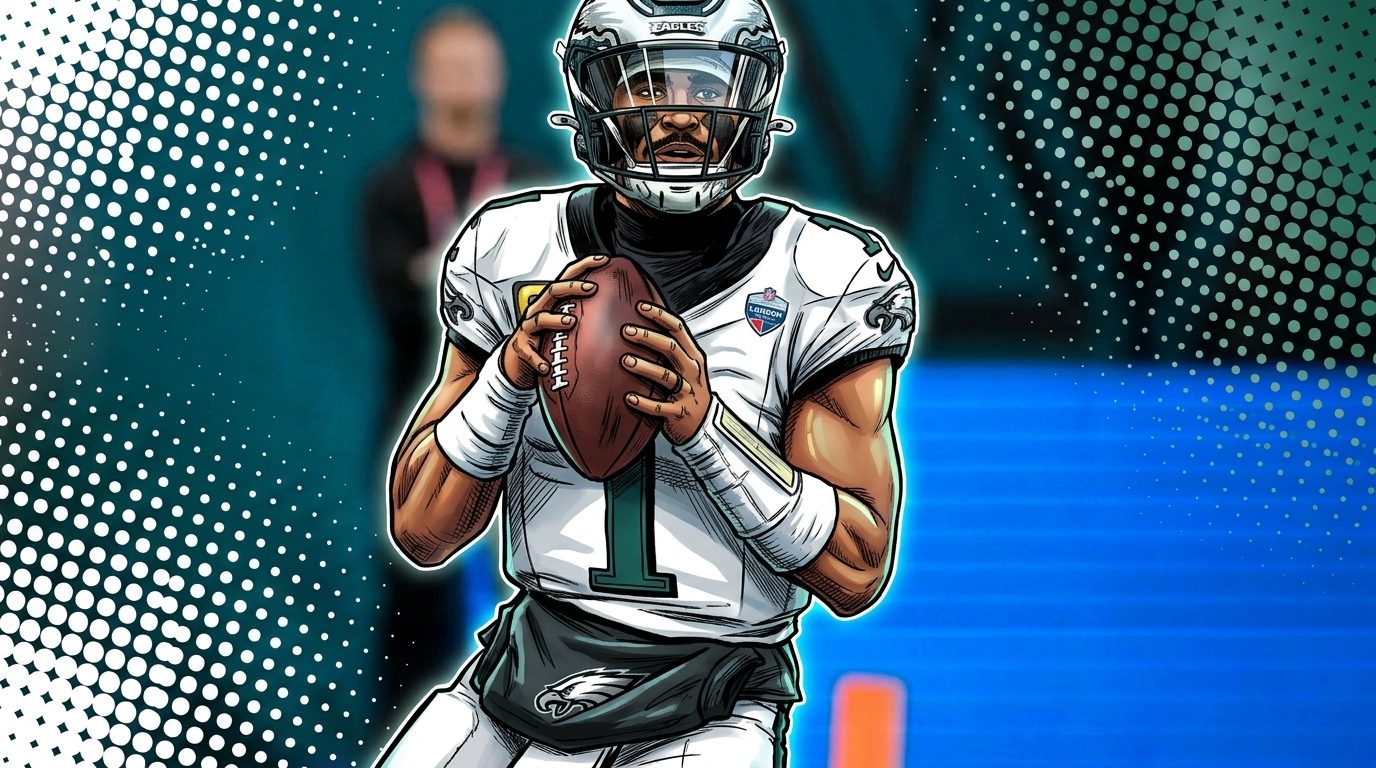

We’ve watched plenty of leagues absorb criticism from outsiders who owe them nothing. What’s happening around Jalen Hurts’ blood clots doesn’t follow that script. The loudest criticism of how the NFL and the Philadelphia Eagles handled this hasn’t come from some hostile corner of the discourse. It’s come from ESPN, which pays billions to broadcast NFL games, and from The Athletic, which operates as a content partner inside the league’s own ecosystem. When a league’s own paid partners won’t defend its handling of something this serious, that’s a heavier verdict than anything an outside critic could offer.
Start with what actually happened, because the timeline matters more than the noise around it. Hurts took a cleat to the calf against the Rams in Week 4, an injury that went unreported at the time. It surfaced on the injury report four days later, and on October 10 an ultrasound in London found a blood clot, which team doctors called stable and cleared Hurts to play. He started the next day against Jacksonville, throwing for 222 yards and a touchdown in a 19-17 loss, with the public none the wiser that the Eagles knew about the clot and played him anyway. A follow-up scan on October 14 showed the clot had moved. By October 19, the Eagles and Hurts’ agent, Nicole Lynn, confirmed bilateral pulmonary emboli and a deep vein clot, a season-ending diagnosis, and three to six months on blood thinners.
The NFL’s own review of how it handled Hurts’ blood clots landed exactly where internal reviews tend to land: no real problem here. Commissioner Roger Goodell’s chief medical officer called the Eagles’ approach “appropriately guarded,” and the league signaled no appetite to discipline the team over the medical timeline itself, only over how it was communicated. (A franchise getting graded on its own homework by a grader it employs is not exactly a shocking result.)
That’s where this would have ended most years: a quiet non-finding, a news cycle that moves on by the weekend. Instead, Chris Russo went on ESPN’s First Take and called the Eagles’ handling “a horrendous job,” ripping the decision to send head coach Nick Sirianni out to field reporters’ questions instead of a team doctor. “Put a trainer out there! Put a team doctor! You make the poor guy answer questions with a hungry media in Philadelphia? That was a disgrace!” Russo also used the moment to needle the league’s safety priorities while it keeps pushing an 18-game season, a connection the NFL would rather nobody draw out loud on its own highest-rated morning show. (I spent two years feeding research notes to TV analysts who read them off a card without digesting a word of it. Russo’s rant didn’t sound like a card. It sounded like a guy who’d actually watched the press conference.) Sirianni facing cameras instead of a physician wasn’t a one-time optics slip, either. It fit a pattern of Sirianni’s non-answers when reporters pressed him on the clots that only sharpened ESPN’s criticism of how the NFL and the Eagles handled Hurts’ recovery in the days that followed.
The NFL Players Association didn’t let the “appropriately guarded” framing stand, either. The union said it hadn’t been told about any internal investigation and that the league had indicated it didn’t plan to review Hurts’ care at all, then demanded a full investigation into how the situation was handled before anyone drew conclusions. Goodell’s response: “We welcome that.” Whether that reflects confidence in what a review will find, or just an acknowledgment that the union had already forced the issue, is something we’ll find out.
By October 25, the two sides had moved from dueling statements to a shared one. Per ESPN’s reporting, confirmed separately by TMZ, the NFL and NFLPA are now jointly reviewing the handling of the Hurts diagnosis. That’s not a reversal of the original clearance. It’s an acknowledgment that the question isn’t closed.
https://twitter.com/AdamSchefter/status/2114336763975999696
That’s about as rare as institutional admissions get in sports: a league agreeing, on the record, to look again at something it already called fine. Getting there took public pressure from outlets with every financial reason to look away instead.
The same day, Mike Silver wrote in The Athletic that the NFL was operating in “full cover-your-ass mode,” comparing the league’s posture to an employer grading an employee’s conduct on an off-site assignment, and arguing that qualified physicians, not public-relations instinct, should be the ones scrutinizing the Eagles’ medical decisions. Per the Inquirer’s framing, the contrast that keeps coming up is the Chiefs’ handling of Josh Simmons’ injury, where the team’s head trainer explained things publicly instead of sending the head coach out alone. The Athletic’s standing as an NFL content partner makes Silver’s framing pointed in a way an unaffiliated columnist’s version of it wouldn’t be.
I think the significant fact here isn’t the NFL’s conclusion. It’s who’s refusing to accept it. Outside critics calling a league’s injury-disclosure process inadequate happens every week. ESPN and The Athletic doing it, in public, about a partner they do business with every week of the season, is a heavier signal. The facts available to people close to this apparently don’t support the convenient answer, and even outlets with every incentive to let it go are choosing not to. This is the same shape of story that’s resonated with readers all week: an institution grading its own test, getting an A, and getting contradicted by people inside its own revenue chain. (Three outlets, three different levels of access to the league, and all three landed on the same read: something here doesn’t add up.)
Watch for three things from here: whether the joint NFL-NFLPA review produces findings beyond another “appropriately guarded” restatement, whether the union treats whatever comes out of it as sufficient, and whether ESPN and The Athletic keep pressing once the news cycle moves on to Week 9. Given how this month has gone, my guess is the pressure doesn’t let up until there’s an actual finding on paper, not just another joint statement promising one is coming.