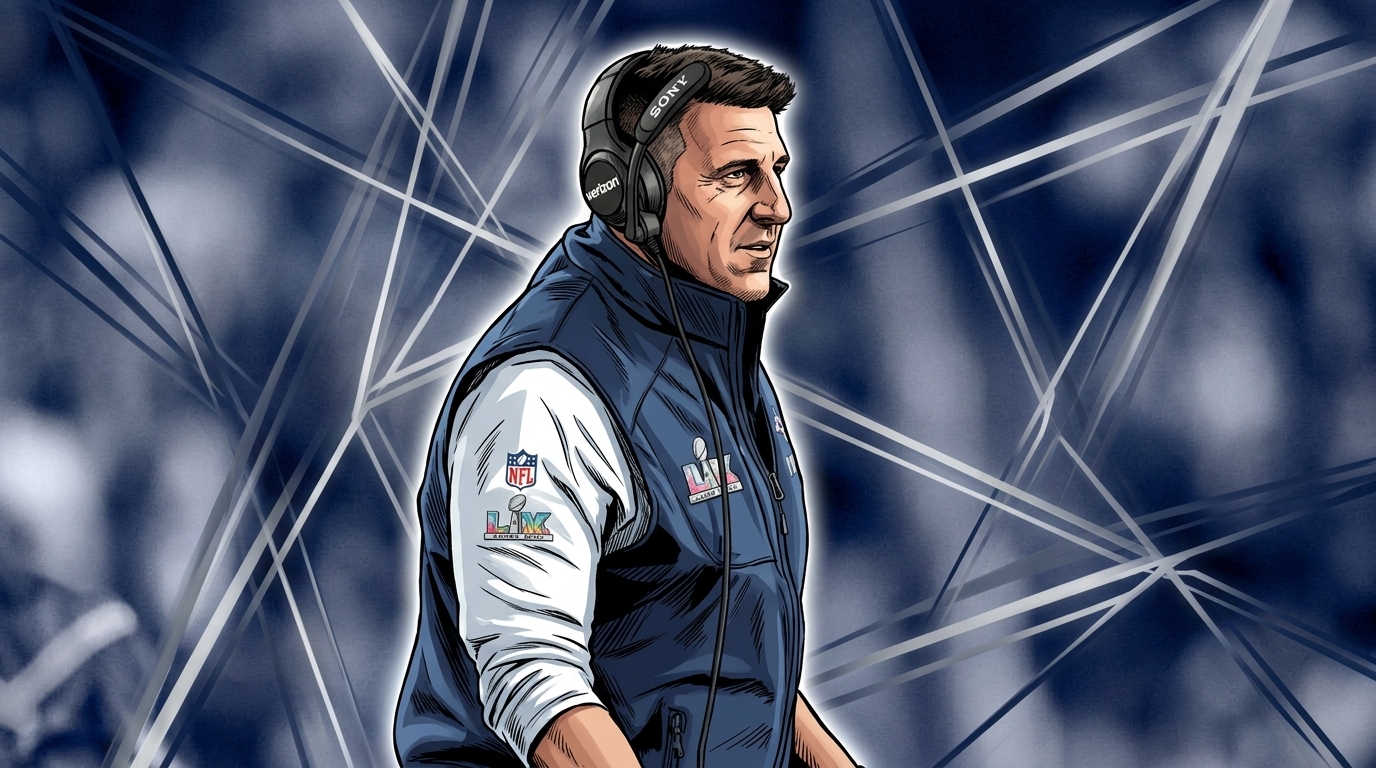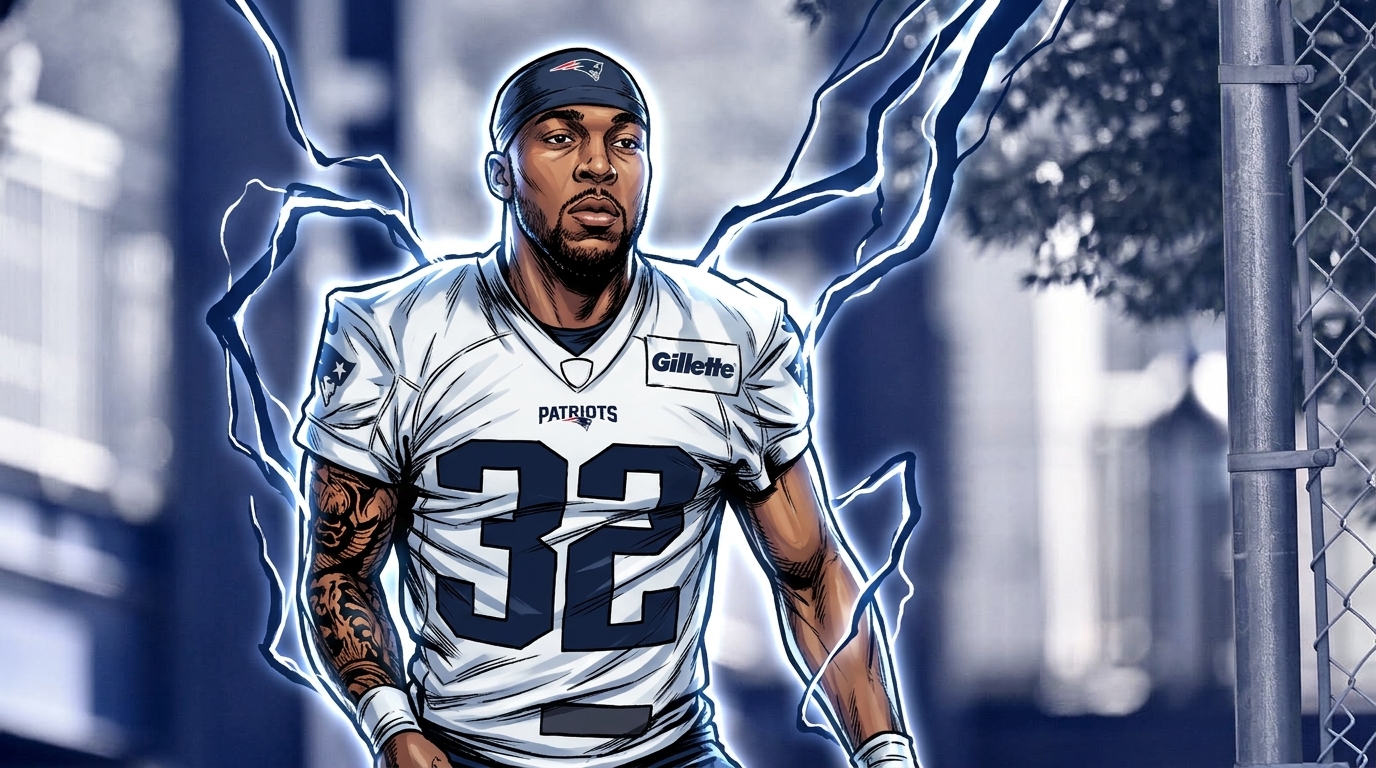

There’s a stat buried in Christian Gonzalez’s contract that matters more than the $135 million headline: how long Devon Witherspoon got to enjoy being the NFL’s highest-paid cornerback. Less than a month. That’s the entire 2026 cornerback market in one number, and if the pattern holds, Gonzalez’s record has an expiration date too.
I run three fantasy baseball leagues with my own valuation model, and this is exactly what a bidding market looks like when everyone realizes a scarce category got underpriced at the same time. Nobody wants to be the last team that paid 2024 rates for a 2026 asset. So they all move at once, and the record keeps changing hands before the ink dries on the last deal.
What Gonzalez’s $135M Actually Buys the Patriots
Four years, $135 million, $102 million guaranteed, a $33.75 million average that makes him the highest-paid corner in football by both measures. The Patriots are paying for a corner who came up big when it counted most, including a game-sealing interception in the AFC Championship win over Denver and a strong showing in the Super Bowl LX loss to Seattle.
The guarantee is the number that actually tells you how the Patriots view the risk. $102 million of $135 million guaranteed works out to roughly three-quarters of the deal locked in before he plays a snap of it, which is a level of commitment teams reserve for players they consider close to un-losable. Ian Rapoport had the framing that mattered most when the deal broke:
https://twitter.com/RapSheet/status/2097187645931589803
That’s not just a record contract. It’s New England deciding a shutdown corner is worth defending like a quarterback’s blindside, and the guarantee structure backs that up more than the topline number does.
Put Gonzalez’s profile next to the guy he just passed and the price makes more sense. Witherspoon is a 2023 No. 5 overall pick and three-time Pro Bowler who played only 12 games in 2025 and still made second-team All-Pro, with 72 tackles, seven passes defended and an interception, and was central to Seattle’s run to Super Bowl LX. Gonzalez was on the other sideline in that same Super Bowl. Two front offices looked at two corners who’d just played in the same championship game and, within weeks of each other, arrived at the same conclusion about what the position was actually worth.
Is the Cornerback Market Really Outpacing Everyone but QBs?
Yes, on pace. The position has set four new AAV records in roughly seven months in 2026, running from the low-$30-million range in early spring to Gonzalez’s $33.75 million now, a cadence of stepwise resets that matches or beats what the wide receiver and edge rusher markets have done, and trails only the quarterback position in speed.
For comparison: the receiver record belongs to Jaxon Smith-Njigba’s $42.15 million-a-year Seahawks extension, which passed Ja’Marr Chase. The edge record belongs to Will Anderson Jr.’s $50 million-a-year Texans deal, the first non-quarterback ever to clear that number, up from Micah Parsons’ $46.5 million. Quarterbacks are still their own universe. Patrick Mahomes resets that market at $64 million a year, and roughly eight passers now clear $50 million. But corner is the only other position moving in real time instead of waiting for its next scheduled cycle, and that’s the part that should surprise you. Receivers and edge rushers get paid because they touch the box score. Cornerbacks get paid for what doesn’t happen, and the market finally caught up to pricing an absence correctly.
The Corner Inflation Index: Four Resets in Seven Months
Line the deals up and the market doesn’t look like four isolated negotiations. It looks like one negotiation that kept getting reopened. Sauce Gardner and Derek Stingley Jr. sat at the top of the position around $30 million entering the year. Trent McDuffie reset it to $31 million in March after his trade to the Rams. Denzel Ward nudged it to $31.1 million with Cleveland in late July. Witherspoon jumped it to $33 million in mid-August. Gonzalez pushed it to $33.75 million before Witherspoon’s record even turned a month old.
Every one of those deals looked like the ceiling for a few weeks. None of them were. That’s the pattern that earns the name: a Corner Inflation Index, four rungs in seven months, each one setting the floor the next negotiation started from instead of the ceiling it settled at.
Who’s Next Up in Line for a Record Deal?
The honest answer is the market doesn’t need a specific name to keep resetting. It needs the conditions that produced the last four resets, and none of those conditions have gone away. The league is more pass-heavy than it’s ever been, which means every offensive coordinator is designing plays to isolate a cornerback in space, and there aren’t enough players who can win that matchup consistently in true man coverage instead of just surviving it in zone. Scarcity plus a passing boom is the same math that broke the receiver and edge markets open, and it’s still running.
That math shows up in how these deals get put together, not just what they cost. A corner who can travel with a No. 1 receiver snap for snap changes what a defensive coordinator can call on early downs, which changes what an offense has to game-plan for all week. That’s a different value proposition than a cornerback who’s only reliable in zone concepts, and the contracts are finally reflecting the gap between the two.
Gardner and Stingley are sitting at the bottom of the current top tier at figures that already look dated next to Gonzalez’s number, and every team with a corner entering a contract year is watching this cadence and adjusting its internal valuation before it ever gets to a negotiating table. That’s how a market actually accelerates — an entire position group recalibrating against whoever moved last, not one team acting alone.
Track the rest of our NFL coverage for whichever front office moves next, because on this timeline, “next” is not a 2027 problem. Four resets in seven months doesn’t end at four. Give me a fifth before the calendar turns.