
Everyone covering Thursday night is going to call this a defense-optional rerun of the 48-42 shootout the Lions and Bills played on Dec. 15, 2024, the last time these two teams met, and the first time that exact score had ever happened in NFL history. They’re only half right. The number that actually explains why that game turned into a track meet, and why this one might rhyme with it, isn’t the score from two seasons ago. It’s a pair of names: Jahmyr Gibbs and James Cook, the running backs everyone insists don’t decide games like this anymore.
That last meeting wasn’t some outlier where both defenses forgot to show up. It was two offenses playing exactly to their identity, and the identity in both cases ran through one running back. Cook scored twice on the ground for Buffalo. Gibbs scored once on the ground and once through the air for Detroit. Between them, the two backs were responsible for four of the twelve total touchdowns in a game that was supposed to prove the position doesn’t matter anymore. It’s the cleanest data point in the league for why bell-cow backs keep deciding this exact rivalry, even as the rest of football insists the workhorse back went extinct years ago.
What Actually Happened the Last Time These Two Played
Start with the box score, because it’s worth translating properly. Ninety combined points. Twelve combined touchdowns. 1,080 combined yards, which is more offense than some teams manage across two full games. Buffalo won 48-42 on four rushing touchdowns, two from Cook and two from Josh Allen, plus two passing scores from Allen to Khalil Shakir and Ray Davis. Detroit answered with five touchdown passes from Jared Goff, matching his career high at the time, spread across Amon-Ra St. Brown, Jameson Williams, Dan Skipper, Gibbs and Tim Patrick, plus a rushing score from Gibbs himself.
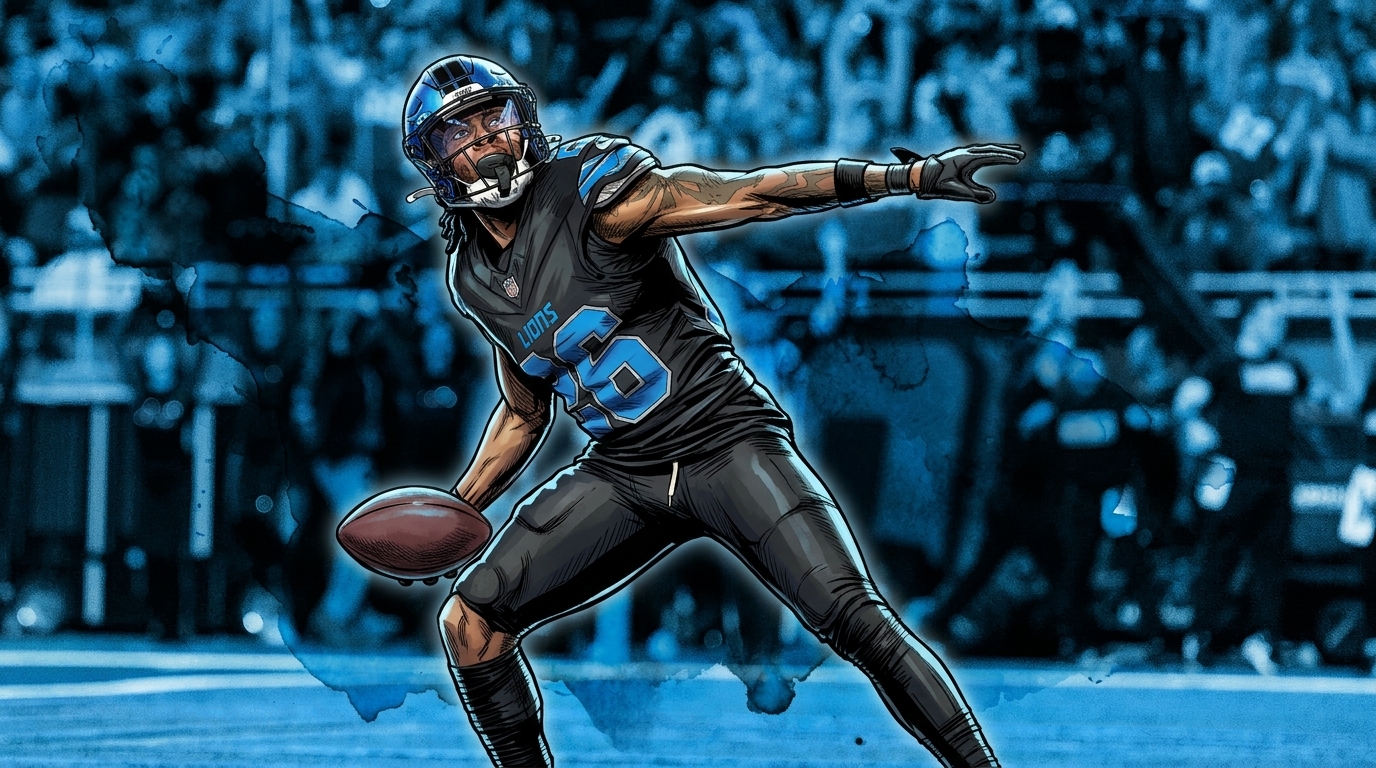
Cook’s piece of it: 105 rushing yards and two scores, the kind of workload a bell-cow back gets when his offense trusts him in the fourth quarter of a shootout. Gibbs matched him blow for blow with a touchdown on the ground and another through the air, doing it as a runner and a receiver in the same afternoon. The NFL’s own account of the game still calls it one of the wildest of that season:
https://twitter.com/NFL/status/2100283574956052502
That’s not two defenses on vacation. That’s two run games that refused to get out of each other’s way.
Is the Bell-Cow Running Back Dead in the NFL?
No. The bell-cow back just got faster and more versatile. James Cook led the NFL in rushing yards in 2025, and Jahmyr Gibbs posted a career-high 320 touches. Both backs decided the outcome the last time Detroit and Buffalo played. Week 2 says the workload never actually left the position. It just changed shape.
The league has spent the better part of a decade telling itself running backs are replaceable, that committees are smarter than feature backs, that paying a runner big money is a front-office mistake waiting to happen. I ran the touch counts on both these guys three different ways looking for the moment their workload actually dipped below feature-back territory, and it never came. Cook and Gibbs aren’t outliers surviving a dying model. They’re the model, still working, in two of the league’s better-run buildings.
James Cook Won the Rushing Title. Week 1 Told a Different Story.
Cook’s 2025 season doesn’t need much translation. He won the NFL rushing title outright, no time-share, no committee split, for a full season: 307 carries, 1,621 yards, 12 touchdowns, a 5.25-yards-per-carry average that’s closer to a slugging percentage than a compiler’s counting stat. It was his third straight 1,000-yard season and a career high in yardage.
Week 1 against Houston didn’t look like that. Cook got 13 carries for 57 yards and three catches for 12 more, a real but modest workload for a guy who just led the league. Josh Allen took the short-yardage and goal-line work instead, scoring twice on the ground himself in a 36-31 win. That’s the version of Buffalo’s offense showing up against a Lions defense that’s had two years to prepare for the last time these teams played.
Jahmyr Gibbs Is the Workhorse Who Got Faster
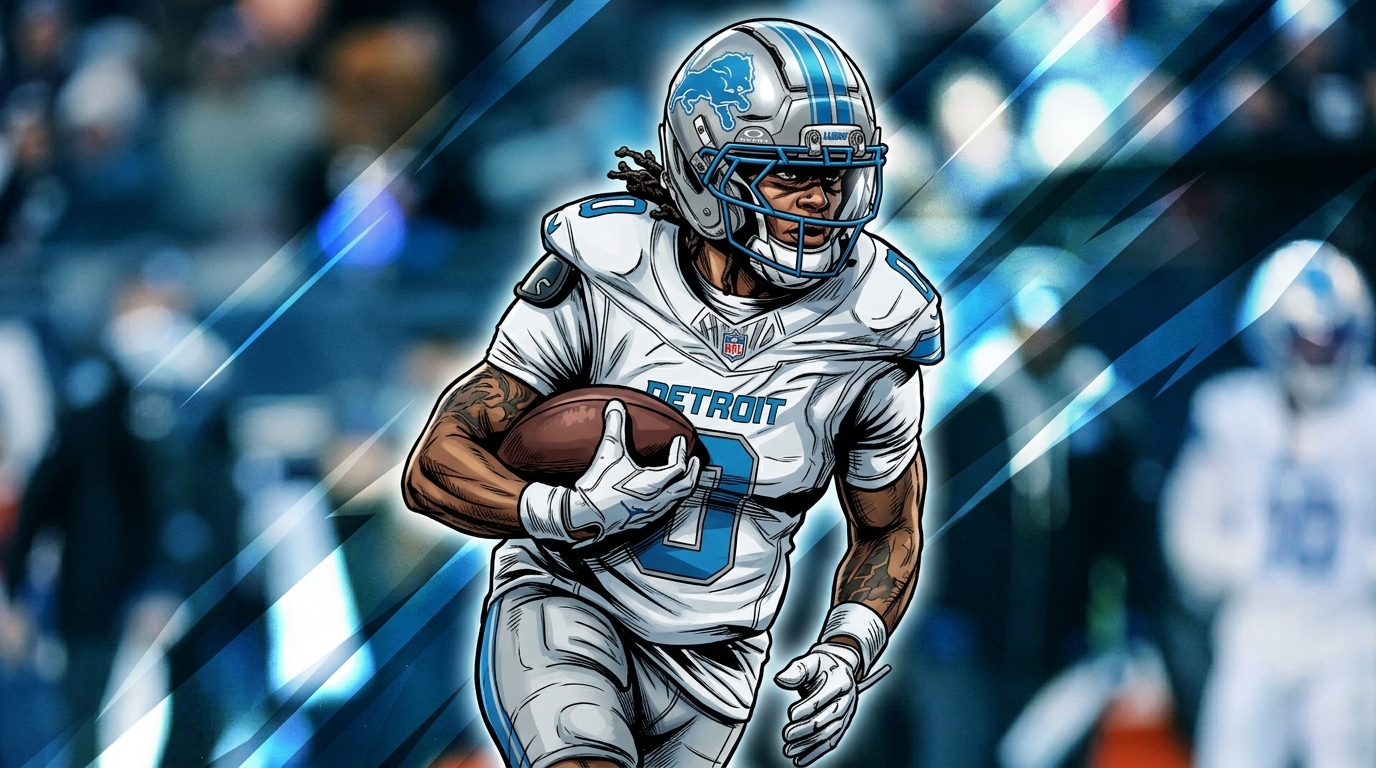
Gibbs went the other direction. His 2025 season produced a career-high 320 touches, 243 carries and 77 catches, translating to 1,223 rushing yards and 13 rushing touchdowns. That workload belongs to a true lead back, not a change-of-pace piece, and he runs the route tree of a slot receiver on top of it, a much harder profile to defend than a straight-line pounder. Gibbs’ new deal already crowned him the running back market’s top earner, which says Detroit isn’t treating him like a committee piece either.
Week 1 kept that trend rolling. Gibbs carried 29 times for 156 yards and two touchdowns against New Orleans, added five catches for 30 more, and finished with 186 total scrimmage yards, the most of any running back in the league that week. Detroit won 31-30 in overtime, and Gibbs was the engine the whole way, not a complement to somebody else’s plan.
What Actually Decides Thursday Night
This is Week 2 of the 2026 season, the first time these two teams have played since that shootout, and it’s also the debut of Buffalo’s new $2.1 billion stadium, Highmark, with the Bills opening as 4.5-point favorites and the total set at 53.5. Joe Brady is Buffalo’s rookie head coach this season, promoted from offensive coordinator, with Jim Leonhard calling the defense. Detroit comes in having fallen from first in the NFC North to the division cellar in 2025, a 9-8 finish that didn’t match the roster. Buffalo’s own 2025, a 12-5 season, was a down year by its recent standard too. Neither team arrives with the swagger of the group that combined for 90 points back in 2024, and that’s worth tracking all season alongside the rest of our NFL coverage.
https://twitter.com/NFL/status/2100223182523531313
What actually decides this game is which version of each running back the coaching staff trusts. If Cook gets Week 1’s 13 carries again, that’s Allen’s offense, and Buffalo’s identity tilts toward the arm that just outdueled Houston. If Gibbs gets anything close to his 29-carry, 156-yard workload from Week 1, Detroit controls the clock and this game looks a lot more like the one these two teams already played.
Give me Gibbs. He’s the back both defenses have to plan around, and Detroit’s staff has shown all season it knows how to feed him. Buffalo found that out two years ago. On their own new field, with the league watching, they’re about to find it out again.