
K-pop stan accounts track something called a “bias trend”: a weekly ranking of which group member is generating the most independent reach, untethered from whether the group released any music that week. I follow a few of these accounts out of professional curiosity about how fandom measures attention, and the thing that gets me every time is how little the actual performance matters to the number. A member can trend off a ten-second fancam, an offhand quote, the wrong expression at the right angle.
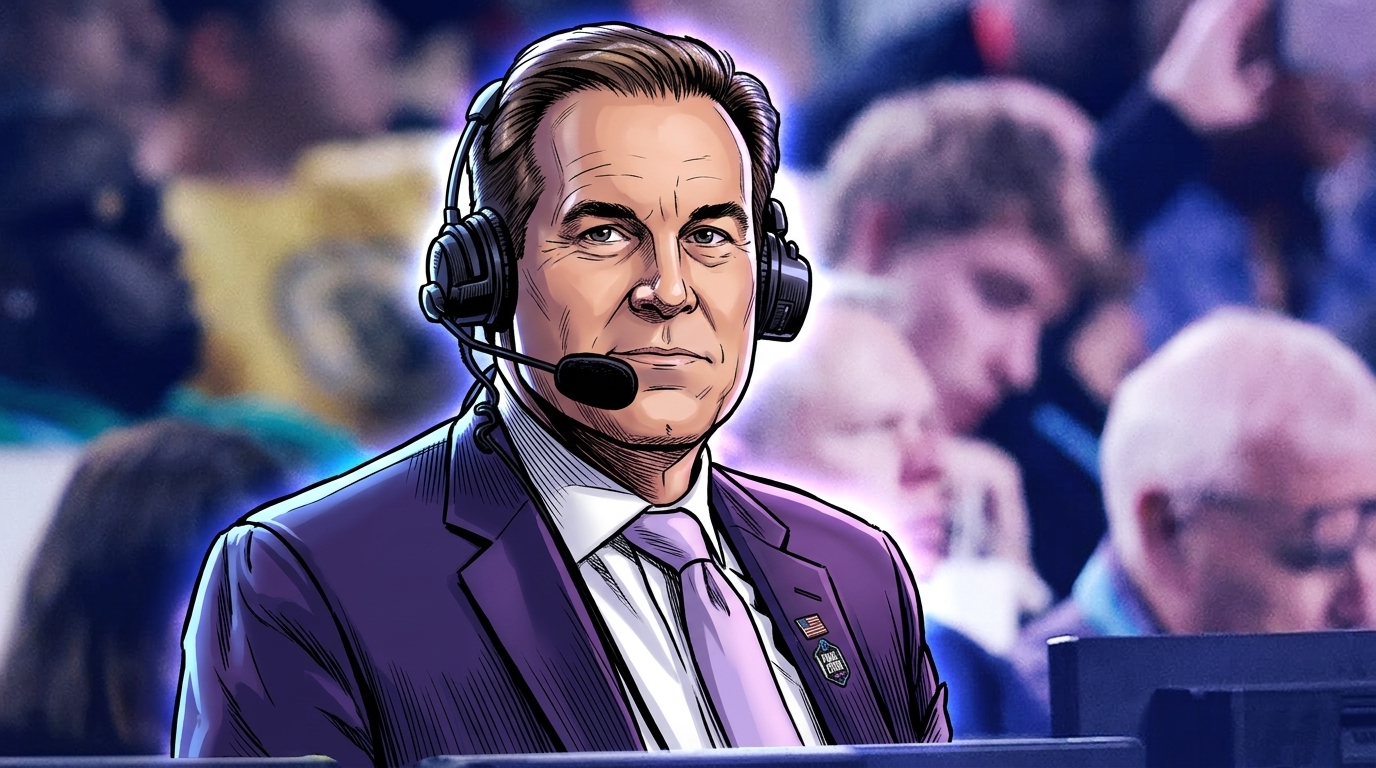
NFL broadcast booths are running the identical metric now, whether CBS wants to admit it or not. A 67-year-old broadcaster threw a real punch on live television during Sunday’s Bills-Raiders broadcast, full-force, at the football clenched in J.J. Watt’s hands, and hurt his own wrist doing it. By Monday, the clip had reached the Bills’ starting quarterback and a former president of the United States, both wanting the same answer the internet wanted: was Jim Nantz’s hand actually broken. The wrist is nothing next to the reach, and the reach says the booth is the broadcast now. That nobody needed the injury-report joke explained to them says as much about this audience’s fluency in NFL media mechanics as it does about Nantz’s sense of humor.
The clip makes this look stranger than it actually was. Watt, who retired as one of the better defensive ends of his generation and is in his first season in CBS’s No. 1 booth after a year as the network’s No. 2-team analyst, wanted to demonstrate the “Peanut Punch” — the strip technique ball carriers now train against by holding the wrist of their ball-carrying hand for support. He asked Nantz to throw the punch at the ball. Nantz, who has called Super Bowls and Final Fours for the better part of three decades, obliged with what looked like a shot-put release, not a tap.
Watt’s own reaction, from the network’s official clip, says it best:
https://twitter.com/NFLonCBS/status/2111933099093406103
That reaction alone outlasted most of Sunday’s actual football in people’s feeds, which is the whole point here. By the next commercial break, Nantz was back in the booth with his hand wrapped and an ice pack pressed against it, which is an unusually high production value for what was supposed to be a throwaway bit.
Josh Allen’s text, which arrived about an hour after the final whistle, got straight to it: “Did you just break your hand? I’m hearing you broke your hand.” CBS Sports reported that a former U.S. president reached out with the identical question, which Nantz has confirmed happened without ever specifying who. I’m not going to guess, and neither should you. The value of that detail isn’t the name. It’s that a booth stunt generated enough gravitational pull to land the reigning MVP-caliber quarterback of the team being broadcast and a former head of state inside the same news cycle.
Nantz himself seems to understand exactly what he’s sitting on. He told Jimmy Traina’s podcast that he expects to be “listed as questionable Wednesday” and plans to work CBS’s Bengals-Ravens game regardless: “They’re going to have to drag me out of the booth to stop me from talking.” On the Pat McAfee Show, he walked the drama back a notch: “I gave it my best, and as soon as I did it, I regretted it because I felt like everything had been compressed.” That’s the sound of someone who got “a little too aggressive” with the stunt and is enjoying the attention more than he’ll admit on the air.
None of this is happening in isolation. CBS’s booth turnover this year has already generated its own news cycle independent of any actual football, and the Aikman-Buck booth drama over on ESPN made the same point from the opposite direction: audiences will treat the people calling the game as a storyline with its own stakes and its own weekly developments. Watt sliding into Nantz’s booth was supposed to be background information for anyone following the realignment. Instead it produced the single most-talked-about clip to come out of Week 6. Networks used to protect the illusion that the booth was furniture: necessary, mostly invisible, there to narrate rather than to be the story. That illusion is gone, and nobody in programming seems to mind, because a blooper out-drawing the fourth quarter is good business even when the guy getting hurt is pushing 70.
I don’t know what it means that a 15-second blooper can out-draw most of the football being played around it, only that it keeps happening, and that we’ve all gotten strangely comfortable treating the broadcast as the event instead of the thing standing between us and the event. Nantz gets a week of being “questionable.” The rest of us don’t get a diagnosis for how we got here, and I’m not sure anyone’s in a hurry to write one.