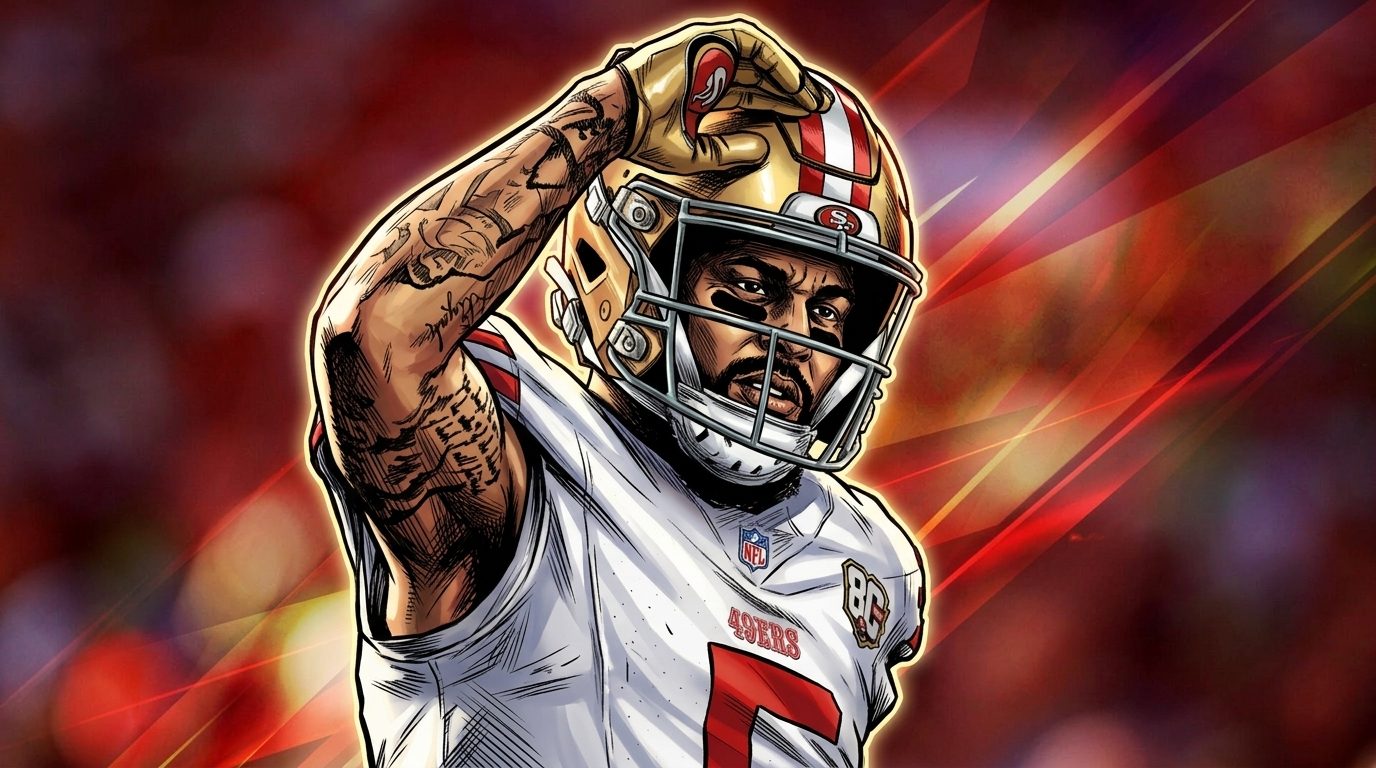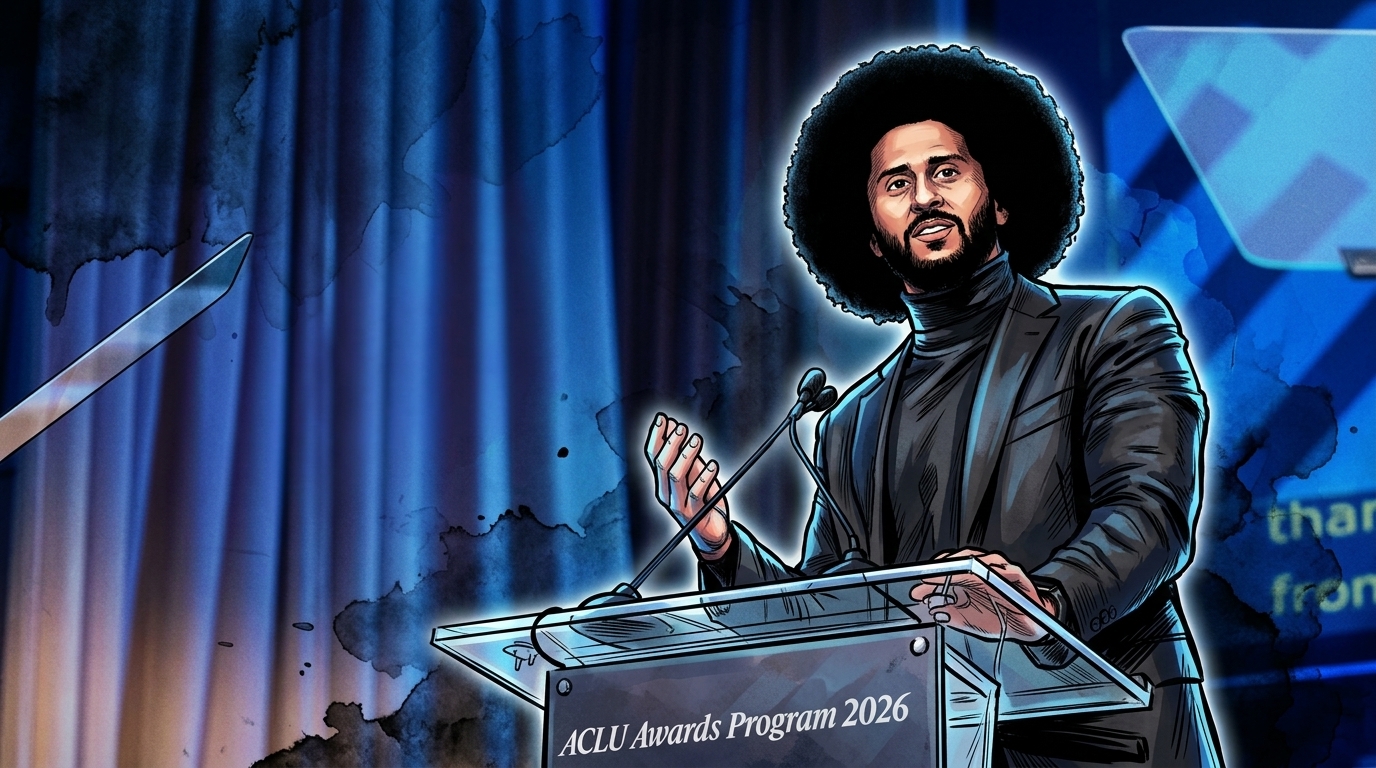

Colin Kaepernick told NBC News this week that he hasn’t watched a single NFL game since he left the league in 2016, and the notable thing about that sentence isn’t the length of the boycott. It’s that nobody involved, including Kaepernick, is still calling it one. Ten years of columns treated his exile as an open wound the league might someday get around to closing. He closed the file himself, quietly, sometime in the last decade, and only mentioned it now because a reporter asked.
“I still watch football,” he told NBC News’s Rohan Nadkarni. “Just not the NFL.” He watches college football instead — a level of the sport he has zero personal history with, no old locker room, no former teammates coaching somewhere on a sideline. That’s the actual tell here, more than any grievance he could air. He didn’t go find a new team to root for. He found a version of football the NFL never touched, which is a much stranger and more final decision than staying angry would have been.
The blackballing line is the one making headlines, and it deserves the attention: “I’m not gonna support an organization that one, is actively blackballing me, but two, has targeted my brothers who have been protesting as well,” Kaepernick said in comments first reported by ESPN. Read on its own, it sounds like a man still fighting. Paired with “I still watch football, just not the NFL,” it reads more like an autopsy; the anger is genuine, but it isn’t negotiating for anything anymore, because there’s nothing left on the table to negotiate.
There’s a specific kind of ending that has nothing to do with a slammed door. It’s the day you realize you haven’t checked on someone in months, not because you made a decision to stop but because the impulse itself expired somewhere you can’t date precisely. Kaepernick not watching the NFL for ten years reads like that ending rather than an active protest sustained through gritted teeth every Sunday. He isn’t refreshing the league’s standings looking for proof it’s worse off without him. He’s watching Saturday football, and that disinterest is a colder verdict on the NFL than another round of kneeling discourse ever managed to be.
The league needed him to stay angry, because anger implies there’s still a negotiation happening, and a negotiation implies the door is technically open. What he told NBC News is a man who stopped needing the door at all.
Roger Goodell, for his part, has spent years insisting there was never a door to shut. In 2017 he said personnel calls were the teams’ business: “Each team makes individual decisions about how they can improve their team.” In 2020, with the kneeling debate forced back into the news, he told NBC he’d “love to see him play again” and claimed he’d personally encouraged clubs to consider it. That’s six years and three years, respectively, that those statements have had to produce a workout, a practice-squad look, hell, anything. Neither has. Kaepernick and Eric Reid, who began kneeling with him during the 2016 preseason, sued the league for collusion and settled in early 2019 — a resolution that closed the legal question and left the football question exactly where it started.
None of that history is new; it’s the same ground the discourse around his upcoming memoir has been circling for months. What’s new is the shrug. The blackballing claim isn’t new either, but Kaepernick delivering it in the same breath as “I still watch football, just not the NFL” turns a decade-old grievance into a specific, almost administrative fact: a description of where he spends his Saturdays now, filed and settled, no longer up for debate.
The interview was timed to the ten-year anniversary of the protest and the release of his memoir, “The Perilous Fight,” out September 15. NBC News framed its own clip around that same anniversary weight:
https://twitter.com/NBCNews/status/2094797439496552474
Kaepernick is 38 now, raising a four-year-old daughter, and he’s said fatherhood raised the stakes of staying vocal rather than lowering them. That’s a harder thing to dismiss than a decade-old kneeling photo, and it’s a worse look for a league that keeps saying, on the record, that the door was open the whole time.
Goodell can keep saying nobody blackballed him. The San Francisco 49ers can keep existing as the team that let him go. Kaepernick has stopped bothering to argue back, which is a worse outcome for the NFL than another decade of him being loudly, publicly furious about it would have been — check the rest of our NFL coverage if you want to watch that argument keep happening without him.
A league built its entire response strategy around waiting Kaepernick out. Technically, it worked. He’s gone. He just went somewhere the NFL can’t follow him to, watching a sport with no memory of him at all, and the league is left insisting, to an empty room, that none of this ever happened.