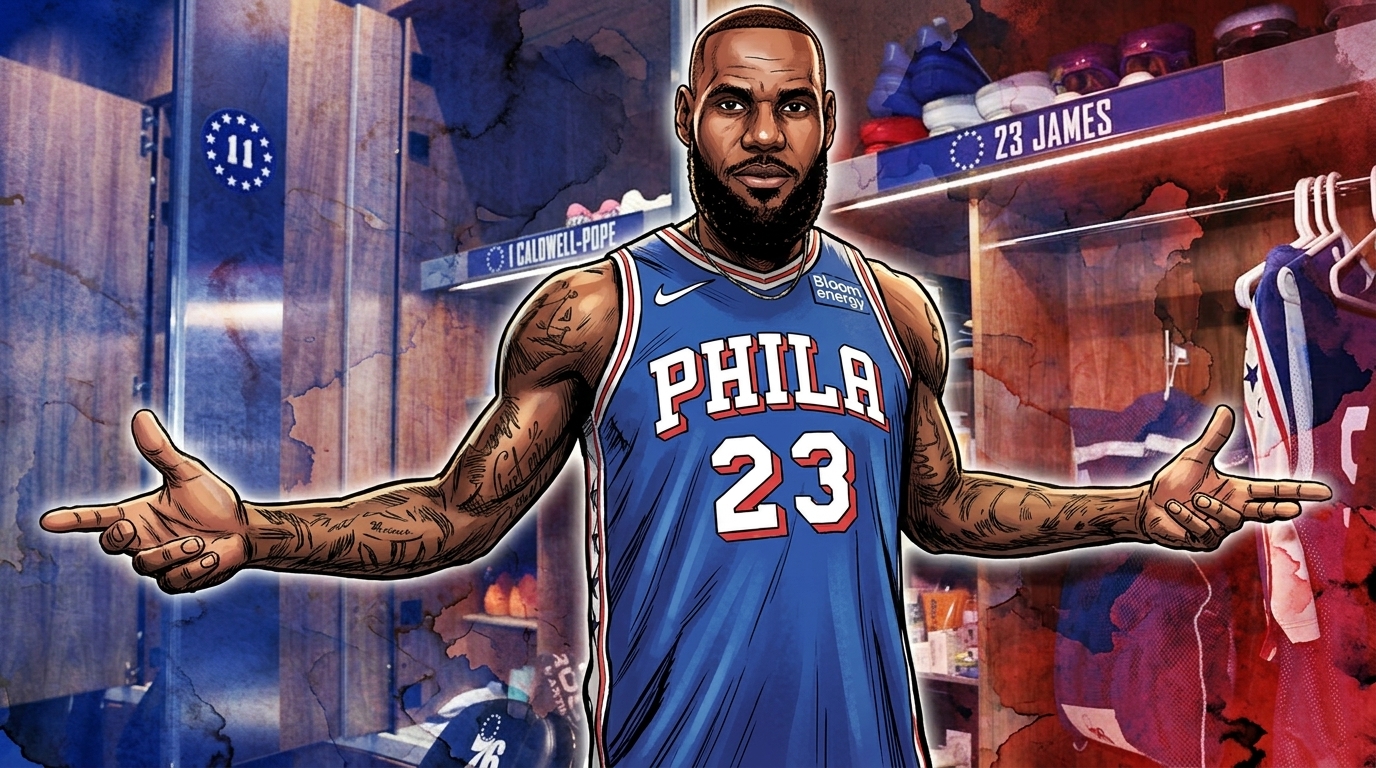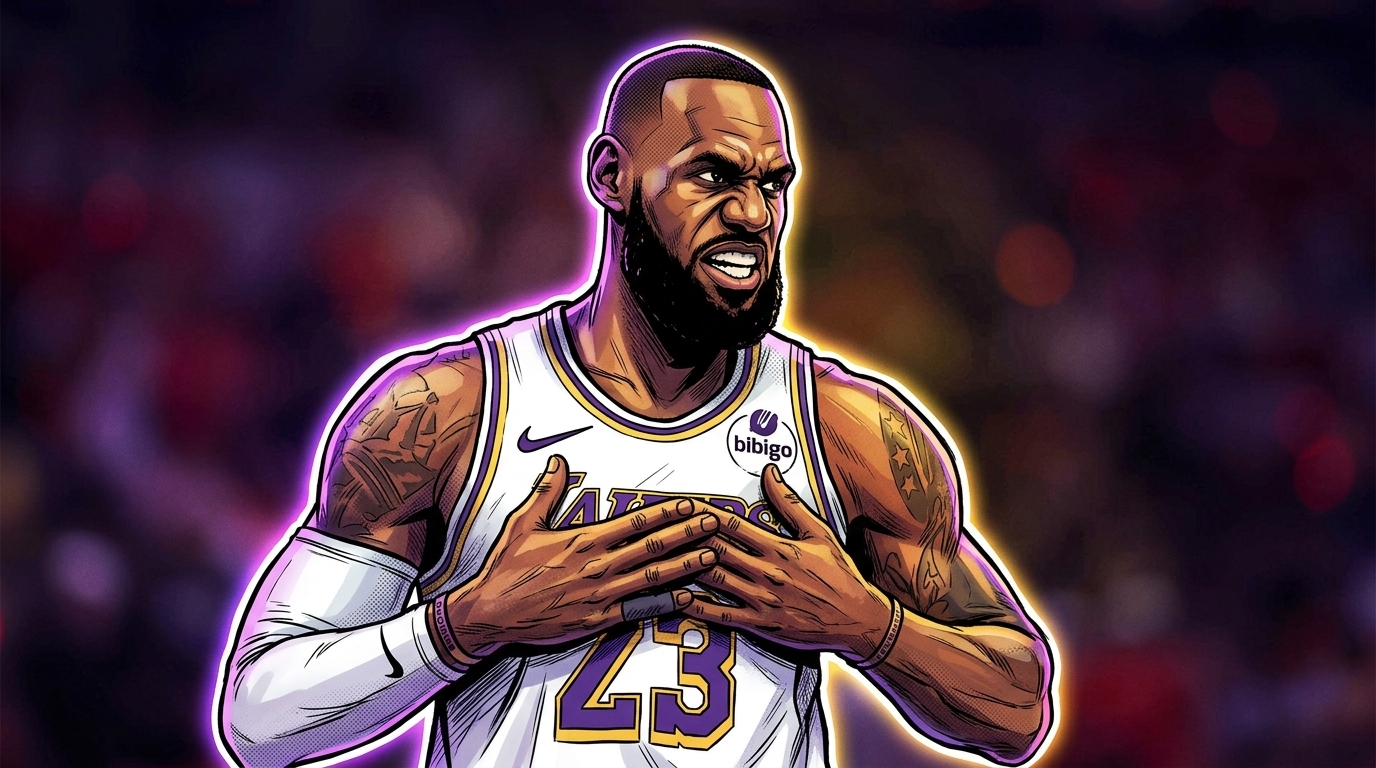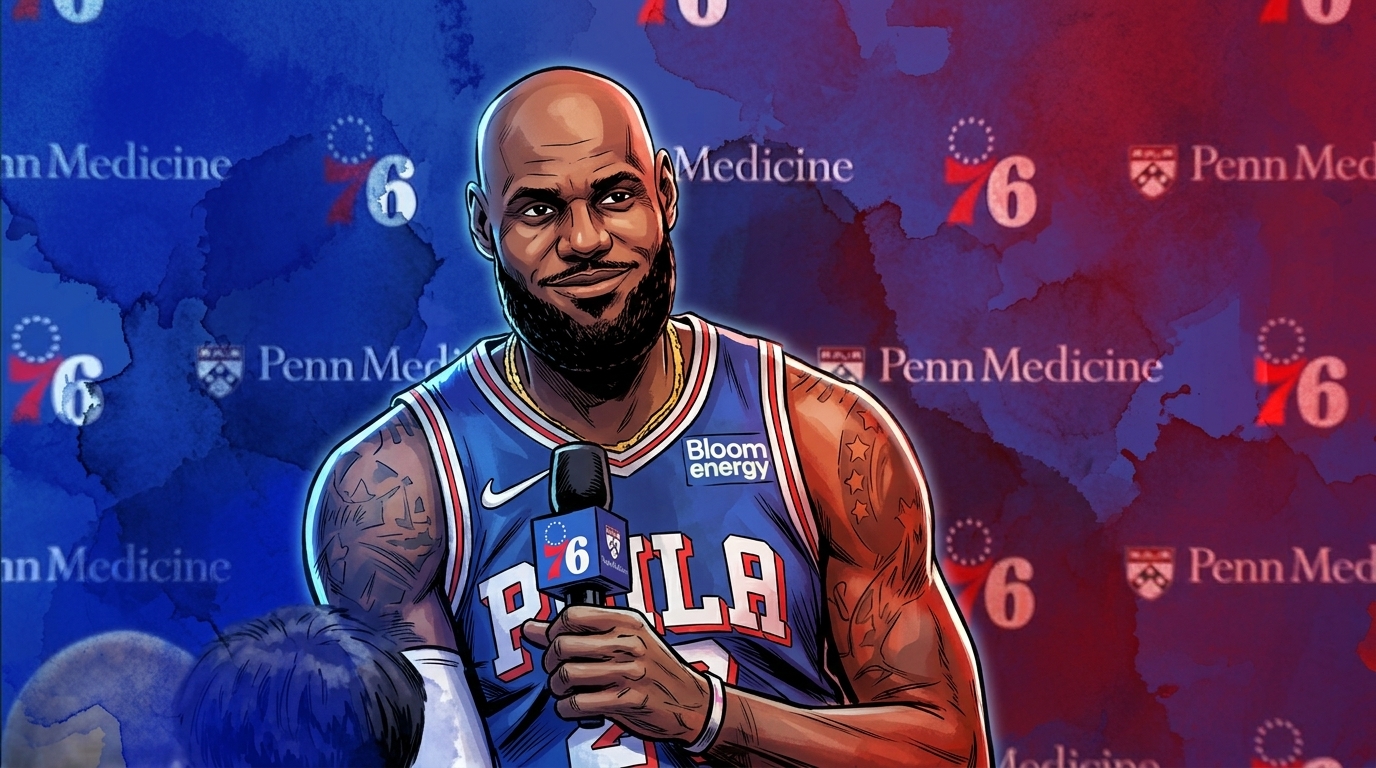

LeBron James just signed a $15 million-a-year deal with Polymarket that pays him nearly four times what the 76ers are paying him to play actual basketball, and somebody thought it was smart to write the contract so he legally can’t talk about basketball at all. I can’t get past how tidy that is. The restriction isn’t a creative lane Polymarket picked for LeBron. It’s a workaround for a rule the NBA wrote to protect itself, not the people watching him.
The math is simple. James is two years and $8 million into his contract with the 76ers, which puts his salary this season at somewhere around $3.9 million. Polymarket is paying him roughly $15 million a year to be its endorser, not an equity partner, a distinction the company would very much like casual readers to skip past. LeBron’s Polymarket deal pays nearly four times his 76ers salary, and the whole arrangement comes with exactly one condition: stick to football.
That restriction is the whole story. The NBA doesn’t ban players from endorsing prediction markets across the board. Giannis Antetokounmpo has an actual equity stake in Kalshi, a Polymarket competitor, and has fronted its ad campaign for months without the league blinking.
What the NBA does bar is players promoting or trading on the league’s own event contracts tied to NBA games, and Commissioner Adam Silver has already said no player can hold more than a 1% stake in a gambling or prediction company. LeBron can’t use his own $15 million platform to talk about the sport that made him famous, because the league’s own rule on prediction-market endorsements says he can’t. So the deal got routed to football instead, which is a small joke on its own — the NFL is the league least interested in letting Polymarket in the building to begin with.
Somewhere there’s a teenager who has spent his whole life wanting to be like LeBron, who has the jersey and the highlight reels memorized, and who now also gets LeBron’s face explaining spreads and moneylines on his feed. That’s the actual product being sold: not a content partnership, a gambling company renting the most trusted voice in basketball to build betting habits in an audience too young to legally place the bets themselves.
Haralabos Voulgaris spent years running the numbers for the Dallas Mavericks front office before he became one of the more respected professional bettors around, and he said what a lot of people were already thinking once the deal went public:
https://twitter.com/haralabob/status/2100582539911979250
Voulgaris isn’t a moral crusader who’s never seen a betting slip in his life. He built his entire career reading these markets for money, and he’s the one calling this predatory. When the professional gambler is the loudest critic of your gambling endorsement, you don’t have a marketing problem. You have a bullshit problem, and everyone with a financial stake in this deal is pretending otherwise.
There’s a fair objection here: Polymarket booked more than $40 million in wagers on LeBron’s free-agency destination in the two months before he signed with Philadelphia, and nobody has produced evidence connecting that volume to the endorsement that followed. I’m not going to pretend otherwise just because the sequence looks convenient. Coincidental timing doesn’t change the deal itself. LeBron is still getting paid four times his basketball salary to sell football bets to an audience raised on his basketball career, restricted to that one sport specifically because his own league won’t let him point the product at the game he actually plays.
MLB and the NHL already have Polymarket deals (the NHL added Kalshi too), and the NBA is reportedly circling one of its own. Once that happens, LeBron’s football-only carve-out stops looking like a principle and starts looking like a gap the league hadn’t closed yet. NBA insider Brett Siegel has raised a separate concern: a sponsor quietly covering the gap on a below-market contract, the same dynamic behind the Clippers’ $30 million fine and five forfeited first-round picks over Kawhi Leonard. Nobody has tied LeBron’s deal to that scandal, but leagues selling gambling education to the public while cashing sponsorship checks from the same industry don’t get to act surprised when fans stop trusting the guardrails.
The backlash when this partnership first leaked wasn’t jealousy over the money — it was fans noticing the guardrail only shows up when enforcing it on the league’s biggest star is inconvenient. Polymarket has done this before: its entanglement with the Yankees over Kalshi follows the same script. Sign the biggest name available, worry about the fine print later.
Call it a content partnership if that helps anyone sleep at night. It’s an ad campaign for legal gambling, fronted by the most recognizable athlete alive, aimed at the exact audience that grew up on his highlights, restricted to football only because his own employer won’t let him point it at the game he actually plays. The league didn’t just tolerate this workaround — it built the loophole LeBron is being paid $15 million to walk through.