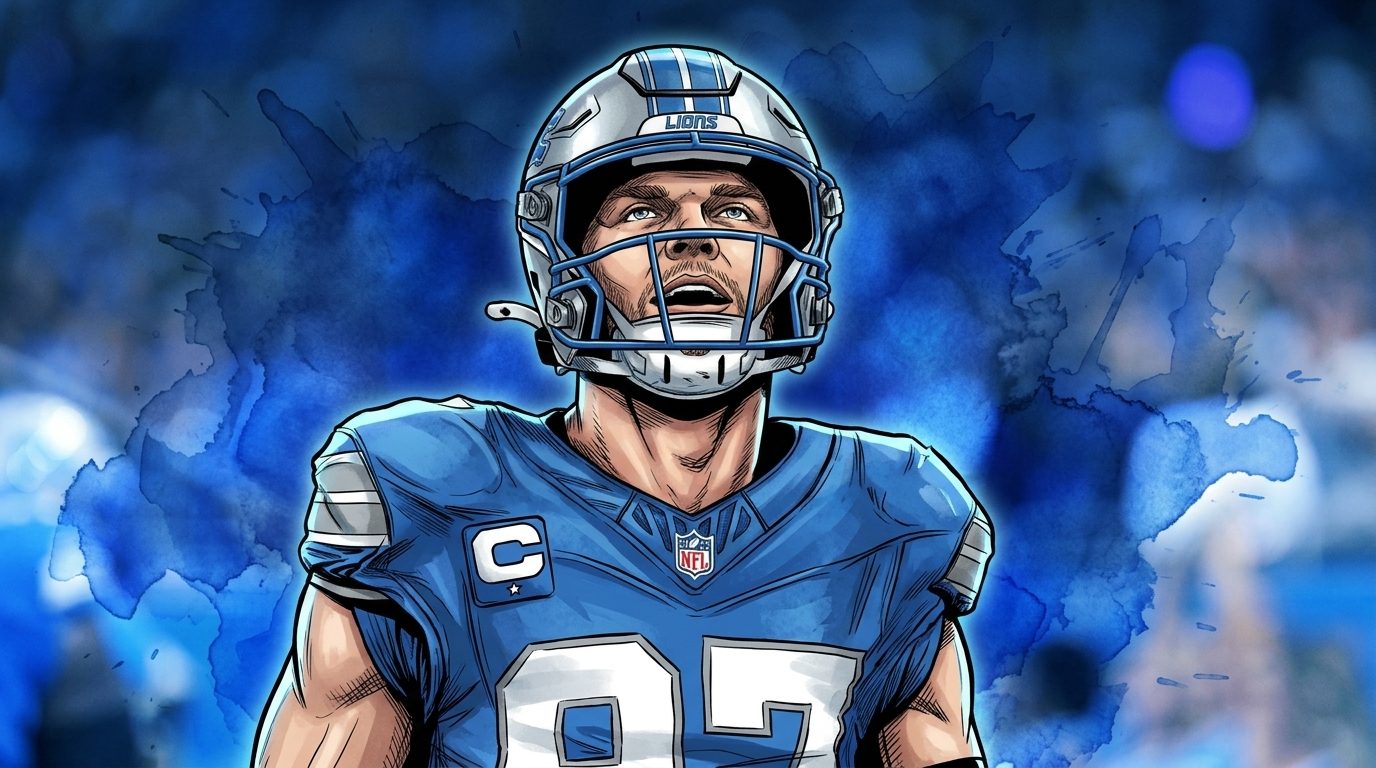

Third-and-goal, first quarter, Munich. Aidan Hutchinson brought Drake Maye down from behind, no flag came out, and neither player finished the game. The Lions won 35-10, but the league’s explanation for why that sack was legal is a bigger story than the final.
Drake Maye limped to the sideline and did not return with an ankle injury. Hutchinson hurt his right knee landing from a jump while celebrating the sack, and Detroit ruled him out in the third quarter. Whatever you think of the tackle, a play that opened a game ended two players’ days, and the officials in Clay Martin’s crew saw nothing to penalize.
Fox rules analyst Mike Pereira handled the replay. “Not a hip drop,” he said. Then he laid out his test: “Three things have to happen: you have to unweight yourself, swivel all around the back,” and land on the back of the leg below the knee. That is the foul the post below says it watched.
https://x.com/MLFootball/status/2121983347895525520
Then Pereira called it “more of a horse collar-type pulled down from behind.” In the same breath he called it “certainly not a horse-collar penalty.” A league spokesman relayed the same verdict from rules analyst Walt Anderson: no swivel, no unweighting, and neither the collar nor the nameplate was grabbed, so it was neither a hip-drop nor a horse collar.
I don’t think anyone has to claim Hutchinson did something dirty to see the problem. The explanation holds up fine on its own terms. The tackle missed the hip-drop definition by a swivel and missed the horse-collar definition by a handful of fabric. The rules are written around what the tackler’s body does. What happens to the person underneath him is a separate matter.
That gap is the whole story. When the definition of a foul is satisfied by technicalities, the rulebook is describing mechanics rather than risk. Maye’s ankle does not know whether a nameplate was touched. The league can hold a play legal and still watch a starting quarterback walk to the locker room, and nothing in this week’s explanation suggests anyone sees those as two separate questions.
The strongest defense of the no-call is that football needs bright lines. Officials cannot flag outcomes, only acts, and a rule that punished any tackle after which someone got hurt would swallow the sport. That is fair. It also explains why the same league has officiating arguments every week and why each new rule tends to arrive after the injury it would have prevented.
A bright line is only worth drawing where the danger actually is. On Sunday in Munich the danger sat just outside the line, with Maye on the ground and the league’s best description of the play a horse-collar type that is certainly not a horse collar.