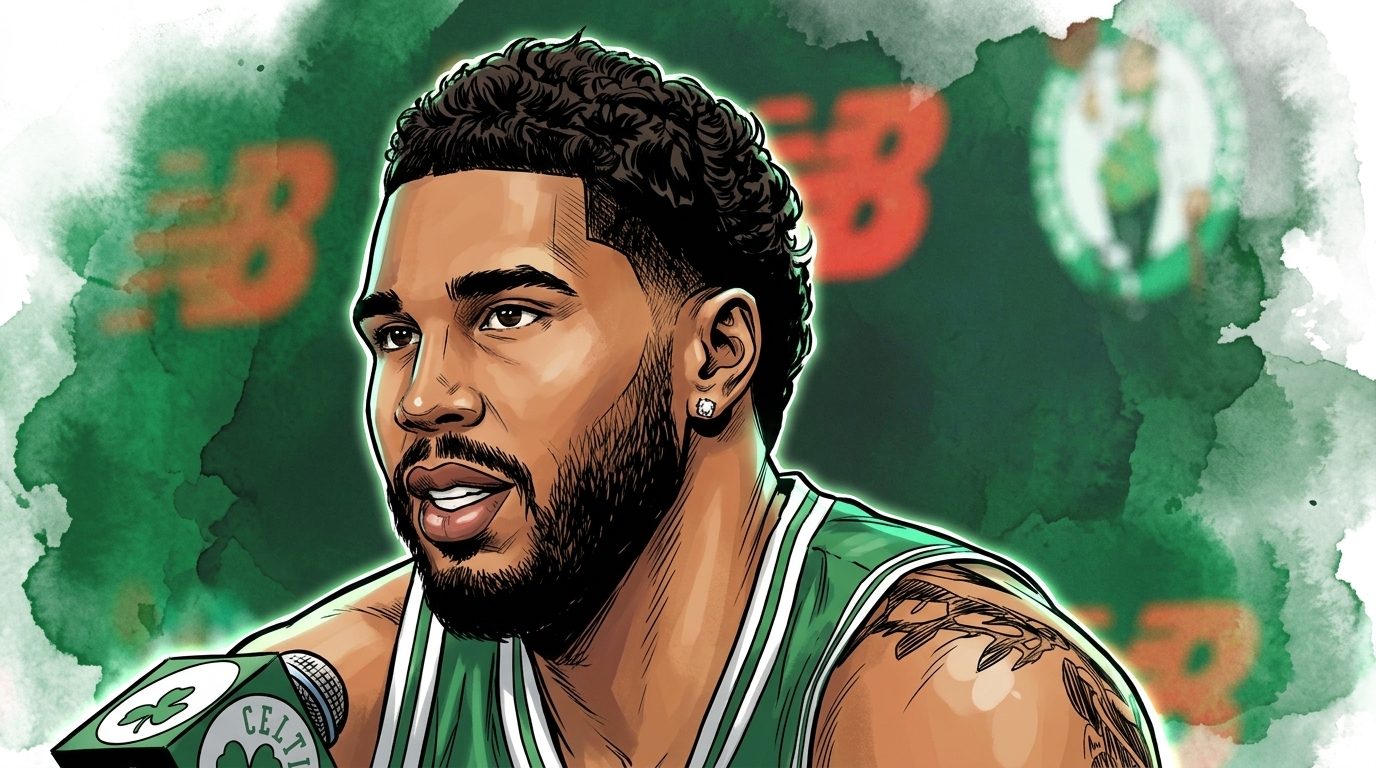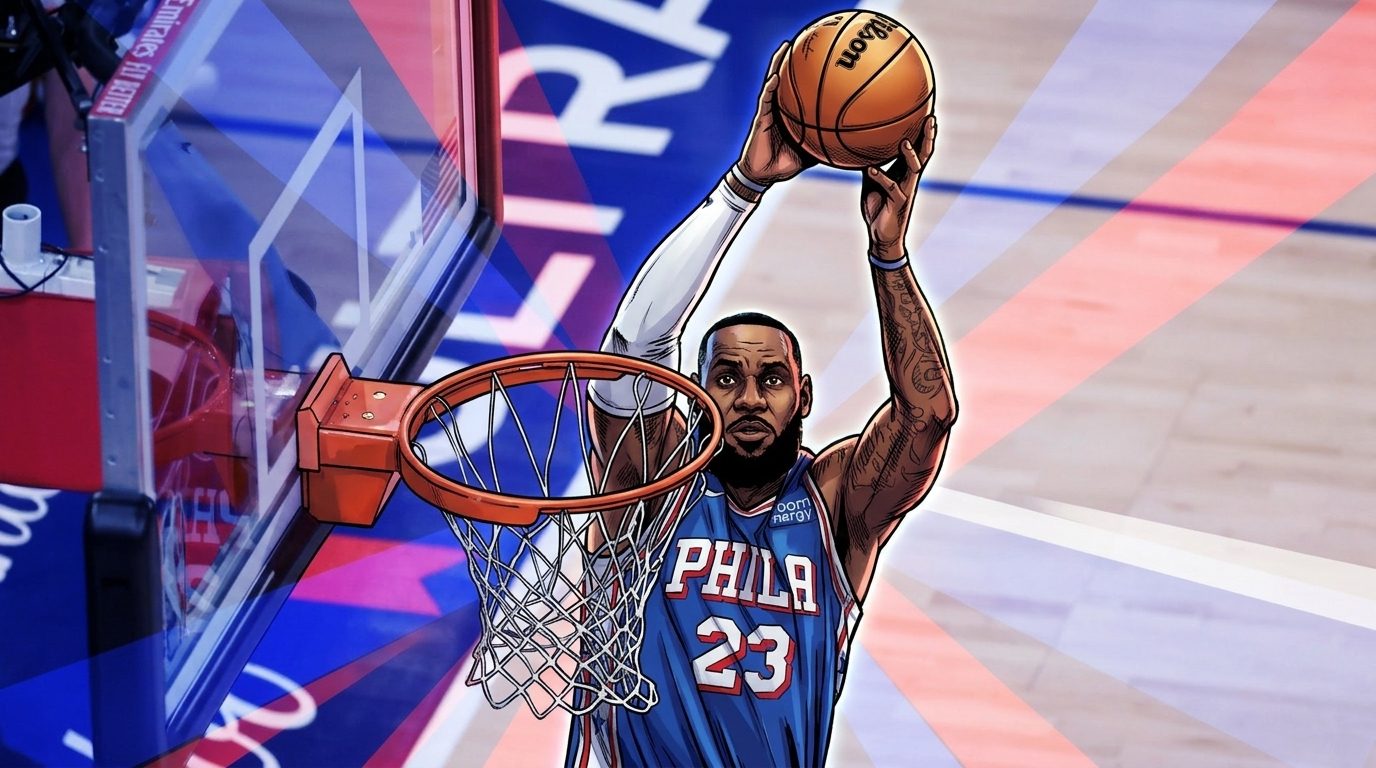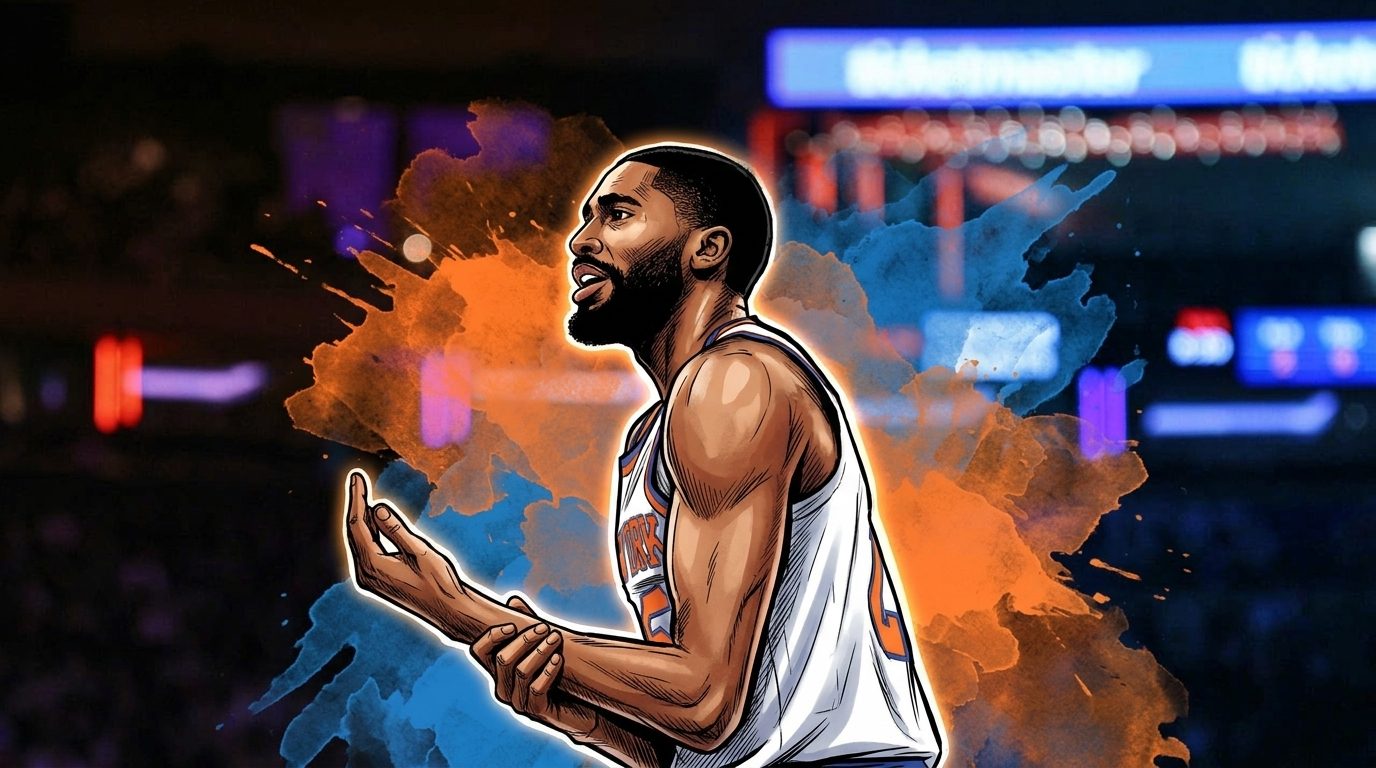

There’s a number buried under the Knicks’ 0-2 record that matters more than the record itself. Mikal Bridges is shooting 2-for-16 from the field through two games, a 12.5 percent clip that would be a bad half from a reserve big man, let alone from the wing New York traded for to be Jalen Brunson’s release valve.
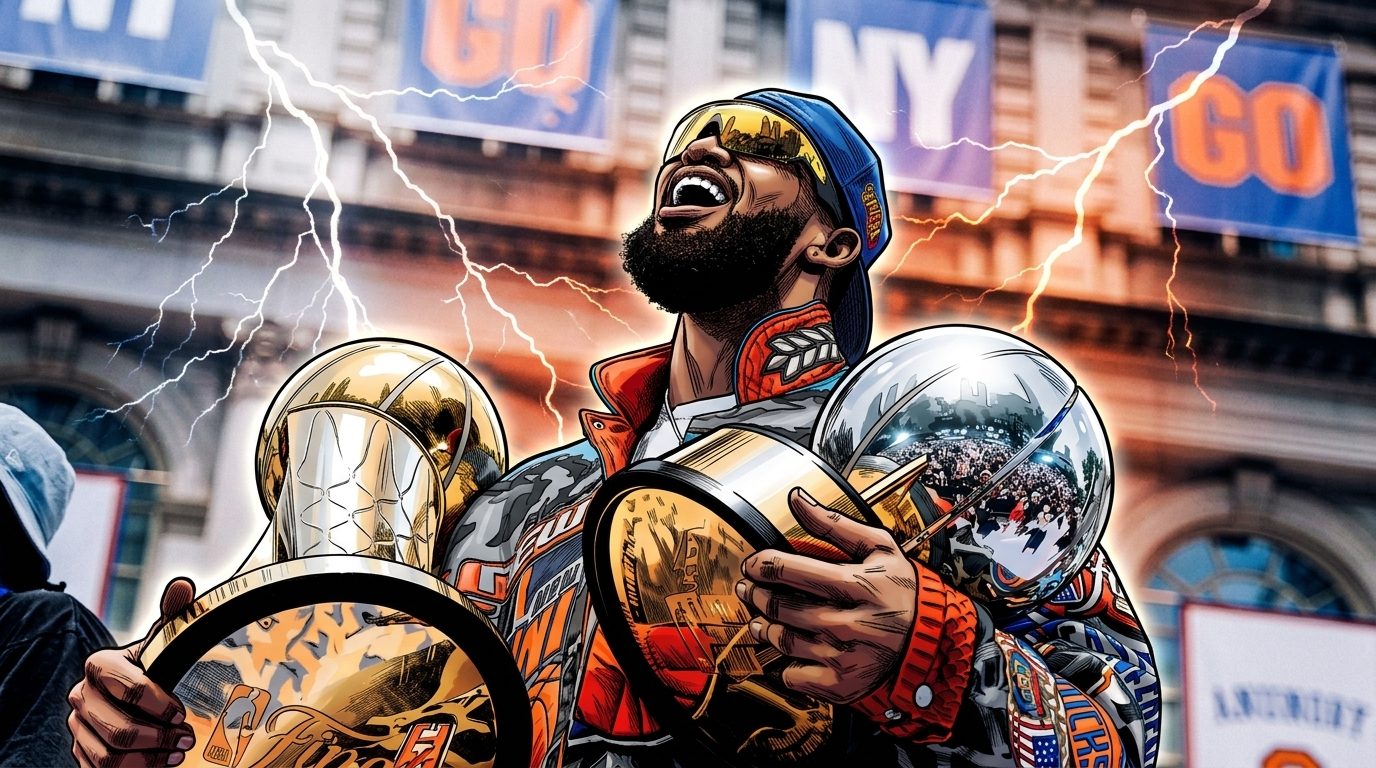
New York is the first defending champion to open a season 0-2 in 15 years, a stretch Yahoo Sports detailed: a 106-100 loss to Philadelphia followed by a 107-103 defeat to the Celtics. That record is the headline. Bridges’ shooting slump is the actual story, because two bad nights from the team’s fourth option are now a live test of whether this roster’s math works when its connective piece can’t make a jumper.
Just How Bad Is Mikal Bridges’ Shooting Slump?
Bridges is 2-for-16 from the field (12.5 percent) across the Knicks’ first two games, capped by an 0-for-8 night in Boston that included five missed threes. He shot 49.0 percent from the field last season. Two games into this one, he’s converting at barely a quarter of that rate, the kind of split you rarely see outside garbage time.
Game one against Philadelphia was quiet rather than alarming: 4 points on 2-of-8 shooting in 33 minutes, the sort of cold night that happens to every shooter across an 82-game season. Game two was different. Bridges played 22 minutes against the Celtics and missed all eight of his shots, including all five three-point attempts, finishing with zero points. Coach Mike Brown pulled him for the final 8.5 minutes and turned to Miles “Deuce” McBride instead, who scored 20 points in 30 minutes off the bench.
Translate the two-game line against where Bridges actually lives as a shooter. He hit 37.1 percent from three last season on the way to averaging 14.4 points, 3.8 rebounds, and 3.7 assists in 32.8 minutes a night, and he didn’t miss a single game. This is a player who shows up every night and, historically, makes close to exactly the shots he’s currently missing. Twelve-point-five percent is what a jump shot going dark looks like, not a jump shot going cold.
The box score from Boston circulated fast:
https://twitter.com/NBA_NewYork/status/2113815359551860924
I run three fantasy baseball projection models of my own every spring, and even the noisiest of them wouldn’t crown or bury a player this early. Basketball shooting splits are noisier over two games than batting average is over two weeks. Sixteen shots is still sixteen shots, though, and fourteen of them haven’t gone in.
Why Is Mike Brown Telling an Ice-Cold Shooter to Keep Shooting?
Because Brown’s diagnosis isn’t the shot itself. Per Yahoo Sports, Brown said Bridges is “getting the looks that he needs to get” but has to “knock them down now,” adding: “He’s got to keep shooting them. And hopefully, they’ll eventually go in sooner than later.” That’s a coach describing a confidence problem, not a shot-selection one.
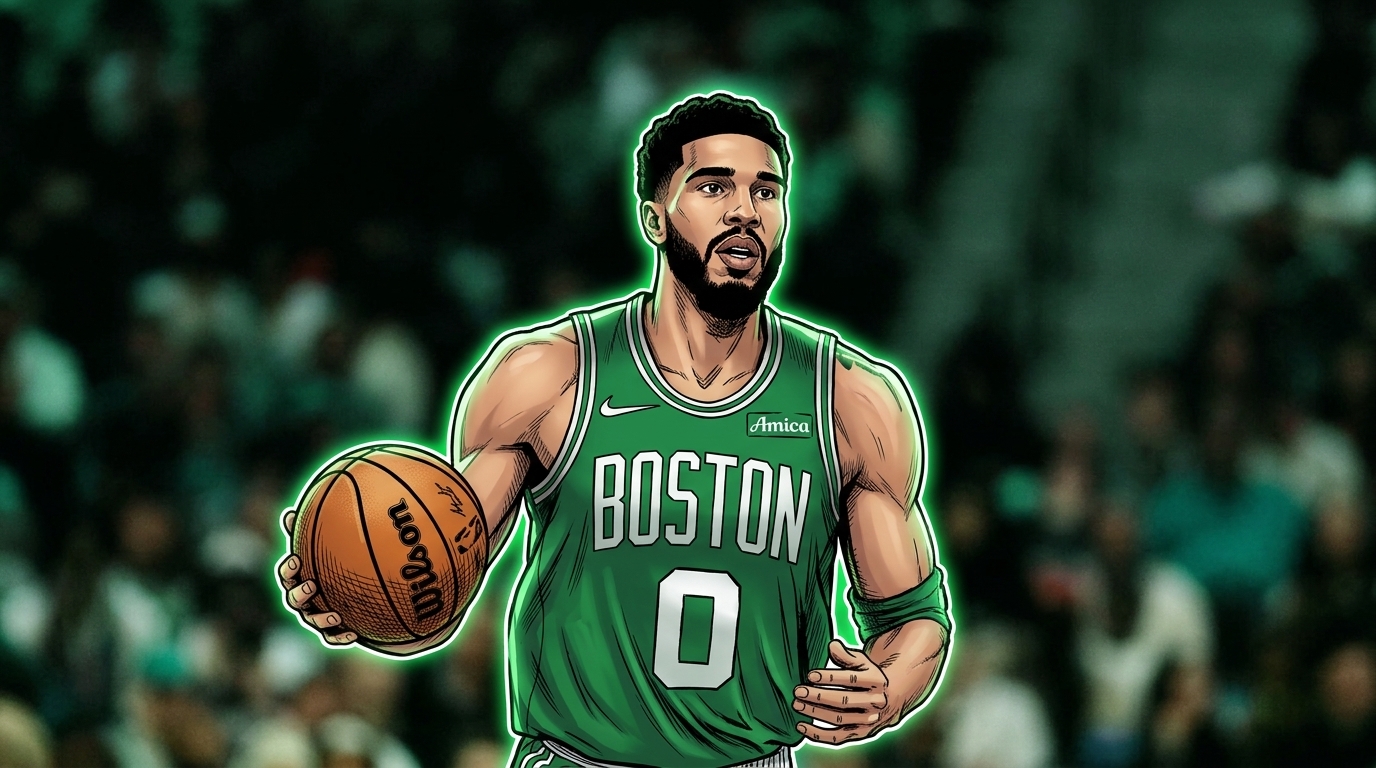
Brown didn’t stop at jump shots. He also flagged Bridges’ defensive physicality as something that needs to sharpen alongside his shot, which matters more than it reads on its own. Bridges wasn’t on the floor for the sequence that decided the Boston game. With him on the bench for the final 8.5 minutes, Josh Hart picked up the primary defensive assignment on Jayson Tatum, who scored 9 of his game-high 36 points in the final six minutes as New York’s rally from a double-digit deficit came up short.
Think about what that lineup choice says. Brown trusted McBride’s legs over Bridges’ track record and trusted Hart’s hands over Bridges’ length against the league’s hottest closer in that moment. That’s not a benching born out of frustration. It’s a coach assembling the best five-man unit available to him right then, which is a different thing than giving up on a player.
Social noticed the superlative hiding in plain sight too:
https://twitter.com/LegionHoops/status/2113813824600158453
A champion going 0-2 is rare enough on its own. A champion going 0-2 while the wing it built its closing lineups around shoots 12.5 percent is a specific kind of rare, and it’s the kind Brown is treating as a math problem instead of a crisis.
What Bridges’ Disappearance Means for the Knicks’ Title-Defense Math
Bridges wasn’t brought to New York to create his own offense. Acquired in a trade from Brooklyn in July 2024, he’s the connective piece around Jalen Brunson and Karl-Anthony Towns, the plus defender who’s supposed to convert the catch-and-shoot looks the offense generates for him. Two games of 12.5 percent shooting function as a stress test on that math for the 2026-27 title defense, not a verdict on it.
This isn’t a hypothetical. Bridges won his first NBA Finals with this franchise this past June, which means the staff has an entire championship season of film showing exactly what he looks like when the math works: open threes off Brunson’s drive-and-kicks, open corners off Towns’ gravity at the five, low-usage efficiency that doesn’t need the ball in his hands to matter. None of that infrastructure changed over the summer. The looks Brown keeps referencing are, by every indication, the same looks that worked across 82 games a year ago.
What’s different is the makes. A title defense built around a top-heavy trio doesn’t need Bridges to be special. It needs him to be automatic in the role he already won a championship playing. Two games isn’t enough to say that’s broken. It is enough to say the margin for error just got smaller, because Brunson and Towns can only manufacture so many easy looks before the offense needs someone else to actually convert them.
Is This a Confidence Problem or a Shot-Selection Problem?
Brown has already answered this one. Bridges is “getting the looks that he needs to get,” which means the staff sees clean, system-generated shots hitting the rim and rattling out rather than bad decisions creating them. That reads as a confidence diagnosis, not a shot-selection one, and it explains why the plan is more reps, not a different role.
If this were shot selection, the fix would be schematic: tighten the catch-and-shoot windows, run more of the offense through him, relocate where on the floor he’s getting his touches. Brown isn’t talking about any of that. He’s talking about makes versus misses on shots the staff is happy with, and that’s a vocabulary that belongs to streaks, not systems.
The defensive note matters here too. Brown pairing “needs to shoot it more” with “needs more physicality on the other end” is a coach asking for the version of Bridges who showed up for 82 games last season, not a reinvented one. That’s the bet New York is making by not benching him long-term: that two games are noise, that a player who shot 49.0 percent for a full season sits closer to that number than to zero, and that the fastest way out of a 12.5 percent shooting slump is through more shots, not fewer.
Give me the version of Bridges who shot 49 percent across 82 games over the version who’s 2-for-16 through two. The Knicks’ title defense was never going to be decided by October splits, and a player this established doesn’t stay ice cold against a league full of teams happy to leave him open. By Thanksgiving, this reads as a two-game footnote. If it doesn’t, New York has a bigger problem than a jump shot.