New York Knicks
The New York Knicks are a three-time NBA champion at Madison Square Garden, winning the 1970, 1973 and 2026 titles behind Finals MVP Jalen Brunson.
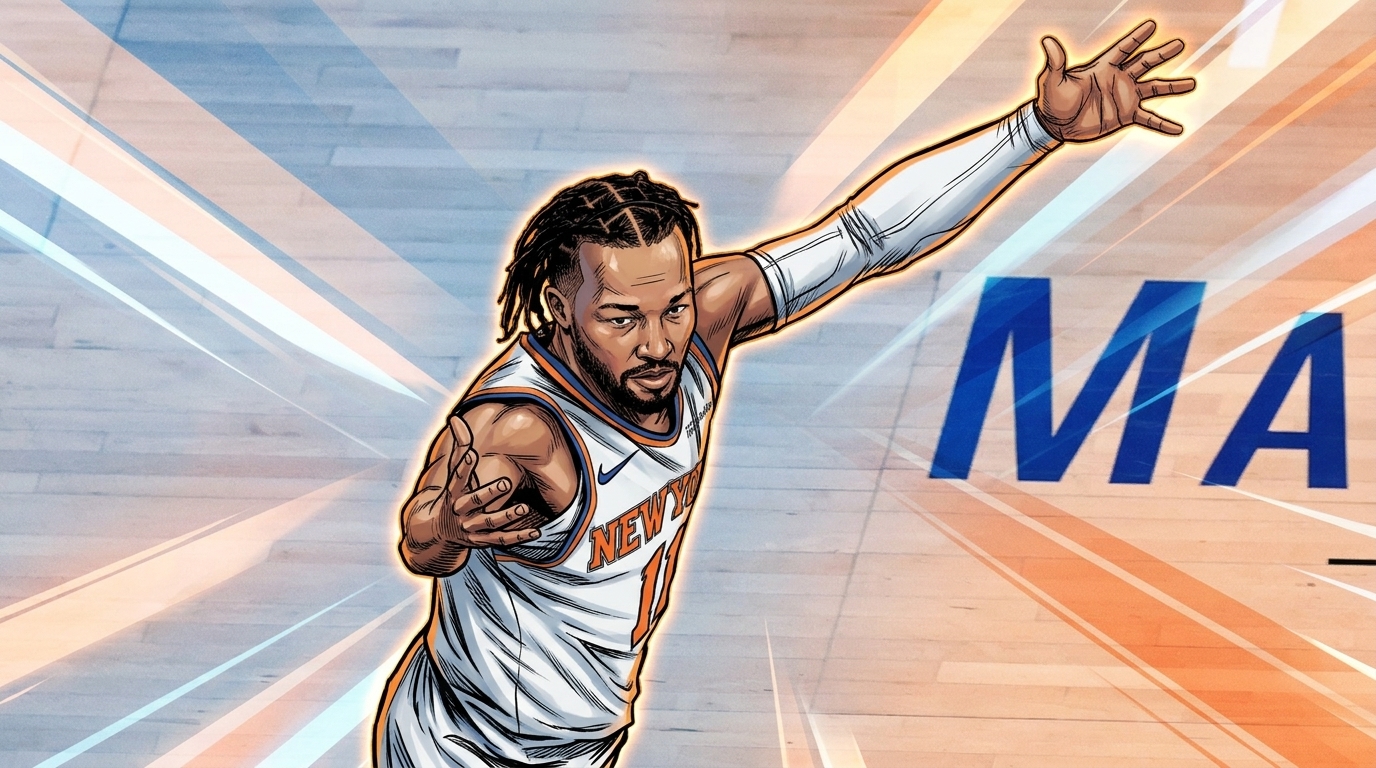
The New York Knicks are one of the National Basketball Association’s founding franchises, born in 1946 and rooted the entire time at Madison Square Garden in Manhattan. For most of their history they carried a peculiar burden: the league’s most valuable and most visible brand, in what the sport markets as its most famous building, in front of the loudest and most demanding crowd it has — and, for 53 straight years after 1973, no championship to show for any of it. That ended in the 2025-26 season, when a team built around Jalen Brunson and first-year head coach Mike Brown won the third title in club history and finally matched the trophy case to the address.
| Vitals | |
|---|---|
| Founded | 1946 |
| League / conf. / div. | NBA — Eastern Conference, Atlantic Division |
| Arena | Madison Square Garden, New York |
| Owner | Madison Square Garden Sports Corp. (James L. Dolan, executive chairman) |
| Head coach (Sep. 18, 2026) | Mike Brown |
| Titles | 3 — 1970, 1973, 2026 |
Founding and the first Finals (1946–1966)
A charter franchise. The Knickerbockers — the name a nod to Washington Irving’s satirical “Diedrich Knickerbocker,” New York shorthand since the 19th century — were one of the Basketball Association of America clubs that launched what became the NBA in 1946, and they have played at some incarnation of Madison Square Garden ever since, one of only two founding members (with the Boston Celtics) never to relocate.
So close, three times. The early Knicks were good almost immediately and then stuck one rung short. Coached by Joe Lapchick and led by Harry Gallatin, Carl Braun and playmaker Dick McGuire, they reached three straight NBA Finals from 1951 to 1953 — losing a seven-game series to the Rochester Royals in 1951, then twice to George Mikan’s Minneapolis Lakers dynasty. Those remain the only Finals the franchise reached in its first two decades. By the late 1950s the roster had aged out, and the Knicks spent most of the 1960s in the Eastern Division’s basement, bottoming out at 21-58 and 21-59 while they accumulated the draft capital and front-office patience that would build something lasting.
The Holzman championship teams (1967–1974)
The blueprint. The turn came when Red Holzman took over as coach in December 1967 and imposed a identity that still defines the franchise’s self-image: relentless team defense (“Hit the open man!” and “See the ball!” were his commandments), unselfish passing, and no dominant hierarchy. The pieces arrived in sequence — center and captain Willis Reed, guards Walt “Clyde” Frazier and Dick Barnett, Princeton forward Bill Bradley, and, in a franchise-altering December 1968 trade with Detroit, forward Dave DeBusschere, who let Reed slide to his natural center spot.
1970 and the Reed game. The 1969-70 club went 60-22 and beat the Los Angeles Lakers of Jerry West, Elgin Baylor and Wilt Chamberlain in a seven-game Finals that produced one of the sport’s enduring images: Reed, having torn a thigh muscle in Game 5, limping out of the tunnel to start Game 7, hitting his first two shots, and playing decoy while Frazier ran the game — 36 points and 19 assists in the 113-99 clincher. It was the franchise’s first title.
1973, the encore. After the Lakers avenged the loss in the 1972 Finals, New York added Baltimore’s Earl “The Pearl” Monroe — pairing him with Frazier in what looked like an impossible backcourt fit and became a two-way masterpiece — and won it all again in 1972-73, beating the Lakers 4-1. Those two Holzman teams were the only championships in the franchise’s first 79 seasons, and their fingerprints are all over the Garden rafters: seven of the club’s retired numbers belong to that era, along with Holzman’s 613, his career win total.
Bernard King and the lean years (1975–1985)
Decline, then a scorer. Reed retired in 1974 and the dynasty aged quickly; the late-1970s Knicks slid back toward the lottery. The lift came in 1982, when New York acquired Brooklyn-born forward Bernard King, and for three seasons the Garden had one of the most electric scorers alive. King’s peak was staggering: in the 1984 playoffs he averaged 42.6 points in a five-game first-round win over Isiah Thomas’s Detroit Pistons, playing through dislocated fingers on both hands, then dueled Larry Bird’s Celtics to seven games in the next round. The following year he led the entire NBA with a 32.9-point average for the 1984-85 scoring title. In March 1985 he tore the ACL in his right knee, an injury that in that era was often career-ending; it cost him nearly two full seasons and closed the window on that team. But King’s brief run kept the franchise relevant just long enough to reach the moment that changed everything.
The Ewing era (1985–2000)
The frozen envelope. New York won the inaugural 1985 NBA Draft Lottery — the source of a conspiracy theory (the “frozen envelope”) that has never died — and took Georgetown center Patrick Ewing first overall. He would become the most decorated player in club history and the anchor of nearly 15 years of contention. Under Rick Pitino’s frantic full-court press in the late 1980s the Knicks got young and dangerous; under Pat Riley, hired in 1991, they became something more distinctive: a bruising, defense-first team of Ewing, Charles Oakley, Anthony Mason and the fearless John Starks that turned the Garden into the most hostile building in basketball.
The Bulls wall. For most of the decade the Knicks were very good and Michael Jordan was better. New York pushed Chicago to a Game 7 in 1992, then blew a 2-0 lead in the 1993 conference finals — the series remembered for Starks’s left-handed dunk over the Bulls’ defense and, two nights later, Charles Smith’s four blocked layups under the basket in the final seconds of Game 5. When Jordan stepped away to play baseball, the door finally opened: the 1993-94 team survived Reggie Miller and the Pacers in a seven-game conference finals and reached the 1994 NBA Finals, only to lose a seven-game classic to Hakeem Olajuwon’s Houston Rockets — Starks shooting 2-for-18 in Game 7 the cruelest note. A year later Miller’s eight points in 8.9 seconds knifed the Knicks out of the 1995 semifinals, and Riley decamped for Miami, turning the rivalry into a personal blood feud.
The 8-seed miracle. Jeff Van Gundy took over and kept the Knicks hard-nosed. Their last great act of the era came in the lockout-shortened 1999 season, when a No. 8 seed — sparked by Latrell Sprewell and Allan Houston’s series-winning runner over Miami and lifted by Larry Johnson’s four-point play against Indiana — became the first and still one of the only No. 8 seeds to reach the Finals, where a Ewing-less, undermanned roster fell to Tim Duncan and David Robinson’s San Antonio Spurs. It was the franchise’s last Finals appearance for 27 years. Ewing, whose No. 33 was retired in 2003, entered the Hall of Fame in 2008.
Two decades in the wilderness (2001–2020)
Dysfunction as a brand. What followed was the longest fallow stretch in club history. The post-Ewing Knicks cycled through expensive misjudgments — the Stephon Marbury era, the disastrous Isiah Thomas front-office years (which included a costly 2007 workplace-harassment verdict against the organization), and Larry Brown’s one-and-done season — and won a single playoff series across two decades. Under James Dolan’s ownership the Garden was a perennial punchline even as it remained one of the sport’s cash machines.
Two bright flashes. The gloom broke twice. In February 2012, undrafted guard Jeremy Lin authored Linsanity — a two-week scoring binge, capped by a game-winning three in Toronto, that briefly made the Garden the center of the sports world. And in 2012-13 a 54-win team led by scoring champion Carmelo Anthony won the Atlantic Division and a playoff round — the high-water mark between Ewing and Brunson. But the rebuild that followed, including Phil Jackson’s failed triangle experiment and the drafting and trading of Kristaps Porzingis, bottomed out at a franchise-worst 17-65 — a mark the Knicks hit in both 2014-15 and 2018-19.
The Brunson rebuild and the 2026 title (2020–2026)
A patient build. The modern turn began quietly with Leon Rose’s arrival as team president in 2020 and the hiring of coach Tom Thibodeau, whose defensive rigor and hard-edged culture pulled the Knicks back to respectability. The keystone came in July 2022, when New York signed guard Jalen Brunson — son of former Knick Rick Brunson — to a four-year, $104 million contract that the rest of the league initially called an overpay and that became one of the shrewdest signings of the decade. Around him Rose assembled a roster with a distinct Villanova spine (Brunson, Josh Hart, Donte DiVincenzo), then went star-hunting: a December 2023 trade brought in two-way wing OG Anunoby, a 2024 deal added Mikal Bridges, and that autumn a blockbuster with Minnesota landed Karl-Anthony Towns.
The breakthrough. The Thibodeau Knicks stacked 50- and 51-win seasons and reached the 2025 Eastern Conference finals — the franchise’s first in 25 years — before losing to the Indiana Pacers. Days later, in a move widely questioned at the time, the Knicks fired Thibodeau and hired Mike Brown, a two-time Coach of the Year, on July 7, 2025. It was vindicated inside a year. New York went 53-29 in 2025-26, then tore through the East — beating Atlanta, sweeping Philadelphia, and sweeping Cleveland in the conference finals — before facing the San Antonio Spurs, the West’s No. 2 seed at 62-20, in the 2026 NBA Finals. The Knicks won it 4-1, stealing the first two games in San Antonio and clinching on the road on June 13, 2026; Brunson, who scored 45 in the deciding game and averaged 32.6 points for the series, was named Finals MVP. It was the Knicks’ first championship since 1973, and it closed a 53-year drought that had come to feel like part of the franchise’s identity.
Retired numbers
Nine banners hang for Knicks figures, alongside Red Holzman’s 613 (his franchise win total) and the league-wide retirement of Bill Russell’s No. 6.
| No. | Honoree | Position | Knicks tenure | Retired |
|---|---|---|---|---|
| 10 | Walt Frazier | Guard | 1967-1977 | Dec. 15, 1979 |
| 12 | Dick Barnett | Guard | 1965-1973 | 1990 |
| 15 | Earl Monroe | Guard | 1971-1980 | March 1, 1986 |
| 15 | Dick McGuire | Guard | 1949-1957 | March 14, 1992 |
| 19 | Willis Reed | Center | 1964-1974 | Oct. 21, 1976 |
| 22 | Dave DeBusschere | Forward | 1968-1974 | March 24, 1981 |
| 24 | Bill Bradley | Forward | 1967-1977 | Feb. 18, 1984 |
| 33 | Patrick Ewing | Center | 1985-2000 | Feb. 28, 2003 |
| 613 | Red Holzman | Head coach (banner: career wins) | 1967-1982 | March 10, 1990 |
| 6 | Bill Russell | League-wide honoree | — | Aug. 11, 2022 |
Per Wikipedia and RealGM, through the 2025-26 season.
Season by season
Every season in club history, folded by decade.
1940s First four seasons — three playoff trips
| Season | W–L | Result |
|---|---|---|
| 1946-47 | 33-27 | Lost BAA semifinals (Philadelphia) |
| 1947-48 | 26-22 | Lost first round (Baltimore) |
| 1948-49 | 32-28 | Lost division finals (Washington) |
| 1949-50 | 40-28 | Lost division finals (Syracuse) |
1950s Three straight Finals, 1951–1953
| Season | W–L | Result |
|---|---|---|
| 1950-51 | 36-30 | Lost NBA Finals (Rochester 3-4) |
| 1951-52 | 37-29 | Lost NBA Finals (Minneapolis 3-4) |
| 1952-53 | 47-23 | Lost NBA Finals (Minneapolis 1-4) |
| 1953-54 | 44-28 | Lost round-robin playoffs |
| 1954-55 | 38-34 | Lost division semifinals (Boston) |
| 1955-56 | 35-37 | Lost division tiebreaker (Syracuse) |
| 1956-57 | 36-36 | Missed playoffs |
| 1957-58 | 35-37 | Missed playoffs |
| 1958-59 | 40-32 | Lost division semifinals (Syracuse) |
| 1959-60 | 27-48 | Missed playoffs |
1960s Lean years, then the climb to 1970
| Season | W–L | Result |
|---|---|---|
| 1960-61 | 21-58 | Missed playoffs |
| 1961-62 | 29-51 | Missed playoffs |
| 1962-63 | 21-59 | Missed playoffs |
| 1963-64 | 22-58 | Missed playoffs |
| 1964-65 | 31-49 | Missed playoffs |
| 1965-66 | 30-50 | Missed playoffs |
| 1966-67 | 36-45 | Lost division semifinals (Boston) |
| 1967-68 | 43-39 | Lost division semifinals (Philadelphia) |
| 1968-69 | 54-28 | Lost division finals (Boston) |
| 1969-70 | 60-22 | NBA champions (def. Lakers 4-3) |
1970s Two championships
| Season | W–L | Result |
|---|---|---|
| 1970-71 | 52-30 | Lost conference finals (Baltimore) |
| 1971-72 | 48-34 | Lost NBA Finals (Lakers 1-4) |
| 1972-73 | 57-25 | NBA champions (def. Lakers 4-1) |
| 1973-74 | 49-33 | Lost conference finals (Boston) |
| 1974-75 | 40-42 | Lost first round (Houston) |
| 1975-76 | 38-44 | Missed playoffs |
| 1976-77 | 40-42 | Missed playoffs |
| 1977-78 | 43-39 | Lost conference semifinals (Philadelphia) |
| 1978-79 | 31-51 | Missed playoffs |
| 1979-80 | 39-43 | Missed playoffs |
1980s King's scoring, then Ewing arrives
| Season | W–L | Result |
|---|---|---|
| 1980-81 | 50-32 | Lost first round (Chicago) |
| 1981-82 | 33-49 | Missed playoffs |
| 1982-83 | 44-38 | Lost conference semifinals (Philadelphia) |
| 1983-84 | 47-35 | Lost conference semifinals (Boston) |
| 1984-85 | 24-58 | Missed playoffs |
| 1985-86 | 23-59 | Missed playoffs |
| 1986-87 | 24-58 | Missed playoffs |
| 1987-88 | 38-44 | Lost first round (Boston) |
| 1988-89 | 52-30 | Lost conference semifinals (Chicago) |
| 1989-90 | 45-37 | Lost conference semifinals (Detroit) |
1990s The Riley–Van Gundy contenders
| Season | W–L | Result |
|---|---|---|
| 1990-91 | 39-43 | Lost first round (Chicago) |
| 1991-92 | 51-31 | Lost conference semifinals (Chicago) |
| 1992-93 | 60-22 | Lost conference finals (Chicago) |
| 1993-94 | 57-25 | Lost NBA Finals (Houston 3-4) |
| 1994-95 | 55-27 | Lost conference semifinals (Indiana) |
| 1995-96 | 47-35 | Lost conference semifinals (Chicago) |
| 1996-97 | 57-25 | Lost conference semifinals (Miami) |
| 1997-98 | 43-39 | Lost conference semifinals (Indiana) |
| 1998-99 | 27-23 | Lost NBA Finals (San Antonio 1-4) |
| 1999-2000 | 50-32 | Lost conference finals (Indiana) |
2000s The wilderness
| Season | W–L | Result |
|---|---|---|
| 2000-01 | 48-34 | Lost first round (Toronto) |
| 2001-02 | 30-52 | Missed playoffs |
| 2002-03 | 37-45 | Missed playoffs |
| 2003-04 | 39-43 | Lost first round (New Jersey) |
| 2004-05 | 33-49 | Missed playoffs |
| 2005-06 | 23-59 | Missed playoffs |
| 2006-07 | 33-49 | Missed playoffs |
| 2007-08 | 23-59 | Missed playoffs |
| 2008-09 | 32-50 | Missed playoffs |
| 2009-10 | 29-53 | Missed playoffs |
2010s Linsanity, a division title, two 17-win seasons
| Season | W–L | Result |
|---|---|---|
| 2010-11 | 42-40 | Lost first round (Boston) |
| 2011-12 | 36-30 | Lost first round (Miami) |
| 2012-13 | 54-28 | Lost conference semifinals (Indiana) |
| 2013-14 | 37-45 | Missed playoffs |
| 2014-15 | 17-65 | Missed playoffs |
| 2015-16 | 32-50 | Missed playoffs |
| 2016-17 | 31-51 | Missed playoffs |
| 2017-18 | 29-53 | Missed playoffs |
| 2018-19 | 17-65 | Missed playoffs |
| 2019-20 | 21-45 | Missed playoffs |
2020s The Brunson rebuild and the 2026 title
| Season | W–L | Result |
|---|---|---|
| 2020-21 | 41-31 | Lost first round (Atlanta 1-4) |
| 2021-22 | 37-45 | Missed playoffs |
| 2022-23 | 47-35 | Lost conference semifinals (Miami 2-4) |
| 2023-24 | 50-32 | Lost conference semifinals (Indiana 3-4) |
| 2024-25 | 51-31 | Lost conference finals (Indiana 2-4) |
| 2025-26 | 53-29 | NBA champions (def. San Antonio 4-1) |
Per StatMuse and Wikipedia, through the 2025-26 season.
By the numbers
Franchise marks
Ranks
- 3rd NBA franchise valuation (Forbes 2025)
- 4th Regular-season wins, all-time
- 3rd NBA home attendance, 2025-26
Honors
- 3× NBA champion (1970, 1973, 2026)
- 5× conference champion
- 8 division titles
- 2026 Finals MVP: Jalen Brunson
Counts per Wikipedia and StatMuse; attendance per ESPN, through the 2025-26 season.
The arguments
The debates around the Knicks are mostly about money and the man who signs the checks. James Dolan, whose family’s Madison Square Garden Sports Corp. has controlled the team since 1997, has drawn sustained criticism for front-office instability and for public clashes with former players and fans — most notably the 2017 arena confrontation with franchise great Charles Oakley that ended in litigation. Supporters counter that his ownership coincided with the Garden’s rise to the most-valuable tier of the NBA and, ultimately, a championship. The other live argument is the 2025 coaching change: critics said firing Thibodeau after a conference-finals run discarded the coach who rebuilt the culture, while a title in Mike Brown’s first season with essentially the same core is cited by the decision’s defenders. How much credit belongs to Thibodeau’s foundation versus Brown’s adjustments is the kind of question the 2026 banner will never fully settle.
Why it matters
The Knicks sit at the commercial and cultural center of American basketball: the league’s marquee market, a home arena marketed as the world’s most famous, and among its most valuable franchises regardless of the standings. For 53 years that stature outran the trophy case, which is exactly what made the 2026 championship one of the more consequential title runs of the era — proof that the sport’s biggest stage could, at last, produce a winner to match it, and that a patiently built roster fronted by an undersized, twice-overlooked guard could be the group to do it.