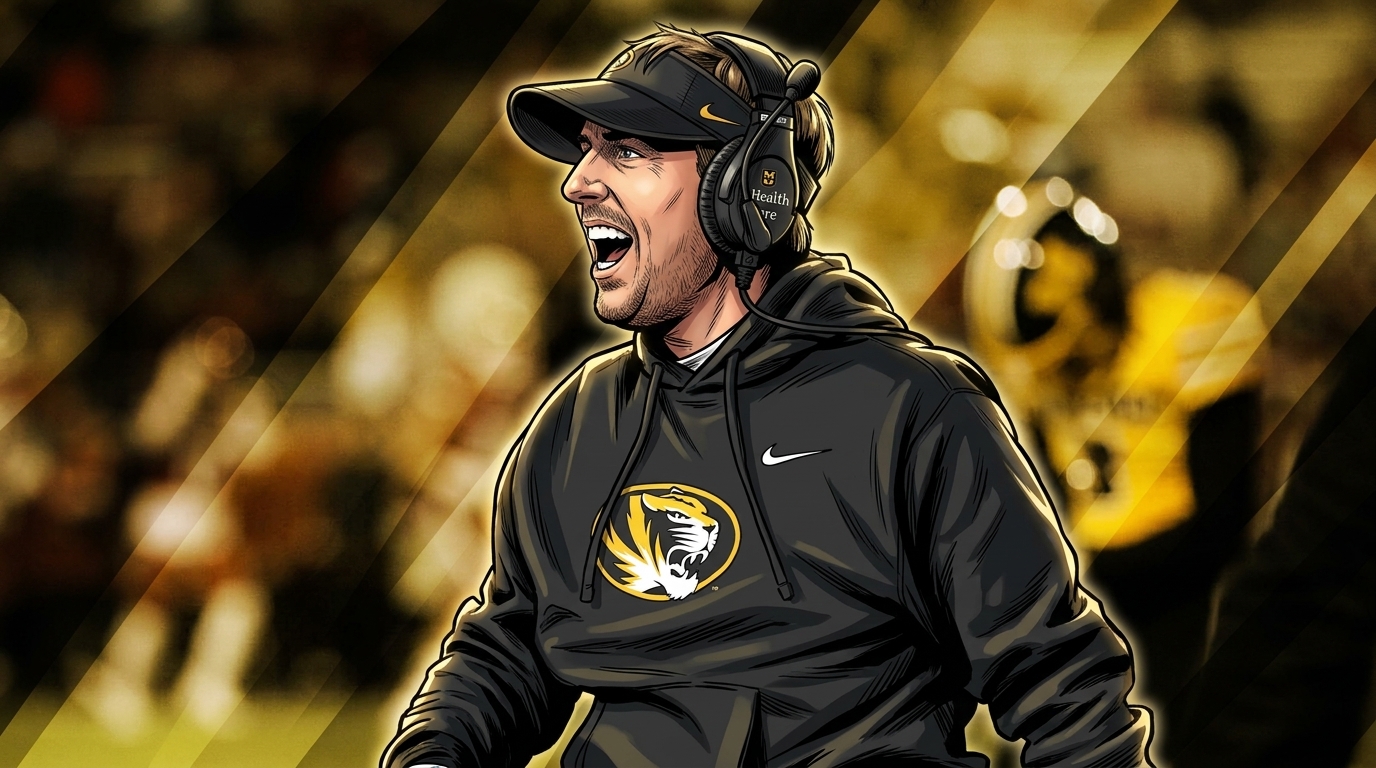

The United States Senate has weighed in on a college football championship from 1960, which sounds like satire until you remember that college football has never had anything closer to a real court to weigh in instead. On August 6, S. Res. 833 passed by unanimous consent, formally recognizing the Missouri Tigers’ claim to the 1960 national title; the Senate found time to settle a 66-year-old football argument in the middle of a session presumably reserved for other business.
The case itself is not nothing. Missouri went 10-1 in 1960, with the loss coming against Kansas in the Big Eight title game, a loss the Big Eight later erased when it found Kansas had fielded an ineligible player, retroactively bumping Dan Devine’s Tigers to 11-0. Missouri then closed the year by beating Navy and Heisman winner Joe Bellino in the Orange Bowl. Introducing the resolution, Sen. Eric Schmitt (R-Mo.) offered floor rhetoric usually reserved for actual legislation: “Every generation needs examples of men who stick to their word. Dan Devine made a promise in the ashes of defeat.” It’s a good sentence. It’s also doing an enormous amount of work for a nonbinding statement of sentiment about a bowl game from before the moon landing.
Because that’s what S. Res. 833 actually is, definitionally: a resolution, not a law, carrying no legal force and settling nothing. Which is the obvious rebuttal here: who cares, it’s symbolic, Congress passes these about National Ice Cream Month. Fair enough. But that’s the point. Missouri didn’t need the Senate to grant it a championship the way a court grants a verdict; college football doesn’t have a body that can do that. It needed the Senate to grant it the appearance of an official ruling, because appearance has always been the sport’s entire currency, and no other institution was ever going to hand one out.
Consider what 1960 actually produced. Minnesota was the AP and UPI poll champion, ranked No. 1 before losing the Rose Bowl to Washington. Ole Miss went 10-0-1, tying LSU and beating Rice in the Sugar Bowl, and the Football Writers Association of America crowned the Rebels champion once Minnesota’s bowl loss opened the door — a title Ole Miss still markets today as one of three it claims, alongside 1959 and 1962, the same program currently in the news for Ole Miss’s own legal aggression this year. Washington got the Helms Athletic Foundation’s nod for beating Minnesota. Iowa got the Litkenhous Rating System’s. The NCAA’s own record book, for what it’s worth, recognizes exactly one shared champion for that season: Minnesota and Ole Miss, with everyone else left off the page entirely.
That’s five programs with a plausible claim to a single season, awarded by five different, mostly forgotten rating systems that nobody outside a research library could name from memory. This is how the sport has always adjudicated its history: not through a governing body with actual authority, but through whichever selector happened to publish a poll that year, and whichever athletic department was willing to put “national champions” on a banner afterward. There’s no commissioner’s office you can appeal to; there’s no instant replay for 1960. There is only self-certification, dressed up in whatever institutional muscle a program can borrow — a trophy case, a press release, and now, for the first time, an act of the United States Senate.
Missouri had never officially claimed the 1960 title before this year, which makes the resolution less a correction of the historical record than the record’s actual creation, backdated by six and a half decades. I’ve gone back to Schmitt’s line about Devine’s promise more than once, and it doesn’t get more convincing; it gets stranger, mostly because it’s aimed at people who will never check what the Big Eight did to Kansas’ eligibility file in 1961.
https://x.com/SenatePress/status/2085449205196202436
None of this makes Missouri wrong. It makes “wrong” a category that doesn’t apply, because college football has never had a real arbiter of its own history — it spent six and a half decades refusing to build the thing that would let anyone be wrong. Congress didn’t referee a dispute; it just showed up as the biggest, loudest claimant in a fight that already had four other entrants, all making the same noise with smaller microphones.
Seven teams are already live for this year’s actual championship, with real games left to decide it on a field, which is more than the class of 1960 ever got. That one will still, eventually, get relitigated by someone’s grandchildren in 2092. College football has never needed a court. It has only ever needed volume, and Missouri just found the loudest microphone in the country.