
Beoga has toured with Ed Sheeran on and off for the better part of a decade, a low-key Irish folk act that’s about as close to a musical family member as a touring headliner gets. This week the band quit his Loop Tour, and their exit statement pointed squarely at pro-Israel political pressure as the reason Macklemore got silenced. We’ve been tracking this standoff for two weeks, and that’s the detail that stopped us cold: not an anonymous account, not a message board post, but the guy’s own longtime tour band, walking out the door with a specific accusation attached to their name.
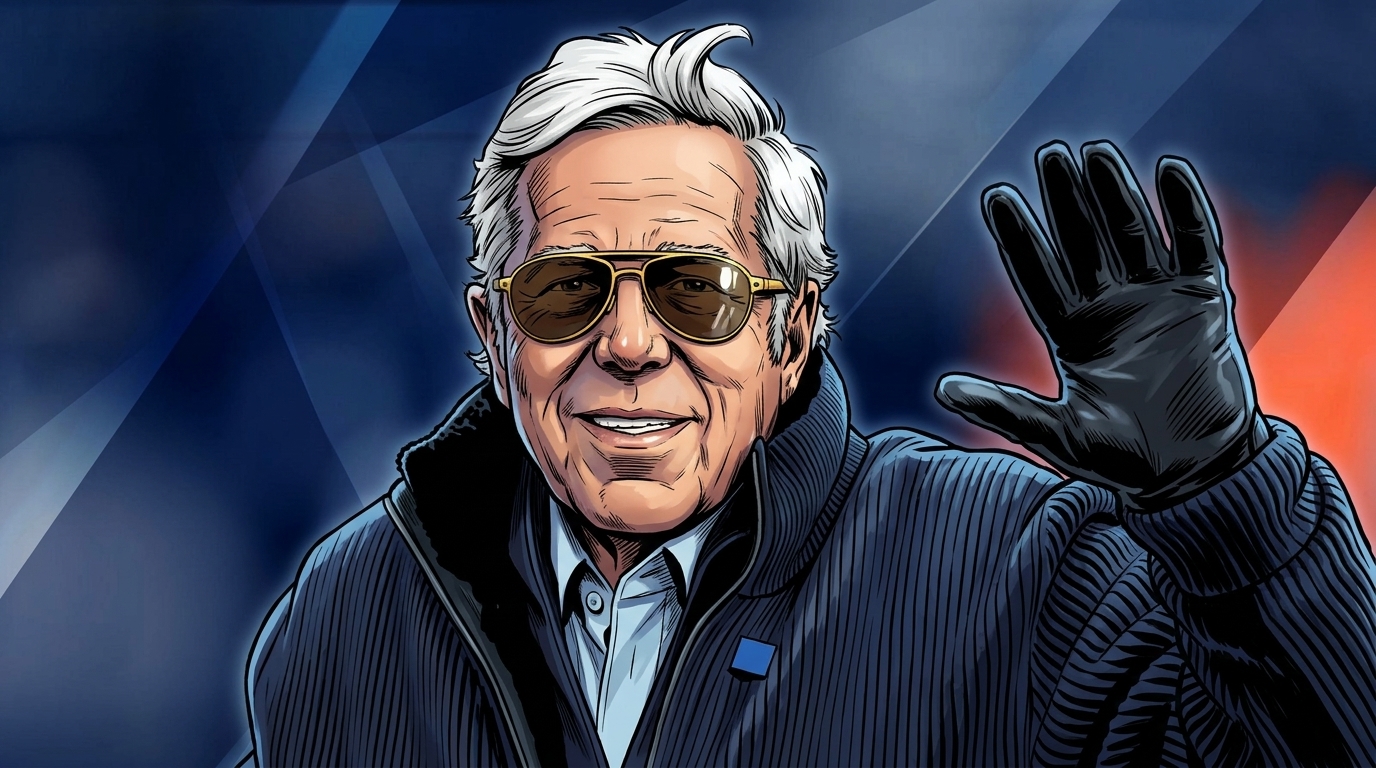
By Sept. 17, Beoga wasn’t alone. Finneas and Lukas Graham had already left. Aaron Rowe left before them. Every opener on Sheeran’s bill was gone, and the reasons they gave, across four separate statements, pointed at the same person: Robert Kraft. What started two weeks ago as one owner’s phone call is now a pattern with names attached. TMZ reported, via Rolling Stone, that David Tepper, Arthur Blank, and Jeffrey Lurie backed Kraft’s push to pull Macklemore from the bill, and Rolling Stone counted seven stadiums total, Gillette included, that wouldn’t book him. That’s the story underneath the antisemitism-versus-censorship argument everyone’s already picked a side on: four NFL owners just demonstrated they can end a touring musician’s stadium access with a phone call, and the people who actually shared a stage with Macklemore decided that mattered more than the underlying dispute.
Rewind to Sept. 4-5, when Macklemore opened for Sheeran at MetLife Stadium in New Jersey and used his set to say “Free Palestine,” displaying imagery of destruction in Gaza. Nothing became public for over a week. Then, on Sept. 14, Macklemore posted a lengthy Instagram statement laying out Kraft’s initial call to pull Macklemore from the tour: he alleged Kraft phoned Sheeran and the tour’s promoter directly, saying Macklemore wouldn’t be welcome at Gillette Stadium for the Sept. 25-26 shows over what Kraft called “a broader history of antisemitic rhetoric and imagery” (reportedly a reference to a 2014 apology Macklemore issued for wearing a costume that resembled Jewish stereotypes). Macklemore’s account goes further: he says Sheeran told him Kraft had rallied other stadium owners into a collective ultimatum, keep Macklemore on the bill or lose access to their buildings. Kraft’s camp, notably, never confirmed or denied that characterization, per WBUR’s reporting. Everything about the ultimatum’s precise wording comes from Macklemore and Sheeran, secondhand, not Kraft on the record.
Sheeran answered the next day, also on Instagram: he said the decision to pull Macklemore belonged to the tour promoter, not to him. He said he’d tried to “build a bridge” and insisted “I am not complicit.” Whatever the intent, the framing didn’t hold. Aaron Rowe was the first opener to walk, citing “billionaires” using their “position of power to silence” pro-Palestinian voices. Within a day, Finneas and Lukas Graham followed. Beoga went last and hit hardest, naming pro-Israel political pressure directly as the reason Macklemore lost his spot. Finneas: “I stand with Palestine and its people.” Lukas Graham: “money doesn’t give you the right to own the conversation.” (Sheeran, for what it’s worth, is now touring a stadium show with no opening act at all, which is its own quiet humiliation for an artist who built his brand on being everybody’s favorite collaborator.)
That collapse might have stayed a music-industry story about one owner’s grudge, except it didn’t stay there. On Sept. 17, TMZ reported, citing Rolling Stone, that David Tepper (Panthers), Arthur Blank (Falcons), and Jeffrey Lurie (Eagles) had backed Kraft’s push. Rolling Stone’s broader count puts the number of venues refusing to host Macklemore at seven, including Gillette: Lincoln Financial Field, Mercedes-Benz Stadium, and Bank of America Stadium are the three named owners’ own buildings, and Lucas Oil Stadium, AT&T Stadium, and Raymond James Stadium make up three more whose ownership groups weren’t named in the reporting. That’s seven stadiums aligned against one performer’s opening slot, over a political statement none of them have any actual authority to police beyond deciding whose name goes on the marquee. (For context, that’s more consensus than NFL owners have managed on replay review in a decade.)
What’s getting lost under the antisemitism-versus-censorship argument is this: the people who were actually in the room, sharing buses and soundchecks and green rooms with both Macklemore and Sheeran, didn’t split evenly. Rowe, Finneas, Lukas Graham, and Beoga all landed on the same side, and none of them work in politics for a living. Beoga plays fiddle-driven folk music. Finneas produces pop records. Their read on who was in the wrong wasn’t a hot take fired off from a phone; it was a decision to walk away from paid tour dates. I think that detail matters more than either side’s press-release language, because it’s the closest thing to a verdict from people who had nothing to gain from taking one.
Kraft, to his credit, didn’t just dig in. After Macklemore pledged his full $1 million in Loop Tour earnings to Palestinian aid groups, Kraft pledged a matching $2 million donation to the region. The Wall Street Journal also reported a 40-minute phone call between Kraft and Sheeran during the dispute, though what was actually said on that call is still filtered entirely through the two men who weren’t Kraft. (Nothing quite says “I didn’t mean for it to get this big” like doubling your money the same week it does.) Read generously, the donation looks like an owner trying to de-escalate a fight he started. Read less generously, it looks like a very rich man buying back some of the goodwill his phone calls just cost him.
None of this requires deciding Kraft is wrong about everything. Macklemore’s 2014 apology for a costume evoking Jewish stereotypes is real, and Kraft is entitled to weigh it however he wants when deciding who plays at a building with his name on the lease. Sheeran’s insistence that the call wasn’t his to make might even be true; cutting an opener is standard promoter business, and promoters do it for far dumber reasons than this all the time. But that defense only covers the first phone call. It doesn’t explain why three more owners went on record backing it, or why three more stadiums with no named owner quietly agreed to enforce the same line, or why the tour’s own openers concluded, independently, that this was worth quitting over. One owner disliking an opening act is a scheduling note. Four named owners and seven buildings agreeing to freeze him out is a system, and I don’t think that system cares much whether the underlying complaint is antisemitism, Palestine advocacy, or something else entirely the next time it gets used. It cares that it worked.
The reaction online has been about what you’d expect once people started connecting the same dots:
https://twitter.com/FearedBuck/status/2100923347915755809
Whatever that reaction lands on, the more useful question is what happens next, and there are two dates worth circling. The first is Sept. 25-26, when Sheeran’s tour actually arrives at Gillette Stadium, Kraft’s own building, with the opener slot still empty and no acts left to fill it. The second is whatever comes after that: the next artist who says something a stadium-owning billionaire doesn’t like, and finds out how many phone calls it takes this time. Four was apparently enough. I’d watch whether it stays four, or grows, the next time somebody tests it.