
Ask a general manager this month what a “team-friendly extension” means, and he’ll give you a number: a discount against the cap on the day it was signed. Ask him again in the fall of 2028 and the math might not flatter him, because the ceiling he measured against is about to move more in the next three years than it moved in the previous six combined.
The NHL’s Board of Governors confirmed this month that the salary cap is projected to reach $127.5 million by the 2028-29 season, up from a locked-in $113.5 million in 2027-28. Pro Hockey Rumors called that $14 million jump the largest season-to-season increase since the cap system began. The obvious read is that every team gets more room to spend in a couple of years. The real story is what happens to the contracts signed right now, before that room shows up, because a deal that looks disciplined against today’s $104 million cap reads very differently against one that’s 22 percent bigger.
Connor McDavid’s own contract is the cleanest version of the bet every team and player is quietly making this year, whether they’ve framed it that way or not.
How Big Is $127.5 Million, Actually?
The NHL salary cap is projected to climb from $113.5 million in 2027-28 to $127.5 million in 2028-29, a $14 million jump in one offseason and the largest single-season increase since the cap system began. That figure comes from the NHL’s own Board of Governors, not a rumor floating around July free agency.
Line up the last five years and the acceleration is obvious. The cap sat at $88.0 million in 2024-25, climbed to $95.5 million in 2025-26 (a $7.5 million bump), and reached today’s $104.0 million for the current 2026-27 season, up $8.5 million. Next season it rises again to a locked-in $113.5 million. Then, in 2028-29, the NHL’s cap projection of $127.5 million lands, nearly double the increase of any of the three years before it.
Translate that $14 million into roster terms and it stops being an abstraction. It’s close to what a genuine number-one defenseman or top-line scorer costs on the open market right now, or enough to fund two solid complementary forwards without touching the rest of the cap sheet. Going from $104.0 million today to $127.5 million in two seasons is a 22.6 percent increase in spending room, nearly a quarter more space to build a roster than teams have this year.
The raw numbers made the rounds fast once the projection became public:
https://twitter.com/BR_OpenIce/status/2103471590583247143
The jump isn’t spread evenly across the three-year window, either. Roughly 60 percent of the total increase from 2026-27 to 2028-29 lands in that single final summer. Any front office budgeting conservatively for 2028 is going to look conservative in hindsight.
Why Is the Jump This Size?
The jump is this size because a new U.S. television deal begins with the 2028-29 season, and the cap formula hasn’t priced that revenue in yet. Commissioner Gary Bettman cited roughly $8.1 billion in projected league revenue this year, and the NHL is in year two of a three-year rising-cap plan announced in January 2025 to recover ground lost during the pandemic-era freeze.
For half a decade, the cap barely moved, and those flat years taught front offices to treat scarcity as the default NHL condition. That habit is about to get expensive. Teams that built their roster philosophy around a tight ceiling are staring down a stretch where the ceiling mostly disappears, and a salary cap jump of this size rewrites what “disciplined” spending even looks like.
What Happens to the Deals Signed Right Now?
Nico Hischier signed a five-year, $11.7 million extension with the New Jersey Devils this summer, 11.25 percent of the current $104 million cap. Ivan Demidov signed an eight-year, $9.125 million deal with the Montreal Canadiens, 8.77 percent of that same number. Run both percentages against the projected $127.5 million cap in 2028-29 and Hischier’s number drops to 9.18 percent, Demidov’s to 7.16 percent: smaller slices of a much bigger pie, which is exactly the outcome a front office wants when it’s the one writing the checks.
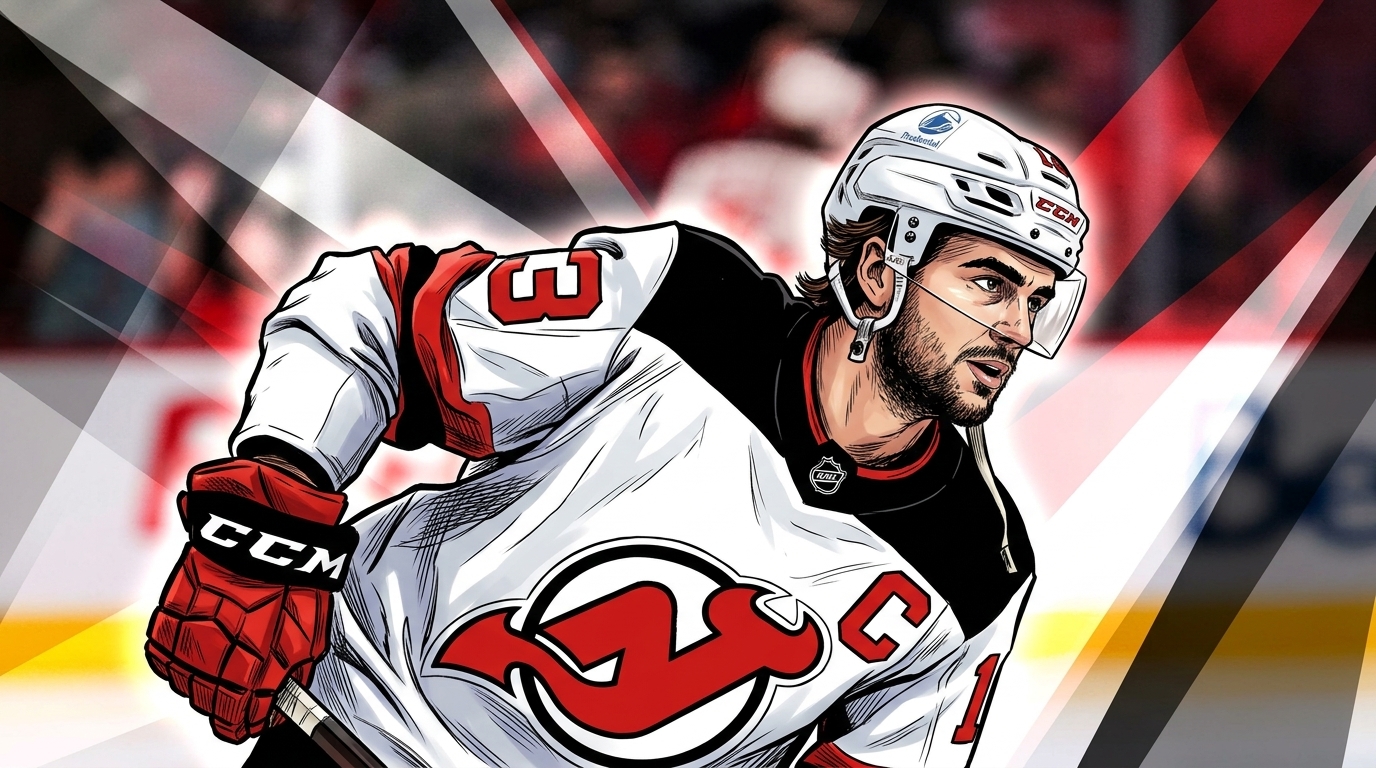
That’s the version of “team-friendly” that ages well for a front office and awkwardly for everyone else. Hischier, the Devils’ captain, and Demidov, coming off a breakout rookie year in Montreal, both locked in against a $104 million ceiling this summer, among a wave of 2026 contract extensions signed before anyone had the $127.5 million number in hand. Whatever their camps priced as fair value at signing is going to look thin against a cap that’s grown by nearly a quarter before either deal reaches its midpoint. Not every extension signed this year carries that risk, though — Alex Ovechkin re-signed for one year at $4.25 million, a deal short enough that it expires before the $127.5 million cap even arrives.
Is There a Smarter Way to Play This?
Connor McDavid found one, though not on the same calendar as Hischier and Demidov’s summer deals. McDavid signed his extension in October 2025, well before this year’s wave of contract activity, and the terms are the tell. His two-year, $25 million deal with the Edmonton Oilers ($12.5 million AAV) takes effect this season and runs through 2027-28, the season directly before the $127.5 million cap arrives. That AAV is a discount in its own right — CBS Sports noted it comes in well below what Kirill Kaprizov just got from Minnesota ($17 million a year), and McDavid would have commanded more had he tested the market. But the term is the real tell: two years, not five or eight, which puts him back on the open market right as the biggest cap jump in league history lands.
That’s the inverse bet. Hischier and Demidov locked in scarcity value against today’s number for five and eight years apiece. McDavid structured his next contract to expire exactly when that scarcity stops being scarce, betting his leverage will be worth more against a $127.5 million NHL salary cap in 2028-29 than it is right now. If the projection holds, he’ll walk into his next negotiation with nearly a quarter more cap room on the table than exists today, and he’ll know it going in instead of finding out three years into a deal he can’t renegotiate.
Check the rest of our NHL coverage for how other front offices are already gaming out their own cap math ahead of 2028.
The players and teams who waited are the ones who benefit from what’s coming. The ones who already signed this year’s extensions are the ones who’ll be doing the explaining in 2028, whether that’s a GM justifying a discount that turned uncomfortable or an agent wishing his client had bet on the calendar instead of the current number.