
Ohio State opened as a 50.5-point favorite over Ball State this week, the largest spread of Week 1 in major college football, and the number should be read as an invoice, not a prediction. Nobody in either athletic department is pretending this is a football game with a competitive outcome attached to it. It’s a scheduling transaction with a scoreboard bolted on for the benefit of the broadcast window, and both sides know exactly what they’re being paid to show up for.
Nothing else on the board is close. Oklahoma is favored by 41.5 over UTEP, Indiana by 40.5 over North Texas, and Oregon-Boise State and Miami-Stanford both sit at 24.5, big numbers in a normal week that register as background noise next to Columbus. The over/under checks in at 56.5, which says less about anticipated fireworks than about how little defense anyone expects Ball State to play.
Ohio State enters ranked No. 1 nationally off a 12-1 season and a run of 7-0 at home; the Ohio State Buckeyes scored 454 points a year ago, 12th-most in the country. Ball State went 4-8, including an 0-7 mark on the road, and the Ball State Cardinals managed 190 points, good for 108th. Those aren’t the numbers of two teams sharing a conference, a division, or really a sport. They’re the numbers of a landlord and a tenant, and underneath the point spread, this is a $1.9 million guarantee game with a coin toss attached.
The lease terms are public. Ball State collects $1.9 million for making the trip to Columbus, one of two nearly identical checks Ohio State is writing to Group of Six programs this fall; Kent State gets the same $1.9 million later in the year, a combined $3.8 million for two afternoons of low-risk football. Forbes called it one of the highest payout totals in the sport’s history, which undersells how routine the arrangement actually is. Ohio State paid UConn $1.95 million for a home date last season. Buying a soft opener is a line item now, priced like any other stadium expense.
Ball State’s athletic department isn’t collecting that figure by accident. A check that size likely outweighs what a home game against a MAC peer draws in tickets and concessions combined, which makes the arithmetic simple even when the football isn’t: absorb whatever the scoreboard does, deposit the guarantee, build next year’s budget around it. This isn’t a story about a small program getting hustled. It’s a story about a small program cashing the only check on the table.
A new quarterback walks into that math this week. Redshirt junior Keldric Luster, a transfer from both Texas State and SMU, was named the starter for Ball State in the days before kickoff, meaning his first pass in a Cardinals uniform arrives at Ohio Stadium against a defense that has treated MAC offenses as a rounding error for a decade.
https://x.com/PeteThamel/status/2091552471399174257
Over the last ten years, Ohio State is 7-0 against MAC opponents by an average margin of 54.1 points, ran up 71 on Miami (Ohio), and considered 28 over Ohio last season a comparatively modest result. Extrapolate from that sample and 50.5 looks less like a bold number than a floor.
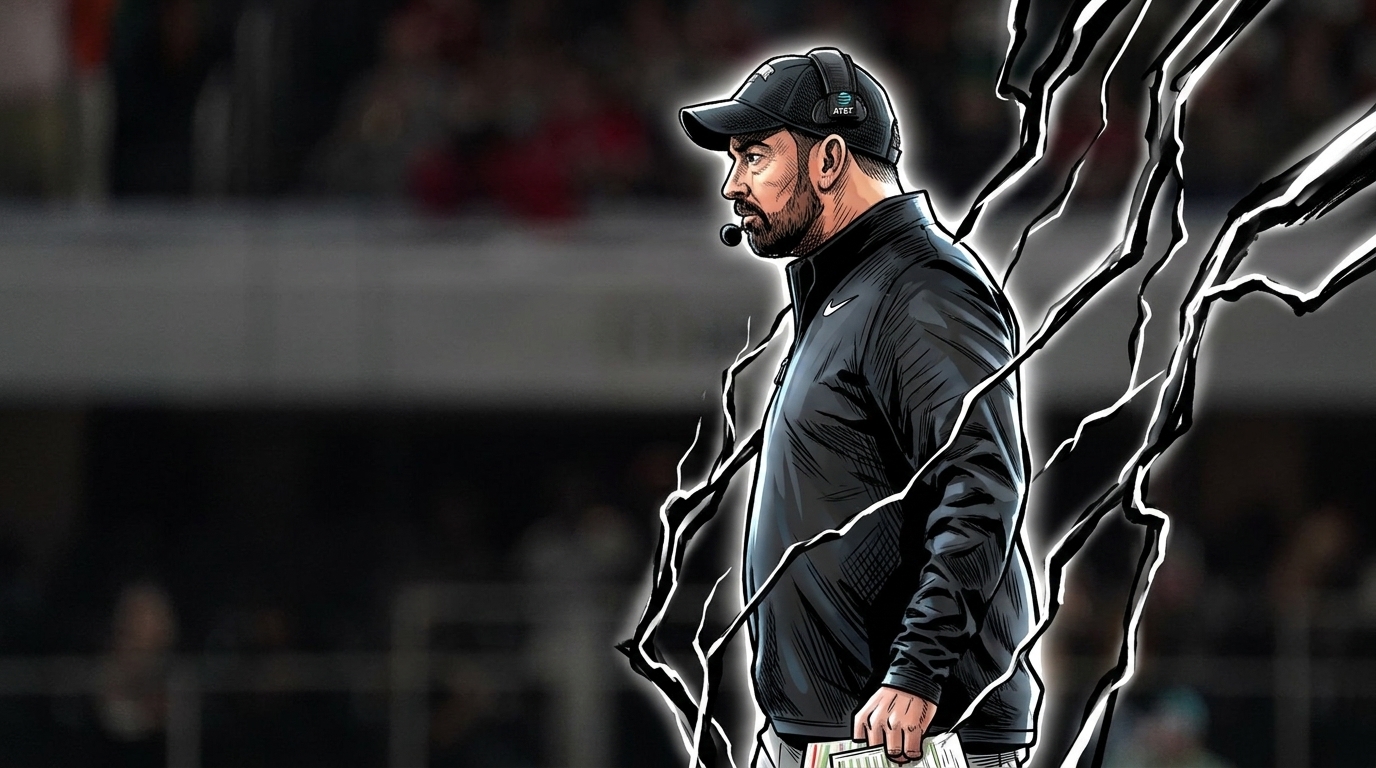
Ryan Day’s uneven history covering openers is the one thread of doubt in an otherwise settled math problem. Day is 3-4-1 against the spread in season openers since taking the job, and in 2024 he took a 48-point line against Akron and still didn’t cover it; as an Ohio State alum who still clears his Saturdays every September, watching the book price this one like a foregone conclusion gets under my skin, mostly because the history says it shouldn’t.
All of this is happening in a sport that just finished retooling its business model to look serious. The 12-team playoff carries into its next iteration in 2026, and the College Football Playoff scrapped the old performance-based revenue formula for a straight conference split: 29 percent apiece for the Big Ten and the SEC, 17 for the ACC, 15 for the Big 12, ten collectively for what’s left of the Group of Six. It’s the same institutional logic that let Jeremiah Smith weigh turning down $10 million to stay in Columbus; the money got serious everywhere except the one place a $1.9 million invoice still buys a guaranteed win.
None of this is new, and it isn’t isolated. Ohio State wasn’t even alone in the largest spread of Week 0 a week earlier, just the biggest number in the biggest sport doing what everyone else was already doing quietly. College football modernized its television deal, its payroll, and its postseason bracket, and it still opens the season by writing a body-bag check to a MAC program and calling it a marquee matchup. Ball State cashes it, Ohio State banks the win, and the only variable left on the board is whether Ryan Day can cover the number this time.