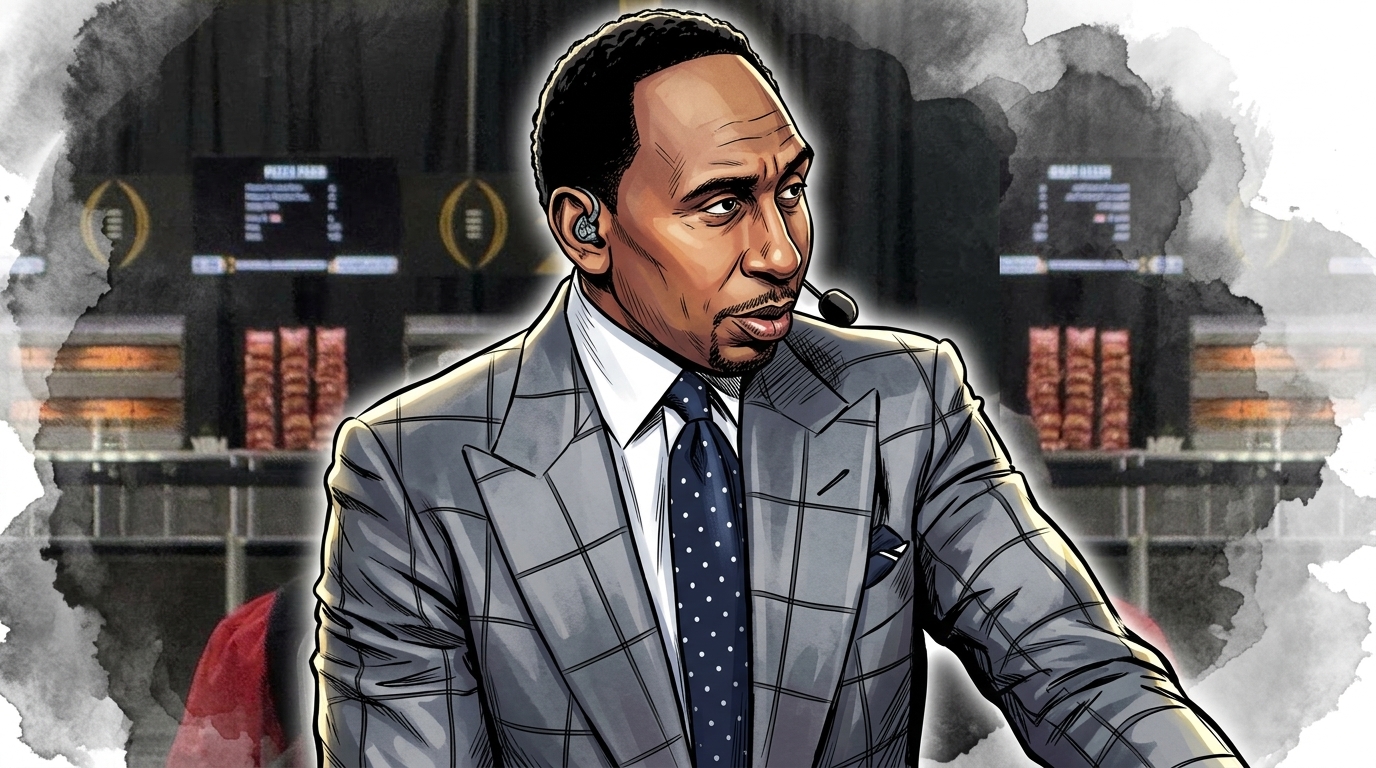

ESPN spent the summer of 2026 firing people who knew football and quietly building out the richest package it has ever offered the guy who yells about it; Pat McAfee is joining Monday Night Countdown as a full-time analyst, and the calendar coincidence tells you plainly which of those two moves ESPN considers the investment.
Start with the chair McAfee isn’t taking, because somebody already took the one that matters. Jason McCourty is the analyst replacing Ryan Clark on Countdown, debuting Sept. 14 against the Broncos and Chiefs. Clark didn’t resign or get reassigned; he was fired live, mid-broadcast, and called it something else, pulled aside during a commercial break on NFL Live and never brought back to finish the show, a detail that Fortune reported traced back to ESPN’s own fear that the news would leak before the segment ended.
That’s one seat. The rest of the summer’s ledger includes Karl Ravech, a 33-year fixture in Bristol, along with Tom Pelissero, Cam Newton, David Lloyd and Bart Scott, part of a wider purge that also swept out longtime ESPN voices. Chairman Jimmy Pitaro has confirmed most of it traces back to one transaction, ESPN’s $3 billion purchase of NFL Network, which closed this year and handed the NFL a 10 percent equity stake in the company that covers it. The league ESPN’s talent is supposed to hold accountable now owns a tenth of the newsroom; the newsroom got smaller.
Picture ESPN’s org chart as a household budget, because functionally that’s what it is: a fixed pool of money, allocated according to what the family actually values, regardless of what it claims to value at Thanksgiving. You can say football expertise matters to you while quietly redirecting the grocery money toward cable and streaming; the credit card statement is the only document that doesn’t lie. ESPN’s statement this summer shows a household that trimmed the people who study the game for a living and expanded the line item for the guy whose primary skill is being loud about it on camera, six days a week, in a voice everyone already recognizes.
That line item is getting fatter. McAfee is reportedly in talks on an extension worth $60 to $65 million annually, roughly double his existing deal, which runs through 2028 at around $30 million a year. The structure is unusual: it’s a production agreement instead of a standard talent contract, meaning McAfee’s own company absorbs the costs of producing and staffing his shows. ESPN isn’t just buying his voice; it’s buying a vendor relationship it can keep expanding without touching the org chart Pitaro just trimmed. Countdown becomes his third daily obligation, after his own show and College GameDay on Saturdays, and it sets him up for a prominent role in ESPN’s first-ever Super Bowl broadcast this February in Los Angeles.
McAfee, to his credit, seems to understand the assignment as an honor rather than a line item.
https://twitter.com/PatMcAfeeShow/status/2090067270340939958
He wrote that it’s “an honor to be a part of MNF in any capacity,” hoped the announcement photo wasn’t real, and promised to be an asset on the road to what he called the biggest Super Bowl of all time. I’ve read that tweet four times and it gets worse each time, not because McAfee is wrong to be excited, but because the sentence is doing unpaid public relations work for a network that just told a colleague he was finished by not calling him back after a commercial break.
The new Countdown lineup photographs well, which is the point.
https://twitter.com/FOS/status/2090060056196768040
Scott Van Pelt, Jason Kelce, Marcus Spears, McCourty and McAfee combine for 43 NFL seasons, two Super Bowl rings, nine Pro Bowl selections and seven First-Team All-Pro honors, the resume paragraph a network prints when it wants you looking at pedigree instead of turnover. It’s a legitimate résumé. It’s also a press release standing in front of a firing.
None of this makes McAfee the villain; he’s a beneficiary of a system he didn’t design, and turning down $60 million because your employer behaves like a corporation would be its own delusion. The corporation is the author, and the corporation just spent a summer demonstrating, in dollars and in dead air, exactly what it thinks its audience tunes in for. It isn’t the analysis. Ryan Clark could tell you that, if ESPN had let him finish the segment.