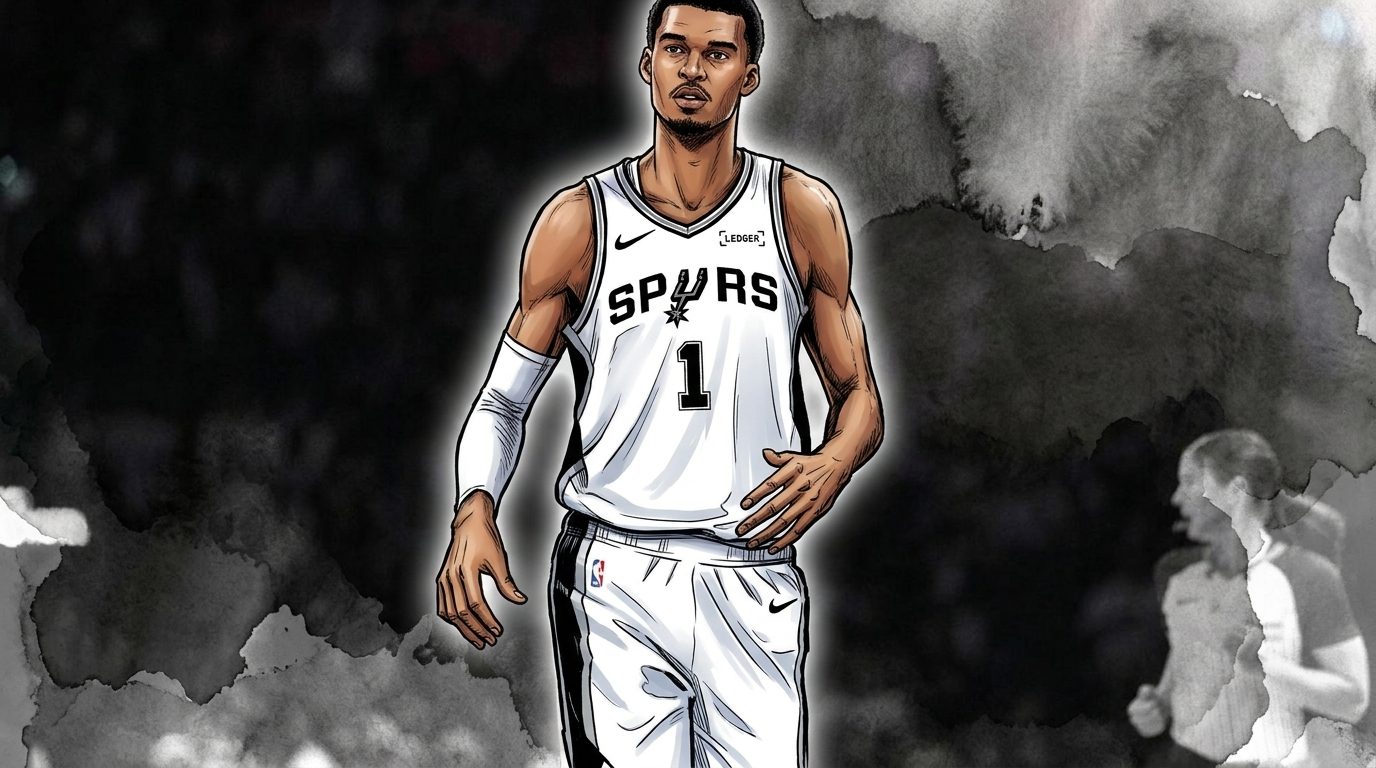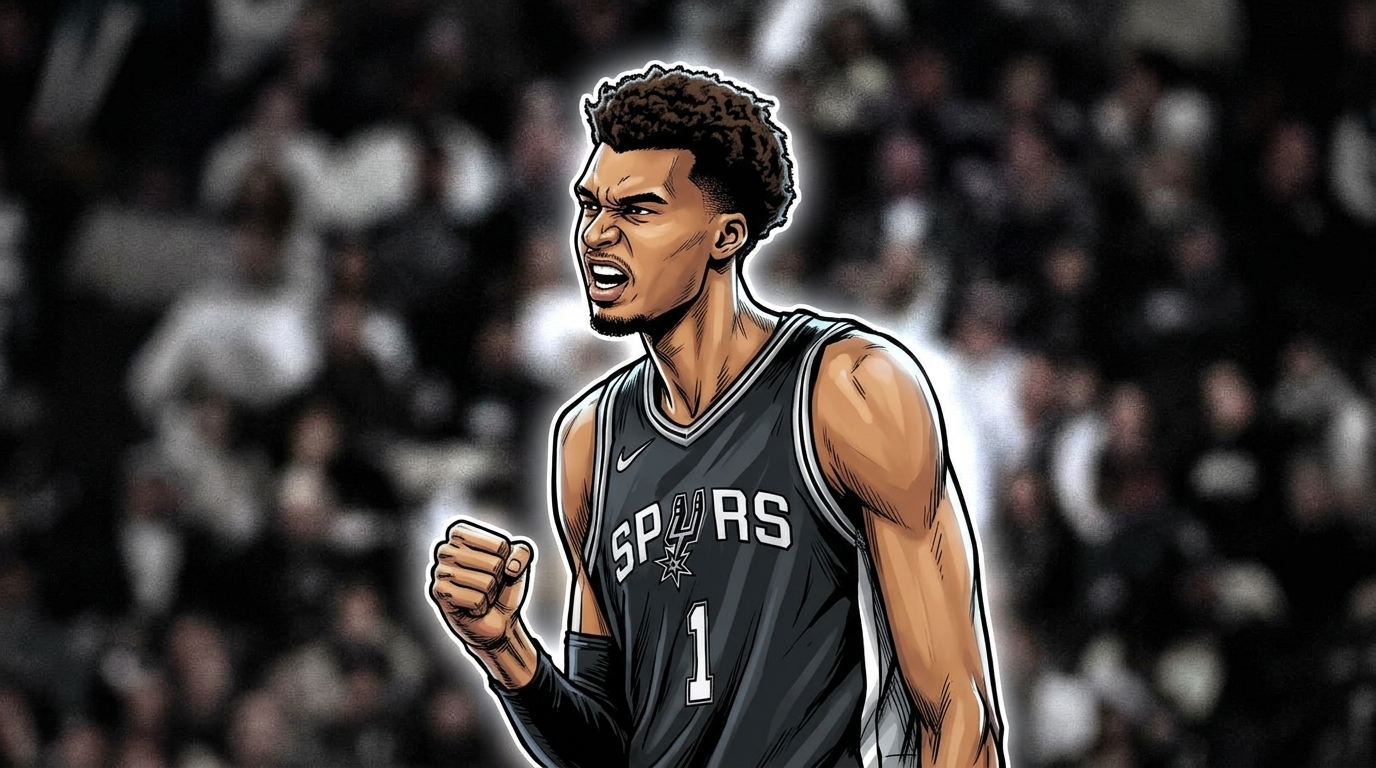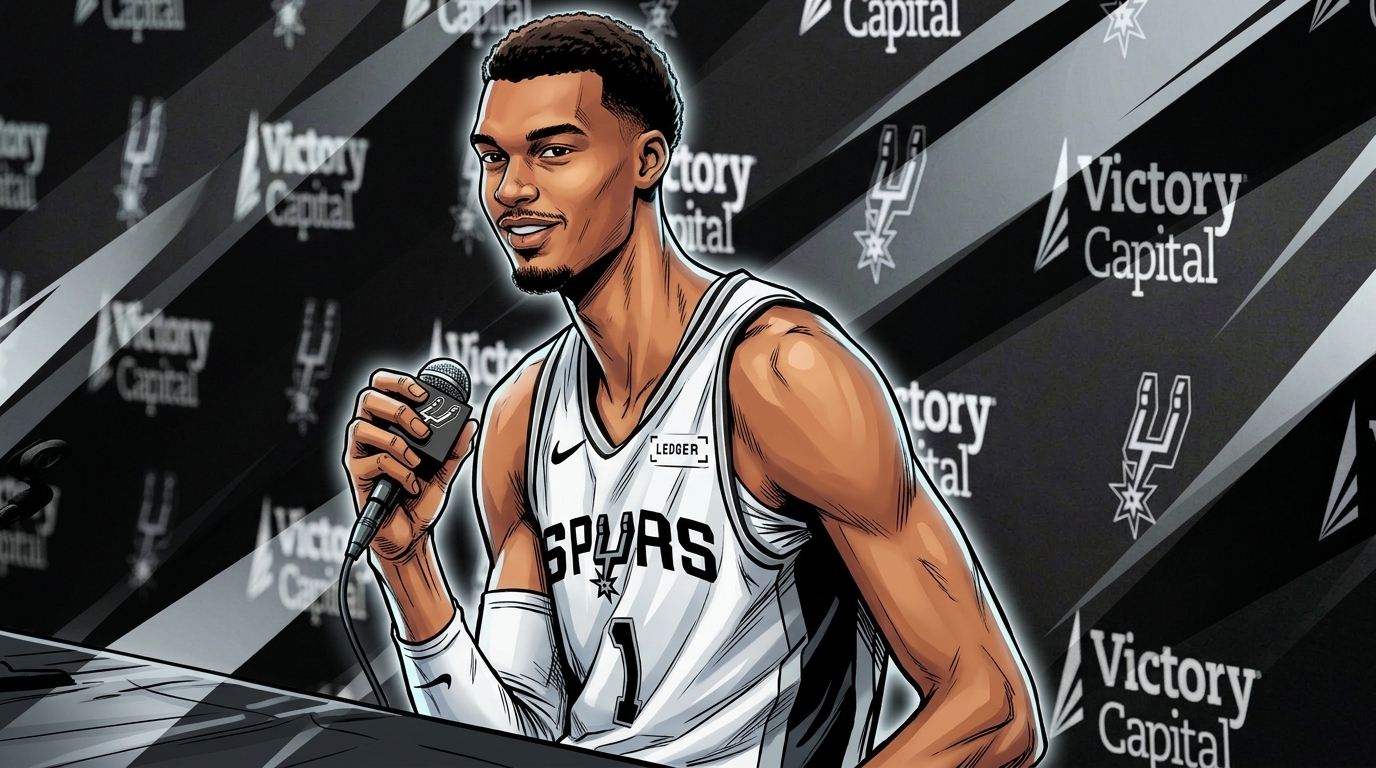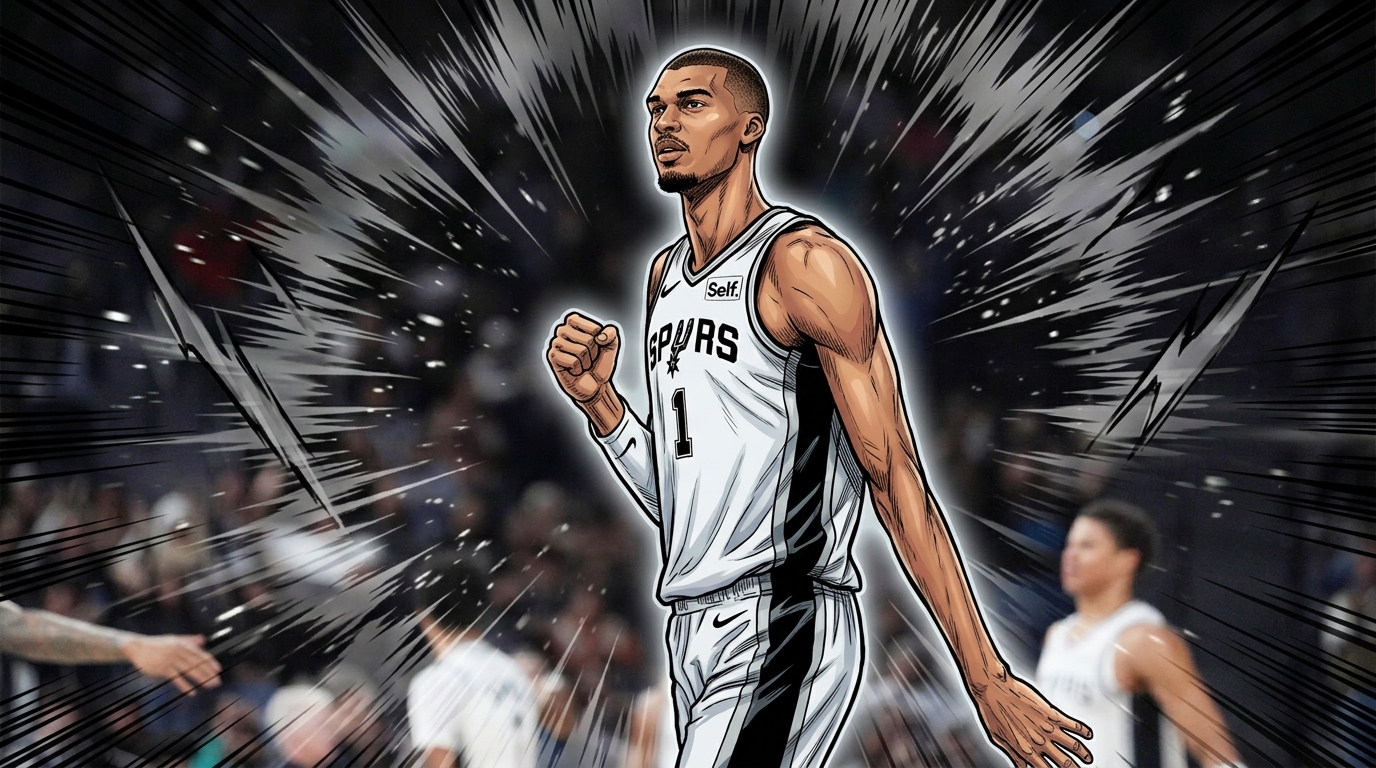

Hold the record and the remark up against each other and both survive. Victor Wembanyama’s 50-point night against the Pelicans is real, historic and earned. So is the late stretch where he kept shooting while the San Antonio Spurs were far ahead, right before he joked that he isn’t good at padding his numbers. The useful question is what padding even means once a lead is decided, and I’d run it through three tests.
What did Wembanyama’s 50-point line actually include?
Fifty points, five blocks, four steals and nearly 20 rebounds against New Orleans on Saturday. CBS Sports reports no player since blocks and steals became official in 1973-74 has reached 50 points, 15 rebounds, four steals and five blocks in one game. It was his second 50-point game this season and third of his career.
That combination is the part worth sitting with. Fifty points happens. Fifty points while also being the best rim protector and a disruptive hand in the passing lanes is a different kind of line, and the NBA’s own post lays out the whole thing: five threes made in 32 minutes.
https://x.com/NBA/status/2124353612101148796
Thirty-two minutes matters for another reason. The usual route to a monster total is simply playing more, and this one did not need it.
Was Wembanyama stat-padding in the fourth quarter?
Arguably, by his own admission. With roughly eight minutes left and San Antonio far ahead, he stayed in after a timeout and kept firing on possession after possession. Afterward he said he did try to stat-pad at the end, which is a rare thing for a star to volunteer.
Look at how the night was built. He had 32 points at halftime, all of them in 18 minutes, which means the other 18 came in the second half, as the lead ballooned. The first half was a star taking what the game gave him. The last eight minutes were a star deciding what he wanted.
His own framing was a joke at the league’s expense, as he put it: “But unlike many of my peers, I’m not good at stat-padding. So I haven’t reached it as many times as I should have.”
https://x.com/LegionHoops/status/2124347341482447345
He is poking at the culture while standing inside a version of it.
What counts as padding when the lead is decided?
Padding is volume that costs the team nothing and the opponent nothing, taken for the box score alone. A decided game strips away the usual way to tell it apart from real production, because no possession carries leverage anymore. That leaves three tests.
The first is intent. Wembanyama supplied that one himself by admitting he tried. The second is cost: did the shots hurt anyone’s chances or burn a teammate’s touches? With the game decided, the cost is close to zero. The third is whether the shots were ones he’d take in a close game. A run of possessions spent looking for his own shot is not a normal rotation of looks, and that is where the padding case is strongest.
Run those tests and the verdict is split. Intent says yes. Cost says it hardly matters. The shot selection says some of it was volume for volume’s sake.
He also pointed at the greats of the game and the question of whether they would worry about optics. The logic is that scorers who chase big nights do not agonize over it, and a game that is already won is the cheapest place to chase one.
The case for the late shots
The best defense of the late shots is simple: it is a blowout, nobody was hurt, and a 7-footer who just put up this line is entitled to a few possessions of fun. The record line does not need the late run to be impressive, and it would still be historic without it. If a star only gets to be called efficient by never shooting in garbage time, that is a rule nobody applies to anyone else.
There is also the identity problem. He has spent a career building a reputation as the player who refuses to game the box score, which is exactly why this night is awkward for him.
Why both readings can stand
The cleanest reading is that he is a rare two-way force who also wanted the number once the game was safe. His appetite for shots has been growing for a while, and it sits next to the long-term money the Spurs have tied to him, which makes every possession he chooses to take a bigger bet on who he is.
The record belongs to him. So does the admission. The next time someone asks him about padding, the best answer is the one he already gave: he tried.