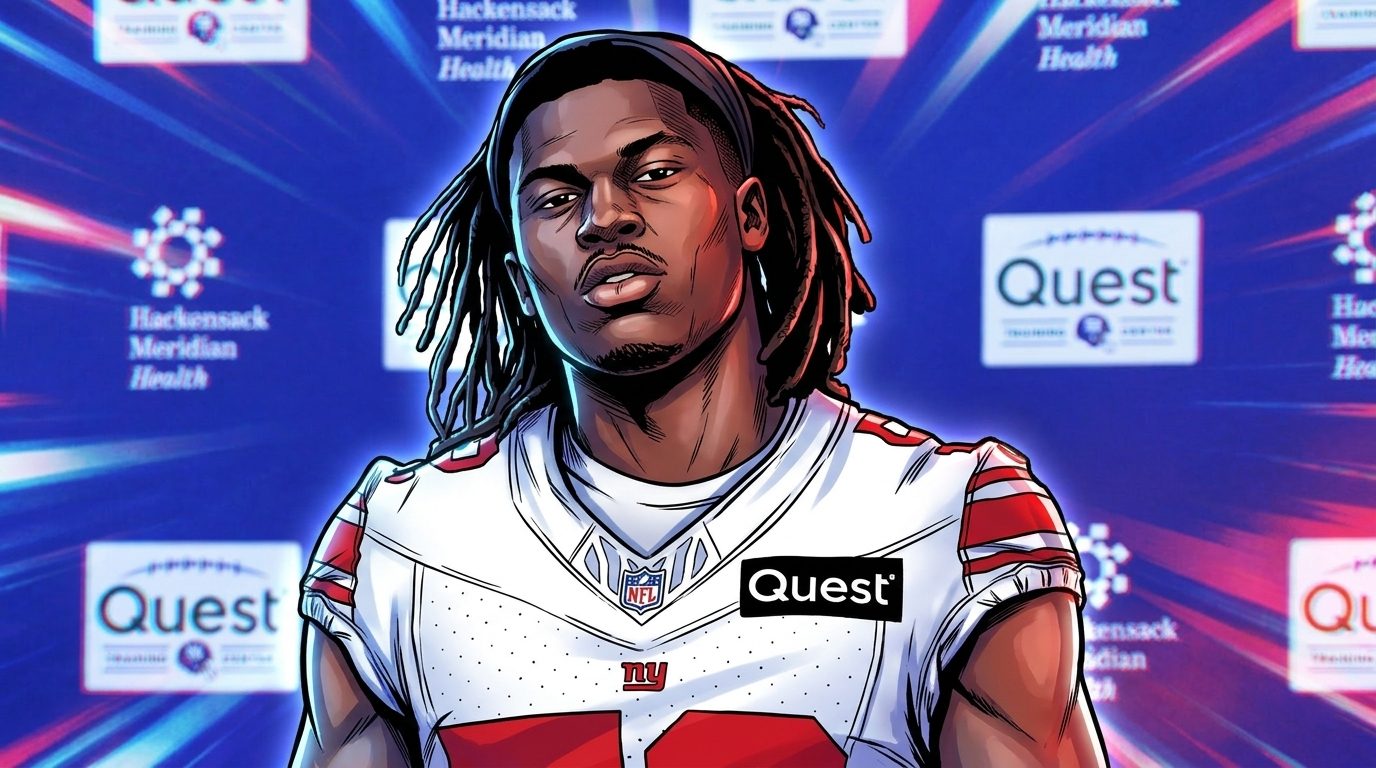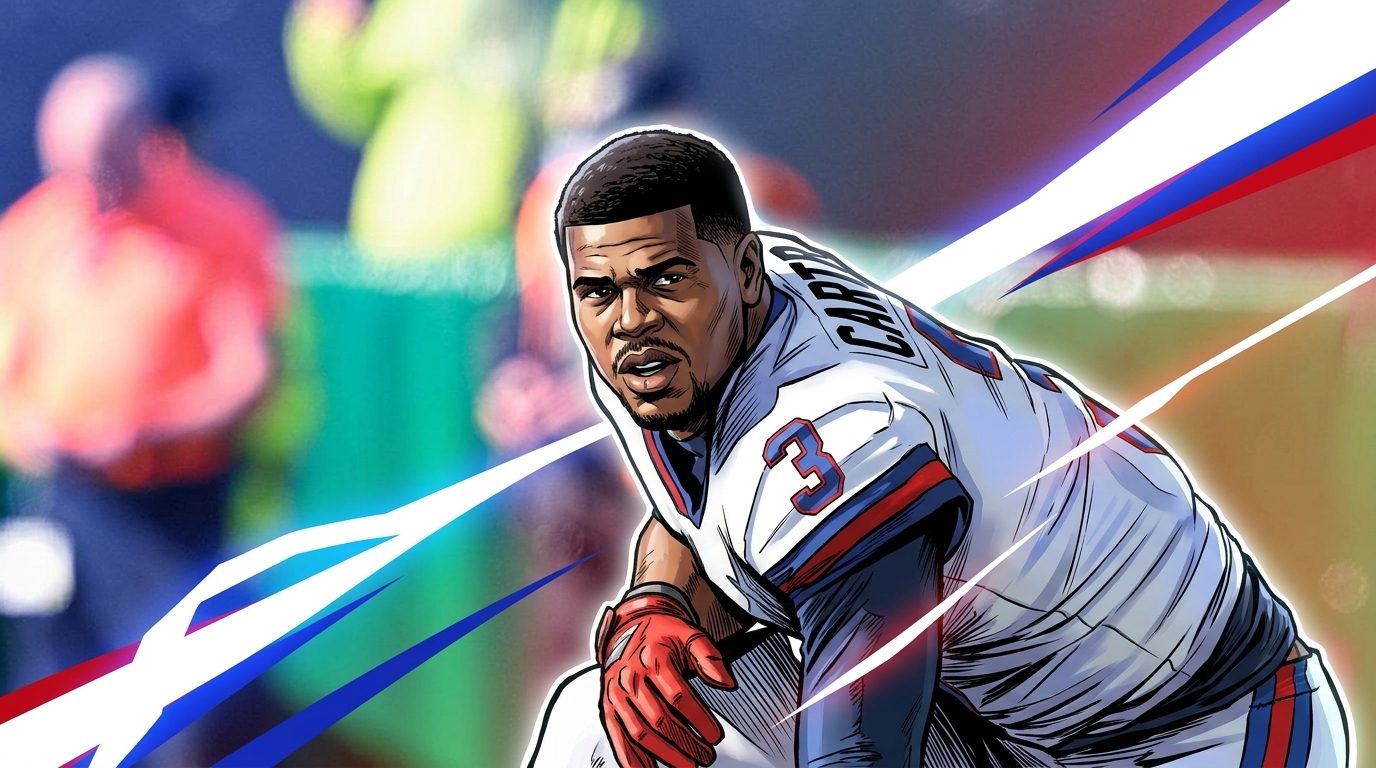

Two sacks. Three tackles for loss. Eight quarterback hits. On that line, Abdul Carter’s season reads like a disappointment, and the word “bust” is easy to reach for. The tracking data tells a different story. Sacks are the wrong receipt for Carter, because the numbers that measure whether he beats his blocker say he is winning, and the Giants’ real problem is turning that disruption into sacks.
Is Abdul Carter a bust?
No. A bust fails to beat blockers, and Carter beats them at an elite rate. His two sacks tie him for 99th in the league, but ESPN’s tracking data ranks him first in forced incompletions and second in pass rush win rate. The production is on the field. The box score just does not record it.
The box score is not kind, and it is worth being fair about that. Carter has six sacks in 26 games over his first two seasons. His three tackles for loss rank 156th. His eight quarterback hits tie for 55th, which is solidly middle of the pack. Nobody invented those figures to make him look bad.
Carter does not hide from them either. “At the end of the day, I’ve got to do more, especially to get more sacks, get more production,” he said. And on the noise around him: “I hear everything.”
His first sack of the season came against Matthew Stafford, and he has added just one since.
https://x.com/art_stapleton/status/2102219273062207684
Two sacks all year invites the bust question. The better question is whether that total says something about him or about how sacks get counted.
What does a 29.0% pass rush win rate actually mean?
It means Carter beats his blocker on 29.0% of his rushes, second in the NFL. Roughly three of every ten snaps, the man across from him loses the matchup. Only one rusher in the league wins more often.
Put that next to the rest of the tracking profile. He has 16 forced incompletions, first in the league, which means quarterbacks are throwing the ball away or throwing it somewhere useless because he is in their face. He has two interceptions created, tied for sixth. He has 17 quick pressures inside 2.5 seconds, tied for eighth, meaning he is arriving before the play has really developed.
Plain version: the pressure is there, and quarterbacks feel it. Forced incompletions are the stat that shows it, because every one is a throw that did not do what the offense wanted. First in the league there is not a consolation prize.
None of that is a player who is being blocked out of games. Compare it with his sack total and you get an odd picture: a rusher near the top of the league in nearly every disruption category and near the 100th spot in the one category that gets printed on the broadcast.
Why do double-teams keep the sacks away?
Opponents double-team Carter on 41% of their dropbacks, the highest rate on the Giants. When two blockers take one rusher, even a winning move is dragged out. Carter can beat the first man and still run into the second before reaching the quarterback.
Think of it as a toll road. Every time Carter wins, someone else is already standing at the next gate. A 41% double-team rate is something offenses do to players they fear, and it explains why a first-place disruption number can sit beside a modest sack count.
There is a second, quieter leak. Opposing quarterbacks are getting the ball out in 2.70 seconds on average, the second quickest release in the NFL behind only Tampa Bay. That is the mechanism the sack total hides. A rusher can win at 2.5 seconds and the throw is already gone. A win rate does not become a sack when nobody is left holding the ball.
Harbaugh sees it. “I believe the sacks will come,” he said, and added: “He’s a disruptive guy.” Defensive coordinator Dennard Wilson was blunter about the gap between effort and reward: “I just wish the production was a little bit more for him right now because he deserves it.”
How do the Giants turn pressure into sacks?
By finishing around Carter instead of waiting for him to finish alone. Linebacker Arvell Reese leads the team with 4.5 sacks while Kayvon Thibodeaux is still hunting his first of the season. The Giants are generating pressure and missing conversion across the line, which points to scheme, not one player.
Reese’s production is real, and his three-sack game against the Eagles showed what happens when the pressure finds a finisher. Offenses that slide help toward Carter leave other rushers a lane, which is one way a double-team rate becomes someone else’s sack total. The contrast is useful: Reese gets home, and Carter makes the pocket collapse. Both help the defense. Only one shows up on the leaderboard.
The Giants have also leaned on the blitz, running it on 45.3% of dropbacks since Week 4, second highest in the NFL. That reads like a defense sending extra people to chase sacks that one-on-one wins are not producing. For more on the roster context, see the injuries that have hit the Giants.
The strongest counterargument is David Bailey. The Jets rookie has 7.5 sacks, in one fewer year than Carter. That is a fair contrast, and it deserves a straight answer: Bailey has the finish Carter lacks. But win rate and forced incompletions measure what Carter controls, while the sack depends on the quarterback holding the ball and the second blocker missing. The first is a skill. The second is circumstance, and circumstances change.
Judge Carter on the numbers he controls. If the Giants find a way to make quarterbacks hold the ball even a half-second longer, the sack column has plenty of catching up to do, and the rush that feeds it is already in place.