New York Giants
The definitive history of the New York Giants, the NFL franchise founded in 1925, from eight league titles to Lawrence Taylor and Eli Manning.
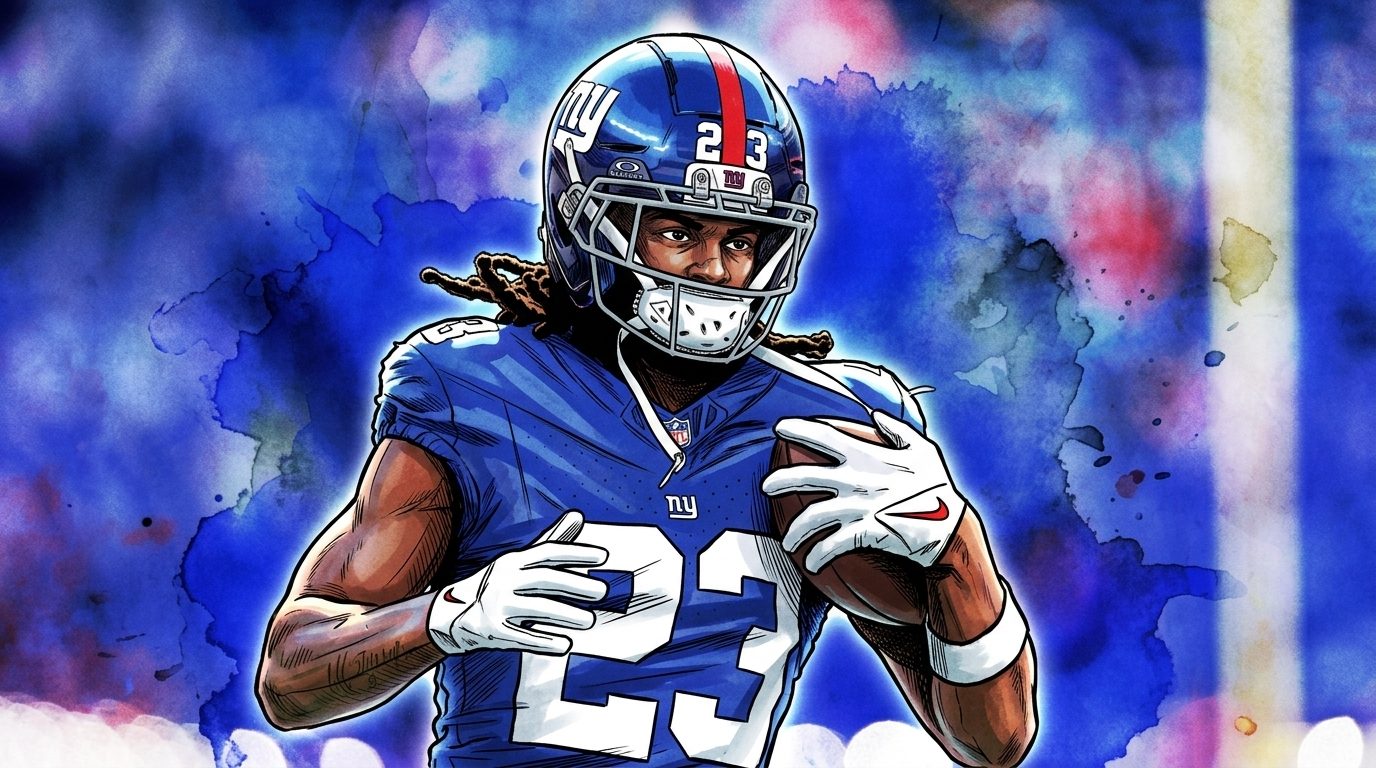
The New York Giants are one of the National Football League’s founding-era institutions, a charter member of the pro game’s rise in the 1920s and, in the century since, the owner of eight league championships — four in the pre–Super Bowl era and four Lombardi Trophies. Owned without interruption by the Mara family since 1925, the Giants are the standard-bearer of the NFC East, the backdrop to the sport’s most famous game and two of its most famous upsets, and — by both wins and league titles — the third-most accomplished franchise in NFL history. This is the full record of the club, from Tim Mara’s $500 franchise to John Harbaugh’s sideline.
| Vitals | |
|---|---|
| Founded | 1925 (New York City; first home: Polo Grounds) |
| League / conference / division | NFL — National Football Conference, NFC East |
| Stadium | MetLife Stadium (2010–present), shared with the New York Jets |
| Owners | Mara family and Tisch family (John Mara, Steve Tisch) |
| Head coach | John Harbaugh (as of Oct. 20, 2026) |
| Titles | 8 — NFL Championships 1927, 1934, 1938, 1956; Super Bowls XXI (1986), XXV (1990), XLII (2007), XLVI (2011) |
Origins: Tim Mara and the 1925 founding
The franchise began as a speculative bet. Boxing promoter Tim Mara paid a reported $500 in 1925 for a New York entry in the five-year-old NFL, reportedly on the logic that a territorial franchise in the nation’s largest city was worth the price at any figure. The team played its home games at the Polo Grounds and finished 8–4 in its inaugural season.
A single visitor rescued the enterprise. A December 1925 appearance by Red Grange and the Chicago Bears drew a franchise-saving crowd to the Polo Grounds at a moment when Mara’s investment was bleeding money, helping establish that pro football could survive in New York. Within two years the club was the best team in the league.
The 1927 Giants delivered the first title. New York went 11–1–1 in 1927 behind a suffocating defense and was named NFL champion by the standings, in an era before a championship game existed. Mara handed day-to-day football control to lineman-turned-coach Steve Owen soon after, setting up the franchise’s first sustained run of contention.
The Steve Owen era and the “Sneakers Game” (1930–1953)
Steve Owen coached the Giants for more than two decades. From 1930 to 1953 Owen built the team around his “umbrella” defense and a roster of early Hall of Famers — center Mel Hein, back Ken Strong and Tuffy Leemans among them. Under Owen the Giants reached the NFL Championship Game repeatedly, winning in 1934 and 1938 while losing in 1933, 1935, 1939, 1941, 1944 and 1946.
The 1934 title is the one fans still name. Trailing the Chicago Bears on a frozen Polo Grounds field, the Giants switched to basketball sneakers for traction at halftime and rallied to a 30–13 win — forever “The Sneakers Game.” Four years later a 23–17 defeat of the Green Bay Packers delivered the 1938 crown.
The decade of near-misses defined the 1940s. New York kept reaching the title game — 1941, 1944 and 1946 — but lost each time, most often to George Halas’s Bears. By the early 1950s Owen’s methods had aged and the franchise, for the first time in a generation, needed to be rebuilt.
The Yankee Stadium golden age and “the Greatest Game” (1954–1963)
The Giants’ move to Yankee Stadium in 1956 opened their glamour era. With a coaching staff under Jim Lee Howell that paired offensive coordinator Vince Lombardi and defensive coordinator Tom Landry, New York went 8–3–1 and routed the Bears 47–7 for the 1956 NFL Championship. The roster — Frank Gifford, Charlie Conerly, Sam Huff, Andy Robustelli, Roosevelt Brown — became the face of pro football as the sport exploded on national television.
On Dec. 28, 1958, the Giants played the game credited with making the NFL. New York lost the NFL Championship to the Baltimore Colts, 23–17 in sudden-death overtime — the first title game decided in overtime, watched by a vast TV audience and remembered as “The Greatest Game Ever Played.” The Giants lost a rematch to the Colts in 1959.
Y.A. Tittle’s arrival produced three more pennants and three more defeats. Acquired in 1961, the veteran quarterback led New York to Eastern Conference titles in 1961, 1962 and 1963. Each ended in a championship-game loss — to Green Bay twice and to Chicago in 1963 — and when the run ended, so did the franchise’s standing for nearly two decades.
The wilderness years (1964–1980)
The collapse after 1963 was total. The Giants fell to 2–10–2 in 1964 and bottomed out at 1–12–1 in 1966, the worst season in team history. Across 1964 through 1980 the club reached the playoffs zero times, the longest drought in franchise history, cycling through coaches, stadiums and quarterbacks without stability.
The low point became a punchline. On Nov. 19, 1978, with a win over the Philadelphia Eagles seemingly secured, a botched handoff was scooped and returned for a touchdown by Herman Edwards — the “Miracle at the Meadowlands,” a loss so galling it helped force a front-office overhaul.
Hiring George Young changed everything. After relocating to Giants Stadium in 1976, ownership installed Young as general manager in 1979. His drafts — quarterback Phil Simms in 1979, then a linebacker from North Carolina in 1981 — ended the wilderness and launched the greatest era in team history.
Lawrence Taylor, Bill Parcells and the first Super Bowls (1981–1990)
Lawrence Taylor redefined defensive football. Drafted second overall in 1981, Taylor was named Defensive Player of the Year as a rookie and won the award again in 1982 and 1986. In 1986 he became the rare defensive player named NFL MVP, posting 20.5 sacks; he retired with 132.5 official career sacks, 10 straight Pro Bowls and, in 1999, a place in the Pro Football Hall of Fame.
Bill Parcells turned that defense into a champion. Promoted to head coach in 1983, Parcells went 77–49–1 over eight seasons, building a punishing identity around Taylor, Harry Carson, Carl Banks and Leonard Marshall. The 1986 team went 14–2 and won Super Bowl XXI, 39–20 over the Denver Broncos, with Phil Simms completing 22 of 25 passes and earning MVP honors.
The 1990 team won it the hard way. With Simms injured, backup Jeff Hostetler quarterbacked a 13–3 club through the playoffs to Super Bowl XXV, a 20–19 win over the Buffalo Bills decided when Scott Norwood’s last-second field goal sailed “wide right.” Running back Ottis Anderson was named MVP, and Parcells walked away a two-time champion.
Reeves, Fassel and the Super Bowl XXXV run (1991–2003)
Parcells’s departure brought a decade of fits and starts. Ray Handley’s two seasons were forgettable, but Dan Reeves (1993–1996) restored order — the 1993 team went 11–5 and won a playoff game — before the franchise turned to Jim Fassel in 1997. Defensive end Michael Strahan, drafted in 1993, grew into the era’s signature player and in 2001 set the single-season sack record with 22.5.
The 2000 season ended one win short of a title. Behind Kerry Collins and running back Tiki Barber, New York went 12–4 and blitzed the Minnesota Vikings in the NFC Championship before losing Super Bowl XXXV to the Baltimore Ravens, 34–7. It remains the franchise’s only Super Bowl defeat.
Tom Coughlin, Eli Manning and the Patriots upsets (2004–2015)
The Giants bet their future on a draft-day trade. On draft day in 2004 they sent quarterback Philip Rivers and future picks to San Diego to acquire Eli Manning, the No. 1 overall selection. Paired with head coach Tom Coughlin, hired the same year, Manning would start 210 consecutive games and finish his career with 57,023 passing yards and 366 touchdowns — every franchise passing record.
Super Bowl XLII ended a perfect season that wasn’t theirs. The 2007 Giants reached the Super Bowl as a wild card and stunned the 18–0 New England Patriots, 17–14, on a drive sealed by David Tyree’s “helmet catch” and a Manning touchdown to Plaxico Burress. Manning was named MVP; the win denied New England the first 19–0 season in NFL history.
Four years later they beat the Patriots again. The 2011 team went 9–7, caught fire in January, and won Super Bowl XLVI, 21–17 over New England — Mario Manningham’s sideline catch the signature play — earning Manning a second MVP. Defensive ends Justin Tuck and Osi Umenyiora anchored both title runs, while Jason Pierre-Paul — drafted 15th overall in 2010 — joined the line in time for the XLVI run; Michael Strahan’s final NFL game had been the XLII victory.
The post-Eli decline (2016–2021)
One playoff trip bridged the drop-off. Under Ben McAdoo the 2016 Giants went 11–5 and made the wild card, powered by receiver Odell Beckham Jr., whose one-handed touchdown catch against Dallas in November 2014 had already made him a star. It was the franchise’s lone postseason appearance of the decade.
Instability followed at every level. McAdoo was fired in 2017, Pat Shurmur lasted two seasons, and Joe Judge two more, none finishing above .500. The Giants drafted running back Saquon Barkley second overall in 2018 — he was Offensive Rookie of the Year — and quarterback Daniel Jones sixth overall in 2019, benching the 38-year-old Manning that season. Manning retired after 2019; his No. 10 was retired on Sept. 26, 2021.
The Schoen–Daboll era and the current team (2022–present)
A new front office produced an immediate playoff run. General manager Joe Schoen and head coach Brian Daboll arrived in 2022 and went 9–7–1, with Daboll named Associated Press Coach of the Year and the team winning a wild-card game at Minnesota — its first playoff win since Super Bowl XLVI.
The Daniel Jones contract became a cautionary tale. In March 2023 the Giants signed Jones to a four-year, $160 million extension with roughly $82 million guaranteed. Barkley was franchise-tagged, then left for Philadelphia in 2024 free agency. Jones never matched the deal: after a benching he was released on Nov. 22, 2024, leaving tens of millions in dead money, and the team finished 3–14. He later became the Indianapolis Colts’ starter.
The Giants rebuilt around two young cornerstones. Receiver Malik Nabers, the sixth overall pick in 2024, set a rookie record with 109 receptions for 1,204 yards; the club even brought Ray Flaherty’s retired No. 1 back into service with his family’s blessing so Nabers could wear it. In 2025 New York traded up to No. 25 to draft quarterback Jaxson Dart out of Ole Miss.
The 2025 season unraveled quickly. Veteran Russell Wilson opened as starter before Dart took over in Week 4; in that same game, on Sept. 28, 2025, Nabers tore his ACL and was lost for the year. Dart’s nine rushing touchdowns as a rookie ranked second-most among NFL quarterbacks in 2025, but the team sank; Daboll was fired on Nov. 10, 2025 after a 2–8 start, coordinator Mike Kafka went 2–5 as interim coach, and the Giants finished 4–13.
John Harbaugh took over for 2026. The Giants hired Harbaugh, fresh from 18 seasons in Baltimore, as head coach in January 2026. Dart opened the 2026 season as the starter and beat Dallas in Week 1 before a season-ending knee injury in Week 2 turned the offense over to Jameis Winston. As of Oct. 20, 2026, New York stood 3–2–1 and atop the NFC East.
Retired numbers
The Giants have honored fourteen jersey numbers and fifteen figures, among the most in the NFL, spanning Steve Owen’s prewar champions to the Super Bowl generation. No. 1 — the first number retired in major American pro sports — was returned to circulation in 2024 for Malik Nabers with the Flaherty family’s permission, and No. 3 was reissued in 1966; both are listed below as honored numbers. Precise ceremony dates survive mainly for the modern honorees.
| No. | Player | Pos. | Team tenure | Retired |
|---|---|---|---|---|
| 1 | Ray Flaherty | E | 1929–1935 | 1935 (returned to service 2024) |
| 3 | Len Grant | T | 1930–1937 | — (returned to service 1966) |
| 4 | Tuffy Leemans | HB/FB | 1936–1943 | — |
| 7 | Mel Hein | C/LB | 1931–1945 | — |
| 10 | Eli Manning | QB | 2004–2019 | Sept. 26, 2021 |
| 11 | Phil Simms | QB | 1979–1993 | — |
| 14 | Ward Cuff | WB/FB/DB | 1937–1945 | — |
| 14 | Y.A. Tittle | QB | 1961–1964 | — |
| 16 | Frank Gifford | HB/FL/DB | 1952–1964 | — |
| 32 | Al Blozis | T | 1942–1944 | — |
| 40 | Joe Morrison | HB/WR/S | 1959–1972 | — |
| 42 | Charlie Conerly | QB | 1948–1961 | — |
| 50 | Ken Strong | FB/HB/K | 1933–1947 | — |
| 56 | Lawrence Taylor | LB | 1981–1993 | Oct. 10, 1994 |
| 92 | Michael Strahan | DE | 1993–2007 | Nov. 28, 2021 |
Season by season
Every season in franchise history, 1925 through 2025, folded by decade with newest first.
The 2020s 32–68–1 · 1 playoff berth · 0 titles (through 2025)
| Season | W–L–T | Finish | Postseason |
|---|---|---|---|
| 2020 | 6-10-0 | 2nd NFC East | — |
| 2021 | 4-13-0 | 4th NFC East | — |
| 2022 | 9-7-1 | 3rd NFC East | Won Wild Card; Lost Divisional |
| 2023 | 6-11-0 | 3rd NFC East | — |
| 2024 | 3-14-0 | 4th NFC East | — |
| 2025 | 4-13-0 | 4th NFC East | — |
The 2010s 70–90 · 2 playoff berths · 1 Super Bowl (XLVI)
| Season | W–L–T | Finish | Postseason |
|---|---|---|---|
| 2010 | 10-6-0 | 2nd NFC East | — |
| 2011 | 9-7-0 | 1st NFC East | Won Super Bowl XLVI |
| 2012 | 9-7-0 | 2nd NFC East | — |
| 2013 | 7-9-0 | 3rd NFC East | — |
| 2014 | 6-10-0 | 3rd NFC East | — |
| 2015 | 6-10-0 | 3rd NFC East | — |
| 2016 | 11-5-0 | 2nd NFC East | Lost Wild Card |
| 2017 | 3-13-0 | 4th NFC East | — |
| 2018 | 5-11-0 | 4th NFC East | — |
| 2019 | 4-12-0 | 3rd NFC East | — |
The 2000s 88–72 · 6 playoff berths · 1 Super Bowl (XLII), 1 SB loss (XXXV)
| Season | W–L–T | Finish | Postseason |
|---|---|---|---|
| 2000 | 12-4-0 | 1st NFC East | Lost Super Bowl XXXV |
| 2001 | 7-9-0 | 3rd NFC East | — |
| 2002 | 10-6-0 | 2nd NFC East | Lost Wild Card |
| 2003 | 4-12-0 | 4th NFC East | — |
| 2004 | 6-10-0 | 2nd NFC East | — |
| 2005 | 11-5-0 | 1st NFC East | Lost Wild Card |
| 2006 | 8-8-0 | 3rd NFC East | Lost Wild Card |
| 2007 | 10-6-0 | 2nd NFC East | Won Super Bowl XLII |
| 2008 | 12-4-0 | 1st NFC East | Lost Divisional |
| 2009 | 8-8-0 | 3rd NFC East | — |
The 1990s 83–76–1 · 3 playoff berths · 1 Super Bowl (XXV)
| Season | W–L–T | Finish | Postseason |
|---|---|---|---|
| 1990 | 13-3-0 | 1st NFC East | Won Super Bowl XXV |
| 1991 | 8-8-0 | 4th NFC East | — |
| 1992 | 6-10-0 | 4th NFC East | — |
| 1993 | 11-5-0 | 2nd NFC East | Won Wild Card; Lost Divisional |
| 1994 | 9-7-0 | 2nd NFC East | — |
| 1995 | 5-11-0 | 4th NFC East | — |
| 1996 | 6-10-0 | 5th NFC East | — |
| 1997 | 10-5-1 | 1st NFC East | Lost Wild Card |
| 1998 | 8-8-0 | 3rd NFC East | — |
| 1999 | 7-9-0 | 3rd NFC East | — |
The 1980s 81–70–1 · 5 playoff berths · 1 Super Bowl (XXI)
| Season | W–L–T | Finish | Postseason |
|---|---|---|---|
| 1980 | 4-12-0 | 5th NFC East | — |
| 1981 | 9-7-0 | 3rd NFC East | Won Wild Card; Lost Divisional |
| 1982 | 4-5-0 | 10th NFC (strike) | — |
| 1983 | 3-12-1 | 5th NFC East | — |
| 1984 | 9-7-0 | 2nd NFC East | Won Wild Card; Lost Divisional |
| 1985 | 10-6-0 | 2nd NFC East | Won Wild Card; Lost Divisional |
| 1986 | 14-2-0 | 1st NFC East | Won Super Bowl XXI |
| 1987 | 6-9-0 | 5th NFC East | — |
| 1988 | 10-6-0 | 2nd NFC East | — |
| 1989 | 12-4-0 | 1st NFC East | Lost Divisional |
The 1970s 50–93–1 · 0 playoff berths · 0 titles
| Season | W–L–T | Finish | Postseason |
|---|---|---|---|
| 1970 | 9-5-0 | 2nd NFC East | — |
| 1971 | 4-10-0 | 5th NFC East | — |
| 1972 | 8-6-0 | 3rd NFC East | — |
| 1973 | 2-11-1 | 5th NFC East | — |
| 1974 | 2-12-0 | 5th NFC East | — |
| 1975 | 5-9-0 | 4th NFC East | — |
| 1976 | 3-11-0 | 5th NFC East | — |
| 1977 | 5-9-0 | 5th NFC East | — |
| 1978 | 6-10-0 | 5th NFC East | — |
| 1979 | 6-10-0 | 4th NFC East | — |
The 1960s 69–63–6 · 3 title-game appearances · 0 titles
| Season | W–L–T | Finish | Postseason |
|---|---|---|---|
| 1960 | 6-4-2 | 3rd East | — |
| 1961 | 10-3-1 | 1st East | Lost NFL Championship |
| 1962 | 12-2-0 | 1st East | Lost NFL Championship |
| 1963 | 11-3-0 | 1st East | Lost NFL Championship |
| 1964 | 2-10-2 | 7th East | — |
| 1965 | 7-7-0 | T-2nd East | — |
| 1966 | 1-12-1 | 8th East | — |
| 1967 | 7-7-0 | 2nd Capitol | — |
| 1968 | 7-7-0 | 2nd Capitol | — |
| 1969 | 6-8-0 | 2nd Capitol | — |
The 1950s 76–41–3 · 4 postseason berths · 1 NFL title (1956)
| Season | W–L–T | Finish | Postseason |
|---|---|---|---|
| 1950 | 10-2-0 | 2nd Am. Conf. | Lost Conference playoff |
| 1951 | 9-2-1 | 2nd Am. Conf. | — |
| 1952 | 7-5-0 | T-2nd Am. Conf. | — |
| 1953 | 3-9-0 | 5th East | — |
| 1954 | 7-5-0 | 3rd East | — |
| 1955 | 6-5-1 | 3rd East | — |
| 1956 | 8-3-1 | 1st East | Won NFL Championship |
| 1957 | 7-5-0 | 2nd East | — |
| 1958 | 9-3-0 | 1st East | Lost NFL Championship |
| 1959 | 10-2-0 | 1st East | Lost NFL Championship |
The 1940s 55–47–8 · 4 postseason berths · 0 titles
| Season | W–L–T | Finish | Postseason |
|---|---|---|---|
| 1940 | 6-4-1 | 3rd East | — |
| 1941 | 8-3-0 | 1st East | Lost NFL Championship |
| 1942 | 5-5-1 | 3rd East | — |
| 1943 | 6-3-1 | 2nd East | Lost Divisional playoff |
| 1944 | 8-1-1 | 1st East | Lost NFL Championship |
| 1945 | 3-6-1 | T-3rd East | — |
| 1946 | 7-3-1 | 1st East | Lost NFL Championship |
| 1947 | 2-8-2 | 5th East | — |
| 1948 | 4-8-0 | T-3rd East | — |
| 1949 | 6-6-0 | 3rd East | — |
The 1930s 80–39–8 · 5 title-game appearances · 2 titles (1934, 1938)
| Season | W–L–T | Finish | Postseason |
|---|---|---|---|
| 1930 | 13-4-0 | 2nd NFL | — |
| 1931 | 7-6-1 | 5th NFL | — |
| 1932 | 4-6-2 | 5th NFL | — |
| 1933 | 11-3-0 | 1st East | Lost NFL Championship |
| 1934 | 8-5-0 | 1st East | Won NFL Championship |
| 1935 | 9-3-0 | 1st East | Lost NFL Championship |
| 1936 | 5-6-1 | 3rd East | — |
| 1937 | 6-3-2 | 2nd East | — |
| 1938 | 8-2-1 | 1st East | Won NFL Championship |
| 1939 | 9-1-1 | 1st East | Lost NFL Championship |
The 1920s 44–17–5 · 1 title (1927)
| Season | W–L–T | Finish | Postseason |
|---|---|---|---|
| 1925 | 8-4-0 | 4th NFL | — |
| 1926 | 8-4-1 | 7th NFL | — |
| 1927 | 11-1-1 | 1st NFL | Named NFL Champion |
| 1928 | 4-7-2 | 6th NFL | — |
| 1929 | 13-1-1 | 2nd NFL | — |
By the numbers
Franchise marks
Per List of New York Giants seasons, through the 2025 season.
Ranks
- 3rd Regular-season wins, NFL history (728)
- 3rd League championships, NFL history (8)
- 3rd Franchise valuation, NFL ($12.1 billion, 2025)
Per List of all-time NFL win–loss records, List of New York Giants seasons, and Forbes via Sports Illustrated.
Honors
- 4× NFL champion (1927, 1934, 1938, 1956)
- 4× Super Bowl champion (XXI, XXV, XLII, XLVI)
- 5× Super Bowl appearance
- Eli Manning — 2× Super Bowl MVP (XLII, XLVI)
- Lawrence Taylor — 1986 NFL MVP, Hall of Fame 1999
- Phil Simms — Super Bowl XXI MVP
- Ottis Anderson — Super Bowl XXV MVP
Per List of New York Giants seasons and Wikipedia, through 2025.
The arguments
Was Eli Manning a Hall of Famer? The case for enshrinement rests on two Super Bowl MVPs and two titles won against one of the great dynasties, plus every meaningful franchise passing record and a durability streak of 210 straight starts. The case against points to a career regular-season record near .500 and middling efficiency numbers that would not define a first-ballot quarterback. Supporters argue the biggest January moments outweigh the regular-season averages; skeptics counter that the Hall should reward sustained excellence, not two hot postseasons.
Did the Daniel Jones extension sink the rebuild? Defenders of the front office note that Jones had just led the Giants to a playoff win and that the reported $82 million guarantee was in line with the quarterback market of the moment. Critics argue the deal, signed the same offseason the team declined to pay Saquon Barkley long-term, committed franchise resources to a quarterback who had not earned them — a position reinforced when Jones was released in November 2024 with heavy dead money while Barkley won a championship in Philadelphia.
Why it matters
The New York Giants are a through-line of professional football itself: present at the creation in 1925, central to the sport’s television breakthrough in 1958, authors of the defensive revolution that Lawrence Taylor embodied, and the only franchise to beat an undefeated New England Patriots team in a Super Bowl — and then do it again. Eight league titles place them third in NFL history, behind only Green Bay and Chicago, and a century of unbroken Mara ownership gives the club a continuity almost no American sports team can claim. However the current rebuild resolves, the Giants’ standing as one of the league’s foundational powers is settled history.