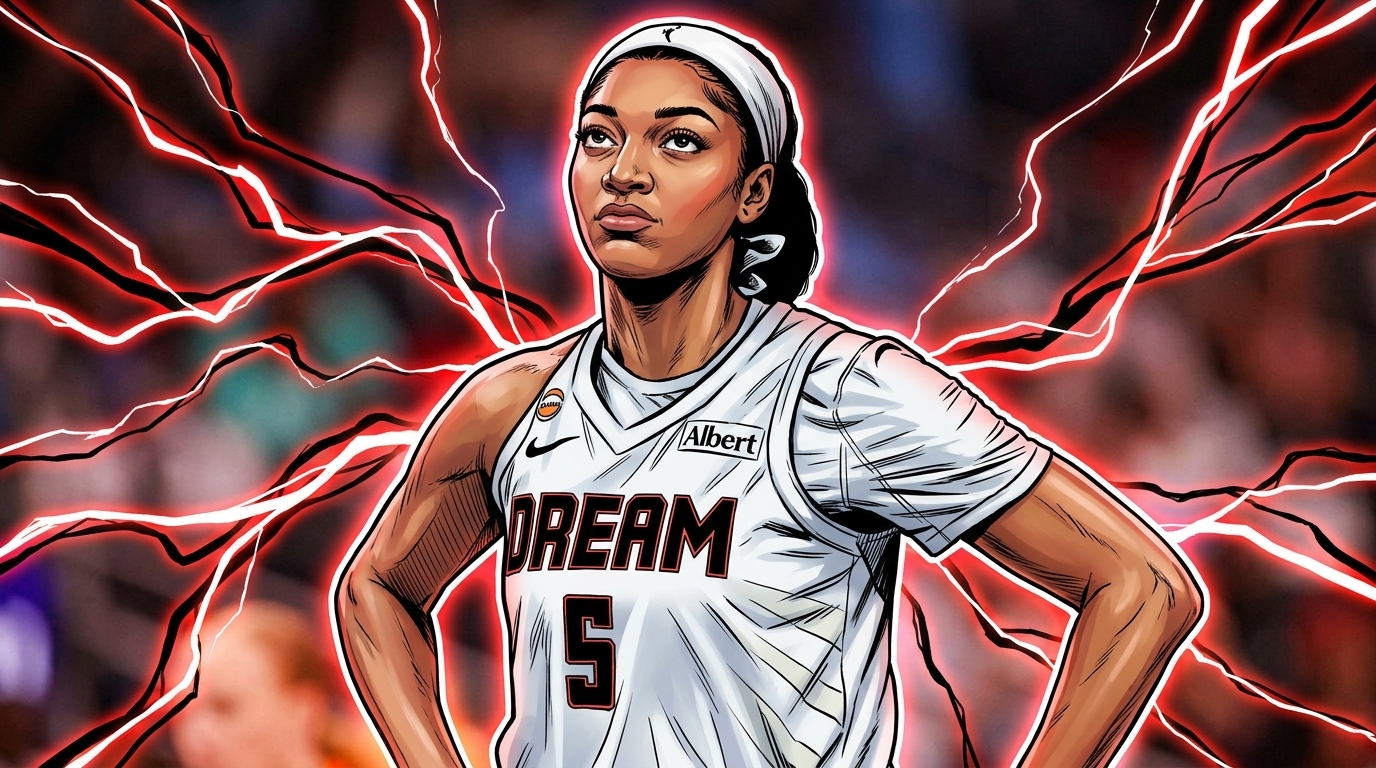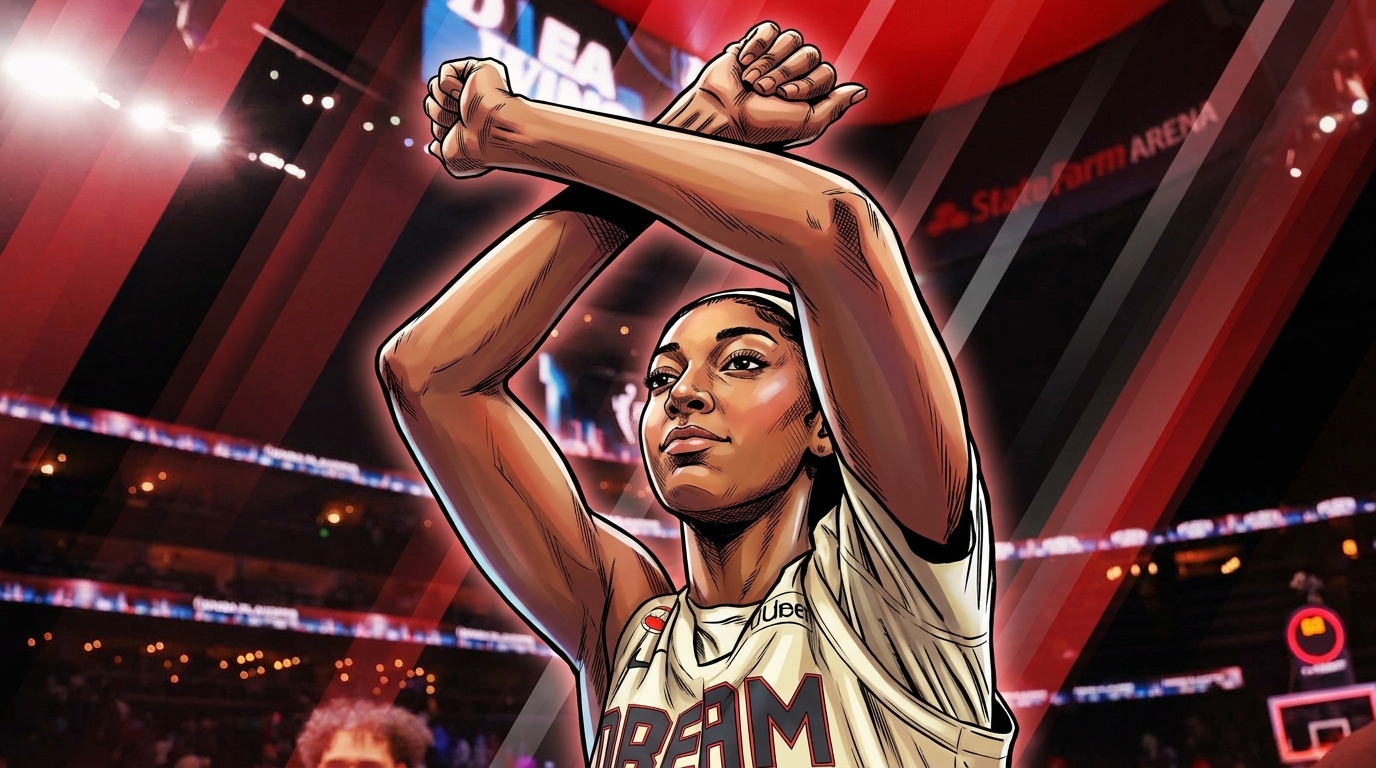

There’s a number buried in the Atlanta Dream’s ticket data that explains the Angel Reese trade better than anything that happened on the court this week, and it isn’t the 91 percent everyone’s already quoting. Six months after the Chicago Sky shipped Reese to Atlanta for two first-round picks, a deal that got torched as a disaster back in April, the Atlanta Dream are 2-0 on the New York Liberty in the WNBA semifinals, and the franchise is rearranging its entire 2027 home schedule around demand nobody priced in correctly.
That’s the second layer here. This isn’t a good-season story. It’s proof that unproven star power moves more real dollars than incumbency does, and every rebuilding front office in the league is about to spend the offseason trying to copy it on purpose.
How Bad Was the Reese Trade Supposed to Be?
Not nearly as bad as the trade grades suggested. Six months later, the Dream are 2-0 on the Liberty in these semifinals, ticket demand is up 91 percent, the largest jump in the WNBA, and Atlanta is moving its full 2027 home schedule to a bigger arena to keep up with crowds that didn’t exist before Reese showed up.
In April, the consensus wasn’t close. Axios Chicago reported the Sky sent Reese to Atlanta for the Dream’s 2027 and 2028 first-round picks, and the reaction treated it as a Chicago heist. Sports Illustrated called it the Sky’s latest blunder. We ran a piece back in July arguing the opposite, that the picks Chicago banked would end up worth more than whatever Atlanta got back. The evidence since then has not been kind to that read.
Start with the series itself. Atlanta took Game 1 by ten, 92-82, then survived Game 2 in overtime Wednesday night, 101-98, pushing the series to a place no team has come back from in WNBA postseason history. Reese scored 23 and went 6-for-6 from the line in overtime. Jordin Canada matched her with 23 points and eight assists, and Naz Hillmon gave Atlanta the lead for good with a layup 20.8 seconds from the end, all of it with Allisha Gray, Atlanta’s other All-Star, watching from the bench with a hand injury from Game 1. Breanna Stewart dropped 35 for a Liberty team that had just swept its way through New York’s 8-seed sweep of Minnesota to get here. None of it mattered. The Dream are 2-0 with a shot to close it out on home floor, the same home floor that’s now too small for its own fanbase.
That last part is the one worth sitting with. Game 1 of this series was about a staredown on the court. This one is about what’s happening in the stands, and that’s a harder story to argue with.
The Repricing Index: Four Numbers Twitter Didn’t Have in April
Call it the Repricing Index: four public numbers that tell you what the trade was actually worth, none of which existed when the deal was being graded.
First, the 91 percent. Ticket demand for Dream games is up 91 percent year over year, the biggest increase of any team in the league, which means Atlanta isn’t just selling more seats, it’s selling them at a rate nobody else in the WNBA is close to matching. Second, the attendance itself: average home crowds jumped from 4,480 fans a game in 2025 to 6,928 this season, a 55 percent increase that happened inside a single offseason built almost entirely around one roster move. Third, where those fans are coming from. The Dream drew 48 percent more fans traveling in from outside Georgia this year, not 48 percent of the total crowd, a 48 percent increase in people willing to cross state lines for a regular-season basketball game. And fourth, the one that makes the first three permanent: Atlanta is moving all 25 of its 2027 home games, under the league’s expanded 50-game schedule, out of the 3,500-seat Gateway Center and into 17,000-seat State Farm Arena full time.
I ran that out three separate ways, on raw ticket demand, on the attendance swing, and on the arena capacity decision alone, and landed on the same read every time. None of those four numbers are opinions. They’re commitments a franchise makes when the money backs it up.
Why Ticket Demand Is the Hardest Stat to Fake
A win total can be padded by a soft schedule. A highlight reel can flatter a bad shooting night. Ticket demand can’t be talked into existing, somebody has to actually decide a Tuesday night in Atlanta is worth the drive and the price of the seat.
Bleacher Report’s rundown of the arena move includes the clearest version of that proof: test-run games already relocated to bigger venues this season drew 388,997 total fans, averaging 15,743 a night, a 40 percent jump over what the same team pulled at Gateway Center. That’s a sustained pattern across an entire slate of games, not one promotional giveaway night inflating a single total, and it’s exactly the kind of signal that shows up on a secondary market before it shows up anywhere else.
https://twitter.com/StubHub/status/2107960657547030678
I track my own pickup basketball makes and misses at the Berkeley rec center on weekends, and even that small a sample teaches you the same lesson: a single good night tells you nothing, but a pattern across dozens of nights tells you almost everything. That pattern, not one hot week in October, is what a 91 percent year-over-year jump actually measures.
What Moving 25 Games to State Farm Arena Actually Signals
A 17,000-seat building is nearly five times the Gateway Center’s capacity, and a franchise doesn’t commit to filling that many extra seats, every night, for an entire season, unless the demand data makes it the safer bet rather than the riskier one.
It’s worth separating two different stories here so neither gets credited to the wrong one. Atlanta had already built real momentum before Reese arrived: a 400 percent increase in season-ticket members over the past five years and 65 sellouts across the past three seasons, per Bleacher Report, numbers that reflect a franchise on the rise well before this specific trade. What’s new since April is the acceleration, the jump from steady growth to a 91 percent single-season spike and a full arena relocation squeezed into one offseason.
https://twitter.com/NoaDalzell/status/2108032419722932296
That kind of jump doesn’t stay confined to a press release for long, and it hasn’t here. Fans noticed the shift before most of the league’s front offices did anything about it.
Is This Replicable, or Is Reese Just Different?
Partly replicable, mostly not. Front offices can copy the mechanism, trading for a disruptive, still-ascending star instead of overpaying for a proven veteran, but they can’t manufacture the specific mix of polarizing popularity, college following, and on-court production that made this particular bet pay off this fast.
That’s the lesson the rest of the league is about to misread. Teams will copy the roster move without copying the bet underneath it, which was never about the trade itself but about paying for upside the market hadn’t finished pricing and then watching that upside actually show up on the floor in October. Reese and the Dream did both. Give me the Dream to close this series out, and give me a dozen imitation trades next spring that don’t come close to working the same way.