Atlanta Dream
The Atlanta Dream joined the WNBA in 2008, reached three Finals, weathered an ownership change, and rose again under Karl Smesko. Full franchise history.
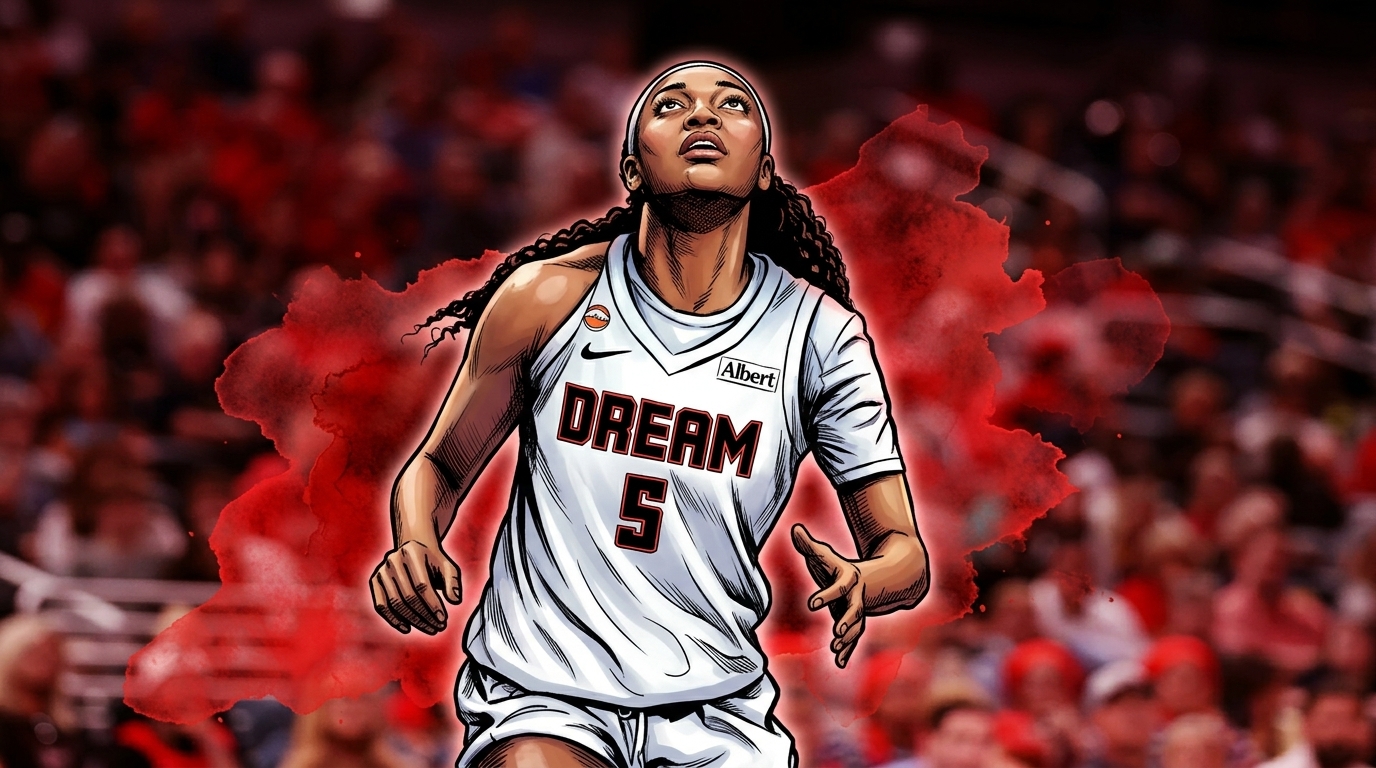
The Atlanta Dream are a Women’s National Basketball Association franchise founded as an expansion team in 2008 and based in the Atlanta metropolitan area. In not quite two decades the Dream have compiled one of the league’s more dramatic arcs: a record-setting losing debut, three Finals appearances in four years (2010, 2011, 2013) built around franchise cornerstone Angel McCoughtry, a nationally covered ownership controversy that ended with a former U.S. senator selling the club, and a late-2020s revival under coach Karl Smesko. The franchise has never won a title, but it has twice reset its own ceiling — and remains the only WNBA team whose sale was driven in part by its own players.
| Vitals | |
|---|---|
| Founded | 2008 (expansion) |
| League / conference | WNBA — Eastern Conference |
| Arena | Gateway Center Arena at College Park (with select games at State Farm Arena) |
| Owner | Larry Gottesdiener (chairman); ownership group includes Suzanne Abair and Renee Montgomery |
| Head coach (Sep. 29, 2026) | Karl Smesko |
| Titles | None — 3 Finals appearances (2010, 2011, 2013) |
From expansion to 4–30: the 2008 origin
The name arrived first. Atlanta’s franchise was unveiled on January 23, 2008, and stocked through the February 6 expansion draft, with Marynell Meadors installed as the first head coach. The “Dream” nod to Atlanta’s Martin Luther King Jr. heritage set a civic tone the club would return to more than once.
The basketball was brutal. The 2008 Dream opened with 17 consecutive losses — the longest season-opening losing streak in WNBA history — before finally beating the Chicago Sky 91–84 on July 5, 2008, for the first win in franchise history. Atlanta finished 4–30, last in the Eastern Conference, and the .118 winning percentage remains the low-water mark of the franchise record.
The floor was downtown. The Dream played those early years at Philips Arena, the Atlanta Hawks’ home, sharing the building through the 2016 season before renovations pushed them elsewhere.
The Angel McCoughtry era and three Finals (2009–2013)
One draft pick changed everything. With the No. 1 overall selection in 2009, Atlanta took Louisville wing Angel McCoughtry, who won Rookie of the Year and became the fulcrum of the best teams the franchise has fielded. McCoughtry would go on to twice lead the WNBA in scoring (2012 and 2013), make five All-Star teams, and later be named to the league’s 25th-anniversary team. She remains the Dream’s all-time leading scorer.
The turnaround was immediate. Atlanta jumped from 4–30 to 18–16 in 2009 and reached the playoffs in year two, a swing anchored by McCoughtry alongside forwards Sancho Lyttle and Érika de Souza and guard Iziane Castro Marques.
Then came the Finals — three times in four years. The 2010 Dream won the Eastern Conference and reached the WNBA Finals, where they were swept 3–0 by the Seattle Storm. In 2011, with point guard Lindsey Harding running the offense, Atlanta returned and was swept 3–0 again, this time by the Minnesota Lynx. After missing the Finals in 2012, the Dream made it back a third time in 2013 under head coach Fred Williams and were swept once more by Minnesota, the Lynx closing it out 86–77. Three trips, nine games, zero wins — the defining paradox of the McCoughtry years.
The Tiffany Hayes years and the Cooper transition (2014–2017)
A new voice on the bench. Michael Cooper, the former Los Angeles Lakers guard and a championship coach in the women’s game, took over ahead of 2014 and guided a still-dangerous roster to a 19–15 first-place finish in the East, though the season ended in the conference semifinals.
Injury reshaped the core. McCoughtry tore her ACL and missed the 2015 season, and as her prime waned the offense increasingly ran through guard Tiffany Hayes, who developed into an All-Star-caliber scorer. Atlanta slipped to 15–19 in 2015, rebounded to a .500 playoff team in 2016, and missed the postseason at 12–22 in 2017 as the roster turned over. During this stretch the Dream also left downtown, playing the 2017 and 2018 seasons at Georgia Tech’s McCamish Pavilion while Philips Arena was rebuilt.
Nicki Collen and the 2018 revival (2018–2019)
A one-year leap. Nicki Collen took over for 2018 and immediately delivered the franchise’s finest regular season to that point: a 23–11 record, first place in the Eastern Conference, and the WNBA Coach of the Year award. Behind Hayes, Angel McCoughtry’s return, and a deep supporting cast, the Dream earned a bye into the semifinals — and fell there in a best-of-five series to the Washington Mystics.
Just as quickly, it unraveled. The 2019 team cratered to 8–26, sixth in the East, as injuries and roster churn erased the prior year’s gains. That season the Dream played their home games at the renovated and rebranded State Farm Arena before relocating their permanent base to the suburbs.
The Loeffler controversy and the sale (2020–2021)
Politics collided with the locker room. Co-owner Kelly Loeffler, appointed to the U.S. Senate from Georgia, publicly opposed the WNBA’s embrace of the Black Lives Matter movement during the 2020 season, writing to the commissioner to object and proposing that players wear American flags on their jerseys instead, per reporting by CNBC. Dream players and others across the league responded by wearing “Vote Warnock” shirts in support of her runoff opponent, Raphael Warnock, who went on to win the seat.
The players’ stand ended the ownership. In February 2021 the WNBA and NBA boards of governors approved the sale of the Dream to an investor group led by real-estate executive Larry Gottesdiener, with Northland president Suzanne Abair and former Dream guard Renee Montgomery among the buyers, NBC News reported. Montgomery became the first former WNBA player to hold both an ownership and executive stake in a franchise. On the floor the turmoil coincided with lean years — 7–15 in the 2020 bubble season played in Florida and 8–24 in 2021 — but the ownership reset gave the club its modern footing.
Rebuilding around Rhyne Howard (2022–2024)
A new College Park home and a new star. By 2021 the Dream had settled into the intimate 3,500-seat Gateway Center Arena at College Park, described in a venue profile as their smallest home to date. With the No. 1 pick in 2022 they drafted Kentucky guard Rhyne Howard, who won Rookie of the Year and became the face of the rebuild.
Steady, not spectacular. Under head coach Tanisha Wright the Dream added All-Star guard Allisha Gray via trade and climbed back into the playoff picture, going 19–21 in 2023 and 15–25 in 2024, losing in the first round both years. Wright was let go after the 2024 season, setting up the franchise’s next reinvention.
The Karl Smesko era (2025–2026)
A college architect goes pro. On November 13, 2024, Atlanta hired Karl Smesko, who had built Florida Gulf Coast into a mid-major power and carried one of the highest winning percentages in Division I women’s basketball history. His analytics-forward, three-point-heavy system was an immediate fit.
A franchise-record season. The 2025 Dream went 30–14, the most wins in club history and a first-place finish in the East, powered by Allisha Gray’s All-WNBA First Team season (18.4 points per game), Rhyne Howard, and free-agent additions Brittney Griner and Brionna Jones. The year still ended in the first round, a 1–2 series loss to the Indiana Fever after Atlanta had won the opener at home.
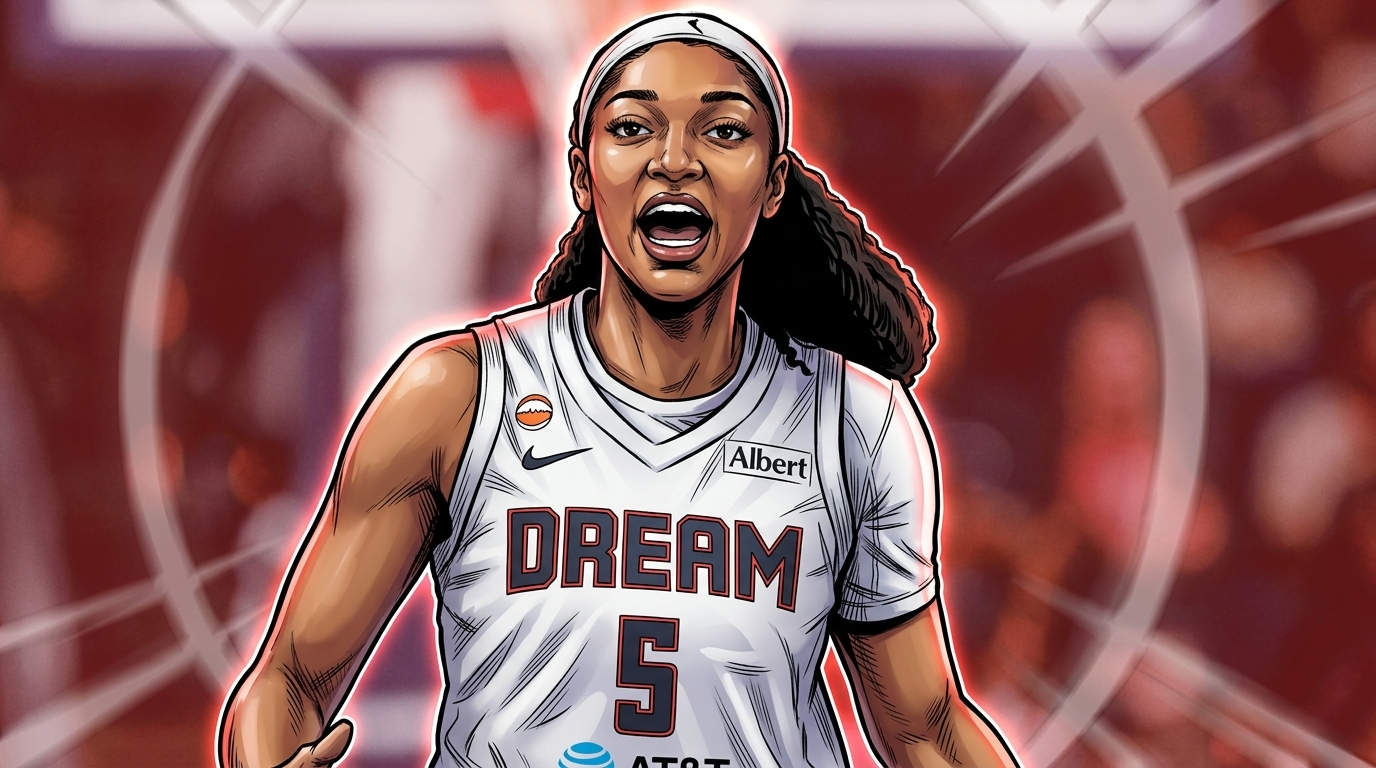
Reloading with Angel Reese. On April 6, 2026, the Dream acquired two-time All-Star forward Angel Reese from the Chicago Sky for future first-round picks, the WNBA announced, pairing the league’s most prolific rebounder with Gray and Howard. Atlanta again finished the 2026 regular season 30–14, atop the Eastern Conference and the No. 4 overall seed. The Dream opened their first-round playoff series against the No. 5 Washington Mystics on September 27, 2026, at State Farm Arena and won Game 1 92–77. Surging attendance also pushed the club to move six 2026 home games to the 17,044-seat State Farm Arena, the team said, a signal that Gateway Center may no longer contain the Dream’s audience.
Retired numbers
As of September 29, 2026, the Atlanta Dream have not officially retired any jersey number, and Basketball-Reference lists no honored numbers in the franchise’s uniform history. The presumptive future candidate is Angel McCoughtry’s No. 35 — she is the club’s all-time leading scorer, a two-time scoring champion in the uniform, and a member of the WNBA’s 25th-anniversary team — but no ceremony has been announced.
| No. | Player | Pos. | Tenure | Retired |
|---|---|---|---|---|
| — | None retired | — | — | — |
Season by season
Every season the Atlanta Dream have played, folded by decade with the newest first.
The 2020s 123–135 · 4 playoff berths · 0 Finals
| Season | W–L | Finish | Playoffs |
|---|---|---|---|
| 2026 | 30-14 | 1st (East) | Reached playoffs (No. 4 seed) |
| 2025 | 30-14 | 1st (East) | Lost 1st round (IND 1-2) |
| 2024 | 15-25 | 4th (East) | Lost 1st round |
| 2023 | 19-21 | 3rd (East) | Lost 1st round |
| 2022 | 14-22 | 5th (East) | DNQ |
| 2021 | 8-24 | 5th (East) | DNQ |
| 2020 | 7-15 | 4th (East) | DNQ |
The 2010s 169–171 · 7 playoff berths · 3 Finals
| Season | W–L | Finish | Playoffs |
|---|---|---|---|
| 2019 | 8-26 | 6th (East) | DNQ |
| 2018 | 23-11 | 1st (East) | Lost semifinals (WAS) |
| 2017 | 12-22 | 4th (East) | DNQ |
| 2016 | 17-17 | 3rd (East) | Lost 2nd round |
| 2015 | 15-19 | 5th (East) | DNQ |
| 2014 | 19-15 | 1st (East) | Lost conf. semis |
| 2013 | 17-17 | 2nd (East) | Lost Finals (MIN 0-3) |
| 2012 | 19-15 | 3rd (East) | Lost conf. semis |
| 2011 | 20-14 | 3rd (East) | Lost Finals (MIN 0-3) |
| 2010 | 19-15 | 4th (East) | Lost Finals (SEA 0-3) |
The 2000s 22–46 · 1 playoff berth · 0 Finals
| Season | W–L | Finish | Playoffs |
|---|---|---|---|
| 2009 | 18-16 | 2nd (East) | Lost conf. semis |
| 2008 | 4-30 | 7th (East) | DNQ |
By the numbers
Franchise marks
Per Basketball-Reference, through the 2026 regular season.
Ranks
- 1st Eastern Conference, 2026 regular season (30–14)
- 1st Eastern Conference, 2018 regular season (23–11)
- 3 WNBA Finals appearances, still seeking a first title
- 12 Playoff appearances in 19 seasons
Per Basketball-Reference, through the 2026 regular season.
Honors
- 3× WNBA Finalist (2010, 2011, 2013)
- Angel McCoughtry — WNBA 25th Anniversary Team
- Angel McCoughtry — 2009 Rookie of the Year
- Angel McCoughtry — 2× scoring champion (2012, 2013)
- Rhyne Howard — 2022 Rookie of the Year
- Nicki Collen — 2018 Coach of the Year
- Allisha Gray — 2025 All-WNBA First Team
Per Wikipedia and Basketball-Reference.
The arguments
Best team never to win it all? The McCoughtry-era Dream reached three Finals in four years yet never won a single game in them, swept in 2010, 2011, and 2013. Admirers argue that reaching the championship round three times in a franchise’s first six seasons is a rare feat that a title drought unfairly overshadows; skeptics counter that being swept 0–9 across those Finals — twice by Minnesota, once by Seattle — reflects a genuine talent gap against the era’s dynasties rather than mere bad luck.
Was the players’ stand the club’s finest hour or a politicized distraction? Kelly Loeffler framed the 2020 dispute as the league injecting politics into sports and objected to Black Lives Matter messaging, per contemporaneous reporting. Players, backed by the union and much of the league, framed their “Vote Warnock” campaign and public pressure as a principled stand against injustice — one that ultimately helped force a sale. The two readings of that season remain irreconcilable, and both are still argued.
Should Atlanta leave College Park behind? With six 2026 home dates moved to the 17,044-seat State Farm Arena amid record demand, some observers contend the Dream have outgrown the 3,500-seat Gateway Center and should make downtown their permanent home; others value the intimacy and community identity of the College Park base and warn against trading a full small building for a half-empty large one.
Why it matters
The Atlanta Dream matter because their story is the WNBA’s story in miniature: an expansion team that bottomed out at 4–30, climbed to three Finals on the back of a generational scorer, became the rare franchise whose own players helped force out an owner, and then rebuilt into a perennial contender under a coach plucked from the college ranks. No banner hangs yet, but few clubs have packed as much basketball history — and as much cultural weight — into their first two decades.