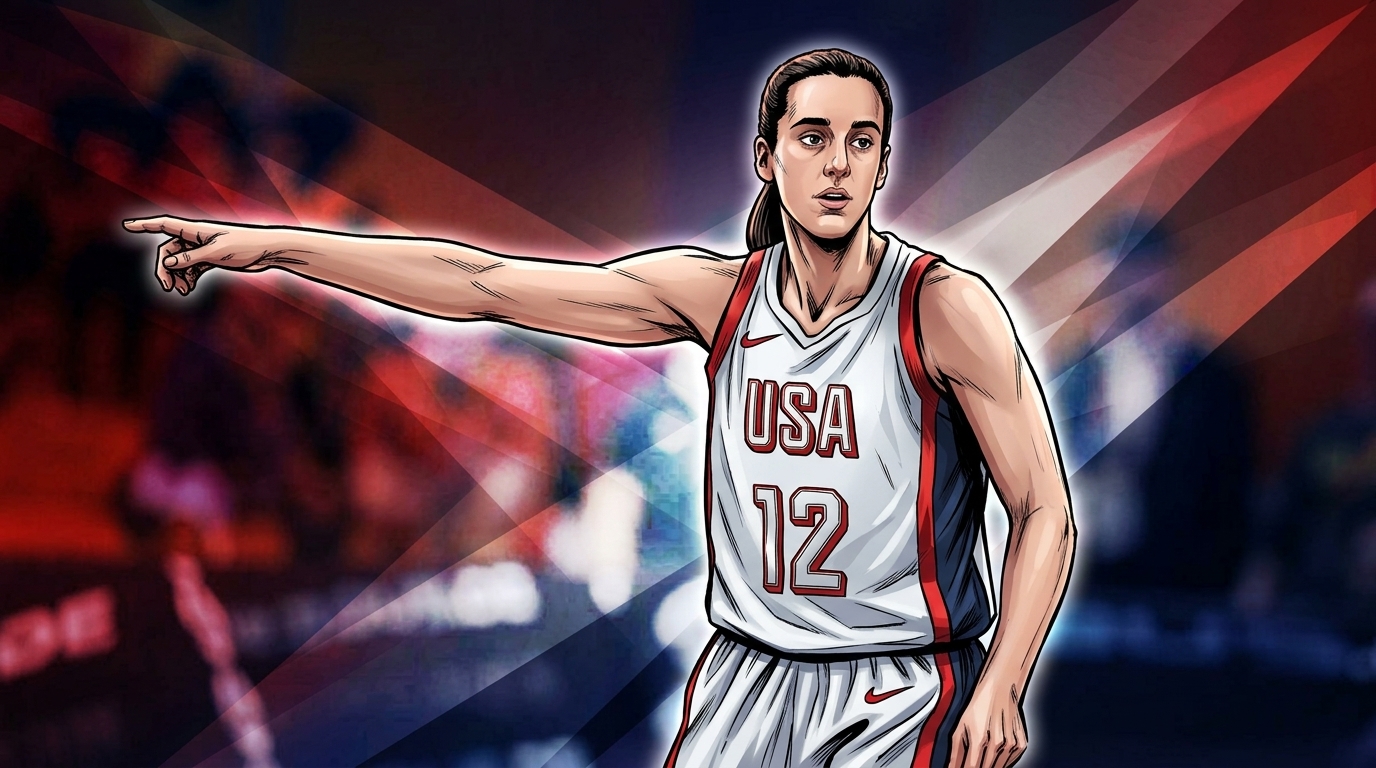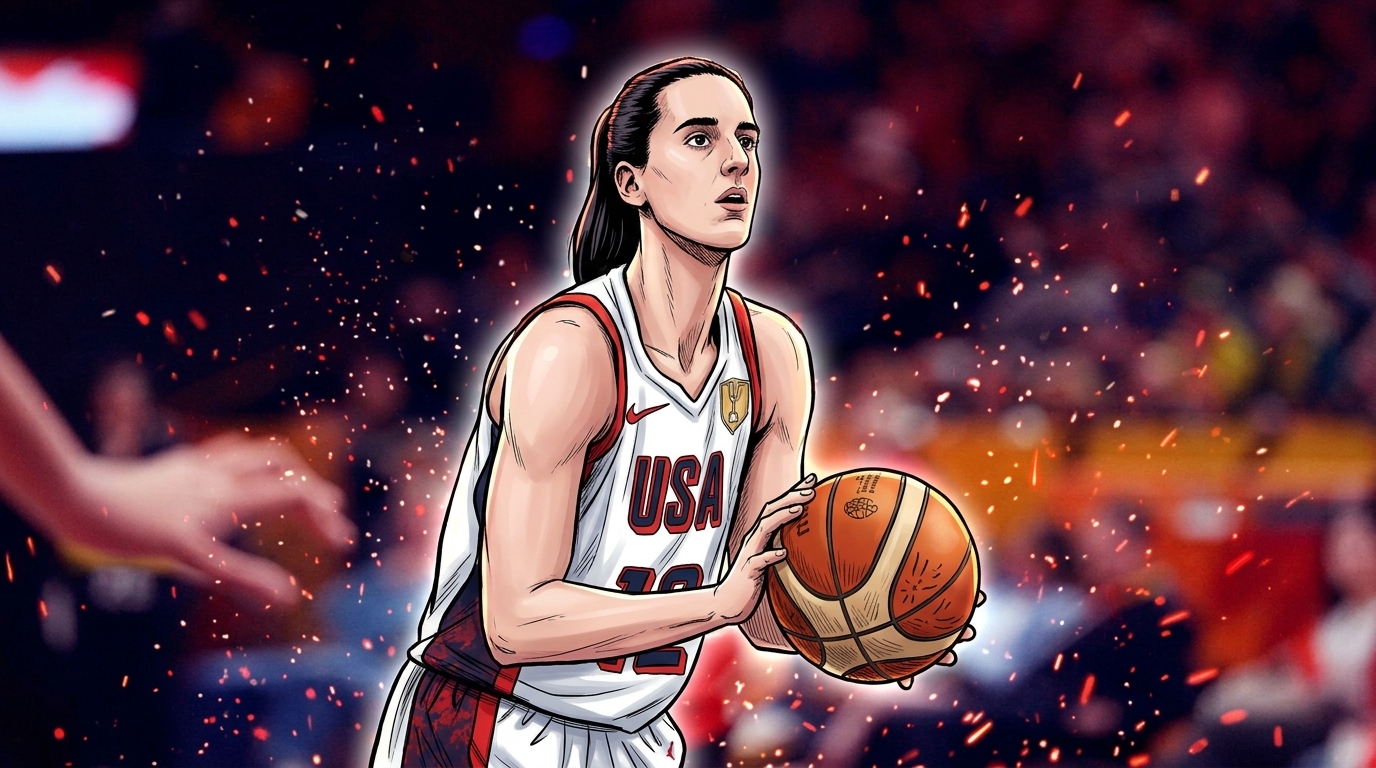

There’s a phenomenon in K-pop fandom I’ve been low-key obsessed with for years: the comeback that underperforms, and the twelve hours after when the fandom either processes it like adults or builds a conspiracy to explain away the numbers. I’ve watched stan Twitter blame everything except the possibility that the song was mediocre: sabotage, algorithm changes, a rigged chart. I thought about that same instinct this week, watching basketball Twitter run it on Caitlin Clark.
Clark missed every shot she took against Italy: 0-for-6 from the field, including 0-for-3 from three, for exactly one point on a free throw in Team USA’s 55-52 escape act at the FIBA Women’s World Cup. It was, by multiple accounts, the first time in her career, WNBA or college, that she failed to make a single field goal. Coaches benched her down the stretch of the fourth quarter. USA won anyway and improved to 2-0.
None of that is really what set off my timeline. The panic wasn’t really about the box score — it was about certainty outrunning patience, the speed with which “rough shooting night” became “she’s not actually that good” before the box score had even finished loading. A chunk of the people melting down didn’t build their fandom on watching Clark develop as a player. They built it on a conclusion: greatest ever, unguardable, a lock. Conclusions don’t leave room for 0-for-6. When results contradict the premise, you either update the premise or get furious at the results, and this weekend’s timeline chose furious.
That’s the part worth sitting with: the gap between what Clark is in the WNBA, where she’s already the engine of an entire offense, and what she is in senior international play, where she’s twenty-three and competing for reps next to players who’ve been doing this at this level for a decade. A bad shooting night in group play at the World Cup isn’t a referendum on her ceiling. It’s what happens when someone who’s already great is, in a different context, still developing, and the discourse around Clark never really settles long enough to hold both of those ideas at the same time.
Angel Reese’s line off the bench got treated like a footnote before the final buzzer had even finished echoing, and I don’t think that’s an accident. She checked in and had, by any reasonable measure, the better game: eight points on 2-for-5 shooting, four made free throws, three rebounds, two blocks and a steal in fifteen minutes against a team that led by three points midway through the fourth quarter. Jackie Young led USA with ten points and guarded Italy’s final possession herself. Italy’s Cecilia Zandalasini put up fourteen points and seven rebounds and nearly delivered one of the bigger upsets in Women’s World Cup history. USA shot somewhere around 29 to 32 percent from the field as a team and 1-for-12 from three. Clark’s line was part of a bad shooting night for the whole roster, not an isolated one, and the discourse still picked a single name to carry it.
Here’s where it gets weird: the clip the NBA’s own account chose to post out of that game was Reese swatting a shot into the second row, not another angle on Clark missing from three.
https://twitter.com/NBA/status/2096676634019447261
That’s the highlight the league itself decided was worth sharing, and it wasn’t the story most of the timeline was telling.
Reese’s stat line is exactly the type of performance that gets a role player a national profile piece under different circumstances: efficient minutes, winning defensive possessions, holding a lead when it mattered most. In this cycle it’s mostly absorbed as garnish on someone else’s crisis narrative, not the first time these two have shared a night and split the coverage down the middle. Whose performance gets picked apart and whose gets folded into the background isn’t a basketball question. It’s a habit, and it predates this specific box score by a wide margin.
None of this is a coincidence so much as an incentive structure working exactly as designed. Outrage about a superstar’s collapse gets clicks in a way that “efficient role player has a good Tuesday” never will, and nobody in sports media needs a memo to know it. That doesn’t make the framing wrong, necessarily. It makes it convenient, and convenient narratives have a way of outliving the box scores that were supposed to justify them.
I don’t know if the reaction cools off the next time Clark has a quiet shooting night in a USA jersey, or whether anyone remembers afterward that Italy played USA to the wire and had every reason to believe they’d win. What I do know is that Reese is going to keep having games like this one, efficient, physical, unbothered, and I’m not convinced anyone outside the box score is going to notice until she makes them.