Detroit Tigers
The Detroit Tigers are a charter 1901 American League franchise with four World Series titles (1935, 1945, 1968, 1984) and a 2025 playoff return.
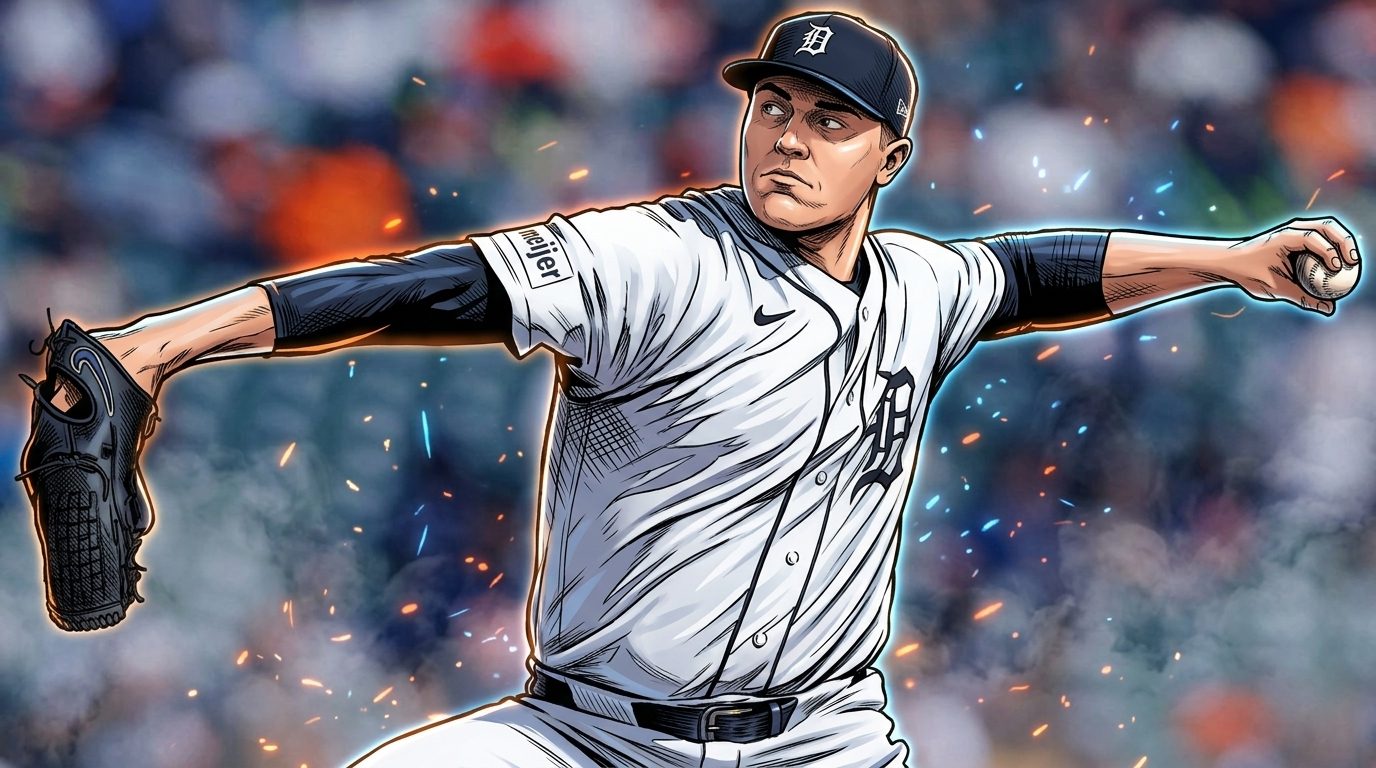
The Detroit Tigers are one of Major League Baseball’s charter franchises, a founding member of the American League in 1901 and one of four of the league’s original eight clubs still playing in its founding city, alongside the Boston Red Sox, Chicago White Sox and Cleveland. Of that quartet the Tigers stand as the oldest continuous one-name, one-city franchise in the American League. Over more than twelve decades the Tigers have won four World Series (1935, 1945, 1968 and 1984), raised 11 American League pennants, and sent some of the sport’s defining figures through their clubhouse: Ty Cobb, Hank Greenberg, Al Kaline, Alan Trammell and Lou Whitaker, Miguel Cabrera and Justin Verlander, and 2024 AL Cy Young winner Tarik Skubal. They remain one of the winningest organizations in the game, with a 9,839–9,728 all-time regular-season record entering the 2026 offseason.
| Vitals | |
|---|---|
| Founded | 1901 (charter American League franchise) |
| League / division | MLB — American League, AL Central |
| Stadium | Comerica Park (opened 2000); Tiger Stadium 1912–1999 |
| Owner | Ilitch family (Christopher Ilitch), as of Oct. 29, 2026 |
| Manager | A.J. Hinch (since 2021), as of Oct. 29, 2026 |
| Titles | 4 World Series (1935, 1945, 1968, 1984) |
Origins: a charter American League club
The franchise was born with the league itself. Detroit’s professional roots run back to a Western League club in 1894, and when Ban Johnson rebranded that circuit as the American League and declared it a major league in 1901, the Tigers were among its eight charter members. Four of those original clubs still play in their founding cities — Detroit along with the Boston Red Sox, Chicago White Sox and Cleveland — and of them Detroit is the oldest continuous one-name, one-city franchise in the American League, per the club’s history.
The early seasons were competitive but unrewarded. Detroit went 74–61 to finish third in the inaugural 1901 season and bounced between the first and second divisions over the next few years, searching for the star who would make them a contender.
The Ty Cobb era (1905–1926)
That star arrived in 1905. An 18-year-old Georgian named Ty Cobb debuted that August and became the most ferocious hitter the game had seen; his .366 career batting average remains the highest in American League history. Cobb’s arrival transformed Detroit almost immediately.
The Tigers won three straight pennants. From 1907 through 1909 Detroit captured the American League flag each year, going 92–58, 90–63 and 98–54. Each run ended in defeat: the Chicago Cubs beat them in both 1907 and 1908, and the Pittsburgh Pirates took a seven-game 1909 World Series. Detroit would not return to the Series for a quarter-century.
Cobb anchored two decades of Tigers baseball. He served as player-manager from 1921 to 1926 and finished his Detroit tenure after the 1926 season, leaving as the face of the franchise’s first generation and a first-ballot Hall of Famer. The club’s lone 100-win season of the period came in 1915 (100–54), though it finished second to Boston.
Hank Greenberg and the first titles (1934–1945)
The breakthrough came behind a new core. Catcher-manager Mickey Cochrane, slugger Hank Greenberg and second baseman Charlie Gehringer drove the 1934 club to a franchise-best 101–53 record, a .656 winning percentage still unmatched in team history. They lost a seven-game World Series to the St. Louis Cardinals’ Gashouse Gang.
1935 delivered the first championship. Detroit went 93–58 and beat the Chicago Cubs four games to two, with Goose Goslin’s walk-off single in Game 6 scoring Cochrane for the clincher. Greenberg was named AL MVP that season.
A second title followed a decade later. After a 1940 pennant that ended in a seven-game World Series loss to Cincinnati, the Tigers returned to the top in 1945, beating the Cubs four games to three. Left-hander Hal Newhouser, the AL’s back-to-back MVP, won Game 7 by a 9–3 score, and Greenberg, freshly returned from military service, supplied the power that summer.
Kaline and the 1968 champions
Al Kaline became the face of the next generation. Signed straight out of high school, the right fielder won the AL batting title at 20 in 1955 and spent his entire 22-year career in Detroit, finishing with 3,007 hits and a 1980 Hall of Fame induction. For years his teams were good but not quite good enough, including a 101–61 second-place finish in 1961.
1968 ended the wait. Detroit went 103–59 behind Denny McLain, who went 31–6 to become the majors’ first 30-game winner since 1934 and swept the AL MVP and Cy Young awards. In a tense, racially charged summer in Detroit, the team’s success carried unusual civic weight.
The World Series produced an all-time comeback. Down three games to one to Bob Gibson’s Cardinals, the Tigers rallied behind left-hander Mickey Lolich, who won three complete games and took World Series MVP. Manager Mayo Smith’s gamble of moving center fielder Mickey Stanley to shortstop kept Kaline’s bat in the lineup, and Jim Northrup’s two-run triple broke open a 4–1 Game 7 win in St. Louis.
Billy Martin, the Bird and decline (1969–1978)
The 1968 core had one more playoff run. Under fiery manager Billy Martin, Detroit won the AL East in 1972 at 86–70, edging Boston by half a game in a strike-shortened schedule, then lost a five-game ALCS to the Oakland Athletics.
The decline that followed was steep. The roster aged, and the Tigers bottomed out at 57–102 in 1975, their worst season since 1952. Kaline retired after 1974.
One bright spark lit 1976. Rookie right-hander Mark “The Bird” Fidrych, who talked to the ball and groomed the mound by hand, went 19–9 with a 2.34 ERA, won AL Rookie of the Year and started the All-Star Game, becoming a national sensation before arm trouble cut his career short.
Bless You Boys: the 1984 champions (1979–1988)
Sparky Anderson built a powerhouse. Hired in 1979, Anderson developed a homegrown core around the double-play tandem of shortstop Alan Trammell and second baseman Lou Whitaker, outfielder Kirk Gibson, catcher Lance Parrish and ace Jack Morris.
1984 was a season for the ages. The Tigers won their first nine games, started 35–5, led wire to wire and finished 104–58, a franchise record for victories. Morris threw a no-hitter at Chicago on April 7, and reliever Willie Hernández swept the AL MVP and Cy Young awards.
The World Series was a coronation. Detroit beat the San Diego Padres four games to one, with Gibson’s two home runs in the Game 5 clincher the lasting image and Trammell (.450) named Series MVP. The team won another AL East title in 1987 at 98–64, clinching on the season’s final weekend over Toronto before falling to Minnesota in the ALCS.
The lean years (1989–2005)
The late 1980s collapse was abrupt. Detroit lost 103 games in 1989 and spent most of the next decade adrift, including a 53–109 season in 1996.
A new ballpark did not bring new results. The Tigers left historic Tiger Stadium for Comerica Park in 2000, but the losing deepened. The 2003 club, managed by franchise icon Alan Trammell, went 43–119, setting an American League record for losses in a season that stood until the 2024 Chicago White Sox.
Leyland, Cabrera and Verlander (2006–2014)
Jim Leyland engineered a sudden revival. Hired for 2006, Leyland took a 91-loss team to 95–67 and the postseason. Detroit knocked off the Yankees and Athletics, winning the pennant on Magglio Ordóñez’s walk-off home run, then lost the World Series to the Cardinals in five games.
The next wave was built on stars. Justin Verlander won the 2011 AL MVP and Cy Young going 24–5, and the Tigers began a run of four straight AL Central titles (2011–2014). Miguel Cabrera capped 2012 with baseball’s first Triple Crown since 1967, batting .330 with 44 home runs and 139 RBI, and was named AL MVP; Detroit reached the World Series but was swept by the San Francisco Giants.
The window closed quietly. Max Scherzer took the 2013 AL Cy Young, but ALCS losses in 2011 and 2013 and an ALDS sweep by Baltimore in 2014 ended the run without a title. The core was dismantled over the following seasons.
Rebuild and the Skubal era (2015–2026)
A hard teardown bottomed out in 2019. Detroit traded Verlander to Houston in 2017 and sank to 47–114 in 2019, their most losses in a season since the franchise-record 119 of 2003. A.J. Hinch was hired to manage ahead of the 2021 season.
Tarik Skubal became the new ace. The left-hander won the 2024 AL Cy Young Award unanimously and the pitching Triple Crown, leading the league in wins, ERA and strikeouts. The 2024 Tigers surged late to grab a wild card at 86–76, upset the Astros and pushed Cleveland to a deciding Game 5 in the ALDS.
2025 brought another October and an instant classic. Detroit returned to the postseason at 87–75, and on Sept. 30, 2025, Skubal struck out 14 Guardians in a 2–1 wild-card Game 1 win at Cleveland, tying the franchise’s single-game postseason strikeout record. The season again ended in a five-game Division Series loss.
The deadline reshaped the franchise. With Skubal a year from free agency, Detroit agreed to send him to the Los Angeles Dodgers on Aug. 2, 2026, ahead of the Aug. 3, 2026 trade deadline, receiving outfielder Zyhir Hope and pitchers River Ryan and Brady Smith. The Tigers slipped to 76–86 and fourth place in the AL Central in 2026.
Retired numbers
The Tigers have retired ten uniform numbers honoring franchise greats, plus Jackie Robinson’s 42, which is out of circulation across Major League Baseball. The honored group spans every championship era, from Charlie Gehringer and Hank Greenberg of the 1935 title team to the 1984 double-play combination of Alan Trammell and Lou Whitaker. Managers Sparky Anderson and Jim Leyland are the two non-players honored.
Retired numbers
| No. | Player | Pos. | Team tenure | Retired |
|---|---|---|---|---|
| 1 | Lou Whitaker | 2B | 1977–1995 | Aug. 6, 2022 |
| 2 | Charlie Gehringer | 2B | 1924–1942 | June 12, 1983 |
| 3 | Alan Trammell | SS | 1977–1996 | Aug. 26, 2018 |
| 5 | Hank Greenberg | 1B/LF | 1930–1946 | June 12, 1983 |
| 6 | Al Kaline | RF | 1953–1974 | Aug. 17, 1980 |
| 10 | Jim Leyland (manager) | — | 2006–2013 | Aug. 3, 2024 |
| 11 | Sparky Anderson (manager) | — | 1979–1995 | June 26, 2011 |
| 16 | Hal Newhouser | P | 1939–1953 | 1997 |
| 23 | Willie Horton | LF | 1963–1977 | July 15, 2000 |
| 47 | Jack Morris | P | 1977–1990 | Aug. 12, 2018 |
| 42 | Jackie Robinson | 2B | (league-wide) | Apr. 15, 1997 |
Season by season
Every season the franchise has played, folded by decade, newest first.
The 2020s 493–537 · 2 playoff berths
| Season | W–L | Finish | Playoffs |
|---|---|---|---|
| 2026 | 76–86 | 4th | — |
| 2025 | 87–75 | 2nd | Lost ALDS |
| 2024 | 86–76 | 3rd | Lost ALDS |
| 2023 | 78–84 | 2nd | — |
| 2022 | 66–96 | 4th | — |
| 2021 | 77–85 | 3rd | — |
| 2020 | 23–35 | 5th | — |
The 2010s 782–835 · 4 playoff berths · 1 pennant (2012)
| Season | W–L | Finish | Playoffs |
|---|---|---|---|
| 2019 | 47–114 | 5th | — |
| 2018 | 64–98 | 3rd | — |
| 2017 | 64–98 | 5th | — |
| 2016 | 86–75 | 2nd | — |
| 2015 | 74–87 | 5th | — |
| 2014 | 90–72 | 1st | Lost ALDS |
| 2013 | 93–69 | 1st | Lost ALCS |
| 2012 | 88–74 | 1st | Lost World Series |
| 2011 | 95–67 | 1st | Lost ALCS |
| 2010 | 81–81 | 3rd | — |
The 2000s 729–891 · 1 playoff berth · 1 pennant (2006)
| Season | W–L | Finish | Playoffs |
|---|---|---|---|
| 2009 | 86–77 | 2nd | — |
| 2008 | 74–88 | 5th | — |
| 2007 | 88–74 | 2nd | — |
| 2006 | 95–67 | 2nd | Lost World Series |
| 2005 | 71–91 | 4th | — |
| 2004 | 72–90 | 4th | — |
| 2003 | 43–119 | 5th | — |
| 2002 | 55–106 | 5th | — |
| 2001 | 66–96 | 4th | — |
| 2000 | 79–83 | 3rd | — |
The 1990s 702–852 · 0 playoff berths
| Season | W–L | Finish | Playoffs |
|---|---|---|---|
| 1999 | 69–92 | 3rd | — |
| 1998 | 65–97 | 5th | — |
| 1997 | 79–83 | 3rd | — |
| 1996 | 53–109 | 5th | — |
| 1995 | 60–84 | 4th | — |
| 1994 | 53–62 | 5th | — |
| 1993 | 85–77 | 3rd | — |
| 1992 | 75–87 | 6th | — |
| 1991 | 84–78 | 2nd | — |
| 1990 | 79–83 | 3rd | — |
The 1980s 839–727 · 2 playoff berths · 1 World Series (1984)
| Season | W–L | Finish | Playoffs |
|---|---|---|---|
| 1989 | 59–103 | 7th | — |
| 1988 | 88–74 | 2nd | — |
| 1987 | 98–64 | 1st | Lost ALCS |
| 1986 | 87–75 | 3rd | — |
| 1985 | 84–77 | 3rd | — |
| 1984 | 104–58 | 1st | Won World Series |
| 1983 | 92–70 | 2nd | — |
| 1982 | 83–79 | 4th | — |
| 1981 | 60–49 | 3rd | — |
| 1980 | 84–78 | 4th | — |
The 1970s 789–820 · 1 playoff berth
| Season | W–L | Finish | Playoffs |
|---|---|---|---|
| 1979 | 85–76 | 5th | — |
| 1978 | 86–76 | 5th | — |
| 1977 | 74–88 | 4th | — |
| 1976 | 74–87 | 5th | — |
| 1975 | 57–102 | 6th | — |
| 1974 | 72–90 | 6th | — |
| 1973 | 85–77 | 3rd | — |
| 1972 | 86–70 | 1st | Lost ALCS |
| 1971 | 91–71 | 2nd | — |
| 1970 | 79–83 | 4th | — |
The 1960s 882–729 · 1 playoff berth · 1 World Series (1968)
| Season | W–L | Finish | Playoffs |
|---|---|---|---|
| 1969 | 90–72 | 2nd | — |
| 1968 | 103–59 | 1st | Won World Series |
| 1967 | 91–71 | 2nd | — |
| 1966 | 88–74 | 3rd | — |
| 1965 | 89–73 | 4th | — |
| 1964 | 85–77 | 4th | — |
| 1963 | 79–83 | 5th | — |
| 1962 | 85–76 | 4th | — |
| 1961 | 101–61 | 2nd | — |
| 1960 | 71–83 | 6th | — |
The 1950s 738–802 · 0 playoff berths
| Season | W–L | Finish | Playoffs |
|---|---|---|---|
| 1959 | 76–78 | 4th | — |
| 1958 | 77–77 | 5th | — |
| 1957 | 78–76 | 4th | — |
| 1956 | 82–72 | 5th | — |
| 1955 | 79–75 | 5th | — |
| 1954 | 68–86 | 5th | — |
| 1953 | 60–94 | 6th | — |
| 1952 | 50–104 | 8th | — |
| 1951 | 73–81 | 5th | — |
| 1950 | 95–59 | 2nd | — |
The 1940s 834–705 · 2 pennants · 1 World Series (1945)
| Season | W–L | Finish | Playoffs |
|---|---|---|---|
| 1949 | 87–67 | 4th | — |
| 1948 | 78–76 | 5th | — |
| 1947 | 85–69 | 2nd | — |
| 1946 | 92–62 | 2nd | — |
| 1945 | 88–65 | 1st | Won World Series |
| 1944 | 88–66 | 2nd | — |
| 1943 | 78–76 | 5th | — |
| 1942 | 73–81 | 5th | — |
| 1941 | 75–79 | 4th | — |
| 1940 | 90–64 | 1st | Lost World Series |
The 1930s 818–716 · 2 pennants · 1 World Series (1935)
| Season | W–L | Finish | Playoffs |
|---|---|---|---|
| 1939 | 81–73 | 5th | — |
| 1938 | 84–70 | 4th | — |
| 1937 | 89–65 | 2nd | — |
| 1936 | 83–71 | 2nd | — |
| 1935 | 93–58 | 1st | Won World Series |
| 1934 | 101–53 | 1st | Lost World Series |
| 1933 | 75–79 | 5th | — |
| 1932 | 76–75 | 5th | — |
| 1931 | 61–93 | 7th | — |
| 1930 | 75–79 | 5th | — |
The 1920s 760–778 · 0 playoff berths
| Season | W–L | Finish | Playoffs |
|---|---|---|---|
| 1929 | 70–84 | 6th | — |
| 1928 | 68–86 | 6th | — |
| 1927 | 82–71 | 4th | — |
| 1926 | 79–75 | 6th | — |
| 1925 | 81–73 | 4th | — |
| 1924 | 86–68 | 3rd | — |
| 1923 | 83–71 | 2nd | — |
| 1922 | 79–75 | 3rd | — |
| 1921 | 71–82 | 6th | — |
| 1920 | 61–93 | 7th | — |
The 1910s 790–704 · 0 playoff berths
| Season | W–L | Finish | Playoffs |
|---|---|---|---|
| 1919 | 80–60 | 4th | — |
| 1918 | 55–71 | 7th | — |
| 1917 | 78–75 | 4th | — |
| 1916 | 87–67 | 3rd | — |
| 1915 | 100–54 | 2nd | — |
| 1914 | 80–73 | 4th | — |
| 1913 | 66–87 | 6th | — |
| 1912 | 69–84 | 6th | — |
| 1911 | 89–65 | 2nd | — |
| 1910 | 86–68 | 3rd | — |
The 1900s 683–632 · 3 pennants (1907–09)
| Season | W–L | Finish | Playoffs |
|---|---|---|---|
| 1909 | 98–54 | 1st | Lost World Series |
| 1908 | 90–63 | 1st | Lost World Series |
| 1907 | 92–58 | 1st | Lost World Series |
| 1906 | 71–78 | 6th | — |
| 1905 | 79–74 | 3rd | — |
| 1904 | 62–90 | 7th | — |
| 1903 | 65–71 | 5th | — |
| 1902 | 52–83 | 7th | — |
| 1901 | 74–61 | 3rd | — |
By the numbers
Franchise marks
Per Baseball-Reference, through the 2026 season.
Ranks
- 10th All-time regular-season wins, MLB franchises (9,839), behind the Giants, Dodgers, Cardinals, Cubs, Braves, Reds, Pirates, Yankees and Phillies
- 1st Career batting average, MLB history: Ty Cobb (.366), ahead of Rogers Hornsby (.358)
- 2nd Most losses in a season, AL history: 119 (2003)
Per the all-time win–loss records, Baseball-Reference and season records, through 2026.
Honors
- 4× World Series champion (1935, 1945, 1968, 1984)
- 11× American League pennant winner
- Ty Cobb — .366 career batting average, an AL record
- Miguel Cabrera — 2012 AL Triple Crown and MVP
- Denny McLain — 1968 AL MVP and Cy Young (31–6)
- Justin Verlander — 2011 AL MVP and Cy Young
- Max Scherzer — 2013 AL Cy Young
- Tarik Skubal — 2024 AL Cy Young and pitching Triple Crown
- Hank Greenberg — 2× AL MVP (1935, 1940)
Per Wikipedia and Baseball-Reference, through 2026.
The arguments
How good was the 1984 team, really? Supporters point to the 35–5 start, the 104 wins and a World Series lost in just five games as evidence of one of the best single seasons any franchise has assembled. Skeptics counter that the club never built a dynasty from it, winning only one more division title (1987) before the roster aged out, and argue the 1968 champions, who overcame a 3–1 World Series deficit against Bob Gibson, were the more complete team.
Was trading Tarik Skubal the right call? The case for the deal, as reported at the 2026 deadline, was that a pending free agent would likely leave for nothing and that the return of three young players strengthened the organization. The case against, voiced by fans and some analysts, was that moving a reigning Cy Young winner signaled a step back for a club that had reached the postseason in back-to-back years.
Where does Ty Cobb sit in franchise lore? Cobb’s on-field résumé is beyond dispute, yet his combative reputation has long complicated how the team and its fans celebrate him. The debate over how to honor a figure of his statistical stature and personal controversy is described, not settled, here.
Why it matters
The Detroit Tigers are a load-bearing piece of baseball history: a charter American League club that never left its city, a four-time champion whose titles stretch from Hank Greenberg to Kirk Gibson, and the stage for Ty Cobb, Al Kaline, Miguel Cabrera and Tarik Skubal. Their story runs through the game’s whole arc, from the dead-ball era to a 2025 playoff return, and a fan reaching for a franchise worth arguing over in a group chat will find more than a century of it in Detroit.