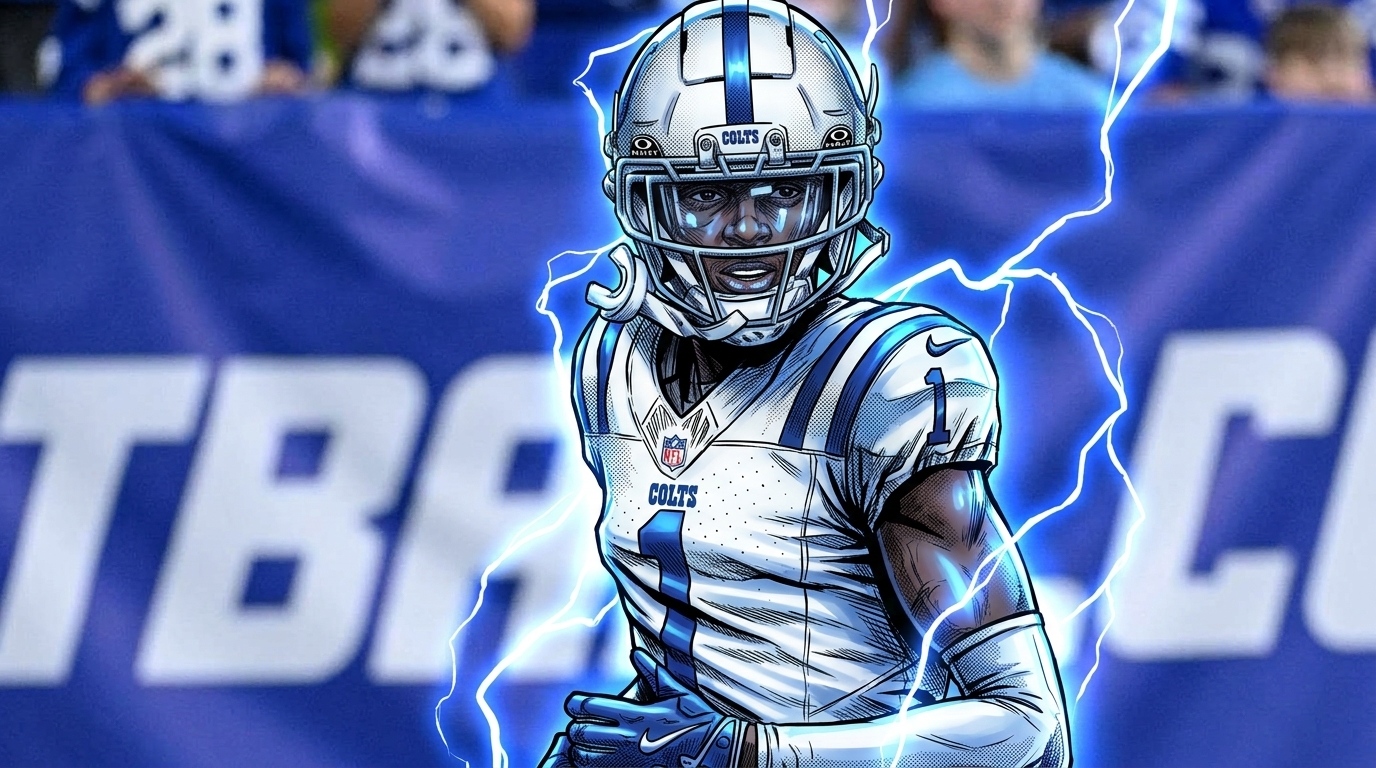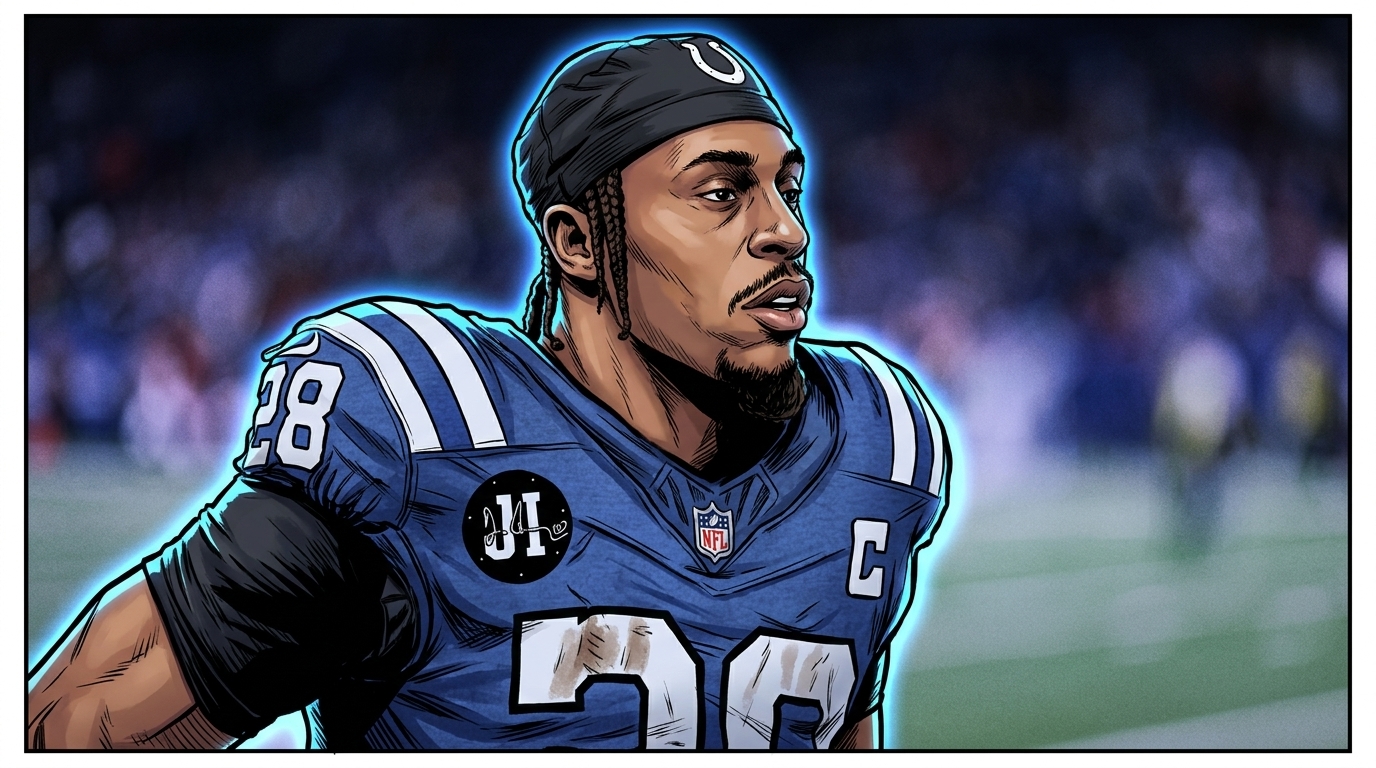

Indianapolis carries an eight-game losing streak into tonight’s Sunday Night Football trip to face the Kansas City Chiefs, and that number is the longest active skid in the league. It’s also the least surprising streak in football, if you’ve been tracking the Colts’ actual record instead of the vibes around Daniel Jones’s arm. Indianapolis has finished 8-9 in back-to-back seasons, and a team doesn’t land on the exact same number twice through bad luck alone. Call it the 8-9 Machine: a roster built to stay competitive enough to avoid a teardown and never quite good enough to threaten anything real.
How Long Is the Colts’ Losing Streak, and Is It Really the NFL’s Longest?
Indianapolis has dropped eight consecutive games, a run that started midway through last season and survived an entire offseason before Week 1 of this one. Entering Week 2 of 2026, that’s the longest active losing streak in the league. Arizona had a longer one, nine games, but the Cardinals ended theirs by winning their own opener.
The streak’s most recent entry came at home, a 41-23 loss to the Baltimore Ravens in which Jones went 19-of-31 for 166 yards, a touchdown, and an interception. On its own, that’s a rough Sunday. Stacked on top of seven straight losses that closed out 2025, it’s the tail end of a stretch that has now outlasted a Super Bowl, a full draft class, and most of an NFL calendar. Adam Schefter flagged just how rare that is:
https://twitter.com/AdamSchefter/status/2101646887610724666
An eight-game streak spanning two seasons is a strange kind of unlucky. Most losing streaks end with a bye-week reset or get buried under a coaching change. This one has survived both, which says less about variance and more about what’s underneath it.
Why Do the Colts Keep Finishing 8-9?
The Colts have finished 8-9 in both 2024 and 2025, and the shape of last year’s collapse is what makes the number repeatable rather than random: Indianapolis opened 2025 at 8-2 with the NFL’s best point differential, then lost its final seven games after a bye to miss the playoffs for a fifth straight year.
Indianapolis clearly can compete: the tape shows that every October. The pattern shows up later, right around the moment competing would actually start to matter, and it shows up on a schedule. I run three fantasy baseball leagues off my own projection model, and the lesson it keeps teaching me is that a result repeated across independent seasons is a signal, not noise. Two 8-9 finishes in a row means the same organization landing on the same floor and the same ceiling, year after year.
The roster context backs it up. Indianapolis hasn’t made the playoffs since 2020, and the front office’s approach this offseason has looked more like maintenance than overhaul. Running back Jonathan Taylor, the one unquestioned building block, signed his extension this offseason instead of getting shopped, which is the correct move for a genuinely good player but also exactly what a team stuck in the middle does with its best asset. Head coach Shane Steichen is entering his fourth season without the kind of accountability reset that usually forces a real teardown, because 8-9 is just good enough to keep everyone’s job intact. That’s the quiet mechanism behind the whole thing: ownership’s patience functions as the actual strategy, whether anyone in the building would call it that or not.
Even off the field, Indianapolis has spent September managing distraction instead of avoiding it. Receiver Keenan Allen is facing a suspension of his own after an August DUI arrest, one more variable in a season that hasn’t needed the extra noise.
Can Daniel Jones’s Leg Actually Break the Pattern?
Jones is playing on a torn Achilles that ended his 2025 season after 13 games, and he’s doing it on the faster end of a typical recovery clock rather than the slower one. Both he and Taylor carry no injury designation for tonight; receiver Ashton Dulin is out with an ankle issue, and running back DJ Giddens is questionable with a knee.
The case for Jones as the pattern-breaker is real. Before the injury, he posted a career-high 100.2 passer rating, completed 68 percent of his throws, and threw 19 touchdowns against 8 interceptions across those 13 games — the best stretch of his career, cut short by the one variable nobody controls. Translate the passer rating: 100.2 sits in the range where a quarterback stops being the problem and starts being the reason a mediocre roster wins close games. The trouble is durability. Jones has played in only 83 games since entering the league in 2019, with 82 starts, and he’s finished exactly one full 16-game season, back in 2022. The Achilles recovery timeline matters as much as the arm talent, because the version of Jones that fixes this roster has to be on the field in December, not just in September.
That’s the tension the Colts carry into Arrowhead tonight, against a Chiefs team built around Patrick Mahomes and no shortage of its own high stakes. Indianapolis doesn’t need a miracle to snap an eight-game streak. It needs its best player healthy for four consecutive months, something this organization hasn’t gotten since 2022.
Maybe this is just injury variance wearing a costume, two unlucky seasons that happened to land on the same number. I don’t buy it. Injury variance doesn’t explain a front office that keeps building a roster engineered for 8-9 even when the pieces are good enough for more, and it doesn’t explain why the number keeps landing in the exact same spot two years running. The Colts won’t break the 8-9 Machine by getting lucky, and they won’t break it tonight in Arrowhead either way the final score lands. They’ll break it by building something willing to actually finish 9-8, and until Jones proves his leg can carry a full season, I’m not betting on it happening this year.