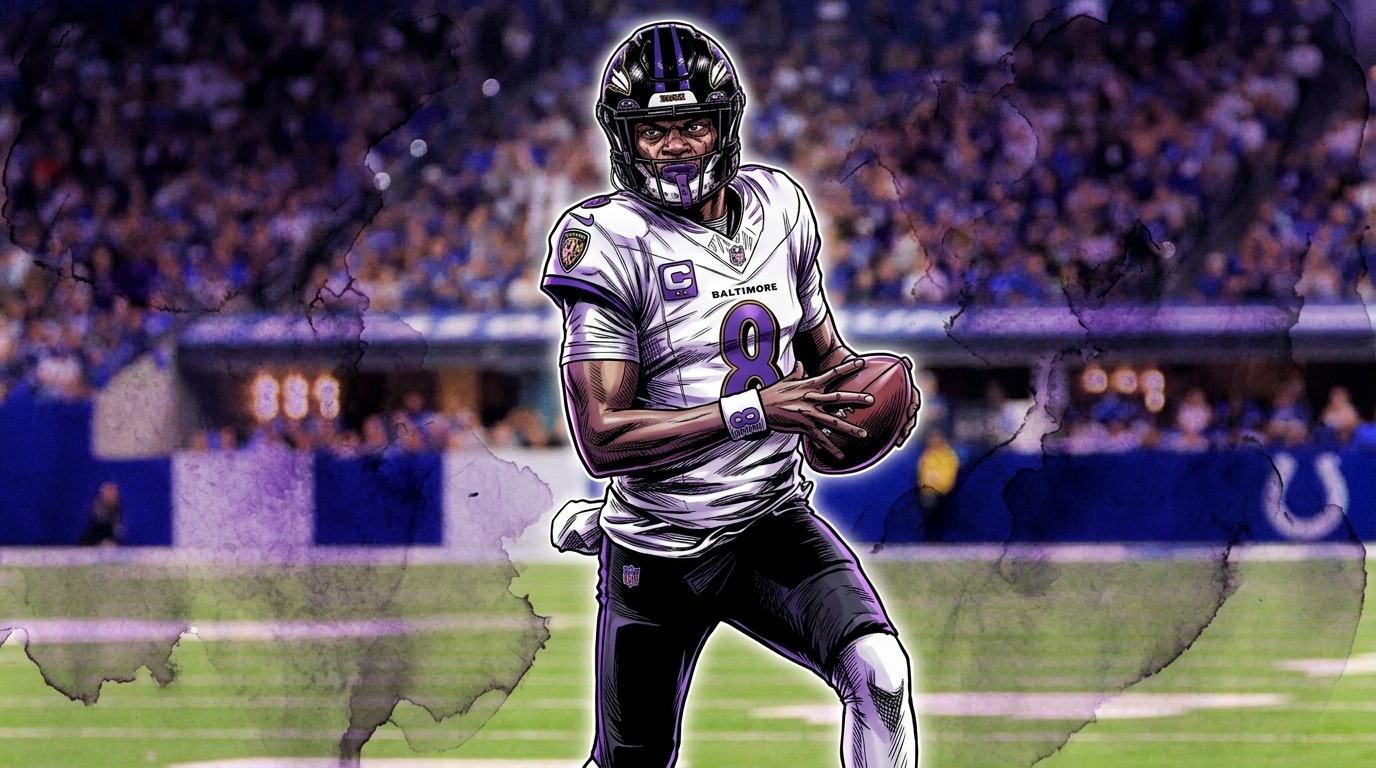

Derrick Henry averaged 4.6 yards a carry in the first half against the Saints on Sunday, and the Baltimore Ravens’ answer was to stop giving him the ball. I’ve watched plenty of coaching staffs talk themselves out of the obvious, but I don’t know that I’ve seen one do it this fast. Henry ran for 51 yards and a touchdown on 11 carries before halftime, plus two catches for 22 more, and Baltimore walked into the locker room up 14-6. Then the staff decided the guy averaging almost five yards a pop didn’t need the ball anymore. He got five second-half carries for 17 yards, the offense managed three total points after the break, and the Saints scored 15 unanswered in the fourth quarter to leave Baltimore’s own building with a 24-17 win.
This isn’t a one-off. Baltimore’s own team site logged it: the Ravens have now blown a fourth-quarter lead 15 times since 2019, a streak that outlasted John Harbaugh’s exit and showed up again in just Jesse Minter’s second game as his replacement. Change the head coach, change the offensive coordinator, and the outcome still doesn’t move. Derrick Henry was rolling before Baltimore stopped feeding him. That’s not a Henry problem. It’s a decision-making problem the franchise has now failed to fix across an entire coaching change.
I have a poli-sci degree and a brother who works in Trenton city government, and between the two I’ve seen plenty of institutions protect a bad process rather than admit somebody in the room called the wrong play. Football, it turns out, runs the same way. The play that says it all came on third-and-1 in the fourth quarter, game tied at 17, with a back who’d just gashed New Orleans for 4.6 a carry standing right there. Offensive coordinator Declan Doyle called a deep incomplete pass to Chris Moore instead, Baltimore punted, and New Orleans drove 68 yards for the winning touchdown on the very next possession. That’s one hell of a decision to get wrong with the whole game sitting right there. Henry didn’t say much about it afterward. “We’re going to ride with Dec with whatever he calls,” he told reporters, which is the NFL’s version of a hostage tape: the calm voice of a guy who knows exactly what happened and also knows saying so out loud gets him nothing but a headline.
Nobody else in that locker room was quite as careful. In their postgame comments, Jesse Minter called it a discipline issue: “They outplayed us, especially in the second half. [We] had a lot of opportunities to turn that game the way we wanted to turn it [and] did not take advantage of it.” That’s true in the way “the ship encountered some water” is true. It’s bullshit dressed up in coach-speak, and the opportunity Minter’s talking about was a specific human being named Derrick Henry, who stood on the sideline for most of the third and fourth quarters. Lamar Jackson blamed penalties: “We weren’t finishing drives, man. We just weren’t finishing. We had the penalties and stuff like that that killed us, too.” Penalties didn’t take the ball out of Henry’s hands. A play sheet did. And Calais Campbell reached for the most NFL-coach word in the English language: “Football is such a momentum game, and we let them get into a rhythm late. It was hard to get them out of that rhythm.” Momentum is real. It is not, however, a mystery. You get it back by handing the ball to the guy averaging 4.6 a carry, not by dialing up incompletions into a defense that had already figured out you weren’t going to run it.
Shannon Sharpe watched the tape and said, on-air, that somebody needed to explain to him how a back running like that got five second-half touches. He wasn’t the only one asking:
https://twitter.com/Thechat101/status/2101954377065832691
I don’t need Sharpe’s résumé to agree with him. The box score already made his argument better than either of us could.
Baltimore isn’t broke, and this isn’t a budget problem. Henry is playing on the $30 million extension he signed last year, worth around $15 million a season, money the front office handed him specifically because he’s supposed to be the guy who closes out a lead. The Ravens just locked up Zay Flowers on one of the bigger receiver extensions in football, and Lamar Jackson’s own contract situation has hovered over this building for a year now. Baltimore clearly knows how to pay for talent. It just hasn’t figured out how to trust the talent it paid for once a game is actually on the line.
Fifteen fourth-quarter collapses since 2019 isn’t bad luck, and it isn’t a Henry problem, no matter how many times a coach says “opportunities” instead of his name. It’s a pattern that survived a full coaching change because nobody ever fixed the actual decision, who gets the ball when the lead needs protecting. They just changed who was making it. Shannon Sharpe wanted somebody to explain it to him on television. Nobody in that building has, and until somebody does, Baltimore is going to keep doing this in prime time, in front of a home crowd, with a future Hall of Famer standing on the sideline wondering why he isn’t in the game.