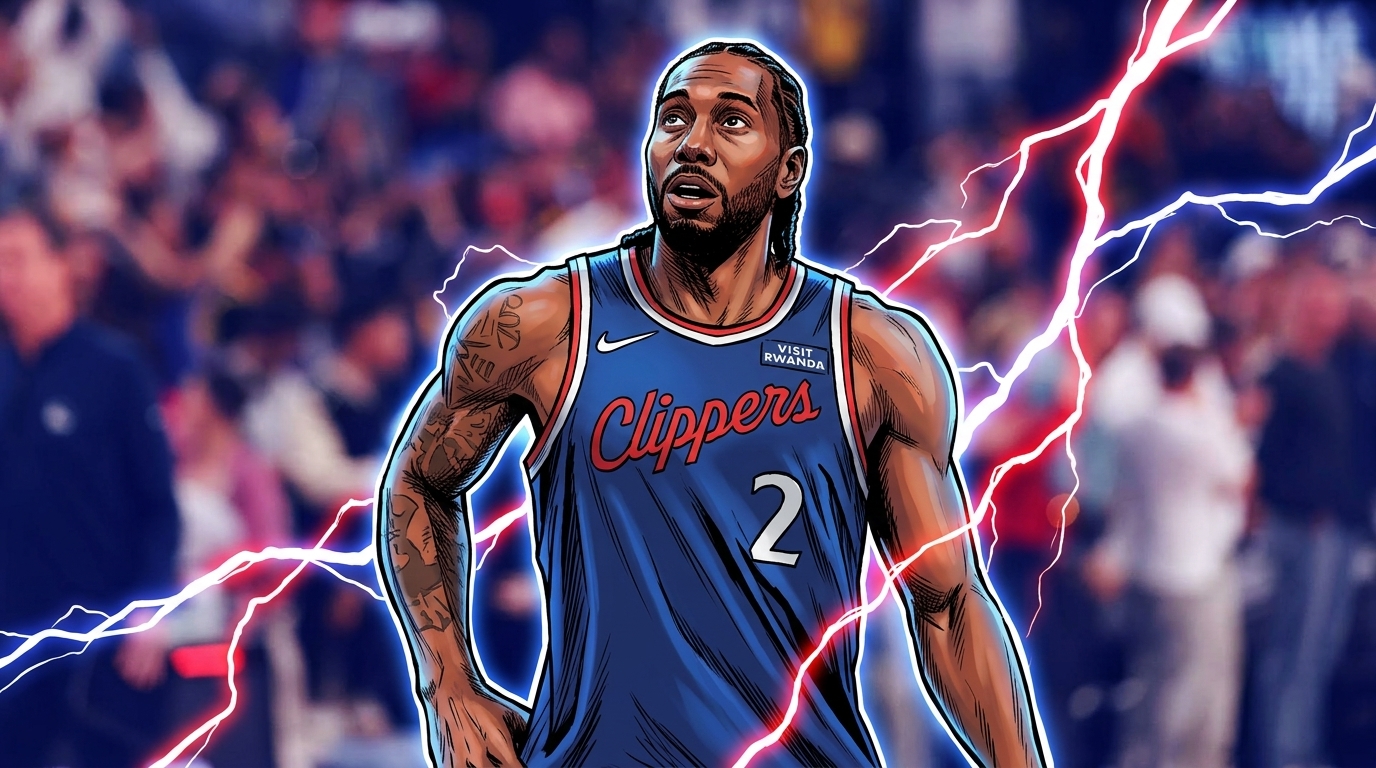
We spent the first nine days of September treating the Clippers’ salary-cap case as settled business. The NBA fined the team $30 million, stripped five first-round picks, suspended Steve Ballmer for a year, and called it the conclusion of the Kawhi Leonard investigation. Then, Thursday night, the New York Times’ Michael Schmidt reported that federal prosecutors in Brooklyn have opened their own criminal investigation into the same arrangement. It didn’t start after the NBA’s punishment went public. It started before that, running quietly underneath the league’s version of the story the entire time.
Is the DOJ investigating the Clippers? Yes. The U.S. Attorney’s Office for the Eastern District of New York, the Brooklyn federal prosecutors, has opened a criminal investigation into whether the Clippers helped arrange secret sponsorship contracts that paid Leonard beyond his three-year, $150 million deal, according to Yahoo Sports. The probe is in its earliest stages, and at least one subpoena has already gone out. (Subpoenas are not typically a symbolic gesture.)
Schmidt broke the story on X, tagging colleagues William Rashbaum and Santul Nerkar:
https://twitter.com/nytmike/status/2098187735395639356
The vocabulary there is deliberate. Prosecutors don’t open criminal files to check a box. They open them because something in the paper trail looked worth pursuing, and “earliest stages” means this is a long way from resolved either way.
That distinction is worth sitting with. The NBA’s discipline, however severe by the league’s own standards, was always going to end in money and draft capital: the harshest version of a fine. A DOJ criminal investigation exists in a different category of consequence. Sanberg’s 14-year sentence is sitting right there in the same set of allegations as a reminder of what that category actually means. Federal wire fraud charges don’t get resolved with a check and a press release, and nobody the NBA suspended in September was suspended for something that could put them in prison.
What the NBA’s punishment actually closed was the league’s own exposure, not the Clippers’ legal one. A commissioner-ordered investigation exists to protect competitive integrity inside the sport, and the Wachtell Lipton report did that job when it produced the harshest cap penalty in league history: $30 million, five first-round picks running from 2029 through 2033, a one-year suspension for Ballmer, a one-year unpaid suspension for team president Gillian Zucker, six months for basketball-ops chief Lawrence Frank, and a five-year ban on business advisor Dennis Robertson. Leonard himself got a $700,000 fine and nothing else. (For a scheme reportedly worth tens of millions of dollars, the player it was built around paid the smallest price of anyone involved.)
Ballmer’s own path through this saga hasn’t been a straight line, either — from the league’s earlier, contradictory finding that cleared him to the suspension the September ruling ultimately imposed. That inconsistency matters less now than it did two weeks ago, because a federal grand jury doesn’t care which version the NBA settled on. It cares what the documents say.
None of this happened in a vacuum. Aspiration co-founder Joe Sanberg already pleaded guilty to defrauding investors of $248 million and is currently serving a 14-year sentence for it. (Sanberg is doing that time somewhere prosecutors do not typically describe their own work as being in its “earliest stages.”) Ballmer put $60 million of his own money into Aspiration and has maintained throughout that he was a victim of the company’s fraud, not a participant in laundering money to Leonard through it. The Clippers’ only on-the-record response to any of this remains tied to the original 2025 allegations, when the team called the idea that Ballmer funneled money to Leonard through Aspiration “absurd.” Neither the Clippers nor the NBA has commented on the new federal investigation itself.
Why a cooperating league investigation helps federal prosecutors is straightforward, even though the link between the two cases is my read of the situation rather than anything either side has confirmed: the DOJ doesn’t need the NBA’s findings to open a file, but a league that already spent months building a paper trail on its own dime makes the next step easier if prosecutors ever want to use it. I think that’s the real story here. Not that the DOJ reacted to the NBA’s punishment, but that two separate investigations ran through the same allegations for months, and only one of them told anybody before it finished.
What happens to the Raptors trade now is the most immediate practical question, and there’s no clean answer yet. Toronto agreed on June 30 to send Brandon Ingram, Gradey Dick, two first-round picks, a pick swap and two second-rounders to the Clippers for Leonard, and the deal was expected to close within days of the September ruling. It hasn’t. Leonard is, at this moment, still technically a Clipper. The Raptors built that deal around the risk Toronto already agreed to absorb back in June — an owner suspension, a fine, five missing first-round picks. A criminal subpoena into the same underlying conduct is a materially different variable than the one Masai Ujiri’s front office priced in three months ago.
I don’t think the NBA’s punishment was ever the finish line, and I don’t think Thursday’s report changes that read so much as confirm it. The league’s investigation and the federal one were never really sequential. They were parallel tracks that happened to surface nine days apart. The suspension, the stripped picks, the $30 million fine were the visible consequence. The DOJ’s subpoena is the invisible one, finally showing itself. My guess is this doesn’t produce charges against Leonard or Ballmer directly — federal fraud cases built on corporate financial structures tend to target the architects of the paperwork, not the athlete or the owner sitting furthest from it. If anyone here is genuinely exposed, it’s more likely the people already pushed to the margins by the league’s own findings: Robertson, banned from doing business with any NBA team for five years, and whoever inside the Clippers’ front office actually drafted these sponsorship contracts.
What to watch next: whether more subpoenas follow this one, whether the Raptors trade closes on its original timeline or starts waiting on the DOJ’s clock instead of the NBA’s, and whether Ballmer’s camp treats a grand jury with the same posture it took toward Adam Silver’s investigators. Nine days ago, this looked like a story about draft picks. It doesn’t anymore.