Minnesota Lynx
The Minnesota Lynx are a four-time WNBA champion, winning titles in 2011, 2013, 2015 and 2017, and remain a title contender behind Napheesa Collier.
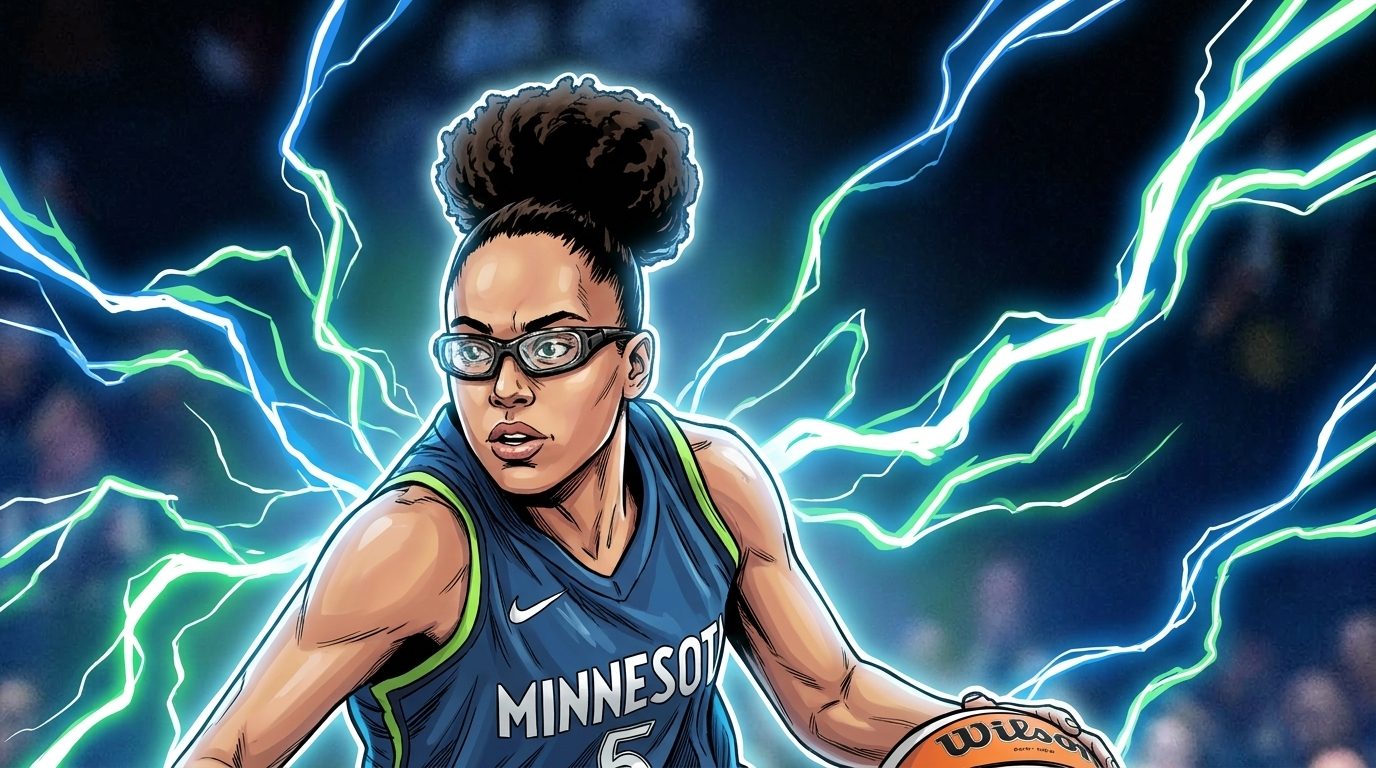
The Minnesota Lynx are a WNBA franchise based in Minneapolis and one of the defining dynasties in the league’s history. An expansion club that played its first game in 1999, the Lynx spent more than a decade as an afterthought before building a team that reached six WNBA Finals in seven seasons and won four championships between 2011 and 2017 — a haul matched by only the Houston Comets and Seattle Storm. Through the 2026 season the franchise had compiled a 549-415 regular-season record (.570) across 28 seasons with 17 playoff appearances, all under the uniform that turned Target Center into one of the WNBA’s most feared buildings. The dynasty has given way to a second contending window built around forward Napheesa Collier, keeping the Lynx at or near the top of the league into the mid-2020s.
| Vitals | |
|---|---|
| Founded | 1999 (expansion) |
| League / conference | WNBA — Western Conference |
| Arena | Target Center, Minneapolis |
| Owner | Marc Lore and Alex Rodriguez (since 2025) |
| Head coach (Nov. 5, 2026) | Cheryl Reeve |
| Titles | 4 (2011, 2013, 2015, 2017) |
Early years
An expansion team and its first star. The Lynx joined the WNBA as an expansion franchise in 1999, playing at Target Center alongside the NBA’s Timberwolves under founding owner Glen Taylor and first head coach Brian Agler. The face of those early teams was guard Katie Smith, selected by Minnesota in 1999 and the franchise’s first genuine star. Smith led the WNBA in scoring in 2001 and was an All-Star every year from 2000 through 2003, her outside shooting the center of the Lynx offense. The team debuted at 15-17 in 1999 and missed the playoffs in each of its first four seasons.
The first playoff trips. Minnesota broke through under coach Suzie McConnell-Serio, posting an 18-16 record in both 2003 and 2004 and reaching the Western Conference semifinals each year — the only postseason appearances of the franchise’s first eleven seasons. Smith, by then the first American woman to score 5,000 professional points, was traded to the Detroit Shock in 2005 as the roster turned over.
A No. 1 pick, and a floor. With the first overall selection in the 2006 draft the Lynx took LSU guard-forward Seimone Augustus, who won Rookie of the Year and immediately became the team’s offensive hub. The wins did not follow: Minnesota went 10-24 in both 2006 and 2007 and did not reach the playoffs again before the end of the decade, cycling through coaches and lottery picks. The pieces of a champion were accumulating, but the structure around them had not yet arrived.
The 2010s dynasty
Reeve assembles the core. The turning point was the December 2009 hiring of Cheryl Reeve as head coach. In 2010 the Lynx acquired Minnesota-born guard Lindsay Whalen from the Connecticut Sun and added forward Rebekkah Brunson, and in the 2011 draft they took Connecticut forward Maya Moore first overall. Alongside Augustus, that quartet formed the spine of a dynasty. Moore won Rookie of the Year in 2011, and the team jumped to a 27-7 record.
The first title (2011). Minnesota rolled through the 2011 postseason and swept the Atlanta Dream in the Finals, with Augustus named Finals MVP — the franchise’s first championship in its 13th season.
Heartbreak, then a second banner. The 2012 Lynx again went 27-7 but lost the Finals to the Indiana Fever. They answered in 2013 with a 26-8 season and a second sweep of the Atlanta Dream, this time with Moore taking Finals MVP. Moore was named the league’s 2014 WNBA Most Valuable Player, though that season ended in the Western Conference finals.
The Fowles trade and titles three and four. A midseason 2015 trade brought center Sylvia Fowles to Minnesota, and the Lynx beat the Indiana Fever in a five-game Finals with Fowles named Finals MVP. The 2016 team posted a franchise-best 28-6 record but lost a five-game Finals to the Los Angeles Sparks. The rematch in 2017 went Minnesota’s way: a five-game Finals win over the Sparks with Fowles again Finals MVP, the same season Fowles was named 2017 WNBA MVP. Across 2011 through 2017 the Lynx reached six Finals and won four, with Reeve collecting multiple Coach of the Year honors in a run that stands among the most sustained in league history.
Rebuild
The core disperses. The dynasty unwound player by player. Whalen retired after the 2018 season to coach the University of Minnesota. Maya Moore stepped away from basketball in February 2019 to pursue criminal-justice reform, devoting herself to overturning the wrongful conviction of Jonathan Irons, who was freed in 2020; she never returned to play. Augustus left for the Los Angeles Sparks in 2020, and Fowles retired after the 2022 season. The championship nucleus was gone within four years.
A new cornerstone amid lean seasons. With the sixth pick in the 2019 draft the Lynx selected UConn forward Napheesa Collier, who won Rookie of the Year. The team stayed competitive but thinner: first-round exits in 2018 and 2019, a semifinal run in the 2020 bubble season and a second-round exit in 2021. The low point came in 2022, when Minnesota went 14-22 and missed the playoffs for the first time since 2010. A 19-21 season in 2023 ended in another first-round exit, but with Collier emerging as a two-way star, the foundation for a second contending era was in place.
Collier-era contender
Collier carries the Lynx back to the top. Minnesota surged to a 30-10 record and the No. 1 seed in 2024 behind Collier, who was named Defensive Player of the Year. The Lynx reached their first Finals since 2017.
The 2024 Finals and its controversy. Minnesota lost the 2024 Finals to the New York Liberty in five games, falling in an overtime Game 5 after a disputed late foul call sent New York to the line in regulation. Reeve said afterward that the title had been “stolen” from her team, blasting the officiating; the Liberty and the league rejected the framing, and the series became one of the most argued-over Finals of the decade. Minnesota’s account of the night emphasized a lopsided free-throw disparity.
A record regular season. In 2025 the Lynx were the best team in the league from start to finish, finishing 34-10 for the No. 1 seed and tying the WNBA single-season wins record. Collier posted a career-high 22.9 points per game and finished runner-up in MVP voting, and she earned All-Star Game MVP honors with a 36-point performance. The season ended short of expectations with a semifinal loss to the Phoenix Mercury, three games to one.
2026 and a historic exit. The ownership of the franchise changed hands in 2025, when the NBA approved the $1.5 billion sale of the Timberwolves and Lynx from Glen Taylor to Marc Lore and Alex Rodriguez. On the court, the 2026 Lynx again earned the top seed at 33-11 but were swept in the opening round by the Liberty, becoming the first No. 1 seed in WNBA history to be swept out of its first series. Three straight seasons of regular-season dominance had, as of the end of 2026, yielded no fifth title, leaving Collier’s window still open and the dynasty’s standard still unmatched.
Retired numbers
The Lynx have retired five jersey numbers, all belonging to the players who powered the four-title run of the 2010s. Whalen’s number was raised first, in 2019; the others followed in the years after each player’s retirement.
| No. | Player | Pos. | Team tenure | Retired |
|---|---|---|---|---|
| 13 | Lindsay Whalen | G | 2010–2018 | June 8, 2019 |
| 23 | Maya Moore | F | 2011–2018 | Aug. 24, 2024 |
| 32 | Rebekkah Brunson | F | 2010–2018 | July 3, 2022 |
| 33 | Seimone Augustus | G/F | 2006–2019 | May 29, 2022 |
| 34 | Sylvia Fowles | C | 2015–2022 | June 11, 2023 |
Season by season
Every season in franchise history, folded by decade, newest first.
The 2020s 166–92 · 6 playoff berths · 1 Finals
| Season | W–L | Finish | Playoffs |
|---|---|---|---|
| 2026 | 33-11 | 1st | Lost First Round |
| 2025 | 34-10 | 1st | Lost Semifinals |
| 2024 | 30-10 | 1st | Lost WNBA Finals |
| 2023 | 19-21 | 3rd | Lost First Round |
| 2022 | 14-22 | 5th | Missed Playoffs |
| 2021 | 22-10 | 2nd (W) | Lost Second Round |
| 2020 | 14-8 | 4th (W) | Lost Semifinals |
The 2010s 231–109 · 9 playoff berths · 6 Finals · 4 titles
| Season | W–L | Finish | Playoffs |
|---|---|---|---|
| 2019 | 18-16 | 3rd (W) | Lost First Round |
| 2018 | 18-16 | 4th (W) | Lost First Round |
| 2017 | 27-7 | 1st (W) | Won WNBA Finals |
| 2016 | 28-6 | 1st (W) | Lost WNBA Finals |
| 2015 | 22-12 | 1st (W) | Won WNBA Finals |
| 2014 | 25-9 | 2nd (W) | Lost W. Conf. Finals |
| 2013 | 26-8 | 1st (W) | Won WNBA Finals |
| 2012 | 27-7 | 1st (W) | Lost WNBA Finals |
| 2011 | 27-7 | 1st (W) | Won WNBA Finals |
| 2010 | 13-21 | 4th (W) | Missed Playoffs |
The 2000s 137–197 · 2 playoff berths · 0 Finals
| Season | W–L | Finish | Playoffs |
|---|---|---|---|
| 2009 | 14-20 | 5th (W) | Missed Playoffs |
| 2008 | 16-18 | 6th (W) | Missed Playoffs |
| 2007 | 10-24 | 6th (W) | Missed Playoffs |
| 2006 | 10-24 | 7th (W) | Missed Playoffs |
| 2005 | 14-20 | 6th (W) | Missed Playoffs |
| 2004 | 18-16 | 3rd (W) | Lost W. Conf. Semis |
| 2003 | 18-16 | 4th (W) | Lost W. Conf. Semis |
| 2002 | 10-22 | 8th (W) | Missed Playoffs |
| 2001 | 12-20 | 6th (W) | Missed Playoffs |
| 2000 | 15-17 | 6th (W) | Missed Playoffs |
The 1990s 15–17 · no playoff berths
| Season | W–L | Finish | Playoffs |
|---|---|---|---|
| 1999 | 15-17 | 4th (W) | Missed Playoffs |
By the numbers
Franchise marks
Ranks
- T-1st WNBA championships, all-time (4)
- 1st Cheryl Reeve, all-time WNBA coaching wins (380+)
- T-1st Wins in a WNBA regular season (34, 2025)
Honors
- 4× WNBA champion (2011, 2013, 2015, 2017)
- 7 WNBA Finals appearances (2011–2024)
- Maya Moore, 2014 WNBA MVP
- Sylvia Fowles, 2017 WNBA MVP
- Napheesa Collier, 2024 Defensive Player of the Year
- 3× Rookie of the Year (Augustus 2006, Moore 2011, Collier 2019)
- Cheryl Reeve, multiple WNBA Coach of the Year
Per Basketball-Reference and WNBA.com, through the 2026 season.
The arguments
Was 2024 a stolen title? The sharpest debate around the franchise is the 2024 Finals. Reeve and Collier argued that the officiating in the overtime Game 5 — a disputed foul that tied the game in regulation, and a wide free-throw gap — cost Minnesota a championship, with Reeve calling the result “stolen”. The Liberty and their supporters countered that New York earned the title over five games and that litigating a single series on whistles discounts the champion. The league did not overturn anything, and the question has no settled answer.
Where does the dynasty rank? The 2011–2017 Lynx won four titles, tying the Comets and Storm for the most in WNBA history, and reached six Finals in seven years. Advocates call it the most sustained excellence the league has seen; skeptics note that the Comets won four straight at the very start of the WNBA and that the Storm and Las Vegas Aces also built multi-title runs, leaving “greatest dynasty” a matter of framing rather than fact.
Can the Collier era close the deal? The 2024–2026 Lynx were arguably the best regular-season team in basketball, earning the top seed three years running and tying the single-season wins record in 2025. Yet that stretch produced a Finals loss and two earlier-than-expected playoff exits, including the first No. 1-seed sweep in league history in 2026. Whether the window around Collier is a championship core or a regular-season juggernaut that cannot finish is the live question of the era.
Why it matters
The Minnesota Lynx turned a decade of expansion-era irrelevance into one of the great runs in American team sports, and then — rather than fading into a long rebuild — rebuilt a contender around a new cornerstone within a few seasons. Their four banners, five retired numbers and the winningest coach in league history make them a measuring stick for the WNBA’s modern era, and their near-misses in the Collier years keep them at the center of the sport’s biggest arguments. For a Lynx fan, the story is not nostalgia for the 2010s but a franchise that has spent most of this century expecting to win.