Indiana Fever
The complete history of the Indiana Fever — the 2000 expansion team, Tamika Catchings, the 2012 WNBA title, the Caitlin Clark boom and beyond.
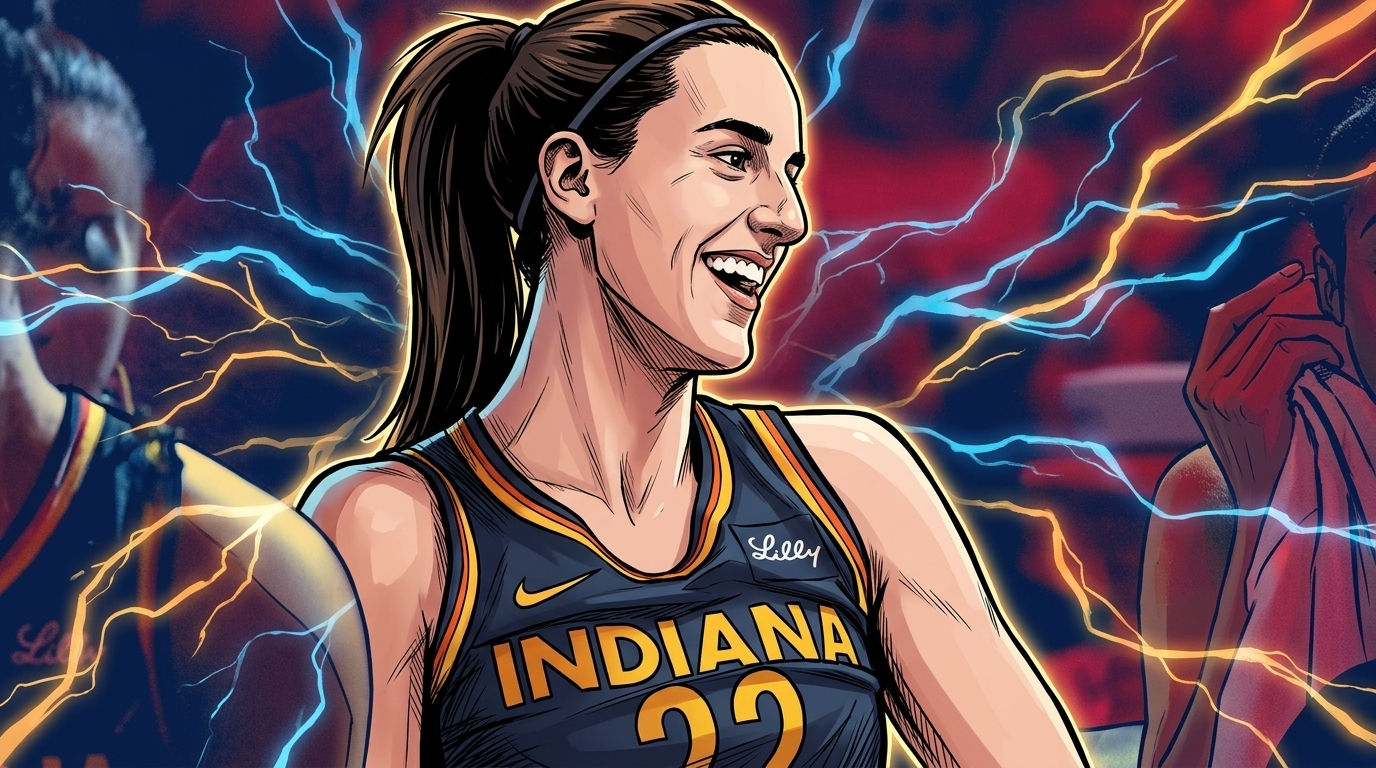
The Indiana Fever are a WNBA franchise based in Indianapolis, one of four teams added in the league’s 2000 expansion and the home of the greatest player of its generation, Tamika Catchings. For a decade they were the Eastern Conference’s most reliable contender, a run that produced the 2012 championship and two other Finals trips; after Catchings retired the franchise collapsed into a long rebuild, then became the center of the entire sport when it drafted Caitlin Clark first overall in 2024. Across 27 seasons through 2026 the Fever have gone 430–499 with one title and 16 playoff appearances — a record that undersells how central they have been to the WNBA’s story at both its quietest and its loudest moments.
| Vitals | |
|---|---|
| Founded | 2000 (awarded June 7, 1999) |
| League / conference | WNBA · Eastern Conference |
| Arena | Gainbridge Fieldhouse, Indianapolis |
| Owner | Herb Simon / Pacers Sports & Entertainment |
| Head coach | Stephanie White (as of Sep. 20, 2026) |
| Titles | 1 — 2012 |
Origins: the 2000 expansion
The Fever were born to fill a new building. The WNBA awarded Indianapolis a franchise on June 7, 1999, one of four expansion teams — alongside the Miami Sol, Portland Fire and Seattle Storm — timed to the opening of downtown’s Conseco Fieldhouse, the arena the club still calls home under its later names. Indiana stocked its roster at the December 15, 1999 expansion draft, taking veterans such as Australian guard Sandy Brondello and center Kara Wolters, and hired Hall of Fame center Anne Donovan as its first head coach.
The early results were what expansion results usually are. The 2000 Fever went 9–23, and 2001 was barely better at 10–22. But the franchise’s future arrived on draft night in 2001, when Indiana used the third overall pick on Tennessee forward Tamika Catchings. A torn ACL suffered in her final college season cost Catchings the entire 2001 campaign — she never played a WNBA minute until 2002 — but the wait would prove to be the best investment the franchise ever made.
The Catchings era begins
Catchings turned a doormat into a contender almost immediately. She was named WNBA Rookie of the Year in 2002, averaging better than 18 points a game, and dragged the Fever to 16–16 and the first playoff berth in club history, a conference-semifinal loss to New York. A two-way force who led the league in steals repeatedly and rebounded like a post despite playing on the wing, Catchings became the axis around which every Fever team for the next 15 years was built.
Under Brian Winters the mid-2000s Fever became a fixture in October. Beginning in 2005 Indiana reached the playoffs in 12 consecutive seasons — a run that stood as a WNBA record — winning 21 games in 2005, 2006 and 2007 and reaching the conference finals more than once. What they could not do was break through: from 2005 to 2008 they lost in the conference semifinals or finals every year, usually to the Detroit Shock. The core around Catchings deepened with guard Katie Douglas, acquired in 2008, and a young Briann January, and the bench was handed to franchise lifer Lin Dunn, who took over as head coach in 2008.
Knocking on the door: the 2009 Finals
In 2009 the Fever finally reached the Finals — and finally lost one that hurt. Dunn’s team went 22–12, won the Eastern Conference and pushed the Phoenix Mercury to a deciding fifth game in the WNBA Finals. Indiana led the series 2–1 before Phoenix’s run-and-gun attack, led by Diana Taurasi and Cappie Pondexter, took Games 4 and 5, closing it out 94–86 in Phoenix. It was the deepest the franchise had ever gone, and it established the Fever as a team that belonged on the last weekend without yet proving it could win there.
Champions: the 2012 title
The breakthrough came in 2012, and it came as an upset. Indiana finished the regular season 22–12 as the No. 2 seed in the East, then survived three-game series against Atlanta and Connecticut before meeting the defending champion Minnesota Lynx — a 27–7 juggernaut with Maya Moore, Lindsay Whalen and Seimone Augustus — in the Finals. The Fever stunned them, winning the series 3–1 and clinching with an 87–78 Game 4 victory in Indianapolis on October 21.
Catchings, at last, had her ring. She was named Finals MVP after averaging 22.3 points, 6.0 rebounds and 3.5 assists across the series, with Douglas, January and the interior work of Erlana Larkins supporting her. The title made Indiana just the second Eastern Conference franchise to win a WNBA championship, and it remains the only one in franchise history.
The last contending years and Catchings’ farewell
The Fever stayed dangerous but could not repeat. Under Stephanie White, who had taken over the bench, Indiana returned to the WNBA Finals in 2015, again drawing the Minnesota Lynx and again losing a five-game series 2–3. It was Catchings’ last real title chance. She retired after the 2016 season — her 15th — closing a career that ranks among the most decorated in league history.
Indiana honored her the only way it ever has honored anyone. On June 24, 2017, the Fever retired Catchings’ No. 24, raising it to the rafters of what was then Bankers Life Fieldhouse; she remains the sole player in franchise history with a retired number. She was inducted into the Naismith Memorial Basketball Hall of Fame in 2020.
The long rebuild
Without Catchings, the Fever came apart. The playoff streak ended in 2016 and the franchise did not return for eight years. The nadir arrived in a string of last-place finishes — 9–25 in 2017, 6–28 in 2018, and a franchise-worst 5–31 in 2022 — as the roster churned through coaches Pokey Chatman, Marianne Stanley and, from 2023, Christie Sides. There were bright spots amid the losing: guard Kelsey Mitchell, drafted second overall in 2018, developed into a durable, high-volume scorer, and undrafted guard Erica Wheeler was named MVP of the 2019 All-Star Game.
The rebuild was also stocked with lottery picks that would pay off. Front-office responsibility passed through Catchings herself, who served as general manager from 2020 to 2022, and back to Lin Dunn, who returned in an interim role. In 2023 the Fever used the No. 1 overall pick on South Carolina center Aliyah Boston, who was named 2023 Rookie of the Year — the first piece of the next era, and the reason the tank had a point.
The Clark era and the attendance explosion
Then came the most consequential draft pick in league history. After another losing season handed them the top selection again, the Fever drafted Iowa guard Caitlin Clark first overall in April 2024. The move detonated interest in the team and the sport: the 2024 draft drew record television audiences, and Fever home games sold out arenas across the country. Indiana’s home attendance surpassed 340,000 — more than 90,000 above the previous WNBA single-season record — and the team set virtually every television mark the league tracked.
Clark delivered on the hype and the wins followed. She was named 2024 Rookie of the Year nearly unanimously, giving Indiana back-to-back winners after Boston, and led all players in assists as a rookie. Sides’ team finished 20–20 and reached the playoffs for the first time since 2016, though the run was brief: a first-round sweep by the Connecticut Sun, 0–2.
The Stephanie White era
Indiana chose experience to steer the new era. On November 1, 2024, the Fever hired Stephanie White — the 2015 Finals coach and a former Fever player — for a second stint on the bench, with Amber Cox installed as general manager and Kelly Krauskopf, who had returned as president of basketball and business operations on September 23, 2024, overseeing the front office. (Krauskopf had replaced Allison Barber, who stepped down at the end of the 2024 season.) Around Clark, Boston and Mitchell the front office added veterans including Natasha Howard and Sophie Cunningham.
The 2025 season was a triumph built despite an injury crisis. White’s team won the 2025 Commissioner’s Cup, beating Minnesota 74–59 in the July final — with Clark sidelined — for the first in-season tournament title in club history. Clark’s own year was wrecked by injury: a left quadriceps strain in May and a later groin injury limited her to 13 games, and she was ruled out for the season in September, one of five Fever players to suffer season-ending injuries. Even so, Indiana hosted its first WNBA All-Star Game — Clark drew a record 1,293,526 All-Star votes — finished 24–20 for the franchise’s first winning season since 2015, beat Atlanta in the first round and pushed the Las Vegas Aces to a deciding fifth game in the semifinals before falling 2–3.
The 2026 season became the best regular season the franchise has ever played. A healthier roster went 27–14 — the most wins in a single season in club history — with Clark, Boston and Mitchell all named All-Star starters and White earning Coach of the Month honors. Indiana clinched a postseason berth on August 21 and entered the 2026 WNBA playoffs as the No. 5 seed; the first round was scheduled to open September 27, 2026, after this entry’s reference date. As of September 20, 2026, Stephanie White remained the head coach and the franchise, for the first time since Catchings, looked built to last.
Retired numbers
Indiana has honored exactly one number in franchise history, and it belongs to the player who defined it. Tamika Catchings’ No. 24 was retired on June 24, 2017, the first and only jersey the Fever have raised to the rafters.
| No. | Player | Pos. | Team tenure | Retired |
|---|---|---|---|---|
| 24 | Tamika Catchings | F | 2002–2016 | June 24, 2017 |
Season by season
Every Fever season, folded by decade — newest first.
The 2020s 101–154 · 3 playoff berths · 1 Commissioner's Cup (2025)
| Season | W–L | Finish | Playoffs |
|---|---|---|---|
| 2020 | 6-16 | 8th (East) | Did not qualify |
| 2021 | 6-26 | 6th (East) | Did not qualify |
| 2022 | 5-31 | 6th (East) | Did not qualify |
| 2023 | 13-27 | 6th (East) | Did not qualify |
| 2024 | 20-20 | 3rd (East) | Lost First Round (CON 0-2) |
| 2025 | 24-20 | 3rd (East) | Lost Semifinals (LVA 2-3) |
| 2026 | 27-14 | — | No. 5 seed; playoffs began Sep. 27 |
The 2010s 161–179 · 7 playoff berths · 1 title (2012), 1 other Finals (2015)
| Season | W–L | Finish | Playoffs |
|---|---|---|---|
| 2010 | 21-13 | 3rd (East) | Lost Conf. Semifinals (NY 1-2) |
| 2011 | 21-13 | 1st (East) | Lost Conf. Finals (ATL 1-2) |
| 2012 | 22-12 | 2nd (East) | Won WNBA Championship (MIN 3-1) |
| 2013 | 16-18 | 4th (East) | Lost Conf. Finals (ATL 0-2) |
| 2014 | 16-18 | 2nd (East) | Lost Conf. Finals (CHI 1-2) |
| 2015 | 20-14 | 3rd (East) | Lost WNBA Finals (MIN 2-3) |
| 2016 | 17-17 | 3rd (East) | Lost First Round (PHO 0-1) |
| 2017 | 9-25 | 6th (East) | Did not qualify |
| 2018 | 6-28 | 6th (East) | Did not qualify |
| 2019 | 13-21 | 5th (East) | Did not qualify |
The 2000s 168–166 · 6 playoff berths · 1 Finals (2009)
| Season | W–L | Finish | Playoffs |
|---|---|---|---|
| 2000 | 9-23 | 7th (East) | Did not qualify |
| 2001 | 10-22 | 6th (East) | Did not qualify |
| 2002 | 16-16 | 4th (East) | Lost Conf. Semifinals (NY 1-2) |
| 2003 | 16-18 | 5th (East) | Did not qualify |
| 2004 | 15-19 | 6th (East) | Did not qualify |
| 2005 | 21-13 | 2nd (East) | Lost Conf. Finals (CON 0-2) |
| 2006 | 21-13 | 3rd (East) | Lost Conf. Semifinals (DET 0-2) |
| 2007 | 21-13 | 2nd (East) | Lost Conf. Finals (DET 1-2) |
| 2008 | 17-17 | 4th (East) | Lost Conf. Semifinals (DET 1-2) |
| 2009 | 22-12 | 1st (East) | Lost WNBA Finals (PHO 2-3) |
By the numbers
Franchise marks
Per Basketball-Reference, through the 2026 regular season.
Ranks
- 1st Single-season home attendance, WNBA history (2024)
- 1st Consecutive playoff berths — 12 straight (2005–16), a WNBA record
- 2nd Eastern Conference franchise to win a WNBA title (2012)
Per Just Women's Sports and the Indiana Fever, through 2026.
Honors
- 2012 WNBA champion
- 2012 Finals MVP — Tamika Catchings
- 2009 & 2015 WNBA finalist
- 2025 Commissioner's Cup champion
- Rookie of the Year — Catchings (2002), Boston (2023), Clark (2024)
- 1st in East — 2009, 2011
Per WNBA.com and Wikipedia, through 2026.
The arguments
How much of the 2024 boom is the Fever’s and how much is Caitlin Clark’s? One side notes that the franchise’s attendance, ratings and valuation numbers exploded the instant Clark arrived, and would follow her anywhere. The other points out that Indiana earned the pick by bottoming out, drafted Aliyah Boston a year earlier, and built the veteran infrastructure that turned the noise into a Commissioner’s Cup and a franchise-record season — a boom the club converted rather than merely received.
Is the Catchings era a success or a near-miss? Supporters point to 12 straight playoff berths, three Finals trips and the 2012 ring as one of the most sustained runs in league history. Skeptics counter that a player of Catchings’ stature — a Hall of Famer and perennial MVP candidate — reaching only one championship in 15 seasons reflects rosters that were consistently very good and rarely quite good enough.
Why it matters
The Indiana Fever are the WNBA’s story in miniature: an expansion afterthought that found a generational talent, built a decade-long contender around her, won a title as an underdog, fell all the way to the bottom, and then — with a single draft pick — became the most-watched team in the sport’s history. Between Tamika Catchings and Caitlin Clark, the franchise has twice put the league’s most important player in a Fever uniform, and both times the whole sport turned to watch what Indianapolis did next.