
Somewhere in the guts of Doak Campbell Stadium on Monday night, a transformer took one look at three years of Florida State football and decided it had seen enough; it blew itself out rather than illuminate one more possession of this era.
The short circuit hit the transformer serving the stadium’s west side, and per ESPN sideline reporter Taylor McGregor, it finally gave out when stadium officials tried to reset it, as if daring them to keep trying. What followed was close to two hours without stadium lights, without Wi-Fi, without helmet-to-helmet coach communication, without replay boards, game clocks, press box power, or a working sound system. Doak Campbell Stadium, in front of a national ESPN audience, went almost entirely dark for an hour and forty-five minutes.
https://x.com/ESPNCFB/status/2097109283754111095
SMU, to its credit, treated the blackout the way a program with somewhere else to be treats an inconvenience. Athletic director Damon Evans put it plainly:
“We’re just going to play old-school football.”
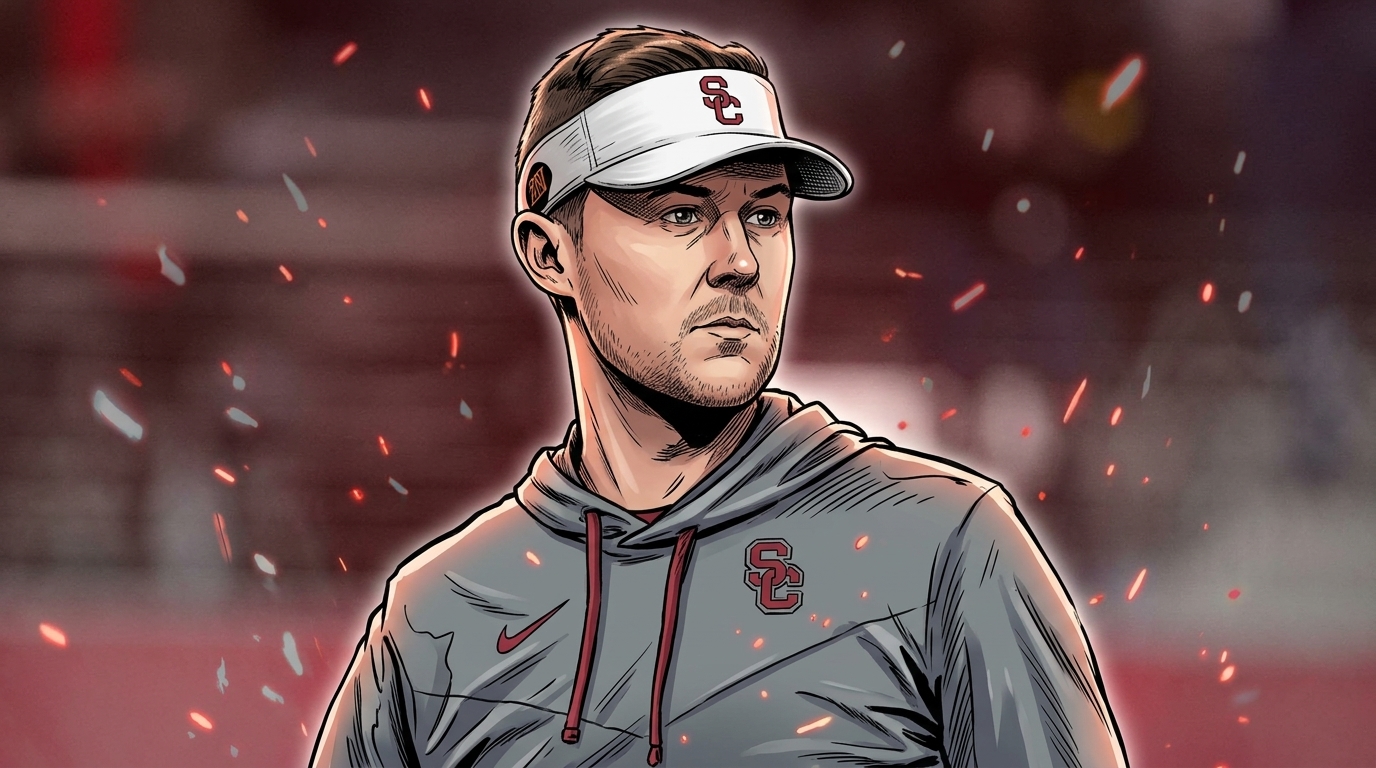
Head coach Rhett Lashlee was even less interested in the drama:
“We adjust and move on. If you whine about how hard it is, you’re not going to solve the problem.”
Neither man was talking about Florida State’s last three seasons, but they might as well have been; it’s the tidiest available description of everything the Seminoles have failed to do since the current stopped flowing their way. A stadium doesn’t lose power on national television for no reason: something upstream has to fail first, some circuit has to carry more than it can handle for long enough that it finally gives out. Florida State has been asking a lot of its circuitry since 2023.
That team went 13-1, won the ACC unbeaten, and got locked out of the four-team College Football Playoff anyway — a decision so galling it functioned as a lightning strike of its own, one the program has been trying to rewire the whole building around ever since. The response was a 2-10 collapse in 2024, one win in seven ACC games, followed by a 5-7 repair job in 2025 that left Norvell’s seat warm enough to double as a space heater. None of that required a blown transformer to be visible. The outage just made it visible to everyone at once, on a Monday, in prime time.
The outage wasn’t the problem here; it was just the proof.
The internet, never shy about running up the score on a program that’s already down, had its diagnosis ready before a snap was played. Veteran writer Pat Forde offered one theory:
“I don’t want to say Florida State has become a cursed program, but have they considered a stadium exorcism?”
Somebody else put it the way you’d talk to a roommate who skipped rent: “Pay your power bill, Seminoles.” Reporter Shehan Jeyarajah added the sharper footnote, noting that Florida State fans aren’t allowed to pretend they can buy their way out of the ACC for at least one calendar year after this — a jab nobody in Tallahassee needed explained.
This is still the same program where Ethan Pritchard walked back onto the field a year after being shot in the back of the head, proof Florida State can still produce something worth the hype without any help from the power grid. Crews eventually got four generators running and rerouted enough power to bring the stadium lights back, though the iPads, replay booths, and scoreboards mostly stayed dead for the rest of the night; the game, somehow, restarted and finished, which is more than can be said for whatever plan Florida State thought it had three years ago. Keep an eye on the rest of this year’s college football chaos — but if you’re looking for the most honest thing to happen to a program in years, it already happened before kickoff, in the dark.