
Jacob Fields explained why he put a teammate in the hospital with a brain bleed in a single text message, sent after the fact: “I made an emotional decision cause how I felt played the last few practices.” He also texted that he’d pay every hospital bill. I’ve read that message more times than I want to admit, and it doesn’t get any less plain on the tenth pass. That’s the entire case against how TCU has handled this, laid out by the man who threw the punch.
Dozie Ezukanma is a TCU wide receiver. On Aug. 12, he delivered a hard block on Fields, a TCU safety, during a TCU Horned Frogs practice. The next day, inside the locker room at the Walsh Athletic Complex, Fields walked up while Ezukanma sat at his locker looking at his phone and punched him in the forehead with a closed fist. Ezukanma dropped to the floor, unconscious. Fields kicked him in the head after that. A teammate who witnessed it said Fields kicked him as hard as he could.
A trainer got Ezukanma to the emergency room once his ears started ringing, and a CT scan found the bleed. He spent three days in the hospital. A second scan showed the hematoma had grown before a third showed it stabilizing; an arrest warrant affidavit lays out the imaging timeline in order, and a separate warrant is where the brain bleed diagnosis first surfaced publicly. He was discharged Aug. 16.
TCU dismissed Fields from the program on Aug. 18. The public explanation at the time was a “violation of team rules.” TCU’s own statement didn’t mention a punch, a kick, or a hospital stay. Ezukanma filled in what the program wouldn’t, posting an Instagram video on Aug. 22 with footage of his own practice block and a screenshot of Fields’ apology text. He called it a sucker punch. The video came down later, but the account under his own name was already out there.
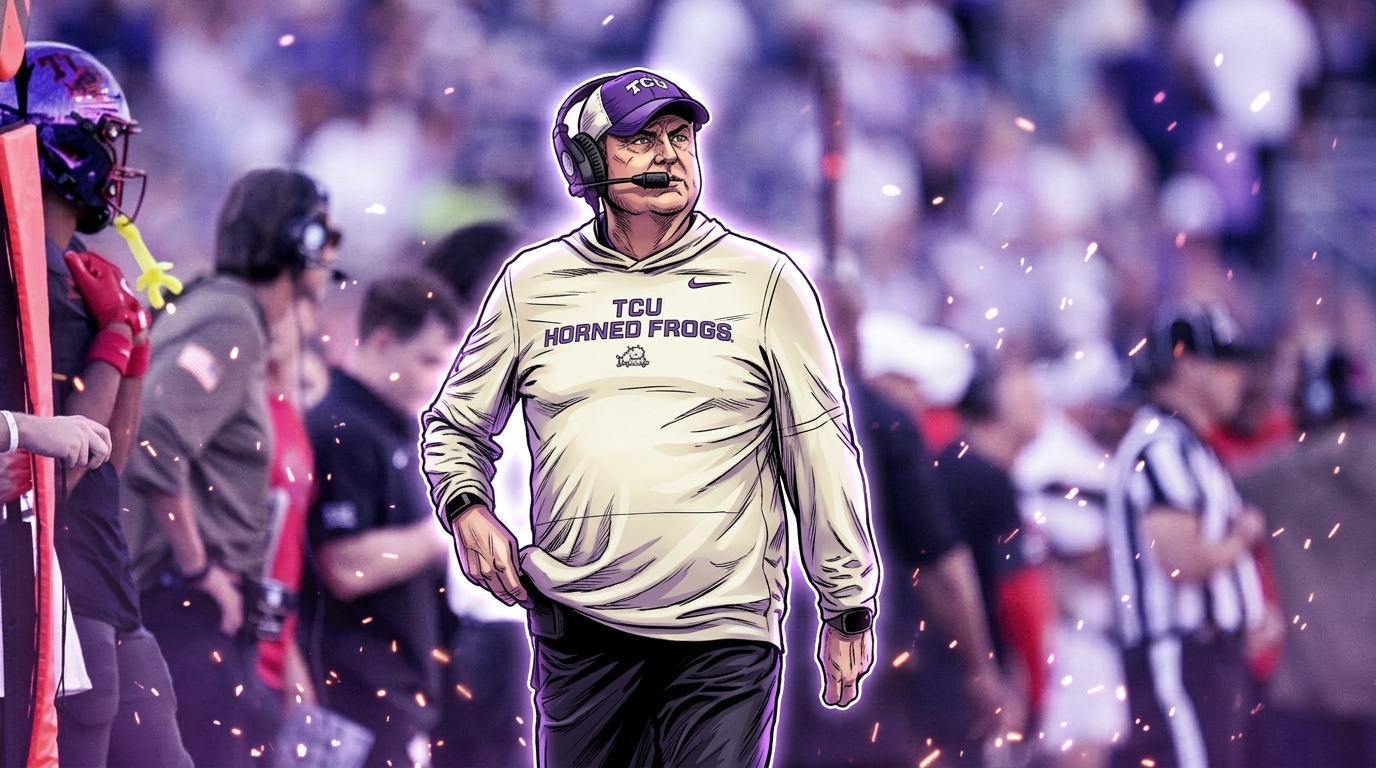
Head coach Sonny Dykes described the assault as “certainly out of character for the team and the young man that was involved” and called it “a teaching moment.” Fields’ own text message is the confession that undercuts him. Nobody who commits an aberration explains it by citing practice reps, because an aberration doesn’t come with a stated cause. This one did. Losing playing time was reason enough, in Fields’ own account of himself, to leave a teammate in a hospital bed with a bleed on his brain.
TCU had a faster response for the reporter who covered this than for the player it happened to. On Aug. 26 and 27, the athletic department indefinitely revoked Fort Worth Star-Telegram writer Steven Johnson’s credentials, including for the season-opening trip to Ireland, over the paper’s coverage of the assault. Athletics spokesperson Mike Buddie said the coverage “endangered a student-athlete and resulted in threats to him and his family.” Ezukanma had identified himself publicly, in his own video, three days before Johnson’s story ran. TCU pulled a reporter’s credentials instead of answering for it.
The Football Writers Association of America’s president, Shehan Jeyarajah, said so directly.
https://x.com/ShehanJeyarajah/status/2092662873650577461
TCU never publicly said it reinstated the credentials. On Aug. 29, the Horned Frogs opened the season against North Carolina at Aviva Stadium in Dublin without Ezukanma on the roster and lost, 15-10. The next day, Fields turned himself in at Tarrant County Jail on a charge of aggravated assault causing serious bodily injury and was released on $50,000 bond.
None of this is unique to TCU. Some program runs a version of this story most every fall: a player gets used up by the system built to develop him, and the people running that system spend more energy managing the story than explaining what happened to him. Chaz Coleman went through his own version of it at Tennessee, a teenager the sport already chewed up and spat out before he’d played a down that mattered. Ezukanma’s version put him in a hospital bed with a bleed on his brain. The program he plays for spent its first two weeks after his hospitalization deciding how much of what happened to say out loud, and its next act was going after the paper that said the rest.
I’m not angry about this the way I usually get angry about these stories. I’m tired of a sport that hears “I made an emotional decision” about a beating that put someone in a hospital with a brain bleed and files it under a lesson instead of what it actually is. It keeps happening, and TCU is just the program that happened to be holding the phone this time. It won’t be the last one you read about in our college football coverage.